Yatzy Cards
- 1.49K
- 4.9
- Installs
- 100.00K
- Price
- Free

Screenshots





Analysis by Reviewed
I spent time with Yatzy Cards because the idea is immediately appealing: take the familiar dice-and-score spirit of yatzy and turn it into a card game built around short duels. FunCraft Games keeps the presentation focused on that central concept rather than trying to make it into a large, complicated card battler. My first impression was that it is easiest to enjoy when I want a quick mental break, not when I am looking for a deep campaign or a long evening of strategy.
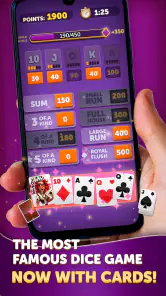
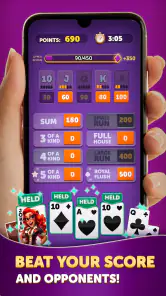
The game is free to start, aimed at Everyone, and belongs firmly in the casual card-game space. Its store summary describes card-based yatzy duels, which is a concise description of the experience: each round asks me to make useful decisions from the cards available, while still preserving the recognizable tension of building combinations and chasing a better result. It is a simple premise, but simplicity is part of its appeal. I can understand the basic purpose quickly without studying a large rulebook.
What makes the game worth considering is not the size of its feature list, but the way its format fits small pockets of time. I can imagine opening it while waiting for an appointment, taking a few turns during a commute break, or playing a short match when I do not have the attention for a traditional strategy game. The important question is whether that compact design feels satisfying after repeated sessions. In my experience, it does for players who enjoy making small tactical choices, although people wanting a richer card collection or a full-length adventure may find it limited.
How the card-duel format feels in everyday play
Quick decisions without a heavy learning curve
The strongest part of Yatzy Cards is the way it gives a familiar dice-game idea a more deliberate card-based shape. Instead of relying only on luck in a roll, I pay attention to what I have available and decide how aggressively to pursue a useful combination. That makes each turn feel more personal. A poor result is not always just bad luck; sometimes it reflects a choice to chase a bigger payoff instead of taking a safer option.
I found that this creates a pleasant rhythm. Early in a duel, I can play with a little more flexibility because there is time to recover. Later, the value of a conservative decision becomes clearer, especially when a tempting combination is not quite within reach. This is one of the less obvious strengths of the format: the game encourages me to think about timing rather than simply selecting the most valuable-looking card immediately.
That does not make it a demanding strategy title. The rules remain approachable, and the card presentation keeps the action understandable. A new player can begin by looking for obvious scoring opportunities, then gradually learn when it is better to protect a modest advantage. I would recommend starting with that mindset instead of trying to optimize every move from the first duel. The game is more enjoyable when I treat the opening rounds as a way to learn its tempo.
Where the speed feels most useful
The short-duel structure suits casual use particularly well. I do not need to reserve a large block of time or remember a complicated chain of objectives before I can enjoy a session. That makes it a better fit than many collectible card games for someone who wants a focused match rather than a long progression loop. It also makes the game easy to put down after a duel without feeling that I have abandoned a major mission.
Perceived speed is not only about how quickly a match ends. It also comes from how quickly I can understand the next decision. Yatzy Cards benefits when the available choices are visually clear and the scoring goal is easy to keep in mind. I spent less mental energy navigating systems and more considering whether to take a safe result or continue looking for a stronger combination. For a casual card game, that is exactly the kind of responsiveness I want from the design.
There is a trade-off, however. Players who enjoy long planning phases may find the compact format too restrained. The game’s appeal comes from repeated small decisions, not from building a complex strategy over an hour. If you prefer card games with large decks, elaborate synergies, or a broad narrative layer, this will probably feel more like a snack than a full meal.
What happens during heavier use
During a longer session, the main challenge is not understanding the rules but maintaining interest. Because the core loop is deliberately focused, the experience depends on whether I enjoy repeating the process of evaluating cards, accepting risk, and reacting to the duel’s changing position. I would not choose it as my only game for an entire afternoon. I would choose it as something I can return to several times throughout the day.
A useful way to avoid fatigue is to change the way I approach each match. In one duel, I might prioritize reliable scoring and avoid unnecessary risks. In another, I can experiment with more ambitious combinations. This turns the same basic system into a small personal challenge. It is not a hidden mode or an extra feature; it is simply a better way to use a focused game without expecting it to provide the variety of a much larger card title.
Heavy use also highlights the difference between a quick game and a shallow one. Yatzy Cards has enough decision-making to make individual turns matter, but it does not appear designed to bury the player under layers of menus or collection management. That keeps the experience approachable, though it also means players seeking constant novelty should set realistic expectations before committing to it.
Stability, recovery, and the practical side of playing
From a practical standpoint, I value a game like this when it lets me return to the action without unnecessary friction. The compact card-duel concept is naturally suited to interruptions: if I need to stop after a short session, I am not walking away from a complicated story sequence or a long tactical setup. That makes it a sensible companion for irregular play, especially for people who use mobile games in small gaps rather than at a desk.
I would still approach any mobile game with the usual care around interrupted sessions. Avoid closing the app in the middle of an important turn if you can help it, and make sure the game has finished loading before switching between several demanding apps. Those are sensible habits rather than claims about a particular failure pattern. The important point is that the design itself does not ask me to invest a large amount of time before reaching the enjoyable part.
The current version is 1.0.24933, and the game has attracted a 4.9 average from around nineteen thousand ratings, alongside roughly one and a half thousand written reviews. That level of response suggests that the straightforward concept is connecting with its intended audience. I treat ratings as a useful signal rather than a guarantee, but they reinforce my impression that this is aimed at players who appreciate an accessible, tightly focused card experience.
Device fit and resource expectations
Yatzy Cards supports Android 7.0 and later, which gives it a broad compatibility range for Android users. That is helpful if you are using an older phone and do not want to install a game that requires a recent operating system. Compatibility alone does not tell me exactly how the game will behave on every device, but the modest, card-centered presentation gives me fewer reasons to expect the kind of demands associated with large three-dimensional games.
I would still keep a reasonable amount of free storage and close unnecessary background apps if the phone is older or already struggling. Card games generally benefit from a clean, responsive interface more than from raw graphical power, and this title’s appeal does not depend on spectacular visual effects. On a modern device, I would expect the main performance question to be convenience: how quickly it opens, how smoothly the cards respond, and whether returning after an interruption feels easy.
For someone choosing between this and a visually intensive strategy game, Yatzy Cards is the more sensible option when battery and attention are limited. For someone using a very old or heavily loaded phone, I would not promise a perfect experience solely from the minimum operating-system requirement. The safest expectation is that the game is designed around relatively light card play, while individual device condition still matters.
Free access and the role of purchases
The game is free to download, which lowers the barrier to trying it. I can explore the basic appeal without paying upfront, an important advantage for a casual title whose enjoyment depends heavily on personal taste. The in-app purchase range runs from $0.99 to $19.99 per item, so I would pay attention to the purchase flow and decide in advance whether I want to spend anything.
My advice is to treat purchases as optional rather than part of the reason to install the game. First play enough to decide whether the duel format itself keeps you interested. If the core decisions already feel repetitive, spending money is unlikely to fix that. On the other hand, players who enjoy the loop and want to support their continued use can make that choice with a clearer idea of the game’s value.
This is also where Yatzy Cards differs from a traditional physical yatzy set. A tabletop version gives me complete control over the pace, costs nothing after purchase, and works well with people sitting together. The mobile game is more convenient when I am alone and want immediate access, but it cannot replace the social feeling of passing a device or playing around a table. Choosing between them depends less on rules and more on the kind of interaction I want.
Who will get the most from it
I think the best audience is someone who likes card games but does not want to memorize a large deck or maintain a complicated collection. It is also a good match for players who enjoy probability, risk management, and the satisfaction of improving a modest hand through careful choices. The Everyone age rating makes it suitable as a broadly accessible casual game, although younger players may still benefit from learning the scoring logic alongside an adult.
A realistic everyday scenario would be a ten-minute wait before an appointment. I can open a duel, make a few decisions, and stop without needing to track a large plot. Another good use is a quiet evening when I want something interactive but not emotionally demanding. The game gives me enough agency to stay engaged while keeping the mental workload below that of a full strategy session.
I would skip it if my priority is a deep competitive card game with deck construction, extensive long-term planning, or a substantial single-player campaign. I would also look elsewhere if I mainly want a classic yatzy experience with physical dice and a group of friends in the same room. Yatzy Cards is not trying to solve those needs; its strength is the compact duel, and its limitations are closely tied to that focus.
Small habits that improve the experience
My first practical tip is to decide what kind of player you are going to be before a match begins. If you always chase the highest possible combination, unlucky turns can make the game feel harsher than it needs to. If you always choose the safest result, you may miss the excitement that gives the duel its character. Alternating between those approaches helps reveal whether you enjoy the underlying decisions or only the occasional big result.
Second, pay attention to the position of the duel rather than judging every card in isolation. A card that looks ordinary can be valuable if it protects a lead or keeps several future options open. Conversely, a seemingly strong opportunity may be a poor choice when it requires too much risk late in the match. This is where the card format earns its place: I am not merely waiting for luck; I am managing the consequences of each choice.
Third, use short sessions as a feature rather than forcing marathon play. The game is easier to appreciate when I stop while the decisions still feel fresh. Returning later also makes it easier to notice whether I am improving at reading situations or simply repeating the same habits. That distinction matters because a focused game can feel rewarding for a long time when I am learning, but repetitive when I expect it to provide endless content by itself.
My performance verdict
After looking at the game as both a player and a practical mobile user, I see Yatzy Cards as a well-targeted casual card title. Its strongest performance quality is perceived efficiency: the concept is easy to grasp, the decisions are compact, and the experience fits naturally into short breaks. The Android 7.0 requirement also makes it approachable for people who are not using the newest phone.
That does not mean it is the right choice for everyone. The focused design can become narrow during extended sessions, and players who expect a large progression system or a highly social tabletop replacement may be disappointed. The free entry point is welcome, while the in-app purchase range means I would keep spending under my own control and judge the base experience first.
My final recommendation is straightforward: install it if you want a quick card duel with meaningful risk-and-reward choices, especially when you prefer a game that can fit around everyday interruptions. I would recommend a different card title for anyone seeking deck building, elaborate combinations across a large collection, or a story-driven campaign. For the right player, though, FunCraft Games has chosen a sensible balance between recognizable yatzy-style decisions and the convenience of mobile card play. With more than one hundred thousand installs and a strong average rating, it has already found an audience, and I can understand why.
Pros
- Simple dice gameplay that is easy to learn and play casually.
- Quick rounds make it suitable for short gaming sessions.
- Score categories add light strategy beyond rolling dice.
- Clean card-style presentation keeps the interface easy to follow.
- Works well for solo players who want a relaxed offline game.
Cons
- Limited variety may make the experience repetitive over time.
- Luck has a strong influence on the final score.
- Some features or content may require in-app purchases.
- Ads can interrupt play
- depending on the app version.
- Multiplayer options may feel limited compared with larger board games.

- Category
- Card
- Version
- 1.0.24933