Worditaire: Word Solitaire
- 314.00
- 4.4
- Installs
- 100.00K
- Price
- Free
Screenshots
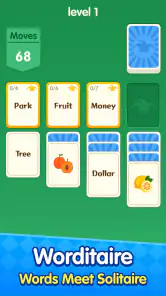
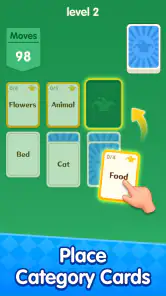
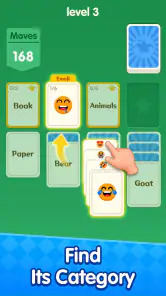
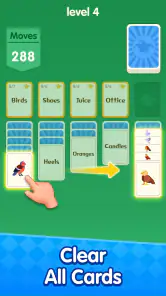
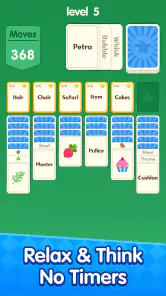
Analysis by Reviewed
I approached Worditaire: Word Solitaire expecting a quiet card game with a word-game twist, and that is exactly where it fits best. Developed by Speedgo, it combines the familiar rhythm of solitaire with the satisfaction of building words. The result is less frantic than a typical word puzzle and more mentally active than ordinary solitaire. I found it easy to understand in short sessions, but it still gives me enough to think about when I want something more engaging than simply matching cards.
The game is free to download and is rated for Everyone, which makes it approachable for a broad audience. It has already passed the hundred-thousand-install mark and holds a 4.4 average from roughly 1.9 thousand ratings, so there is clear interest in this particular blend of card and word play. I would not treat those figures as a guarantee that it will suit everyone, but they do suggest that the central idea is connecting with players.
What the first few minutes feel like
The important thing to understand is that this is not a conventional solitaire game with a word-themed visual style. The word-building element changes how I look at every move. Instead of focusing only on exposing hidden cards or arranging suits, I also pay attention to which letters can combine into a useful word. That extra layer makes even a simple board feel like a small decision-making exercise.
For a first-time player, the best approach is to resist trying to optimize everything immediately. I found it more comfortable to learn the relationship between the cards and the words by making a few obvious moves first. Once the basic flow becomes familiar, I could start looking for better letter combinations and thinking about whether a tempting move would leave the remaining cards in an awkward position.
This makes the game suitable for several everyday situations. I can imagine opening it while waiting for an appointment, taking a short break from work, or winding down before bed. It does not demand the same uninterrupted attention as a long strategy game. At the same time, it is not completely passive, so it gives my mind something to do without turning a ten-minute break into a major commitment.
The relaxing description is fair, but it should not be mistaken for effortless. Some turns are pleasantly obvious, while others require me to pause and scan the available letters. That balance is one of the strongest parts of the design. If you want a game that lets you switch off entirely, a basic solitaire app may be a better match. If you enjoy quiet concentration, this hybrid has more personality.
Starting without overthinking the board
After installing it, I would recommend beginning with the simplest available move rather than searching for an ideal word before touching anything. The first meaningful success comes from recognizing that progress is usually built one sensible decision at a time. I look for a short, clear word or a move that exposes a more useful card, then check what that action opens up.
That approach matters because new players often assume the longest possible word is automatically the best choice. In my experience, that is not always true in a solitaire-style layout. A shorter word can be more valuable if it clears a card that gives access to a better letter or a more flexible sequence. The practical lesson is to judge a word by what it unlocks next, not only by how impressive it looks on the current turn.
Once I complete an early word, the game becomes easier to read. I can see which cards are now available, which letters are becoming scarce, and whether I am creating a useful path or simply consuming convenient options. That first successful action is reassuring because it turns the game from an unfamiliar arrangement into a repeatable process: inspect, choose, clear, and reassess.
I also found it helpful to pause before using a letter that could support several possible words. A flexible letter is often more valuable than one that fits only a single obvious combination. This is one of the less visible skills in Worditaire: the strongest move is sometimes the one that preserves future choices rather than producing the biggest immediate result.
What can confuse new players
The main source of confusion is that the game asks me to think in two directions at once. Solitaire habits encourage me to move cards quickly and expose whatever is hidden. Word-game habits encourage me to hold letters in mind and wait for a promising combination. Those instincts can conflict. Moving too quickly may remove a useful letter from consideration, while waiting too long can make the board feel more complicated than it really is.
When I get stuck, I do not restart immediately. I first rescan the board from a different angle. I check for short words, look at cards that have just become available, and consider whether a less attractive move could create a better follow-up. This small reset is more useful than repeatedly staring at the same arrangement. It also helps reveal whether I am genuinely out of options or simply locked into one assumed solution.
Another common misunderstanding is expecting every round to feel like a vocabulary test. The challenge is not just knowing unusual words. It is also about recognizing ordinary combinations, managing access to cards, and choosing the right moment to spend a letter. Players with a large vocabulary may still make poor moves, while someone who favors simple words can progress well by managing the layout carefully.
For that reason, I would not describe the game as a pure spelling exercise. It is closer to a compact planning puzzle with words as the main tools. That distinction should help you decide whether it is right for you. If you want a crossword-like experience with clues and a fixed grid, this will feel different. If you like word formation but prefer a looser, card-based structure, the format is more appealing.
How I build a reliable playing routine
My most useful routine is to divide each turn into three quick checks. First, I look for an immediate word that does not damage future options. Second, I identify the card or letter that move will expose. Third, I ask whether the newly available choice is actually better than what I had before. This takes only a moment, but it prevents the common mistake of making a move simply because it is available.
I also try to avoid using every convenient letter as soon as I see it. In a word solitaire game, flexibility has practical value. A letter that can join several combinations may be worth keeping available, especially when the board contains blocked or uncertain cards. By contrast, a very specific letter can be used earlier if it is unlikely to help elsewhere. This is a small but important trade-off between immediate progress and future control.
A second useful habit is to treat the end of a round differently from the beginning. Early on, I prioritize opening the layout and learning what resources are available. Later, I become more conservative and look for moves that finish cleanly rather than merely creating activity. This change in attitude makes the game feel less random because I am responding to the stage of the board instead of using one strategy throughout.
For busy players, I would use it in short sessions rather than promising myself a long play period. A quick round can work as a mental transition between tasks. If I have just finished a meeting, playing one round gives me a clear break without requiring the emotional investment of a competitive multiplayer game. The limitation is that anyone looking for social interaction, a deep campaign, or a large strategic system may find the experience too self-contained.
Compared with standard solitaire, Worditaire gives me more reasons to examine the board before moving. Compared with a regular word game, it offers a more visual and spatial challenge because the letters are tied to card movement. That middle ground is its main identity. It is not trying to replace either category completely; it is most enjoyable when I want a little of both.
Where the free model fits into the experience
The game is free, but optional in-app purchases range from $1.99 to $99.99 per item. That is worth keeping in mind before playing regularly, especially if you are comfortable with free games only when spending can be ignored. I would approach the game with a simple rule: enjoy the core loop first and decide later whether any optional purchase genuinely improves your experience.
This matters because the appeal of a relaxing puzzle can change if I start feeling pushed to spend in order to continue enjoying it. I prefer to judge the game on its free experience rather than assuming that buying something is necessary. For families, it is also sensible for the person managing the device to be aware of the purchase range, even though the content rating is Everyone.
The age rating makes the game easy to recommend from a content perspective, but suitability is still personal. Younger players may enjoy the word element, while older players may appreciate the slower pace and the chance to practice flexible thinking. Someone who dislikes reading, spelling, or card layouts will probably not be persuaded by the gentle presentation alone.
Performance, access, and version details
Worditaire: Word Solitaire supports devices running Android 7.0 or later. That gives it a reasonably broad reach for people using older compatible phones, although the actual comfort of play will still depend on screen size and general device condition. On a smaller display, I would take a little extra care when scanning the cards, because the experience depends on seeing the whole arrangement clearly.
The current version is 1.22.245. When I evaluate a game like this, I pay more attention to whether the basic interaction remains easy to follow than to flashy additions. The central loop needs to feel readable: I should know what I can select, what a move changes, and why a word counts. If those relationships are clear, the simple presentation becomes a strength rather than a weakness.
Because it was released on November 25, 2025, I would expect new players to approach it as a relatively recent entry rather than as a long-established classic. That does not automatically make it better or worse. It simply means I would install it for the specific word-and-solitaire combination, not because it carries decades of familiarity or a huge traditional community.
Who should try it, and who should skip it
I think it is a strong fit for someone who already enjoys solitaire but wants more decision-making, or for a word-game fan who prefers open card layouts to clues and grids. It also suits players who like games that can be understood quickly but still reward a more thoughtful second attempt. The relaxing pace makes it particularly attractive for short solo sessions.
I would be more cautious about recommending it to players who need constant novelty, competitive rankings, rich storytelling, or fast action. The pleasure comes from refining small choices, not from dramatic events. If you become bored by repeating a focused puzzle structure, the calm design may feel limited rather than soothing.
It is also not the best choice if your main goal is to improve at classic solitaire rules. The word layer changes the priorities, so skills transfer only partially. In the other direction, someone looking for a serious vocabulary trainer may want a game built around definitions, spelling feedback, or structured lessons. Worditaire is more about using words as part of a card puzzle than studying language directly.
My practical verdict after settling into it
What I like most is the way the game turns familiar solitaire behavior into a more deliberate activity. I am not simply clearing cards; I am deciding which word is useful now, which letter should remain available, and what kind of board I want to create for the next turn. Those choices are small, but they give the game its character.
The main limitation is equally clear: the experience depends heavily on enjoying that repeated loop. There is no reason to choose it if you want a broad collection of unrelated modes or a strong social component. Its value comes from doing one thing with a thoughtful variation. Players who understand that before installing it are more likely to appreciate the simplicity.
My advice for a first session is to give yourself enough time for a few rounds, but do not judge it by chasing the biggest word immediately. Start with a move that opens the board, keep flexible letters in mind, and watch how each choice changes the next opportunity. That is where the game becomes more interesting than its short description suggests.
Overall, I would recommend Worditaire: Word Solitaire to anyone who wants a free, low-pressure card game with a genuine word-puzzle layer. It is easy to approach, suitable for Everyone, and thoughtful enough to reward patience. I would skip it only if you need action, competition, or a much broader feature set. For a quiet break where I can make a few careful decisions and feel a small sense of progress, it earns a place on my phone.
Pros
- Combines classic solitaire rules with relaxing word-building challenges.
- Short rounds make it easy to play during quick breaks or commutes.
- Word lists help exercise spelling
- vocabulary
- and pattern recognition.
- Simple controls are accessible for both casual and experienced players.
- Progression and scoring add replay value beyond a standard card game.
Cons
- Some puzzles may feel repetitive after extended play sessions.
- Difficulty can vary noticeably between consecutive rounds.
- Players wanting pure solitaire may find the word mechanics distracting.
- Mistakes can be frustrating when a strong word option is overlooked.
- Offline availability and full feature access may depend on the app version.
- Category
- Card
- Version
- 1.22.245