Wordfeud Premium
- 13.55K
- 4.8
- Installs
- 500.00K
- Price
- $5.99

Screenshots



Analysis by Reviewed
I like word games best when they leave room for a plan, not just a quick scramble, and Wordfeud Premium is built around that kind of patient competition. It turns familiar letter-tile play into a series of matches you can return to in short bursts, which suits a busy day better than a game that expects your attention all at once. The catch is that its appeal depends on enjoying an ongoing contest: if you want instant rounds, a solo puzzle, or a more guided learning experience, this is not the option I would reach for first.
A familiar board with room for decisions
At its best, the game makes each turn feel like a small calculation. I weigh the value of the word I can form against where it lands, what it leaves available, and whether my opponent may get a more rewarding play next. That gives the familiar word-board format a strategic edge without making every move feel like homework. It is satisfying for someone who enjoys spotting a clever placement as much as finding a long word.
The asynchronous rhythm is useful in real life, too. I can make a move while waiting for a bus, then leave the match alone until I have another spare minute. With several games running, I can choose a quick decision in one match or take more time over a difficult board in another. The trade-off is that a full game may stretch across many small visits rather than deliver the tidy finish of a single-session puzzle.
Who will get the most from it
I would recommend it to friends who like word challenges but do not always have the same free hour. It also works well for a low-pressure rivalry with someone you know: a move can keep a shared game alive without requiring both people to be online together. The chat makes that personal back-and-forth possible, though I would treat it as a social extra rather than a reason to choose the game on its own.
For a beginner, playing an experienced opponent can be an enjoyable way to notice how board placement matters, but it may also feel discouraging if every match becomes a lesson in missed opportunities. If your main goal is to build vocabulary or practise a language systematically, a dedicated learning app is a better fit. Here, language choice broadens the kinds of matches you can play; it does not turn the game into a structured course.
Game Play and Features
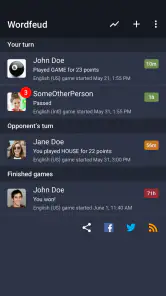
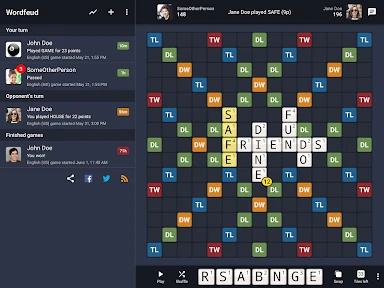
When I first downloaded Wordfeud Premium, I was instantly hooked. The app allows you to play against random opponents or invite your friends to a match. The interface is clean and intuitive, making it easy for both newbies and seasoned players to navigate. You can play in up to 30 separate games simultaneously, which is perfect for those of us who like to keep our options open.
One of the standout features is the ability to choose from multiple languages, which adds a fun twist if you're multilingual or learning a new language. Plus, the game includes a chat feature, so you can engage in friendly banter or strategize with your opponent. The ability to customize the board layout is another fantastic feature, allowing you to alter the game to your liking.
More From Our News Desk

Weather by Xiaomi Review: Clear at a Glance, Less Clear Up Close

X Under Pressure: Can It Recover When Posting Goes Wrong?

Clash of Clans Is Won Between the Battles

Android Auto Makes the Case for Quieter Car Software

MobiOffice: Transforming Mobile Productivity with Seamless Integration

EA SPORTS FC™ Mobile Soccer: Redefining Mobile Sports Gaming
Small choices that change the feel
Board customization is more than a cosmetic extra: it lets players adjust the character of a match, so it is worth agreeing on a layout with a friend before starting if you want a fair comparison of results. I would also settle the language and expectations for response pace at the outset. That simple habit helps avoid a mismatch where one person expects quick turns and the other treats the game as something to revisit whenever convenient.
Running multiple matches is useful, but it can make it harder to remember the position and plan in each one. I find it helps to pause before placing a tile and check not only the score on the current move but also the open premium spaces the play might leave behind. That is a more dependable habit than chasing the biggest word every turn; a modest placement can be smarter if it limits an opponent’s next opportunity.
Graphics and User Interface
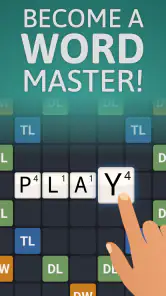
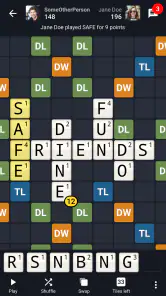
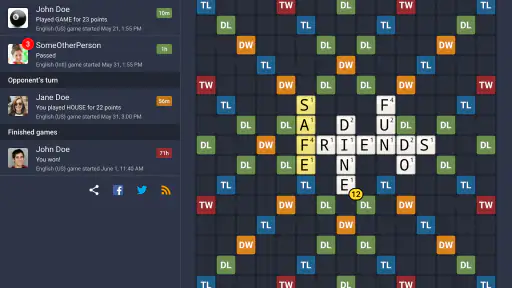
The visuals of Wordfeud Premium are simple yet effective. The board is clear, and the tiles are easy to read, which is essential when you're deep in thought trying to outsmart your opponent. The app runs smoothly without any lag, which is crucial for maintaining that competitive edge.
What I particularly love is the notification system that promptly alerts you when it's your turn. This keeps the game flowing, and you won't have to constantly check your phone to see if it's time to make your move. It's the small things like this that make the gaming experience seamless and enjoyable.
Where it differs from quick word games
Compared with short word-search or timed word-building games, this is less about racing a clock and more about managing a shared board over time. That makes it a better choice for thoughtful play with friends or strangers than for a commute where you want a complete round before your stop. It also differs from a solo crossword-style puzzle: your opponent’s placements change the board, so you are responding to another person rather than solving a fixed challenge.
That social structure brings a real limitation. A match is only as lively as the other player’s pace, and notifications help you notice a turn but cannot make someone respond. If you dislike waiting or prefer clear endings in every short session, a quick-match alternative will probably feel more satisfying. I would choose this one when the ongoing contest is the point, not when I need guaranteed action on demand.
A practical way to fit matches into a day
A typical day shows both the advantage and the compromise. I might start a match with a friend over breakfast, make a considered move while waiting for a meeting, and return to the same board in the evening. Each visit is easy to fit around something else, but there is no promise that the other player will be ready when I am. I treat the game as a thread I can pick up, not as a timed appointment.
If you have several matches going, it helps to give each board a quick mental reset rather than assume the best move in one game will suit another. I look at the available letters, the scoring opportunities, and what my opponent could reach next before committing. This small pause reduces careless turns and makes the multiple-game option feel manageable instead of like a queue of unfinished chores.
Graphics and User Interface
The visuals of Wordfeud Premium are simple yet effective. The board is clear, and the tiles are easy to read, which is essential when you're deep in thought trying to outsmart your opponent. The app runs smoothly without any lag, which is crucial for maintaining that competitive edge.
What I particularly love is the notification system that promptly alerts you when it's your turn. This keeps the game flowing, and you won't have to constantly check your phone to see if it's time to make your move. It's the small things like this that make the gaming experience seamless and enjoyable.
What Premium means in practice
Now, you might be wondering, "Why should I opt for the premium version?" Well, let me tell you, the premium version is worth every penny. Say goodbye to those pesky ads that pop up at the most inconvenient times. With Wordfeud Premium, you get an uninterrupted gaming experience, leaving you free to focus on forming the best words possible.
The premium version also offers statistics tracking, so you can monitor your progress and see how you stack up against your opponents. It's a fantastic way to see how your skills improve over time and to set new challenges for yourself.
The game is made by Bertheussen IT and costs $5.99, so I would think of the purchase as paying upfront for the ad-free experience rather than assuming it is a free trial of a different style of play. Its Everyone age rating makes it broadly accessible, while its popularity—an average rating of 4.8 from around 106,000 ratings, with over 500,000 installs—suggests that the format has found a sizable audience. Those figures are reassuring context, but they do not change the basic question: will you enjoy a slow-burn match enough to play it repeatedly?
What I would check before buying
The important question is not whether the premium edition changes the core word-board idea; it is whether the way you play makes its ad-free approach worthwhile. If you already enjoy this style of game and expect to return often, paying upfront can make sense. If you are unsure whether asynchronous matches suit you, first think about your patience for waiting and whether you have someone who will reliably play at a similar pace.
Statistics are most useful when treated as feedback, not as a scorecard for self-worth. I would use them to notice patterns across matches—perhaps whether I tend to prioritize immediate points or leave valuable spaces exposed—then try a different approach in a later game. They cannot replace reviewing the board itself, but they can give a regular player a reason to reflect beyond simply winning or losing.
The game’s 2010 release gives it a long history in mobile word play, but I would judge it on the experience it offers now: a familiar format, human opponents, and the freedom to take turns on your own schedule. Its average rating of 4.8 from around 106,000 ratings and more than 500,000 installs offer useful reassurance that many players enjoy the formula, while the 14,000 reviews indicate a substantial body of player feedback. I would still make the choice based on your own preference for this slower, social style.
My verdict for the right kind of player
In conclusion, if you're a fan of word games and enjoy a bit of friendly competition, Wordfeud Premium is definitely worth checking out. Its combination of strategic gameplay, customizable features, and ad-free experience makes it a standout choice in the world of mobile gaming. So, why not give it a try? You might just find yourself immersed in a world of words you never knew existed!
My recommendation is more specific: choose it if you like planning a move, returning to a match later, and seeing how your decisions hold up against another person. Skip it if you want a guided vocabulary trainer, a solo game with a guaranteed finish, or a fast burst of action every time you open your phone. For the right player, the appeal is not simply making words; it is learning to make them in a way that leaves the board in your favor.
Who should pass, and why
I would steer away from it if interruptions frustrate you, if you prefer every session to have a definite ending, or if you want a game that teaches new vocabulary step by step. A timed word challenge is a better pick when you are looking for urgency and a complete round in one sitting; a solo puzzle is more suitable when you do not want another person’s schedule to shape your progress. Neither alternative is universally better—it simply answers a different need.
For families or casual groups, the Everyone age rating makes the game broadly approachable, and the shared board can give players of different ages a simple way to compete. I would still agree on language and board layout before starting, especially if players are comparing results. That keeps a friendly match from turning into an argument about whether the conditions were the same.
One last practical distinction
It is easy to mistake the appeal of a word game for vocabulary practice, but those are not identical goals. I get the most from this one by treating each move as a blend of word-finding and board management: a familiar word in a strong position can matter more than an ambitious play that opens a scoring route for the other person. If you enjoy that kind of trade-off, the game has more staying power than a sequence of isolated word puzzles.
My final take is that this is a focused, social word game rather than an all-purpose language app. Bertheussen IT has made a format that fits naturally into spare moments, and the premium purchase is easiest to justify for someone who expects to keep several thoughtful matches going over time. I would choose it for a patient friend-to-friend rivalry, but reach for a solo or timed alternative when I want immediate closure. That distinction is what makes my recommendation positive, with a clear reservation about pace.
Wordfeud Premium Frequently Asked Questions
Can I play Wordfeud Premium without an internet connection?
Wordfeud Premium is designed as a multiplayer word game, so its central appeal is playing against other people. If you are considering it for offline use, keep in mind that an internet connection is needed for online matches and interactions with opponents. The game is best suited to players who want to make words, compare scores, and enjoy turns with other people.
Who develops Wordfeud Premium, and is it a well-established game?
Wordfeud Premium is developed by Bertheussen IT and has been available since October 5, 2010. It has an average rating of 4.8 from around 106,000 ratings, with about 14,000 written reviews and over 500,000 installs. Those figures suggest that many players have encountered the game, while its word-based multiplayer format remains the main reason to consider it.
What kind of game is Wordfeud Premium?
Wordfeud Premium is a multiplayer word game built around making words and aiming for the highest score. It suits players who enjoy vocabulary challenges and taking turns against other people, rather than playing a word puzzle entirely on their own. Its straightforward premise makes it easy to understand, while each board gives players a chance to think carefully about their next word.
Is Wordfeud Premium suitable for children?
Wordfeud Premium has an Everyone content rating, so it is presented as suitable for a broad audience. Its word-focused gameplay can appeal to families and players of different ages, especially those who enjoy spelling and vocabulary challenges. As with any online multiplayer game, parents may also want to consider whether they are comfortable with their child playing against other people.
How much does Wordfeud Premium cost, and is it a one-time purchase?
Wordfeud Premium costs $5.99. That gives you the price to consider before downloading, but the purchase arrangement can depend on the platform and the terms shown in its store. Check the final purchase screen on your device before confirming, so you know exactly what you are agreeing to. The Premium edition is intended for players who want its paid version rather than the free one.
Pros
- Ad-free experience enhances gameplay.
- Extensive dictionary support for diverse languages.
- Customizable board settings for varied play.
- Cross-platform play with Android and iOS users.
- Regular updates with new features.
Cons
- Paid version lacks trial option.
- Limited offline functionality.
- Higher price than similar apps.
- No in-game chat feature.
- Requires stable internet connection.
- Category
- Word
- Version
- Varies with device