Word Search Meow - Cat Puzzle
- 112.00
- 5.0
- Installs
- 10.00K
- Price
- Free
Screenshots



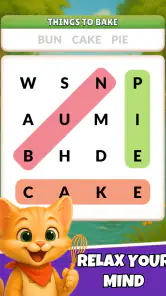
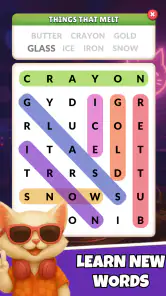
Analysis by Reviewed
Word Search Meow – Cat Puzzle is the kind of game I can open for a few quiet minutes without feeling that I have committed to a large gaming session. It combines familiar word-search puzzles with a gentle cat-centered presentation, and that pairing gives it a softer personality than the usual grid of letters. After spending time with it, I see the main appeal clearly: this is a low-pressure word game for short breaks, especially if you enjoy simple puzzles and cozy storytelling more than competition or complicated progression.
The game comes from Yum Yum Labs and is free to start, with optional in-app purchases ranging from $0.99 to $9.99 per item. It is listed for Everyone, runs on Android 8.0 or later, and its current version is 1.2.171. Those details make it accessible to a broad audience, but accessibility is not the same as lasting appeal. My central question was whether the cat theme could keep the basic word-search format interesting after the first burst of curiosity. The answer is mostly yes, although the game works best when treated as a calming daily habit rather than an endlessly demanding puzzle challenge.
Why the first week feels so inviting
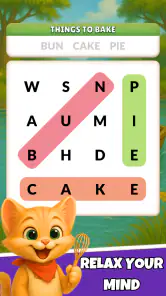
The opening experience is easy to understand. You look for words in a letter grid, complete the puzzle, and move on to the next small moment of progress. There is no need to learn a complicated control scheme or memorize a large set of rules. That simplicity matters on a phone, where I might be playing while waiting for an appointment, winding down before bed, or taking a short break between chores.
The cat stories give the familiar format a reason to feel more personal. A standard word-search game can become visually interchangeable with dozens of alternatives, but the feline framing adds a small emotional reward to each session. I found that useful because it changes the mood of the activity. Instead of feeling like I am completing a worksheet, I feel as though I am moving through a collection of light, comforting scenes connected to cats.
That atmosphere is also why I would recommend trying it with realistic expectations. This is not a word game built around intense competition, speed records, or deep strategic planning. Its pleasure comes from recognition and completion: spotting a word, following the letters, and enjoying the surrounding presentation. If you like puzzles that demand sustained concentration and punish mistakes, the relaxed design may feel too gentle. If you want something that occupies your hands without overwhelming your attention, it is much better suited.
During the first week, the strongest use case is the “in-between” session. I can play one or several puzzles when I have a little time but do not want to begin a larger game. It is more involving than simply scrolling, yet less demanding than a strategy title, a crossword with difficult clues, or a timed competitive word app. That middle ground is the product’s most convincing strength.
The free entry point helps with that first impression. I do not need to make a purchase before understanding whether the format suits me. At the same time, the presence of optional purchases means I would pay attention to how quickly the game encourages spending during longer sessions. A free game is most comfortable when the basic loop remains enjoyable without turning every pause or reward into a sales prompt.
The public response is unusually positive, with a 5.0 average from around 1.2 thousand ratings and more than 10 thousand installs. I would not treat those figures as proof that every player will enjoy it, but they do suggest that the gentle concept is connecting with its early audience. The smaller scale also fits the feeling of a focused, niche puzzle rather than a huge social platform competing for constant attention.
What makes the word-search loop work
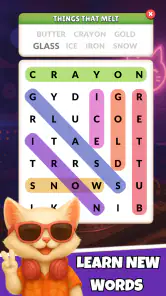
Word searches are easy to underestimate because the rules are familiar. In practice, the quality of the experience depends on how well the game supports the act of scanning. I found the basic format most satisfying when I approached each grid in a deliberate way instead of sweeping randomly across every row. Looking for unusual letter combinations first, then checking likely directions, makes the puzzle feel more like a small visual investigation.
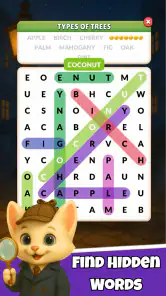
That approach is one of my practical tips for getting more from the game: do not rush to mark the first obvious word. I look for distinctive starting letters and mentally check horizontal, vertical, and diagonal paths before dragging. This keeps the puzzle active without making it stressful. It also prevents the session from becoming a repetitive motion in which I simply trace whatever catches my eye.
A second useful habit is to use the game as a transition activity rather than a background activity. If I play while watching a complicated show or listening to a podcast that requires close attention, I lose the calming focus that makes the game worthwhile. It works better when I give it a few uninterrupted minutes. The cat stories then have room to register, and the puzzle itself becomes a small reset between more demanding tasks.
The third insight is about difficulty tolerance. A word-search game can feel easy when I am rested and surprisingly absorbing when I am tired. I would not judge it only by whether the first puzzles challenge me. Its value is partly that it lets me choose a level of attention. On a busy afternoon, I can focus just enough to finish a grid; at night, the same activity can become a slower wind-down ritual.
Whether the appeal survives from month to month
The longer-term question is more complicated. The central word-search mechanic does not transform into a deep system simply because the surrounding theme is charming. Once the initial novelty of meeting the cat world fades, the game has to earn repeat visits through the satisfaction of solving, the comfort of the presentation, and the convenience of short sessions.
For me, that means its recurring value depends on habit more than escalation. I am unlikely to play it for hours every day, and I do not think that is the right standard. The better comparison is a small puzzle book kept beside a chair: something I return to when I want a predictable mental break. Against that alternative, the phone format is convenient because it is always available and does not require carrying anything else.
Compared with a crossword, this game asks less of my vocabulary in the clue-solving sense. I am recognizing and locating words rather than interpreting clues, building answers, or working through a theme. That makes it friendlier when I am mentally tired, but it also means players seeking language development or complex deduction may find a crossword more rewarding.
Compared with an anagram game, the experience is less about rearranging letters and more about visual search. Anagram titles can provide a stronger sense of word construction, while this one offers a more tranquil rhythm. Compared with competitive word apps, it gives up urgency and social pressure in exchange for a calmer pace. I prefer that trade-off when I want relaxation, but not when I am looking for a game that pushes me to improve measurable performance.
The cat-story layer is important for retention because it supplies emotional continuity between puzzles. I would keep returning for that atmosphere if the stories remain pleasant and the puzzle flow stays comfortable. However, the theme cannot completely hide repetition forever. Players who need constantly changing mechanics, elaborate objectives, or a strong sense of mastery may eventually feel that they have seen the main idea.
This is where personal routine matters. I would not schedule a long daily session. Instead, I would use it as a five-to-ten-minute option after lunch, during a commute when it is safe to do so, or before sleep. A small, regular habit protects the game from becoming stale because I am not exhausting its central loop in one weekend. The same restraint is useful with many relaxing puzzle games, but it is particularly relevant here because the appeal is steady comfort rather than dramatic variety.
A realistic everyday routine
Imagine finishing work with a crowded mind and a short gap before preparing dinner. I can open the game, complete a puzzle, and stop without needing to remember a complicated campaign or worry about losing progress in a competitive match. The activity gives my attention one clear target. When the session ends, I feel that I have taken a break rather than started another obligation.
For an older family member who enjoys word puzzles but dislikes fast controls, the same quality may be appealing, provided the text and grid are comfortable to read on the device. The Everyone rating also makes the game broadly approachable from an age-classification perspective. I would still choose a different title for someone who wants educational vocabulary exercises, multiplayer interaction, or a demanding challenge designed around speed.
It can also work as a shared, informal activity. One person can spot a word while another follows its path, making the puzzle a quiet conversation starter. I would not describe it as a multiplayer game based on that possibility; the value is simply that the grid is easy to understand together. That makes it more suitable for relaxed companionship than for structured competition.
Maintenance, spending, and the small frictions
The maintenance burden is low in the ordinary sense. There is no complicated setup to learn, and the minimum Android requirement of 8.0 keeps it compatible with many older devices. The current version, 1.2.171, indicates an actively maintained release line, which is reassuring when I want a game that remains usable rather than an abandoned one-off download.
Still, “low maintenance” does not mean friction-free. A free-to-start puzzle game has to balance access with optional purchases, and the listed purchase range gives the monetization a meaningful spread. I would decide in advance whether I am happy to remain within the free experience or whether I might spend on convenience or extra content. Making that choice before a relaxing session is useful because it prevents an impulse purchase from becoming part of the routine.
My practical advice is to judge the game over several short sessions before paying for anything. The first session mainly tests the presentation; repeated sessions reveal whether finding words remains satisfying once the cat theme feels familiar. If I still want to open it naturally after that trial period, an optional purchase may feel more reasonable. If I already feel myself scanning for something more complex, spending money will not solve the underlying mismatch.
Another maintenance issue is attention. A game designed for brief relaxation can become less relaxing if I turn it into a completion obligation. I would avoid treating every available puzzle as a task that must be cleared. Leaving the game with some content still waiting can actually preserve its charm. This is a small but important distinction between using it as a restorative habit and converting it into another source of digital pressure.
Storage and device performance are not the main concerns I would have here, because the core activity is visually straightforward. My bigger concern is whether the presentation stays fresh enough over time. Cat art and gentle stories can be appealing, but they are also a particular taste. If you enjoy that style, it supports the puzzle loop; if you do not, there is less beneath the surface to compensate for the mismatch.
Where fatigue is most likely to appear
The first source of fatigue is mechanical repetition. Searching a grid is satisfying in small portions, but the action remains fundamentally similar from one puzzle to another. The stories soften that repetition, yet they do not turn the game into a radically different genre. I noticed that my interest was strongest when I played occasionally and weaker when I tried to make it the only game on my phone.
The second source is the gap between relaxation and challenge. Some players will appreciate that the game does not constantly pressure them. Others may interpret the same calm design as a lack of ambition. If you want difficult vocabulary, layered clues, or puzzles that require planning several moves ahead, the familiar word-search structure may feel limited regardless of how polished the cat theme is.
The third source is monetization fatigue. Optional purchases are not automatically a problem, especially in a free game, but repeated prompts can change the emotional tone of a quiet experience. I would pay attention to whether the free path feels complete enough for my habits. If I need to keep interrupting the puzzle flow to consider purchases, I would probably move to a paid word game or a less commercially intrusive alternative.
There is also a risk of visual fatigue for people who prefer plain puzzle interfaces. The cozy identity is a selling point for me, but it can feel decorative if I am primarily interested in solving grids. In that case, a traditional word-search app may be the better choice because it puts the puzzle first and removes the narrative framing.
On the other hand, players who find standard puzzle games cold or anonymous may experience the opposite trade-off. The cats and stories provide a reason to care about returning, even when the underlying activity is simple. That is a genuine advantage, but it is conditional: the emotional layer works only if the player likes the tone rather than merely tolerates it.
Who should install it, and who should skip it
I would recommend it to adults who want a calm word-search game, people who enjoy cat-themed storytelling, and anyone looking for a short activity that does not require a large learning curve. It is also a sensible choice for players who prefer solo entertainment and want to control the length of each session. The free price makes experimenting easy, while the Everyone classification broadens its potential audience.
I would skip it if my priority were competitive rankings, multiplayer matches, advanced vocabulary training, or a constantly changing set of mechanics. I would also hesitate if I knew that a cute presentation would not hold my attention. In that situation, a crossword app would offer more interpretive challenge, an anagram game would provide more letter manipulation, and a premium puzzle title might deliver a cleaner experience without optional spending.
The game is not a replacement for every kind of word entertainment. Its strength is narrower and more specific: it turns a simple search task into a comforting pause. That narrow focus is a virtue when it matches my mood, but a limitation when I want variety or measurable progression.
My long-term verdict
After the novelty fades, Word Search Meow – Cat Puzzle earns a place on my phone if I treat it as a small maintenance habit rather than a main game. I would open it for a brief reset, enjoy a cat story, solve a grid, and leave before the repetition starts to show. That pattern gives the game a realistic chance of lasting because it respects what the design does well instead of demanding depth it was not built to provide.
The 5.0 average from around 1.2 thousand ratings and the 10 thousand-plus install milestone show strong early enthusiasm, but my recommendation is based more on fit than popularity. I like the accessible word-search loop, the softer atmosphere, and the way the game fills the space between passive scrolling and demanding play. I also accept that its long-term ceiling is limited for anyone who needs constant novelty.
My honest recommendation is to try it as a gentle daily puzzle, not as an endless word-game marathon. Give the free version enough short sessions to test whether the cat stories continue to add warmth after the first impression. If they do, the game can become a pleasant part of a quiet routine. If they do not, choose a crossword, anagram, or more challenging word title instead; the basic search mechanic alone may not be enough to keep you coming back.
In the end, Yum Yum Labs has made a focused game with a clear identity. It succeeds when I want comfort, simplicity, and a little mental engagement without pressure. It falls short when I want deep systems, serious language practice, or a powerful reason to play for long periods. For the right player, that modest ambition is exactly the point, and it is why I can see this cozy puzzle retaining a small but useful space in a regular phone routine.
Pros
- Simple rules make it suitable for quick
- casual play.
- Cute cat theme adds charm without overwhelming the puzzle experience.
- Word lists help expand vocabulary while you play.
- Short levels work well for commutes or brief breaks.
- Offline play is convenient when no internet connection is available.
Cons
- Repeated word-search layouts may feel predictable over time.
- Small letters can be difficult to read on compact phone screens.
- Later puzzles may become frustrating without helpful hints.
- Ad interruptions can reduce the relaxing pace of some sessions.
- Limited gameplay variety may not satisfy players seeking deeper challenges.
- Category
- Word
- Version
- 1.2.171