Word Search Journey: Word Game
- 461.00
- 4.9
- Installs
- 100.00K
- Price
- Free
Screenshots
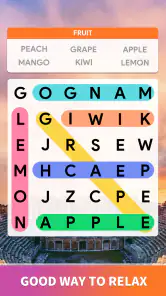
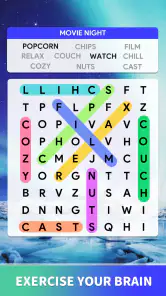
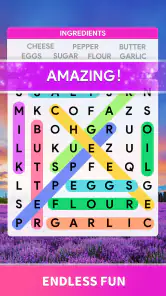
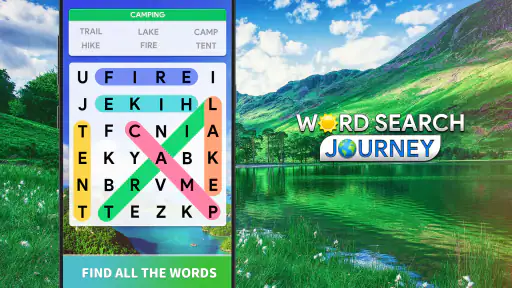
Analysis by Reviewed
Word Search Journey: Word Game is the kind of title I open when I want something calm, familiar, and easy to understand within seconds. It is a free word game from TOR Games, built around the straightforward pleasure of finding hidden words rather than learning a complicated system. My first impression was that it aims for a relaxed journey mood: the presentation encourages steady progress, while the central puzzle keeps the focus on scanning letters and making small discoveries.
That simplicity is its main strength. I do not need a long tutorial or a large time commitment before playing. A short session works well when I am waiting, taking a break, or trying to switch off after a busy day. At the same time, the basic formula has a clear limitation: players who want a story-heavy adventure, competitive multiplayer, or a constantly changing puzzle format may find the experience too restrained.
A gentle word-search journey with a clear identity
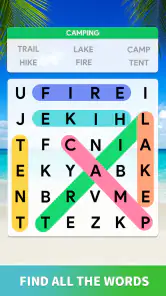
The game sits in the word category, but it presents the familiar word-search format as a progression rather than as a single endless grid. That framing matters. Instead of treating each puzzle as an isolated exercise, the journey idea gives ordinary searches a sense of direction. I found that this made the game feel more inviting than a bare list of randomly generated boards, even when the underlying activity remained intentionally simple.
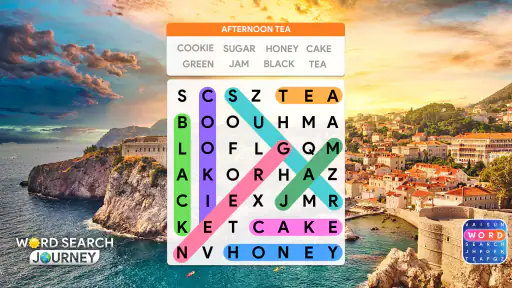
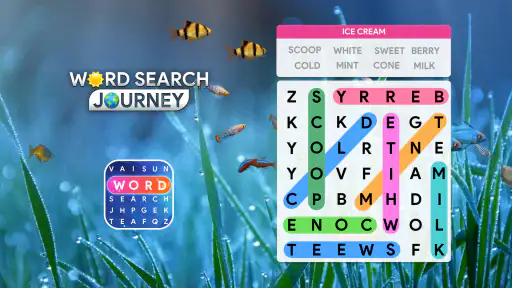
The visual direction supports that approach. The setting feels designed to make the player settle into a comfortable rhythm instead of creating pressure. Its appeal comes less from visual spectacle and more from consistency: the world around the puzzles helps the game feel like one connected experience. I would not choose it for cutting-edge graphics, but I do appreciate how the art direction avoids fighting the word-search mechanics.
That coherence is important in a genre where the board can easily become the only thing that matters. Here, the surrounding presentation gives the act of completing a puzzle a little more context. I noticed that I was more willing to continue through several short rounds because the game felt like a sequence of small stops on a larger route, not merely repeated letter hunting.
The opening experience is also approachable for younger players and casual users. The content rating is Everyone, and the controls are simple enough that a player who already understands word searches can begin without assistance. I would still recommend that parents look at the in-app purchase structure before handing over a device, especially if the game is being used by a child.
What the first sessions feel like
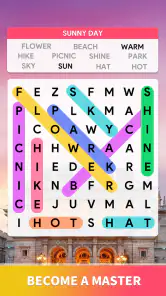
My first few sessions were defined by low friction. I could pick up the game, look at the available letters, and start tracing words without first managing a character, building a collection, or reading a large amount of text. That makes it a useful choice for short bursts. It is not demanding in the way a strategy game is demanding, and it does not ask me to remember a complicated set of rules.
The trade-off is that the early appeal depends heavily on whether you already enjoy word searches. If you find satisfaction in spotting patterns, testing possible spellings, and clearing a board one answer at a time, the structure feels natural. If you need a strong narrative reason to keep playing, the journey framing may not be enough on its own.
I also think the game works best when approached as a relaxing routine rather than a challenge to rush through. Searching every corner of a grid can become tiring if I treat each board like a speed test. Taking a moment to scan diagonals, unusual letter combinations, and the edges of the puzzle makes the activity feel more deliberate and reduces the frustration of repeatedly dragging across the same area.
The visual language behind the journey
The art direction creates a soft setting for the puzzles, and that setting helps define the game’s personality. The important point is not whether every image will impress players who normally choose action games; it is that the visuals support the intended mood. The journey concept feels more convincing when the interface, backgrounds, and progression presentation point in the same relaxed direction.
I found this especially useful during longer sessions. A plain word-search utility can begin to look interchangeable after several boards, while this game uses its broader presentation to give the sequence some identity. The environment does not replace good puzzle design, but it gives the player a reason to feel that one completed board leads naturally into the next.
There is also a practical benefit to restrained visual design. When the screen is not overloaded with competing effects, my attention stays on the letters. That matters in a word game, because even a small distraction can make a nearly visible word harder to recognize. The best parts of the presentation are therefore the ones that frame the puzzle without obscuring it.
Players who prefer bold, highly animated interfaces may see this restraint as a weakness. I see it as a deliberate choice that suits the category, although it means the game’s atmosphere must carry more of the emotional weight. If the surrounding journey does not appeal to you, the core board may feel too familiar to compensate.
Sound, silence, and the pace of play
The game’s mood is also shaped by how it handles rhythm. Word searches naturally create a stop-and-start pattern: I look, trace a word, receive confirmation, and return to scanning. A good presentation should make those small actions feel satisfying without turning every discovery into an interruption. In my experience, the overall tone works best when the feedback remains subordinate to the search itself.
This is not a game I would describe as driven by dramatic sound design. Its identity comes from calm repetition rather than musical spectacle. That can be a positive when I am playing in a quiet room or using the game as a brief mental reset. It also means that players seeking a strong soundtrack or a highly expressive audio world may find the atmosphere understated.
The pacing benefits from that understatement. I am not pushed into a frantic loop where every second feels like a penalty. The absence of aggressive urgency lets me examine the board carefully, which fits the reflective side of word puzzles. I can play for a few minutes, stop, and return later without feeling that I have missed a major event.
One useful habit is to treat the sound and visual feedback as a rhythm guide rather than as decoration. When a word is found, I use that moment to reset my eyes before searching again. This small pause helps prevent the common mistake of staring at the same cluster of letters and overlooking an answer in another direction. It is a modest technique, but it makes longer sessions less tiring.
Why the mechanics fit the mood
The central mechanic is easy to grasp: search through a letter arrangement and identify the intended words. That clarity is exactly why the game’s setting works. The presentation can suggest travel and discovery, but the rules remain stable enough that I always know what kind of attention the next puzzle requires.
I like this balance because the game does not bury its word-search identity under unnecessary systems. There is value in opening a title and immediately understanding the task. For casual players, that makes the game welcoming. For experienced word-game players, it provides a familiar base on which the journey presentation can add variety and motivation.
At the same time, the simple mechanic places a lot of responsibility on puzzle pacing. If a board is too easy, I may complete it without much thought. If it is too repetitive, the journey can start to feel like a sequence of similar chores. The most enjoyable sessions came when I varied my approach: sometimes I searched for obvious short words first, while at other times I scanned by direction or focused on less common letter patterns.
That approach also reveals one of the game’s quiet strengths. It can be played at different levels of attention. I can use it as a light distraction while taking a break, or I can concentrate more seriously and treat each board as a visual pattern exercise. It is not a substitute for a dedicated vocabulary trainer, but it does reward patience, recognition, and careful scanning.
Practical use in an everyday routine
A realistic use case is a short commute or a waiting period before an appointment. I can play one or two puzzles without needing to organize a long session, and the game’s calm structure makes it less mentally demanding than a competitive title. It also suits an evening routine when I want screen time that feels more settled than scrolling through social feeds.
For families, the Everyone rating makes the game broadly approachable, but the free label should be read alongside the purchase options. The game includes in-app purchases ranging from ninety-nine cents to eighty-nine dollars and ninety-nine cents per item. I would personally check the device’s purchase protections before letting a child play independently. That is not a criticism of the word-search format itself; it is simply sensible preparation for any free game with optional paid items.
The title is available for devices running Android seven or later, so compatibility should be comfortable for many older Android phones and tablets. I would still keep the operating-system requirement in mind before recommending it to someone using an especially old device. The current version is 1.0.16, which is useful context for anyone comparing installation requirements or checking whether their device can run it.
Because the game is free to start, it is easy to test without making an immediate financial commitment. The important question is not whether the opening cost is low, but whether the progression and atmosphere give you enough reason to continue. For me, the answer depends on mood: I return when I want a peaceful word search, not when I am looking for a deep long-term system.
How it compares with familiar alternatives
Compared with a plain word-search app, this game has a stronger sense of place. A basic alternative may be better if you want the fastest possible route from launch to puzzle, with no surrounding journey or decorative setting. Word Search Journey: Word Game is the better fit when the presentation helps you stay engaged with a familiar activity.
Compared with crossword games, it asks for a different kind of thinking. I do not need to interpret clues in the same way or construct answers from definitions. The focus is visual recognition and spatial scanning. Someone who enjoys vocabulary clues may prefer a crossword format, while someone who finds clues tiring may appreciate the directness here.
Compared with competitive word games, this title is much less stressful. There is no need to measure myself against another player during a quiet session, and that makes it easier to use as a wind-down game. The downside is that players motivated by rankings, head-to-head matches, or social pressure may find less to hold their attention.
Compared with word-building games, it also offers a more controlled mental task. I am not constantly choosing letters to create new words under a score system. That makes the experience calmer, but it also removes some of the strategic depth that makes tile-based word games compelling. Choosing this game is therefore less about finding the “best” word game and more about choosing the right kind of concentration.
Who will enjoy it, and who should skip it
I would recommend it to casual puzzle players, families looking for an accessible word activity, and anyone who likes a gentle game with a travel-inspired presentation. It is particularly suitable for short sessions because the rules are immediate and the atmosphere does not demand intense commitment.
I would be more cautious about recommending it to players who need constant novelty. If you quickly tire of scanning letter grids, the journey theme may not be strong enough to change your mind. I would also point competitive players toward another category, since the appeal here is relaxation and personal progress rather than confrontation.
Players who are sensitive to optional purchases should make a deliberate choice before installing. The game costs nothing to download, but the range of available items means that “free” does not mean every part of the experience is without a price. I found the fairest way to approach it was to decide in advance whether I wanted to spend anything and then treat the game as a casual puzzle first.
My final view of the atmosphere
The strongest achievement is the way the journey mood supports, rather than replaces, the word-search mechanic. The art direction gives the boards a sense of continuity, the sound and feedback keep the pace comfortable, and the familiar rules make the game easy to enter. None of those elements turns the title into a completely different genre, and that is exactly why the combination works.
TOR Games has made a focused word game for players who want a calm destination rather than a demanding challenge. Its average rating is 4.9 from around 6.5 thousand ratings, and it has passed 100 thousand installs, which suggests that the accessible formula has found an audience. Those figures are useful context, but my recommendation rests more on the actual fit: this is a pleasant choice when you enjoy hidden-word puzzles and want a little atmosphere around them.
After spending time with it, I would keep it installed for quiet breaks and low-pressure evenings. I would not present it as a replacement for every other word game, because its simplicity can become a limitation for players seeking competition, deep strategy, or a substantial narrative. But if you want a free, Everyone-rated word-search journey that feels more composed than a bare puzzle grid, Word Search Journey: Word Game is an easy title to try.
My advice is to begin with a few short sessions and pay attention to how the pacing feels rather than judging it only by the first board. Use careful scanning instead of rushing, take brief visual pauses between discoveries, and decide early whether the surrounding journey adds value for you. If it does, the game settles into a comfortable routine; if it does not, a simpler word-search tool may be the more honest choice.
Pros
- Relaxing gameplay suitable for short or extended sessions.
- Large variety of word-search puzzles to keep the experience fresh.
- Helpful hints assist players when a puzzle becomes difficult.
- Simple controls make it accessible for most ages.
- Works well as a casual vocabulary and concentration exercise.
Cons
- Some puzzles may feel repetitive after extended play.
- Hints and extra features can be limited by in-game resources.
- Difficulty progression may not satisfy experienced word-game players.
- Small text or crowded layouts may challenge some users.
- Ads can interrupt the flow
- especially between puzzle sessions.
- Category
- Word
- Version
- 1.0.16