Word Roll
- 7.77K
- 4.9
- Installs
- 1.00M
- Price
- Free

Screenshots

Analysis by Reviewed
I find Word Roll easiest to judge by the small moments it is meant to fill: a short wait, a quiet break, or a few minutes when I want a word puzzle without a long setup. It is a free word game from PlaySimple Games, and its appeal is straightforward: make words from scrambled letters, then see whether you can keep going as the clock adds pressure. That simple loop can be satisfying, though it suits some moods and abilities better than others.
Readable enough for a quick start
The first thing you'll notice when you fire up Word Roll is its sleek and user-friendly interface. It's designed to get you into the action without any fuss. No complicated menus or steep learning curves here, folks. Just open the app, and you're ready to roll—literally! I appreciate that the basic task is easy to grasp; a player can understand the goal without studying a rulebook. That matters when I only have a moment to spare.
The game was released on November 12, 2020, and its current version is 1.268. It has a 4.9 average from around 46,000 ratings, with over one million installs. Those figures suggest broad appeal, but they cannot tell me whether the pace or presentation will feel comfortable for every player. I would treat them as context, not a promise that the game will suit you personally.
Getting oriented without rushing
Because the central task is to form words from letters on screen, I find it easier to approach than a word game with a long sequence of rules or a large board to study. That makes it a sensible first try for someone who knows basic word puzzles but has not played this particular one. Still, “easy to understand” is not the same as “easy to play comfortably”: the timer can turn a clear interface into a demanding experience once the round gets moving.
If you are unsure whether the pace will work for you, I’d start with one brief session when you are not already distracted. Pay attention to whether you can read the letters and plan a word without feeling hurried. That small test is more useful than assuming the game will suit you because it looks simple. Players who find small on-screen details hard to follow may also want to try it on their own device before settling into longer sessions.
Playing at your own pace—and its limits
I find the timer is the key to deciding whether this game feels energizing or tiring: it gives each scramble urgency, but it also leaves less room to pause and reconsider. I’d use a short session to see whether that pressure helps me focus or gets in the way, then choose a slower word puzzle when I want more control over the pace. That distinction matters especially when screen comfort and the setting around me affect how easily I can concentrate.
Letters, hints, and time pressure
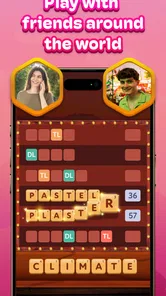
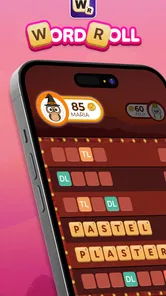
So, what's the deal with Word Roll? It's all about crafting words from a jumble of letters. Think of it as a modern twist on classic word puzzles. The game presents you with a set of scrambled letters, and your task is to create as many words as possible. Sounds simple? Well, it is, but don't let that fool you. The clock is ticking, and the challenge ramps up as you progress.
More From Our News Desk

 Gmail
Gmail in a Busy Inbox: Who Benefits Most?
From first account to crowded workday, Gmail earns its place through dependable search and flexible sorting—but its best fit depends on how much inbox maintenance you can tolerate.

 Prime Video
Switching to Prime Video: What Changes in Your Viewing Routine
Prime Video can make a compelling second home for streaming, but switching means learning a different catalog, rental layer, and route from browsing to playback.

 Universal TV Remote Control
 Works Best as a Reliable Backup
A phone remote earns its place through quick setup and reliable habits. Here is how to get more from Universal TV Remote Control—and where its limits show.

 Weather - By Xiaomi
Weather by Xiaomi Review: Clear at a Glance, Less Clear Up Close
Xiaomi’s weather app makes everyday forecasts quick to scan, but its calm surface can leave useful details and recovery paths harder to find than they should be.

 X
X Under Pressure: Can It Recover When Posting Goes Wrong?
A resilience-focused review of X, examining setup, mistaken posts, interruptions, weak connections, and the gaps that matter when recovery needs to be dependable.

 Clash of Clans
 Is Won Between the Battles
Its raids are quick; its community is a long-term project of coordination, teaching, rivalry, and shared responsibility—with all the friction that entails.
Latest News



One cool feature is the hint system. Stuck on a tricky word? Tap the hint button, and you'll get a nudge in the right direction. But use them wisely, as they are limited! I’d save a hint for a genuine mental block rather than spend one as soon as a word fails to come to mind. That gives me a chance to scan the letters again, try a different starting sound, and keep the solving satisfying.
A useful habit is to make a quick mental pass through the letters before committing to a guess. I look for familiar beginnings or endings, then check whether a shorter word is hiding in the same group. This gives me a plan instead of tapping at random, which matters when the clock is part of the challenge. I would not turn that into a strict strategy, though: if a round starts feeling like a race against my own routine, it is time to play casually or stop.
Motor and sensory considerations
Because the game asks you to work quickly, comfort depends partly on how you handle time pressure and repeated interaction. A player who enjoys tapping out several possible words may find the pace lively; someone who needs extra time to read, think, or make selections may find the same timer stressful. I would not choose it as a calm, untimed word exercise. The hint button can reduce a moment of uncertainty, but it does not remove the central pressure to solve promptly.
For a more comfortable session, I’d play somewhere with little distraction and stop between rounds rather than trying to push through when concentration fades. That is a practical trade-off: a short session makes the game convenient, but the quick rhythm may be a poor match when you want a slow, reflective puzzle. The age rating is Everyone, though that does not mean every child will enjoy timed play or find the challenge equally easy.
Repeated tapping can also be tiring if you are playing one-handed, holding a drink, or using the phone while moving around. I would keep the game for moments when I can give the screen steady attention rather than trying to squeeze in a round while walking or juggling another task. That is not a special setting or workaround; it is simply a better fit for a game whose input and thinking both happen at speed.
Where it fits into an ordinary day
Now, let me tell you, once you start playing, it's hard to stop. The combination of time pressure and the thrill of discovering new words keeps you hooked. It's perfect for a quick game during your coffee break or a longer session when you're in the mood for some serious word wrangling.
What I love most is the sense of achievement when you finally nail that elusive word that's been teasing you for ages. It's a dopamine rush like no other! In a more ordinary scenario, I’d open it while waiting for a takeaway order, play a round or two, and put my phone away when my number is called. That works better than starting when I need uninterrupted attention or have only a few seconds before a meeting.
It can also suit a shared break, with one person suggesting possibilities while the other handles the phone. That turns the scramble into a small conversation rather than a solitary score chase, although it works best when both people are comfortable with the timer. If one player wants to think aloud and the other wants to move quickly, the pressure can make the shared session less fun. I’d treat that as a casual experiment, not a substitute for a genuinely cooperative mode.
Daily play, competition, and alternatives
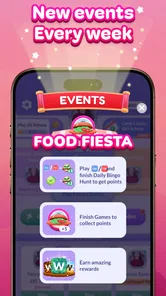
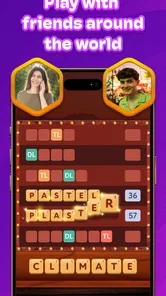
Aside from the addictive gameplay, Word Roll offers some nifty features. There's a daily challenge mode that gives you a fresh puzzle every day. It's a great way to keep things interesting and ensure you never run out of new content. Plus, there's a leaderboard where you can compete with friends or other players worldwide. Who doesn't love a bit of friendly competition?
These options give me two different ways to return: the daily puzzle offers a defined target, while the leaderboard makes scores feel social. If I want an open-ended, unrushed word search, a crossword or a traditional word game is a better fit; if I want quick rounds built around rearranging letters, this is the more direct choice. The leaderboard may motivate competitive players, but I would ignore it if comparing scores makes a casual break feel like an obligation.
Compared with a crossword, the main difference is the kind of attention each asks from me. A crossword lets me work through clues at my own pace and return to a difficult answer later; this game’s letter scramble feels more immediate and rewards quick pattern spotting. A word-search puzzle is usually about locating words already set in a grid, while here I have to create words from the available letters. I’d choose based on whether I want calm clue-solving, visual scanning, or a brisk anagram challenge.
The daily puzzle is a practical way to make play feel contained: I can set myself a small goal rather than opening the game with no stopping point. The leaderboard is best treated as optional seasoning, not the reason to play. If I notice that comparing results is making me rush or replay when I meant to take a short break, I would ignore that layer and focus on the word task itself.
Learning value and practical trade-offs
Another standout feature is the app's ability to improve your vocabulary. With each game, you're exposed to words you might not encounter in everyday life. It's like a fun vocabulary lesson wrapped in a game, and who wouldn't want that? I’d treat unfamiliar words as prompts to look them up later, rather than assuming that seeing a word once will make it stick. That turns a quick round into a small learning routine without making every session feel like homework.
The game is free to download, with in-app purchases ranging from $0.99 to $99.99 per item. I’d keep that in mind if a child is playing or if I am trying to avoid optional spending: the purchase range is broad, so it is worth checking carefully before confirming any transaction. It runs on Android 9 or later. That gives prospective players a simple compatibility check to make before installing, especially on an older device.
For someone using it as a vocabulary prompt, I’d keep a small note of words that are genuinely new rather than trying to remember every result. After a session, choosing one word to check or use in a sentence makes the learning more deliberate without interrupting the round. It is a modest routine, but it suits the game better than expecting a fast puzzle to teach and reinforce a large amount of vocabulary on its own.
The purchase range is also a reason to be deliberate around children’s play. The Everyone age rating indicates broad content suitability, but it does not answer whether a child is comfortable with the pace or whether optional purchases fit a household’s rules. I’d talk through spending expectations before handing over a device, and I would check each purchase screen rather than treating “free” as a guarantee that every part of play has no cost.
Who will enjoy it—and who may prefer something else
I’d recommend it to someone who likes anagrams, wants bite-sized play, and enjoys a little urgency. It is also a reasonable pick for word fans who like having a daily target alongside a competitive option. I’d steer away from it if I wanted a leisurely puzzle, disliked timers, or needed a game that lets me pause and think at length. In those cases, a crossword or another slower word pastime is likely to be more comfortable than trying to adapt to this game’s pace.
It is a weaker fit if you regularly play in noisy places, have only one hand free, or want to use a word game as a low-pressure way to unwind. The challenge relies on being able to concentrate for a short stretch, so interruptions can break the flow rather than simply delay a move. If that sounds like your usual setting, an untimed puzzle may be more forgiving and easier to pick up exactly where your attention left off.
For a new player, the sensible question is whether a timed anagram round sounds enjoyable, not whether you are already an expert at word games. The basic goal is approachable, and hints can help when you hit a block, but neither removes the need to make decisions under pressure. I’d give it a try if you enjoy quick mental challenges; I would not recommend it as a way to practice words at a slow, fully self-directed pace.
Making the most of a short session
I get the most from the game when I decide what I want from it before opening it: a quick challenge, one daily target, or a few minutes of word practice. That simple intention gives me a natural stopping point. It also helps avoid the common trap of letting a short break stretch because I am chasing one more result. If a round leaves me more tense than entertained, I close the app rather than treating persistence as the goal.
When playing with a learner, I would keep the conversation focused on how a word can be formed, not on who is fastest. The timer naturally encourages speed, so a relaxed companion can help shift attention toward letter patterns and vocabulary instead. If the learner finds the countdown discouraging, I would choose an untimed word activity instead; there is little value in turning a casual game into a test.
Final Thoughts
In conclusion, Word Roll is more than just a game; it's a delightful way to keep your mind sharp and your vocabulary rich. Whether you're a word enthusiast or just looking for a casual game to pass the time, this app has something for everyone. So, why not give it a spin? You might just find it rolling its way into your list of favorite apps.
Remember, it's not just about playing; it's about learning and having fun at the same time. And with Word Roll, you get the best of both worlds. Happy word rolling!
Word Roll Frequently Asked Questions
Who developed Word Roll, and what kind of game is it?
Word Roll is a word game developed by PlaySimple Games. It is aimed at players who enjoy vocabulary challenges and letter-based puzzles. The short store description simply calls it “Word Roll,” while its central pitch asks whether you are smart enough for the word challenge. If you like spending time finding words rather than playing action-focused games, its category gives you a useful sense of what to expect.
Is Word Roll suitable for beginners and experienced word-game players?
Word Roll is presented as a word challenge, so it can appeal to both people who want a casual puzzle and players looking to test their vocabulary. The game’s letter-grid format makes its basic goal easy to understand: find and form words. As the difficulty increases with progress, experienced players can also face a greater challenge.
What is Word Roll and how does it work?
Word Roll is an engaging word puzzle app designed to challenge your vocabulary and cognitive skills. The app presents users with a grid of letters, and the objective is to form as many words as possible within a set time limit. Players can swipe across the grid to create words, with the difficulty level increasing as they progress. It’s perfect for both casual gamers and word enthusiasts looking for a mental workout.
Is Word Roll available for both Android and iOS devices?
Yes, Word Roll is available for download on both Android and iOS platforms. Users can easily find the app on the Google Play Store for Android devices and the Apple App Store for iOS devices. It ensures a smooth and seamless experience across different devices, allowing users to enjoy the game wherever they go. The game is free to download, with optional in-app purchases available.
What is Word Roll’s age rating, and is it appropriate for children?
Word Roll has an Everyone content rating, indicating that its content is broadly suitable for players of all ages. Its word-puzzle format can make it an appealing choice for families and anyone who enjoys vocabulary games. Parents can still use their own judgment about whether the app is right for a child, including considering the optional in-app purchases available in the game.
Pros
- User-friendly interface
- Quick setup process
- Customizable themes
- Offline access available
- Real-time collaboration
Cons
- Limited free version
- Ads in free version
- Occasional sync issues
- Lacks advanced features
- No dark mode option