Word Oasis: Calm Puzzle Game
- 61.00
- 4.9
- Installs
- 10.00K
- Price
- Free

Screenshots



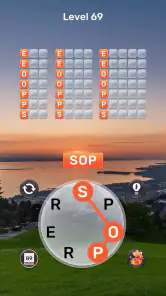

Analysis by Reviewed
I went into Word Oasis expecting a quiet word game I could open for a few minutes, and that is exactly where it makes the strongest impression. It is a free word puzzle game from Oasis Games, Ltd., built around a calm, low-pressure mood rather than noisy competition or complicated rules. The store summary calls it a calming word puzzle game, but in practice that description matters because the relaxed presentation changes how I approach each puzzle: I am more willing to pause, rethink a clue, and enjoy a small breakthrough instead of rushing toward a timer.
The game is available for Everyone and runs on Android devices using version 6.0 or later. Its current version is 1.14.2, and the listing shows a 4.9 average from around 1K ratings, with over 10K installs. Those numbers suggest that it has already found a small but enthusiastic audience, although I would not treat them as proof that it will suit every type of word-game player. The important question is whether its gentle pace gives you enough reason to keep returning once the first novelty wears off.
How the first goals shape the experience
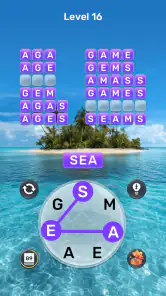
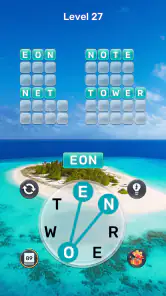
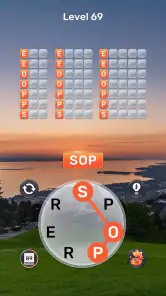
The opening appeal is simple: solve words, make progress, and settle into a rhythm. I like that the game does not need a long explanation before it becomes understandable. For someone who wants a word puzzle during a coffee break, a commute, or a few quiet minutes before bed, that low entry barrier is useful. You can focus on the vocabulary challenge instead of learning a large collection of menus, currencies, or rules.
That simplicity also defines the early goals. The immediate objective is not to master a huge strategic system; it is to recognize possible words, test your thinking, and complete the puzzle in front of you. This gives the first sessions a clean sense of purpose. Each solved word acts as a small confirmation that your approach is working, while an unsolved word gives you a reason to slow down rather than abandon the game immediately.
For me, the best early use case is a short, repeatable session. Imagine waiting for an appointment with only a few minutes to spare. A word game with elaborate setup would feel inconvenient, but Word Oasis is easier to pick up because its central activity is immediately clear. I can attempt a puzzle, stop when I need to, and return later without feeling that I have interrupted a long story or competitive match.
The calm presentation is not just decoration. It encourages a different relationship with mistakes. In a faster word game, I often start guessing mechanically, especially when a countdown or leaderboard is involved. Here, the slower atmosphere makes it more natural to examine letter patterns and consider less obvious possibilities. That is a meaningful strength for players who enjoy language itself, not only the satisfaction of winning.
What progress feels like when the game stays quiet
Word games need progress signals, even when they avoid aggressive rewards. In this one, the clearest signal comes from moving through the puzzle rather than from a complicated outside system. Solving one word narrows the remaining possibilities, and that gradual reduction creates a modest but satisfying sense of advancement. I found that more pleasant than being interrupted by constant prompts demanding attention.
The trade-off is that understated progression can feel too subtle for players who want a strong stream of unlocks. If your ideal puzzle game gives you new modes, visible collections, competitive ranks, or frequent milestone celebrations, the calm approach may seem sparse. Word Oasis works better when the act of solving is itself the reward. It is less convincing for anyone who needs a large progression structure to stay motivated.
A useful way to play is to treat each session as a small mental reset instead of trying to force a long run. I would begin with a clear goal, such as completing the current puzzle or finding one stubborn word, and stop there if my attention starts to fade. This prevents the relaxing design from turning into repetitive guessing. It also makes the game easier to fit into everyday routines without turning every spare moment into a demand to continue.
Another practical tip is to separate recognition from guessing. When I see a promising letter combination, I try to ask whether it matches the shape of the puzzle rather than entering every word that comes to mind. That habit makes the game feel more like a word exercise and less like trial and error. It is a small distinction, but it helps preserve the satisfaction of a genuine solve.
Challenge and pacing: gentle does not always mean easy
The main difficulty question is how long the relaxed pacing can remain engaging. Early puzzles in a word game naturally feel approachable, but the real test comes when familiar answers stop appearing. Word Oasis benefits from giving the player room to think, because vocabulary puzzles can become frustrating when pressure is added too quickly. I would rather spend extra time examining a puzzle than lose a run because of an arbitrary timer.
That same patience can expose a limitation. Without a strong competitive layer or a forceful difficulty ramp, experienced word-game players may eventually want more resistance than the app’s soothing identity is designed to provide. Someone who enjoys dense anagrams, daily score chasing, or highly punishing challenges may find a dedicated competitive alternative more rewarding. This is not a flaw in the concept, but it is an important boundary: the game’s appeal depends on whether calm problem-solving is your preferred form of challenge.
I also think the pacing suits mixed attention better than many traditional puzzle titles. If I am tired, I can approach a word cautiously instead of treating every hesitation as failure. If I am focused, I can look for patterns and push myself to solve more efficiently. The same puzzle can therefore feel like a light distraction or a small concentration exercise, depending on how seriously I approach it.
There is a subtle trade-off here. A relaxed game can make a difficult puzzle feel inviting, but it can also make an easy one feel less urgent. Players who depend on pressure to stay engaged may drift away when there is no immediate consequence for taking a break. I would recommend trying it with a personal rule, such as aiming to complete a small set of puzzles during a session, if you need a clearer target than the game naturally provides.
Unlocks, return appeal, and the pressure to keep playing
Retention is where I judge a calm word game most carefully. A pleasant first session is not enough; there needs to be a reason to open it again. Word Oasis has a natural return loop because word puzzles are easy to revisit and the activity does not require a large time commitment. I can come back when I want a quiet mental task, which is a more comfortable form of retention than a game that constantly pushes notifications, streak anxiety, or competitive comparison.
Still, gentle retention has limits. If you need a clearly visible chain of unlocks to maintain interest, the experience may not create enough momentum on its own. The game’s strongest reason to return is the puzzle activity and the calming atmosphere, not an elaborate sense of collecting everything. That makes it a good companion for occasional play, but potentially a weak choice for someone searching for a long-term progression game with a substantial endgame.
The free entry point is helpful because it lets you test that question without paying first. The app includes in-app purchases ranging from $0.99 to $49.99 per item, so I would approach the optional spending carefully and decide in advance whether the basic experience already gives me enough value. For a casual player, the sensible test is simple: use the free version during several short sessions and see whether the puzzles themselves keep calling you back. There is no reason to spend merely because the game is available at no upfront cost.
This is also where the game may not suit children or families who expect every part of a free title to be entirely free. The Everyone rating makes it broadly accessible, but adults may still want to supervise purchasing on a shared device. I would also avoid presenting it as an educational vocabulary course. It can encourage attention to words, but its primary purpose is relaxation and puzzle-solving rather than structured language instruction.
Compared with a daily word alternative, Word Oasis feels less tied to a single once-a-day ritual and more suitable for flexible sessions. Compared with a crossword app, it offers a lighter commitment and less of the broad clue-solving culture that crosswords bring. Compared with a fast anagram game, it is better for players who dislike countdown pressure, but probably less exciting for people who thrive on speed. Those differences matter more than the basic label of “word game.”
Who will enjoy it, and who should choose something else
I would recommend this game to people who want a peaceful puzzle they can play without preparing for a major challenge. It is especially suitable for casual word fans, players who enjoy quiet interfaces, and anyone looking for a short activity that can fit between other tasks. It also works well for someone who likes to think privately rather than compare scores with strangers.
I would be more cautious about recommending it to expert word-game enthusiasts who need a demanding vocabulary test every time they play. If your favorite part of the genre is racing a clock, climbing a leaderboard, or chasing a highly visible sequence of rewards, another option may give you stronger motivation. The same applies if you want story-driven progression, character development, or a large strategic layer; this app’s identity is much narrower and more focused.
There is also a difference between relaxing and passive. Word Oasis is calm, but it still asks you to pay attention. If you want something you can play almost automatically while watching another screen, a simpler matching game may be a better fit. The word-focused design rewards concentration, and its quiet mood works best when you give the puzzle at least a little of your attention.
For older phones, the minimum requirement of Android 6.0 or later is reassuringly modest. That makes it easier to consider on devices that are not recent, although the actual comfort of play will still depend on the phone’s screen and performance. On iOS or Android, I would judge it mainly by whether the controls and text feel comfortable on your particular device, especially if you plan to play for longer sessions.
My progression verdict after living with the puzzle loop
Word Oasis succeeds because it understands that not every word game needs to shout for attention. Its early goals are clear, its progress comes from solving rather than from clutter, and its pacing gives difficult words room to breathe. I appreciate that it can turn a few spare minutes into a focused break without making me feel that I have missed a major event by putting it down.
The compromise is equally clear: the quieter progression may not satisfy players who want constant unlocks, escalating competition, or a deep long-term system. Its retention depends on whether you enjoy returning to word puzzles for their own sake. The in-app purchase range also means I would keep spending deliberate, using the free starting point to decide whether the experience has earned more of my time or money.
My final view is that Word Oasis is best treated as a calm word companion, not as a replacement for every other puzzle format. I would choose it for a peaceful break, a low-pressure vocabulary workout, or an evening session when a competitive game feels too demanding. I would skip it in favor of a faster or more structured alternative if my priority were rankings, intense difficulty, or a rich unlock system.
With a 4.9 average and a growing audience of over 10K installs, it has made a strong first impression among the people it targets. More importantly, its design has a coherent purpose: it makes word solving feel restful without removing the need to think. The best reason to try it is not the promise of endless rewards, but the chance to turn ordinary waiting time into a small, satisfying moment of concentration.
Pros
- Relaxing gameplay with no time limits or stressful challenges.
- Simple word puzzles are easy to learn and suitable for casual play.
- Calm visuals and music create a pleasant
- peaceful atmosphere.
- Offline play makes it convenient for travel or areas without internet.
- Short levels fit well into quick breaks throughout the day.
Cons
- Some puzzles may feel repetitive after extended play sessions.
- Difficulty can vary
- with occasional clues feeling too easy or obscure.
- Hints and extra features may be limited by in-app purchases.
- Ads can interrupt the experience
- depending on the game version.
- Players seeking competitive or highly strategic gameplay may find it basic.

- Category
- Word
- Version
- 1.14.2