Word Journey: Word Puzzle
- 27.00
- 4.6
- Installs
- 50.00K
- Price
- Free
Screenshots


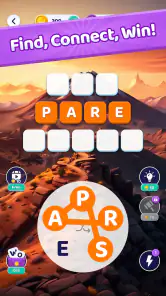
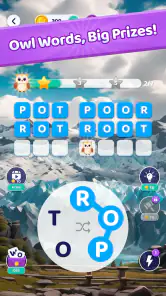


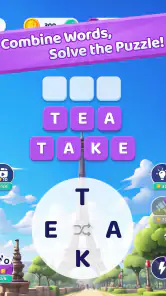
Analysis by Reviewed
I found Word Journey: Word Puzzle easy to understand within a few minutes and surprisingly pleasant to return to in short sessions. It is a free word game from Lumica Games built around connecting letters, solving crossword-style boards, and moving through a travel-themed progression. That combination gives it a gentler personality than a timed spelling challenge, although its long-term appeal depends on how much you enjoy repeating the same basic mental rhythm.
My first impression was that this is best treated as a quiet daily game rather than a demanding vocabulary test. I can open it when I have a few spare minutes, solve a handful of words, and stop without feeling that I have abandoned a complicated campaign. The game is rated for Everyone, which fits its approachable presentation and simple premise. It is available free, while optional purchases range from $1.49 to $49.99 per item, so the important question is not whether it is easy to start, but whether it deserves a regular place on your phone after the initial curiosity fades.
From an inviting first week to a lasting habit
Why the opening sessions work
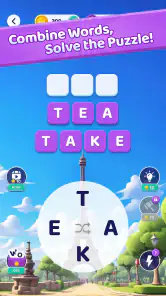
The central action is immediately readable: letters are presented as pieces of a word, and I connect them to form answers that fit into crossword-like spaces. I do not need to learn a large rulebook, manage a character build, or understand a complicated scoring system before playing. That low barrier makes the game suitable for a waiting room, a short commute, or the few minutes before bed when I want something more engaging than scrolling.
The travel framing gives the progression a useful sense of direction. Even when the underlying activity remains word solving, the feeling of moving from one destination to another helps prevent the boards from seeming like a disconnected stack of puzzles. I found that especially helpful during the first week, because each completed group feels like a small step rather than an isolated exercise.
There is also a nice balance between recognition and discovery. Some answers arrive quickly because the available letters suggest familiar words, while others require me to inspect the crossword pattern and think about less obvious combinations. That makes the game accessible without making every board entirely automatic. If you enjoy word games but do not want every round to feel like a competition, this softer pace is one of its strongest qualities.
A realistic use case is a short evening reset. I might finish dinner, open the game, and work through a few boards while listening to something in the background. Because the basic interaction is quiet and self-contained, it does not demand the same attention as a fast arcade game. I can pause mentally between puzzles, and the travel structure gives me a reason to continue without forcing me into a long session.
What I would do differently from a beginner
My most useful early habit was to avoid chasing the first word I noticed. I look at the whole letter arrangement, identify the spaces in the crossword, and then search for words that share likely letters. This reduces the feeling of being stuck because I am using the board as a network rather than treating every answer as a separate guess.
I also recommend keeping an eye on short connecting words instead of spending all your attention on the longest answer. A small word can reveal how the remaining letters fit together and make a later solution obvious. This is a simple adjustment, but it changes the game from random swiping into a more deliberate process. Players who already enjoy crossword puzzles will probably discover this naturally; casual players may benefit from making it their default approach.
Another practical tip is to stop after a satisfying group of puzzles instead of playing until every board feels difficult. The game works well as a repeatable break, and pushing through frustration can make its calm design feel monotonous. I would rather leave with one unresolved clue than turn a relaxing session into a chore. That habit matters because the first-week novelty can encourage longer sessions than the format really supports.
How it compares with familiar word-game alternatives
Compared with a daily guessing game, this offers more continuous play and less pressure from a single result. I am not waiting for one new challenge or worrying about preserving a streak; I can keep moving through its journey at my own pace. That makes it a better fit for someone who wants several small puzzles rather than one carefully limited daily ritual.
Compared with a traditional crossword app, the entry point is lighter. I am working from a defined set of letters, so the search space feels more manageable than a large grid that depends heavily on general knowledge or obscure clues. The trade-off is that experienced crossword solvers may find the structure less rich. If your main pleasure comes from cryptic clues, broad trivia, or a large open grid, this will feel more guided than challenging.
Compared with an anagram game, the crossword layout adds useful context. The answer is not judged only as a valid word; its position and crossing letters matter. That gives me more information when I am stuck, but it also means the game can become predictable once I learn its preferred rhythm. In my experience, the best audience is someone who wants a middle ground between free-form word mixing and serious crossword solving.
Where the first-week charm starts to soften
The same simplicity that makes the opening friendly can become the first source of fatigue. The fundamental loop remains connecting letters and filling crossword spaces, so players looking for dramatic changes in mechanics may feel that the travel layer is doing more of the work than the puzzle design. I enjoyed the calm repetition at first, but I could also see how a frequent player might begin solving by pattern rather than by genuinely thinking about language.
The free entry is appealing, yet optional purchases deserve attention before anyone develops a spending habit. The listed purchase range runs from $1.49 to $49.99 per item, which is a wide spread. I would approach the game with a clear personal rule: play the free experience first, decide whether the routine is genuinely useful, and only then consider whether any optional purchase improves that routine. A relaxing word game should not quietly become an impulse-buying trigger.
The current version is 1.6.5, and the game has reached over 50 thousand installs with an average rating of 4.6 from roughly 447 ratings. Those figures suggest that it has attracted a positive audience, but they do not change the basic evaluation: popularity cannot replace a good fit with your habits. I would judge it by how often I want to return after the novelty of the travel progression has settled.
The month-to-month question
For lasting value, I look for three things: enough variation to make repeated sessions feel worthwhile, a difficulty curve that does not become irritating, and a reason to play that is stronger than simply clearing another screen. Word Journey has a good foundation for the first two because the crossword arrangement can make familiar letters behave differently from board to board. Still, its recurring value is likely to be strongest for players who enjoy the act of solving itself.
This is not the game I would choose when I need a deep competitive system or a clearly defined endgame. It is better for maintaining a small mental routine. I can use it as a vocabulary warm-up, a screen break, or a low-pressure way to occupy my hands while waiting. Those uses are modest, but they are realistic, and modest games often last longer when they fit naturally into daily life.
One non-obvious trade-off is that the lack of pressure can be both its advantage and its weakness. I appreciate not being rushed, yet without a strong external goal I sometimes need to create my own stopping point. I solve a few boards, check whether I am still enjoying the process, and close it before the activity turns automatic. In that sense, the game rewards self-managed play more than compulsive progression.
Another useful workflow is to separate “practice” sessions from “progress” sessions. During a short break, I focus only on solving the next accessible board and do not worry about clearing everything. When I have more time, I revisit the harder patterns and deliberately search for alternative letter combinations. This approach keeps the game from being reduced to a reflex and helps preserve some mental freshness across repeated visits.
Maintenance and everyday friction
The maintenance burden is relatively low in the sense that I do not need to remember complex controls, long story details, or a large inventory. I can return after a few days and understand what I am doing immediately. That is a real advantage for a casual word game: it survives interruptions well. A player who only opens it on weekends will not spend the first session relearning a system.
On the other hand, low maintenance also means the game needs to earn attention through the quality of its puzzle flow. There is no complicated personal strategy to refine over weeks. If the boards stop feeling satisfying, there may not be another layer strong enough to pull me back. This is why I see it as a habit companion rather than a hobby that demands long-term mastery.
The operating-system requirement is Android 7.1 or later, so it remains accessible to people using older supported devices. That matters for a lightweight casual game, since the ideal audience may include someone who does not replace a phone frequently. On an iOS or Android device that meets the requirement, I would still judge the experience by comfort: word games are most enjoyable when the letter layout is easy to read and the connection gesture feels precise.
For families, the Everyone age rating makes the game an uncomplicated choice in terms of intended audience. I would still explain the optional purchase model to younger players and avoid leaving buying decisions entirely unattended. The puzzles themselves are suitable for casual shared play, too. An adult can help a child spot a word, while a more experienced player can use the crossword crossings to demonstrate how to reason from partial information instead of simply guessing.
What can cause fatigue over time
The largest risk is repetition without enough personal challenge. Once I understand the game’s usual answer patterns, some boards can feel like routine sorting rather than discovery. That does not make the design poor; it means the game’s ceiling is tied to my appetite for this particular type of word exercise. Someone who wants increasingly difficult clues, unusual vocabulary, or head-to-head competition should look elsewhere.
There is also a difference between relaxing and passive. If I play while distracted, I may swipe through easy answers without really engaging. After several sessions like that, the game can feel empty even though the controls work well. I get more value when I treat each board as a small reasoning task, pause on the crossings, and resist using help or moving on too quickly.
The travel theme may not be enough for every player. I like having a sense of movement, but it is not a substitute for fresh mechanics. If your interest is primarily in visiting destinations or following a substantial narrative, this game should not be mistaken for a travel adventure. Its journey is a frame around word puzzles, and the puzzles remain the reason to stay.
I would also skip it if you dislike optional monetization in free games on principle, even when the core activity is enjoyable. The purchase range includes a high-end item, and that alone may make the model uncomfortable for some people. A paid, focused crossword experience could be a better match if you prefer a clearly defined upfront cost and fewer decisions about extras.
Who should keep it installed
I would recommend it to someone who wants a calm word game that can be played in brief, repeatable sessions. It suits casual puzzle fans, people who like anagram-style thinking but want the guidance of a crossword grid, and players who enjoy progress presented as a journey. It is also a good option for households seeking an Everyone-rated game that can be understood without a tutorial-heavy introduction.
I would be more cautious with dedicated crossword experts. The guided letter pool makes the experience approachable, but it can also reduce the depth that advanced solvers expect. Likewise, competitive players may miss leaderboards, direct opponents, or a stronger performance-based goal. For those audiences, a more demanding crossword or multiplayer word title would probably provide better long-term motivation.
My strongest recommendation is to use it intentionally. Keep sessions short when you want relaxation, use the crossing letters as clues rather than guessing blindly, and avoid buying anything until you know the game has become part of your routine. Those choices preserve what the game does well: giving me a small, pleasant mental reset without asking for a major time commitment.
My long-term verdict
After the first week, Word Journey remains appealing because it is clear, gentle, and easy to revisit. After a month, its value depends less on the travel presentation and more on whether I still enjoy connecting letters into crossword answers. For me, it earns lasting space as an occasional daily puzzle, not as a primary game that I would play for hours.
Its best quality is the low-friction habit it can support. I can return after a break, understand the board immediately, and complete a useful little mental task without preparing for a long session. Its main limitation is equally clear: the basic loop may not provide enough variety for players who need constant novelty or a steep mastery curve.
Lumica Games has made a friendly word title that knows what it wants to be. It does not need to replace a serious crossword app, a competitive spelling game, or a story-driven adventure. If you want a free, approachable way to fill spare moments with letter puzzles and a light sense of travel, I think it is worth trying. If you are searching for deep strategic progression, demanding clues, or a purchase-free experience, I would choose a different option before committing to it as a long-term favorite.
In the end, I would keep it installed for quiet breaks and occasional vocabulary practice, while accepting that its staying power comes from routine rather than constant surprise. That is a perfectly valid kind of value. Word Journey: Word Puzzle works best when I let it remain a small, dependable part of the day instead of expecting it to become something larger.
Pros
- Simple controls make it easy to start playing immediately.
- Short levels fit well into quick breaks or casual sessions.
- Progressive difficulty keeps later puzzles more engaging.
- Useful for practicing spelling and expanding everyday vocabulary.
- Offline play makes it convenient when no internet is available.
Cons
- Some puzzles may feel repetitive after extended play sessions.
- Hints can become limited unless you watch ads or use in-game resources.
- Difficulty may vary noticeably between individual levels.
- The game can encourage frequent ad interruptions between puzzles.
- Players seeking competitive multiplayer features may find it too basic.
- Category
- Word
- Version
- 1.6.5