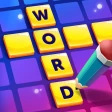
Word Challenge-Daily Word Game
- 1.01K
- 4.3
- Installs
- 1.00M
- Price
- Free
Screenshots
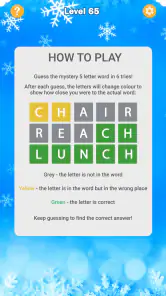

Analysis by Reviewed
I spent time with Word Challenge-Daily Word Game as a small, repeatable word puzzle rather than a game designed to occupy an entire evening. Its central idea is simple: return to a daily word challenge, make a few thoughtful guesses, and then put the phone down. That limited rhythm is the most important part of the experience because it changes the game from an endless test of vocabulary into a short mental reset.
It is a free word game from MeeGame Studio, available for players rated Everyone. The store listing describes it as a way to relax while guessing the daily word, and that description is a fair starting point, although the relaxing quality depends heavily on how comfortable you are with uncertainty. I found the best moments came when I treated each attempt as a compact language exercise instead of chasing a perfect result.
The game has built a sizeable audience, with more than a million installs and an average rating of 4.3 from roughly 31 thousand ratings. Those figures suggest that the daily format has broad appeal, but they do not change the basic truth of the experience: this is a focused word game, not a full collection of puzzles, story content, or long-term progression systems.
The daily word is the whole appeal
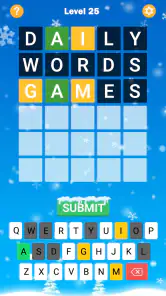
The verified capability worth focusing on is the daily word challenge. That single recurring task gives the game its identity and its restraint. Instead of presenting an unlimited stream of levels, it encourages me to solve one featured word and return later. For anyone who likes a short routine, that is a meaningful advantage.
I particularly liked how the daily structure creates a natural stopping point. Many mobile word games keep offering another round until I lose track of time. Here, the idea of one daily target makes it easier to play during a short break, before bed, or while waiting for an appointment without turning the session into an accidental hour.
That same design can feel restrictive if you want constant variety. Players who enjoy rapidly clearing stages, building a long score streak, or choosing from several difficulty levels may find the daily focus too narrow. The game’s strength is also its boundary: it asks for attention in a small dose, rather than trying to become a complete word-game platform.
There is also a useful psychological difference between a daily puzzle and a random word quiz. A daily challenge feels like a shared point in time, even when I play alone. It gives the routine more importance than an ordinary practice round, and it makes me think carefully before using a guess that might reveal too little or too much.
Why a short challenge can be more relaxing
The relaxing part is not simply that the game is easy. A word puzzle can be surprisingly tense when I become fixed on one possible answer. What helps here is the compact goal. I can approach the puzzle with a clear limit: make progress, learn from the clues available in the round, and accept that some days will be less obvious than others.
My advice is to avoid opening it with the expectation of proving how clever you are. That mindset makes every unsuccessful guess feel like a failure. A better approach is to use the challenge as a vocabulary warm-up. Think about common letter patterns, endings, and familiar word shapes, but do not spend an unreasonable amount of time forcing an answer.
This is one of the less obvious benefits of the daily format: it can train patience more effectively than speed. Because the target is singular, I am encouraged to examine the information already on screen instead of immediately searching for another level. That makes the game suitable for a short concentration break, especially when I want something more active than scrolling but less demanding than a full game.
How I approach each attempt
I get better results when I treat an early guess as a source of information rather than a desperate attempt to solve everything immediately. A useful opening word should help me test different letters and familiar structures. After that, I narrow the possibilities instead of repeating similar guesses simply because they feel comfortable.
One practical habit is to separate certainty from instinct. If a letter seems likely, I still consider whether another word pattern fits the available clues more naturally. This prevents the common mistake of building an entire solution around one attractive possibility. In a daily puzzle, a calm second look is often more valuable than a fast third guess.
Another tip is to keep a mental note of unusual combinations that appear during play. Even when I do not solve the word immediately, the attempt can refresh my awareness of prefixes, suffixes, and less familiar spellings. That makes the game more useful for language practice than its minimal presentation might suggest.
I would not recommend using a dictionary or search engine at the first sign of difficulty. Doing so may produce the answer, but it removes the small reasoning exercise that makes the daily challenge worthwhile. If I am genuinely stuck, I prefer to step away and return later. The pause often helps me see the word differently without turning the game into a research task.
A realistic everyday use
My favorite use case is a short morning routine. After checking messages, I can spend a few minutes on the daily word before starting work or school. It gives my attention a defined target and feels more intentional than opening a social feed. Because the challenge is compact, I do not need to prepare a long session or remember a complicated storyline.
It also fits a commute or waiting room, provided I am comfortable concentrating in a noisy environment. The word puzzle does not demand the continuous attention of an action game, but it still requires enough focus to make random tapping a poor strategy. I would use it when I have a small block of uninterrupted time, not when I am constantly being called away.
For families, the Everyone rating makes the game broadly approachable. A parent could use the daily word as a quick vocabulary prompt with a child, although the quality of that interaction depends on the child’s reading level and the particular word presented. It is better suited to casual discussion than formal teaching because the game itself is not a replacement for structured language instruction.
Older players may also appreciate the lack of pressure created by the daily limit. Someone who wants a gentle mental activity can make a few guesses and stop without feeling that they have fallen behind in a large campaign. On the other hand, a competitive player who needs leaderboards, extensive statistics, or a large set of daily modes may find the experience too modest.
Where it differs from familiar alternatives
Compared with crossword apps, this game is more focused and less dependent on interpreting clues across a grid. Crossword fans usually enjoy a broad network of answers and the satisfaction of filling connected spaces. This daily word format is better when I want one concentrated language problem without committing to a full puzzle layout.
Compared with anagrams or word-search games, it rewards deduction more than scanning. An anagram game can provide a long list of possible words, while a word-search title often emphasizes visual discovery. Here, the daily target creates a narrower question: which word fits the evidence? That makes each guess feel more consequential, but it also means there is less freedom to wander.
Compared with an unlimited word quiz, the daily structure is calmer but less flexible. Unlimited modes are preferable when I want to practice for a long period or keep playing after solving a puzzle. This game is the better choice when I value a predictable, bite-sized routine and do not want the app encouraging me to continue indefinitely.
The comparison also explains who should skip it. If your ideal word game includes hundreds of selectable stages, elaborate progression, rich explanations, or a large social competition layer, this may feel underpowered. I would choose a broader puzzle app for those needs. The appeal here is not quantity; it is the discipline of returning to one word challenge at a time.
Small friction points and the cost of convenience
The first trade-off is replayability. A daily puzzle can become part of a routine, but it does not offer the same immediate variety as a large level library. Once I finish the day’s challenge, the experience naturally loses momentum. That is either a welcome stopping point or a limitation, depending on whether I want relaxation or extended entertainment.
The second trade-off is emotional. A difficult word can make a supposedly calming session feel irritating, especially if I become attached to an early guess. The game works best when I accept that not every round will match my vocabulary. Players who dislike ambiguity may prefer a word game with direct definitions, multiple-choice answers, or adjustable difficulty.
There is also a financial consideration. The game is free to download, while optional in-app purchases range from $0.99 to $18.99 per item. I would approach those purchases carefully and decide whether any convenience they provide genuinely improves my routine. For a game built around a single daily challenge, spending money should be a considered choice rather than an automatic part of play.
The current version is 1.3.6, and it runs on Android 7.1 or later. That makes it accessible to people using older compatible devices, which is useful if you keep a phone for basic gaming rather than replacing it frequently. Still, device compatibility alone does not guarantee that every player will enjoy the design. The important question is whether a limited daily word task matches your habits.
I also think the game asks players to supply their own motivation. There is a satisfying routine available, but it is not the kind of title that constantly rewards attention with new systems. If you need frequent unlocks, visual surprises, or a strong sense of advancement, the quiet format may seem sparse. That is not a flaw for everyone, but it is a real boundary worth understanding before installing it.
Who gets the most from the daily format
The strongest audience is someone who wants a short word exercise with a clear endpoint. That includes casual players, people trying to reduce aimless phone use, and anyone who enjoys testing vocabulary without starting a large campaign. I would also recommend it to players who like making a daily habit out of small challenges rather than playing in long bursts.
It can be useful for language learners as a supplementary activity, especially when the goal is to notice spelling patterns and think through possible word structures. I would not treat it as a complete learning tool because solving a word is different from understanding its definition, pronunciation, or real-world usage. Its value for learners comes from active recall and attention, not from formal lessons.
Families can turn the daily challenge into a quick conversation: suggest a word, explain why it might fit, and discuss alternative possibilities. That makes the experience richer than simply entering guesses. The game becomes a prompt for language, although players should remember that different ages and vocabulary backgrounds will make the same puzzle feel very different.
People who should look elsewhere are equally clear. I would skip it if I wanted endless rounds, elaborate progression, competitive rankings, or a deep collection of puzzle types. I would also avoid making it my only game if I need a reliable way to stay entertained during a long journey. A larger word-game collection would provide more control over session length and difficulty.
My practical routine for getting more from it
I recommend setting a personal time boundary before beginning. Give the daily word a focused attempt, then pause rather than guessing carelessly. This keeps the game aligned with its relaxing purpose and prevents one stubborn answer from taking over the day.
It is also worth playing at the same general time for a week. The consistent timing makes it easier to judge whether the game genuinely improves your routine or simply becomes another notification-driven habit. I found that the daily format works best when I choose to open it, rather than treating it as an obligation.
If you play with another person, compare reasoning instead of only comparing results. Ask why a particular opening guess seemed useful and which possibilities were rejected. That turns a very small game into a thoughtful vocabulary conversation and exposes patterns I might miss when solving alone.
Finally, keep expectations modest. This is not trying to replace crosswords, anagram collections, or competitive word tournaments. Its value comes from doing one focused thing well: giving me a daily word problem that can fit into ordinary life without demanding a large time commitment.
After using it, I see Word Challenge-Daily Word Game as a good recommendation for anyone who wants a free, approachable daily word puzzle with a natural stopping point. MeeGame Studio has centered the experience on a simple routine, and that focus is more meaningful than a long list of extra systems would be. The game is easiest to enjoy when I accept its narrow scope and use it as a small mental reset.
My final advice is straightforward: install it if you like vocabulary, deduction, and short sessions; pass on it if you need endless content or a more developed competitive structure. The daily word capability can make a quiet moment feel purposeful, but only when the player values a measured challenge over constant novelty. For the right person, that restraint is exactly what makes the game worth returning to.
Pros
- Quick daily rounds make it easy to play during short breaks.
- Improves vocabulary through repeated exposure to new words.
- Simple controls are suitable for casual players of all ages.
- Daily challenges encourage a consistent playing habit.
- Usually works well for players who enjoy offline-style word puzzles.
Cons
- Some answers may feel unclear because multiple words can seem possible.
- Difficulty can vary noticeably between daily challenges.
- Progress may feel repetitive once familiar word patterns appear.
- Hints or extra attempts may be limited without watching ads.
- Players seeking multiplayer competition may find the experience too solitary.
- Category
- Word
- Version
- 1.3.6