Word Card Sort: Solitaire
- 18.00
- 4.9
- Installs
- 10.00K
- Price
- Free
Screenshots
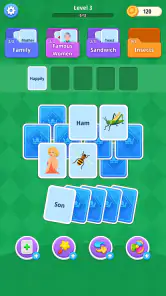
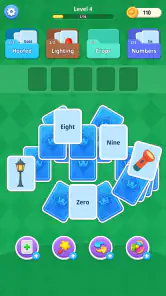
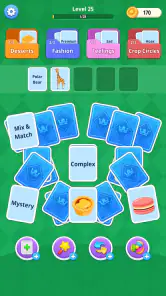
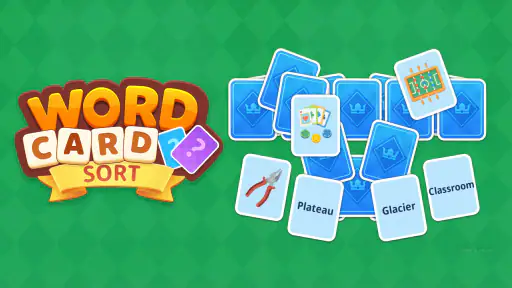
Analysis by Reviewed
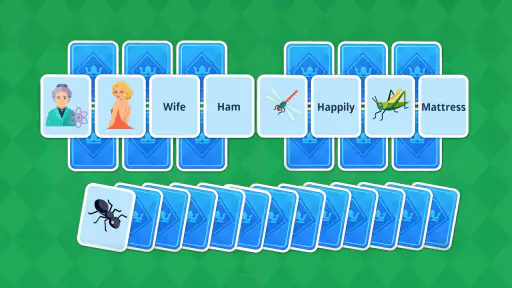
Word Card Sort: Solitaire is the kind of word game I can open without preparing myself for a long session. Its basic idea is easy to understand: sort words and connect cards, then keep working through a puzzle at a relaxed pace. After spending time with it, I found that its appeal comes less from spectacle and more from the way a familiar solitaire-like structure gives wordplay a calm, focused setting.
That makes it a pleasant fit for quiet breaks, especially when I want something more involving than a simple tap game but less demanding than a competitive puzzle. The game is free to start, carries an Everyone age rating, and is made by BitEpoch. It is listed as a word game, although the card presentation gives it a slightly different feel from a conventional crossword or anagram app.
The public response is notably positive, with a 4.9 average from around 320 ratings and more than 10K installs. I would not treat those figures as a guarantee that every player will enjoy the same pace, but they do match my overall impression: this is a focused, approachable game built around short bursts of mental sorting rather than dramatic progression or a large fictional universe.
How the first few puzzles establish the mood
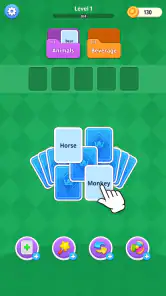
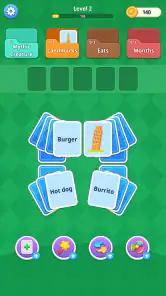
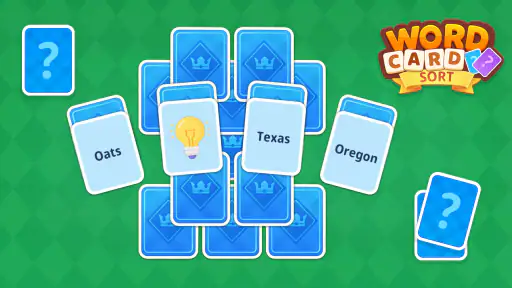
My first impression was that the game wants me to concentrate immediately, but not under pressure. The card format makes the board feel organized and readable, while the word associations provide the actual mental work. I am not simply looking for a hidden word or filling spaces in a grid; I am deciding which terms belong together and how that decision affects the remaining arrangement.
That distinction matters. Traditional solitaire is usually about suits, ranks, and legal moves. A crossword depends on clues and intersecting answers. Word Card Sort: Solitaire borrows the visual comfort of cards but turns the central challenge into recognition and classification. The result is more reflective than a fast word scramble and more flexible than a fixed crossword layout.
I like that the premise is understandable before I have learned a complicated rule set. A player who enjoys word puzzles can begin by looking for obvious relationships, then gradually become more careful about words that could fit several groups. That second layer is where the game becomes interesting. Correct answers are not always the first association that comes to mind, so a quick guess can create extra friction later.
The free entry point also suits the format. I can test whether the sorting style matches my habits without committing to a purchase. At the same time, the presence of in-app purchases ranging from $1.99 to $99.99 per item means I would advise checking any purchase prompt carefully, particularly if the phone is shared with a younger player. The age rating is Everyone, but “suitable for everyone” does not mean every optional purchase is equally appropriate for every household.
A visual language built around order and association
The most important artistic choice is the use of cards as the game’s visual vocabulary. Cards suggest sequence, arrangement, and deliberate movement, which supports the sorting mechanic better than a busy illustrated map would. The presentation gives each word a place in a larger structure, so the board feels like something I am organizing rather than merely scanning.
This approach creates a coherent playable mood. The visual identity does not need a detailed story world because the board itself supplies the setting: a small mental workspace where categories, relationships, and choices are laid out in front of me. That restraint is useful. It keeps my attention on the words instead of competing decorations.
For me, the card framing also changes the emotional weight of mistakes. In a conventional word search, missing an answer can feel like failing to notice something hidden. Here, a wrong group feels more like an organizational error. I have to reconsider the relationship between several words, which encourages a slower second look rather than random tapping.
One of the less obvious strengths is that the visual arrangement can help me think in clusters. I naturally begin by separating words that share a clear subject, function, or association, then reserve the uncertain cards for later. That is a useful workflow: solve the strongest group first, but do not force the leftovers into a category simply because the board looks untidy.
The trade-off is that players who prefer rich character art, animated environments, or a narrative reason to keep playing may find the setting sparse. The game’s world language is functional and understated. It communicates “sort, compare, refine” very well, but it does not try to create a memorable fantasy location or a cast of personalities.
Why the sound and pacing matter more than spectacle
The game’s mood depends heavily on restraint. A word puzzle needs enough feedback to make actions feel clear, but too much noise would interrupt the thinking process. In this format, sound works best as punctuation: a small confirmation when a decision lands correctly, a sense of completion when an arrangement comes together, and a gentle signal that keeps the board readable as an interactive space.
I see the pacing in the same way. The game is most comfortable when I treat each puzzle as a compact exercise rather than a race. There is a natural rhythm of scanning, testing, correcting, and clearing. That rhythm gives the card movement a purpose. The actions are not there merely to make the board lively; they mark the stages of reasoning.
This makes it suitable for everyday situations where I have only a little attention available. I can imagine opening it while waiting for an appointment, taking a short break from work, or winding down before bed. In those moments, I do not necessarily want a game that demands rapid reactions or asks me to remember a complicated campaign. I want a contained problem that can hold my focus for a while and then let me leave.
There is also a practical downside to this calm design. If I am looking for urgency, competition, or a strong sense of escalation, the measured rhythm may feel too quiet. Players who enjoy timed word challenges or score chasing may prefer a faster alternative. This is not a weakness in execution so much as a clear design choice: the game values mental sorting over adrenaline.
A useful personal habit is to play it in two modes. When I am relaxed, I try to solve groups intuitively and enjoy the flow. When I am tired, I slow down and treat every uncertain card as evidence that one of my earlier assumptions may be wrong. That second approach prevents frustration because it turns a stuck moment into a review of the board rather than a reason to tap randomly.
Where the card format and word mechanic fit together
The central mechanic works because the cards give word relationships a visible structure. I can compare terms side by side, hold a possible group in mind, and notice when the remaining cards make a previous theory less convincing. The solitaire influence is useful here: the board feels like a sequence of decisions, and each move can simplify or complicate what follows.
Compared with a crossword, this is better for players who enjoy broad associations but do not want to depend on clue wording or crossing letters. Compared with an anagram game, it gives me more room to reason about meaning instead of only rearranging characters. Compared with classic solitaire, it adds vocabulary and interpretation, so the experience is less about memorizing card order and more about identifying relationships.
The strongest strategic lesson is to avoid solving only by the most obvious connection. A group can look convincing because several words share a general theme, yet the intended relationship may be narrower. I found it more reliable to ask what all members have in common and whether the category explains the exact wording, not merely the general subject.
Another useful technique is to protect one or two uncertain cards from premature commitment. If I place every plausible card into a group immediately, I can lose the ability to compare alternatives. Leaving a doubtful card mentally “unassigned” gives me a reference point when the rest of the board changes. This is especially helpful for players who tend to make fast, confident guesses.
The game is also a good match for casual vocabulary practice, although I would not describe it as a formal learning tool. It encourages me to notice shades of meaning and relationships between words, but the main goal remains solving the puzzle. Someone studying a language may enjoy the association practice, yet a dedicated vocabulary app would offer more structured instruction and clearer progress tracking.
My main reservation is that this type of puzzle can become mentally repetitive if the player does not enjoy categorization itself. The card presentation is pleasant, but it cannot transform every word group into a fresh kind of challenge. If you prefer logic grids, number puzzles, or visual pattern games, the emphasis on language may feel narrow after the novelty fades.
Everyday use, device fit, and who should try it
I would recommend it first to people who like word games but want something less conventional than a daily five-letter challenge. It is also a sensible choice for players who enjoy solitaire’s orderly feel and want a little more interpretation in each move. The Everyone rating makes it easy to consider for a broad household audience, while the minimum operating system requirement of Android 6.0 keeps it accessible to many older Android devices.
For a realistic everyday scenario, I would use it during a ten-minute break between tasks. I could start a puzzle, identify the obvious associations, and then decide whether I have enough attention left to resolve the ambiguous cards. If I need to stop, the format feels naturally interruptible because the board is already divided into clear decisions rather than one continuous action sequence.
That same quality makes it less suitable for a social group looking for a party game. The experience is primarily individual and contemplative. It can be fun to discuss a difficult association with someone nearby, but it is not built around simultaneous play, conversation, or direct competition. A multiplayer word game would be a better choice for that situation.
Players should also think about their tolerance for optional spending. The game is free, but individual in-app purchases can cost between $1.99 and $99.99. I would approach those options as convenience or support choices rather than assuming they are necessary for the basic appeal. Anyone who dislikes repeated purchase prompts, or who wants a completely fixed-cost experience, may prefer a paid word game with no in-app store.
The current version is 1.130, and the game was released on January 9, 2026. Those details are useful when judging how fresh the product feels, but they do not change the central recommendation: install it if the combination of word association and card sorting sounds appealing, not simply because its rating is high.
What the presentation gets right, and where it stays limited
The art direction, sound, and pacing all support the same goal: making concentration feel comfortable. The cards provide a clear visual metaphor, the word groups supply the intellectual texture, and the unhurried rhythm gives me time to reconsider a choice. Nothing about the presentation fights the mechanic, which is more important here than having a large amount of content on screen.
I especially appreciate the way the mood encourages deliberate correction. A puzzle can be challenging without feeling hostile when the board invites me to inspect relationships again. That is a meaningful difference from games that use constant countdowns or loud failure effects to keep attention. Here, the atmosphere makes patience feel like part of the strategy.
Still, the same coherence creates a narrow emotional range. The game is calm, tidy, and focused, but it is not especially dramatic. There is no reason to expect a story-driven journey, a strong character hook, or a changing world to carry me through the experience. Its identity rests on the satisfaction of getting a difficult arrangement right.
That is why I would not recommend it to someone who needs a word game to deliver constant novelty. I would point that player toward a title with varied modes, timed rounds, or a richer progression system. I would recommend this one instead to a friend who likes quiet puzzles, notices word relationships, and enjoys the small satisfaction of turning a messy set of cards into an orderly result.
My final take on the atmosphere and the play
Word Card Sort: Solitaire succeeds because its presentation understands the mechanic. The cards are not just decoration; they make sorting feel tangible. The restrained mood is not a lack of ambition; it is a way to protect the attention that word association requires. When I approach it as a calm puzzle rather than a competitive event, the pacing feels natural and the setting becomes surprisingly effective.
BitEpoch has made a free word game that is easy to approach but still rewards careful thinking. Its 4.9 average, based on around 320 ratings, suggests strong early enthusiasm, and I can see why. The game offers a distinct middle ground between classic solitaire and familiar word puzzles, with enough structure to feel purposeful without demanding a large time commitment.
My recommendation is straightforward: try it if you want a quiet card-based word challenge for short breaks and focused solo play. Keep your expectations realistic about the understated atmosphere, watch optional purchase prompts, and do not force fast answers when a category feels uncertain. For the right player, the pleasure is not in spectacle but in the gradual click of associations falling into place.
Pros
- Simple card-sorting rules make it easy for beginners to start playing.
- Short rounds work well for quick breaks or casual sessions.
- Solitaire format lets you play without needing other players.
- Organizing cards can provide a relaxing
- low-pressure gameplay experience.
- Progressive challenges may help keep repeated sessions engaging.
Cons
- Gameplay may feel repetitive after extended play sessions.
- Some levels can become frustrating when available moves are limited.
- The game may offer less depth for players seeking competitive features.
- Ads may interrupt play
- depending on the version and connection settings.
- Players who dislike sorting puzzles may find the core mechanic too narrow.
- Category
- Word
- Version
- 1.130