Word Box - Sort & Block Jam
- 52.00
- 4.8
- Installs
- 50.00K
- Price
- Free
Screenshots
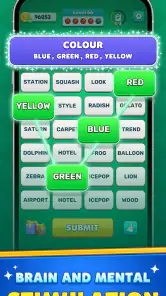
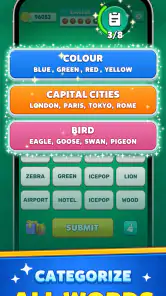
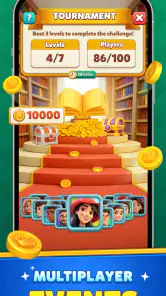
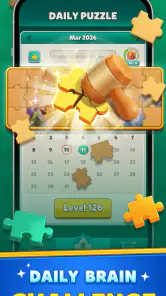

Analysis by Reviewed
Word Box - Sort & Block Jam is the kind of word game I can open with no preparation and understand almost immediately. I look at a crowded puzzle, make a first move, see the board react, and then decide whether I have enough momentum for another attempt. That simple rhythm is the main reason I found myself returning to it. It does not ask me to learn a complicated control scheme or commit to a long story before the game becomes enjoyable.
Published by Yalla Technology FZ-LLC, this free word puzzle game is aimed at Everyone and runs on Android 8.0 or later. Its store summary presents it as an all-in-one word puzzle experience, while the short description calls it Word Box. In practice, the appeal is less about one grand feature and more about how quickly the central interaction becomes understandable. I can start testing words, sorting out a difficult arrangement, and learning from the result within moments.
That accessibility does not make it automatically perfect for every player. People who want a deep crossword editor, a competitive word league, or a carefully written adventure may find the experience too focused on short puzzle sessions. For anyone who enjoys vocabulary challenges with a visible sense of progress, though, it has a welcoming starting point. The strongest part is the loop: make a choice, receive clear feedback, collect the benefit of a good decision, reset mentally, and begin again.
How the word puzzle loop feels in everyday play
The first action is easy to understand
My first impression came from the opening move rather than from any elaborate presentation. The game puts the puzzle in front of me and encourages experimentation. I do not need to spend several minutes figuring out what every control means. I can focus on the letters, the available arrangement, and the immediate question of which move is most likely to open the board.
That low barrier matters in real situations. Imagine waiting for a takeaway order or sitting on a short train journey. I can begin a round without needing a quiet room or a large block of time. The game suits those small gaps because the mental commitment is light at the start. I am not promising myself an entire campaign; I am simply trying one arrangement and seeing what happens.
The first useful habit is to resist tapping through the most obvious-looking option immediately. I found it better to scan the whole puzzle first, looking for a move that creates room or reduces the number of awkward letters. A word that looks attractive on its own may not be the best opening if it leaves the remaining board tightly packed. This is one of the more interesting trade-offs: quick recognition feels satisfying, but planning the next position usually produces a cleaner run.
That small planning step gives the game more substance than a basic word guessing exercise. I am not only asking whether I know a word. I am also asking what that word will do to the rest of the puzzle. The action therefore has two layers: vocabulary recognition and board management. Players who enjoy arranging objects or clearing space may appreciate that extra decision-making, even when the session remains casual.
Feedback keeps each move readable
The game’s feedback rhythm is what turns individual taps into a playable routine. A move should tell me whether I am progressing, whether I have made the board easier or harder, and what deserves attention next. When that information arrives quickly, I do not feel lost between actions. I can connect the choice I made with the new state of the puzzle.
I especially like using the first few moves as information rather than treating them as a test I must pass flawlessly. If an arrangement creates a helpful opening, I continue along that line. If it blocks the remaining possibilities, I treat the result as a clue about what to avoid. This mindset makes mistakes less irritating because they become part of the solving process instead of a complete failure.
A practical tip is to watch for the difference between a move that gives immediate satisfaction and one that improves future flexibility. Clearing something quickly may feel like progress, but preserving several possible follow-up choices can be more valuable. That is the sort of detail a short store description cannot explain. The best decisions are often not the flashiest ones; they are the ones that leave me with options.
This feedback also makes the game suitable for different levels of attention. I can play casually, choosing words by instinct, or slow down and inspect the consequences of each placement. The same puzzle can therefore feel quick during a break and more deliberate when I want a focused mental exercise. That flexibility is a genuine strength, although players seeking a consistently intense challenge may find the relaxed presentation less demanding than a dedicated competitive word title.
Rewards give the session a reason to continue
A successful move feels useful because it changes the puzzle in a visible way. I get the satisfaction of reducing clutter, finding a workable combination, or reaching a cleaner board state. The reward is not only an end-of-round result; it is also the small confirmation that my previous decision mattered.
That distinction is important. In many casual games, the reward arrives so far after the action that the connection becomes weak. Here, the immediate result encourages me to think about the next move. I am rewarded for progress, then presented with a new problem created by that progress. The game does not let the satisfaction end the thought process; it turns that satisfaction into another prompt.
There is also a useful emotional balance between recognition and uncertainty. I may spot a familiar word quickly, but I still need to consider whether using it now is sensible. When the choice works, the reward feels earned because it combines knowledge with timing. When it does not, I have a clear reason to reconsider my approach instead of blaming random controls.
The free entry point makes trying this loop straightforward. The current version is 1.2.1.0, and optional purchases range from $0.99 to $49.99 per item. I would approach those purchases carefully rather than assuming they are necessary for enjoyment. For a casual player, the sensible test is simple: play enough free sessions to decide whether the basic word-and-board interaction is already satisfying. If it is not, spending more is unlikely to fix the underlying mismatch.
The reset is part of the appeal
When a puzzle ends, the reset gives me a clean mental break. I do not have to carry a complicated chain of decisions into the next attempt. A new board invites a fresh scan, a different opening, and another chance to improve the way I manage space. That reset is why a disappointing round does not necessarily feel like wasted time.
I found this especially useful on days when I wanted a small distraction but did not want to become absorbed in a long game. One round can be a complete activity. If I have more time, the end of that round naturally raises the question of whether I can solve the next one more efficiently. The game creates continuation through curiosity rather than requiring a large narrative cliffhanger.
There is a subtle trade-off here. A clean reset is excellent for short sessions, but it may provide less long-term emotional attachment than a game built around characters, chapters, or a persistent world. If you need a strong story reason to return, this is probably not the right choice. Its motivation is practical and immediate: I want to try another puzzle because I have just learned something from the previous one.
My advice is to use the reset deliberately. If I make several rushed moves and start guessing without thinking, I stop treating the next puzzle as a continuation of the frustration. I pause, look for the simplest opening, and rebuild my rhythm. That approach keeps the game relaxing rather than turning a short break into an unwanted battle with the same mistake.
Where it fits beside familiar word games
Compared with a crossword, this game feels more immediate and less dependent on reading a long clue. Crosswords are better when I want layered definitions, a broad grid, and the pleasure of gradually unlocking a themed puzzle. Word Box - Sort & Block Jam is better when I want the action to begin quickly and the board state to respond directly to each decision.
Compared with a traditional word search, it appears more focused on arranging and managing the available puzzle rather than simply scanning a fixed field for hidden terms. That makes each choice feel more consequential. A word search can be soothing because the answer is already somewhere on the page; this style asks me to think about order and consequences as well.
It also differs from competitive word games that revolve around timers, opponents, or score pressure. I would choose a competitive alternative when I want a social challenge or a clear reason to improve against another person. I would choose this one when I want control over the pace and a private puzzle that can be started and stopped easily.
The comparison is not entirely one-sided. A specialist crossword or an established vocabulary trainer may offer more depth in definitions, learning tools, or structured difficulty. A fast multiplayer word game may deliver more excitement. This title’s advantage is the middle ground: it combines word recognition with board decisions while remaining approachable enough for ordinary spare moments.
Small techniques that make solving more satisfying
The first technique I recommend is to identify the move that creates the most breathing room, not necessarily the move that looks like the longest or most impressive word. Space changes the quality of the next decision. When the board opens up, I can compare possibilities instead of reacting to whichever letter is easiest to notice.
The second is to keep a mental note of blocked or awkward combinations. If a move leaves a difficult cluster behind, I avoid repeating the same pattern in the next attempt. This turns the reset into a learning tool. I am not memorizing a solution; I am learning which kinds of local choices tend to make the remaining puzzle less manageable.
The third is to separate recognition from commitment. I may see a possible word immediately, but I do not have to use it immediately. I look at what the board will look like afterward and ask whether the move preserves a backup plan. That extra pause is small, yet it changes the game from reflex tapping into a more thoughtful sorting challenge.
Finally, I recommend stopping after a satisfying round when playing during a busy day. Because the next session is so easy to start, it is tempting to keep going without noticing the time. The game works best for me when I decide whether I want one quick puzzle or a longer run before opening it. That simple boundary keeps its convenience from becoming a distraction.
Who will enjoy it, and who should skip it?
I would recommend it to players who like word puzzles but want more movement and consequence than a static list of clues provides. It is also a good fit for someone who prefers short, self-contained sessions, since the action can begin quickly and the reset does not demand a major commitment. Families may appreciate the Everyone rating, while adults looking for a calm mental break can enjoy the same basic loop at a slower pace.
It is less suitable for players who dislike repeated puzzle structures or who need a strong sense of narrative progression. If your ideal word game teaches new vocabulary in a systematic way, a dedicated learning app may be more useful. If you want head-to-head competition, a multiplayer alternative will likely create more tension. If you expect every round to feel radically different, the focused nature of this game may eventually seem narrow.
I would also be cautious if optional spending makes you uncomfortable. The game is free to start, but the presence of purchasable items means I would check the purchase flow carefully and keep my attention on whether the core sessions are enjoyable without extra spending. The right reason to continue is that the puzzle loop works for you, not the feeling that a purchase is needed to make the experience worthwhile.
My verdict on the action-feedback-reward-reset cycle
After spending time with Word Box - Sort & Block Jam, I see its main strength clearly: it makes every session easy to enter and easy to understand. The first action is approachable, the board responds in a way that supports learning, and a successful move creates enough satisfaction to invite another decision. When the puzzle ends, the reset feels like a fresh opportunity rather than a punishment.
Its limitations come from the same focused design. Players who want elaborate stories, serious vocabulary instruction, or social competition should look elsewhere. The game is not trying to replace every kind of word entertainment. It is a compact choice for people who enjoy arranging words, managing the consequences of each move, and taking another run after a near miss.
The title has reached over 50 thousand installs and holds a 4.8 average from around 460 ratings, which suggests that its straightforward appeal is connecting with its audience. I would not treat those figures as a guarantee that it will suit everyone, but they match my own impression that the game is easy to pick up and pleasant to revisit. Its Everyone rating also makes it an uncomplicated recommendation for a broad audience.
My final recommendation is to try it when you want a word challenge that sits between a relaxed sorting activity and a more thoughtful puzzle. Start by scanning before tapping, value moves that preserve options, and use each reset to adjust your approach. If that cycle of action, feedback, reward, and renewal sounds enjoyable, Word Box - Sort & Block Jam is worth a place on your phone. If you need story, competition, or advanced language study, choose a more specialized alternative instead.
Pros
- Simple rules make it easy to start playing immediately.
- Short levels are convenient for quick breaks or casual sessions.
- Colorful visuals make the board easy to read at a glance.
- Progressive challenges help keep the gameplay engaging over time.
- Offline play is useful when you have no internet connection.
Cons
- Some levels may feel repetitive after extended play sessions.
- Difficulty can increase sharply in later puzzles.
- Hints or extra moves may be limited without watching ads.
- Frequent advertisements can interrupt the flow between levels.
- Players seeking deep strategy may find the mechanics too simple.
- Category
- Word
- Version
- 1.2.1.0