Where is cat?
- 53.00
- 4.7
- Installs
- 5.00K
- Price
- $1.99

Screenshots
Analysis by Reviewed
When I want a puzzle that asks me to look closely rather than react quickly, I’m drawn to games built around a small, clear question. Where is Cat? is a puzzle game by Bart Bonte that makes finding a hidden cat the focus of its adventures. The idea is easy to grasp, but the fun comes from paying attention to each scene and working out what deserves a closer look.
The pleasure of a focused search
The central appeal is not simply spotting a cat-shaped detail. I enjoy the way the search encourages me to treat the whole scene as a puzzle: a clue may come from an object, an arrangement, or a detail that looks ordinary until I connect it to something else. That gives each moment a satisfying little arc: observe, form a guess, try it, and see whether the scene responds.
This kind of design is especially welcoming if you are new to puzzle games. You do not need to learn a complicated control scheme before the thinking begins. The question is immediately understandable, while the solution still asks for attention. I also find that the simple premise makes it easy to share a screen with someone else; one person can point out a detail, and the other can suggest what to try without either needing much explanation.
A Delightful Puzzle Adventure
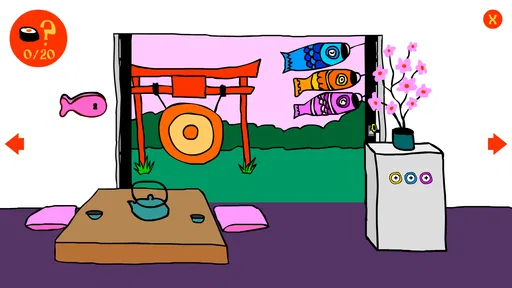
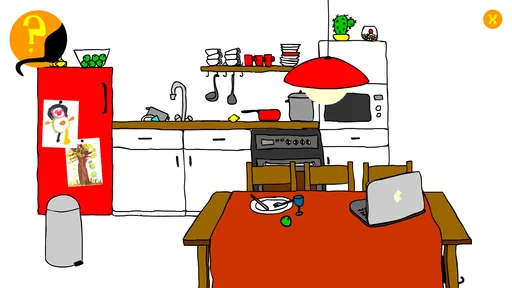
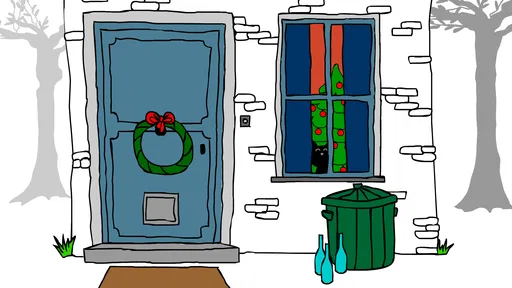
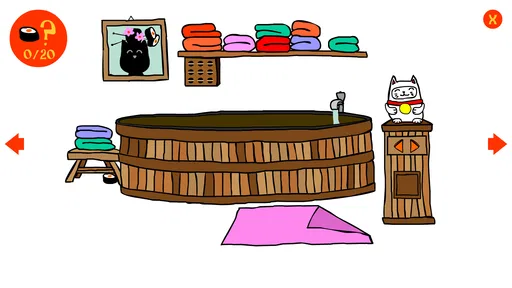
Let’s dive right into what makes Where is Cat? such a delightful experience. The premise is simple: you have to find a sneaky little cat hiding in various rooms. But don’t let the simplicity fool you. This game is all about keen observation and a bit of detective work. As you navigate through different environments, you’ll need to interact with objects, solve mini-puzzles, and piece together clues to find the elusive feline.
Gameplay and Mechanics
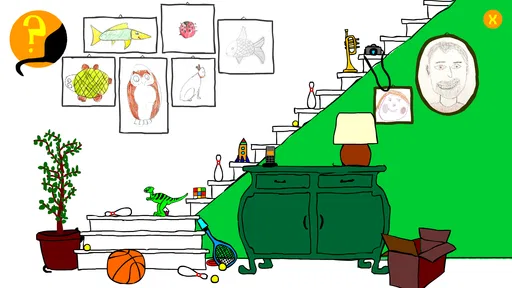
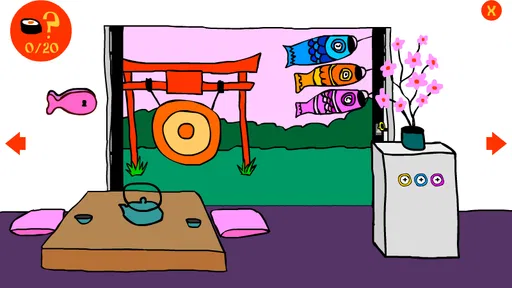
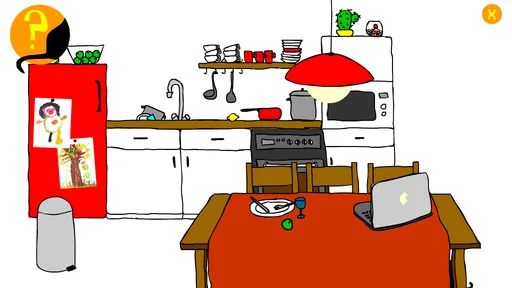
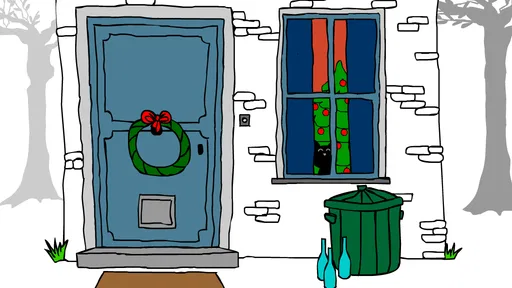
The game is designed with a minimalist approach, making it easy for anyone to pick up and play. The controls are intuitive – just tap around the screen to explore and interact with different elements. It’s perfect for those quick gaming sessions when you’re waiting for your coffee or commuting. The vibrant, hand-drawn graphics add a charming touch, making every level a visual treat.
What I particularly love about this game is its ability to surprise you. Just when you think you’ve got it all figured out, a new twist in the puzzle keeps you on your toes. The difficulty progresses well, ensuring that both new players and seasoned puzzle enthusiasts stay challenged.
How to Approach Each Scene
My most useful habit is to pause before tapping randomly. I scan the whole scene first, then test objects that look out of place or seem likely to conceal a clue. That small change makes the search feel like observation instead of guesswork, and it helps when a puzzle’s answer depends on noticing how several details fit together.
More From Our News Desk

 Gmail
Gmail in a Busy Inbox: Who Benefits Most?
From first account to crowded workday, Gmail earns its place through dependable search and flexible sorting—but its best fit depends on how much inbox maintenance you can tolerate.

 Prime Video
Switching to Prime Video: What Changes in Your Viewing Routine
Prime Video can make a compelling second home for streaming, but switching means learning a different catalog, rental layer, and route from browsing to playback.

 Universal TV Remote Control
 Works Best as a Reliable Backup
A phone remote earns its place through quick setup and reliable habits. Here is how to get more from Universal TV Remote Control—and where its limits show.

 Weather - By Xiaomi
Weather by Xiaomi Review: Clear at a Glance, Less Clear Up Close
Xiaomi’s weather app makes everyday forecasts quick to scan, but its calm surface can leave useful details and recovery paths harder to find than they should be.

 X
X Under Pressure: Can It Recover When Posting Goes Wrong?
A resilience-focused review of X, examining setup, mistaken posts, interruptions, weak connections, and the gaps that matter when recovery needs to be dependable.

 Clash of Clans
 Is Won Between the Battles
Its raids are quick; its community is a long-term project of coordination, teaching, rivalry, and shared responsibility—with all the friction that entails.
Latest News



If I get stuck, I switch from searching for the cat itself to asking what the scene seems to invite me to do. A puzzle may ask for a little experimentation, but repeating the same taps without a reason rarely makes the moment more satisfying. Taking a short break can be better: when I return, a detail I had overlooked may stand out immediately.
Making a short session count
A practical way to play is to treat each scene as a self-contained pause rather than an obligation to push through a long stretch. On a coffee break, I can look carefully, try a couple of sensible interactions, and stop when my attention shifts back to the day. That makes the game a good fit for spare moments without turning every spare moment into another task to finish.
It can also work as a quiet shared activity. If I’m sitting with a friend or family member, we can take turns suggesting what to inspect; the pleasure comes from comparing observations, not from racing one another. That said, I would not choose it for a lively group that wants quick turns or a competitive score. The calm pace suits one attentive player, or a small pair willing to talk through a visual clue.
A Good Fit for Small Breaks
Imagine having a few minutes between errands or waiting for a drink. This is the kind of game I’d open for a focused puzzle rather than a long session that demands constant attention. There’s no ticking clock pushing me to hurry, so I can stop when I need to and come back when I feel like giving the next scene my attention.
That relaxed pace is also a useful distinction from many puzzle alternatives. A timed brainteaser rewards speed, while a match-style game often asks for repeated rounds and pattern-matching. Here, the appeal is closer to a small visual mystery: look, test an idea, and notice what changes. If you mainly want fast action, a score chase, or an endless stream of quick levels, this gentler approach may not hold your interest.
Compared with a traditional word puzzle, the challenge here is less about vocabulary or recalling facts and more about interpreting a picture. Compared with a hidden-object game that asks you to locate a list of items, the cat hunt puts more weight on figuring out what to do with the scene. That distinction matters: I’d pick it when I want to reason visually, but choose a crossword or a dense object-finding game if I want a longer, more systematic challenge.
Why You’ll Get Hooked
One of the standout features of Where is Cat? is its engaging and sometimes quirky sound design. Each tap, swipe, and discovery is accompanied by delightful audio cues that enhance the immersive experience. Plus, there’s something incredibly satisfying about finally spotting the cat after a particularly tricky level.
Another reason you might find yourself hooked is the game’s whimsical narrative. Each level feels like a mini-story, with its own set of characters and peculiarities. It’s this blend of storytelling and puzzle-solving that keeps players coming back for more.
If you’re someone who enjoys a good challenge without the stress of a ticking clock, this game is perfect for you. There’s no rush, no penalties for taking your time – just pure, unadulterated fun.
Small habits that make the puzzles fairer
For a more satisfying solve, I try to change only one thing at a time when testing an idea. If I tap several objects in quick succession, I may get a reaction without understanding what caused it. A deliberate test makes the clue easier to interpret and keeps the answer from feeling like an accident.
I also separate “I haven’t found the cat” from “I don’t understand the puzzle.” In the first case, another careful sweep of the scene may be enough. In the second, I look for an interaction that could alter what I’m seeing rather than scanning the same spots again. This is a useful distinction in visual puzzles: searching harder is not always the same as thinking differently.
The main limitation is that this approach depends on being in the mood to look. If I’m distracted, tired, or hoping for constant stimulation, the quiet scenes can feel slower than they are. It is not a substitute for a high-energy game, and players who need a clear objective marker or a rapid succession of rewards may prefer something more direct.
What to Expect Before You Play
This is a paid game, listed at $1.99, so I’d treat it as a deliberate little purchase rather than a free time-killer to sample casually. Its Everyone age rating makes the premise approachable for a broad audience, and its small-scale, visual puzzles suit playing alone or sharing a scene with someone nearby. It has a 4.7 average from 262 ratings and 53 written reviews, with 5K+ installs; those figures suggest a modest audience, not a reason by themselves to assume it will match every player’s taste.
Because there is a purchase price, I’d make the decision based on the kind of puzzle I actually enjoy, not just the appealing cat theme. If I like pausing over a picture and testing a hunch, the cost feels easier to justify than it would for someone who prefers free, repeatable rounds or a game with a competitive loop. The audience figures are encouraging context, but personal taste matters more here than popularity.
The practical device details are straightforward: the game was released on Dec 10, 2015, its current version is 3.6, and it requires Android 5.0 or later. If you’re choosing between phone and tablet, the key question is where you prefer to inspect illustrated scenes; the central appeal is careful looking, so a screen that feels comfortable for that matters more than speed or elaborate controls.
For me, the main trade-off is that a scene-based hunt depends on your patience with visual puzzles. If you prefer explicit instructions, constant new mechanics, or a competitive reason to replay, this may feel too quiet. But if you like figuring things out at your own pace, the best way to enjoy it is to resist tapping everywhere and give each scene a thoughtful scan.
Who will get the most from it
I’d recommend it most to someone who likes gentle mysteries, enjoys noticing small visual details, and wants a puzzle they can approach without a timer. It can also suit a parent and child or two friends sharing ideas, as long as they are happy to solve together rather than compete. The Everyone rating supports its broad accessibility, while the simple premise gives a first-time player an easy way in.
I’d steer away from it if you want a long-form story, a demanding strategic system, or a game built around speed and replaying for a score. It is also a less natural choice when you only want passive entertainment; the enjoyment comes from actively examining the scene. A useful expectation is to think of it as a sequence of small visual problems, not as an action game or an endless puzzle feed.
Final Thoughts
In a world filled with high-octane games and flashy graphics, Where is Cat? offers a refreshing change of pace. It’s a game that reminds you of the joy of discovery and the simple pleasure of solving a puzzle. Whether you’re a casual gamer or a puzzle aficionado, this game deserves a spot on your device. So, next time you find yourself with a few minutes to spare, why not embark on a whimsical journey to find the cat?
Where is cat? Frequently Asked Questions
How much does Where is Cat? cost, and what should I expect before downloading?
Where is Cat? is a puzzle game by Bart Bonte, built around the playful idea of a cat that likes to play hide-and-seek. It costs $1.99, so it is a paid download rather than a free game. Its small audience and positive average rating may help you get a sense of its reception, while the Everyone age rating makes its content suitable for a broad audience.
What Android version is needed to run Where is Cat?
For Android users, Where is Cat? requires Android 5.0 or later. Checking your device’s operating system before downloading is a useful way to avoid compatibility surprises, particularly if you use an older phone or tablet. The game is a puzzle experience focused on finding a cat, so a compatible device is the main practical requirement to consider before installing it.
What is the primary objective of the game 'Where is Cat?'
In 'Where is Cat?', the primary objective is to locate the hidden cat within various challenging and intricately designed scenes. Players must carefully search through cluttered rooms, exotic locations, and colorful environments to spot the elusive feline. It's a fun and engaging puzzle game that tests observation skills and attention to detail.
Is 'Where is Cat?' suitable for all age groups?
Yes, 'Where is Cat?' is designed to be family-friendly and suitable for all age groups. Its simple yet captivating gameplay, coupled with vibrant graphics, makes it an ideal choice for both kids and adults. The game encourages cognitive development and sharpens observational skills, making it a perfect pastime for everyone. Its Everyone content rating also reflects its broad age suitability.
Does 'Where is Cat?' require an internet connection to play?
No, 'Where is Cat?' does not require an active internet connection to play. This makes it a convenient game for users who want to enjoy uninterrupted gameplay while on the go, such as during commutes or in places with limited connectivity. However, certain features like updates or leaderboards may need internet access.
Pros
- Challenging puzzles enhance cognitive skills.
- Adorable graphics appeal to all ages.
- Simple controls make it easy to play.
- Engaging storyline keeps players hooked.
- Frequent updates with new levels.
Cons
- Limited hints can frustrate players.
- In-app purchases may be costly.
- Some levels are too difficult.
- Occasional bugs affect gameplay.
- Ads can be intrusive.