Triple Hunt - triple match!
- 43.00
- 4.5
- Installs
- 10.00K
- Price
- Free
Screenshots
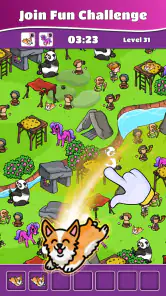
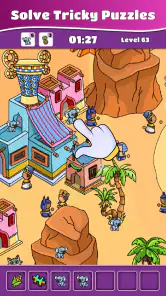
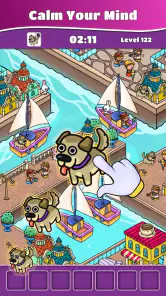
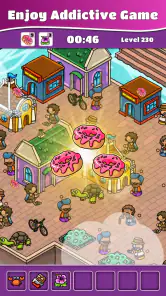
Analysis by Reviewed
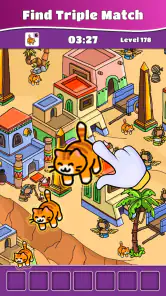
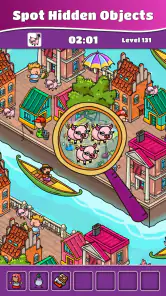
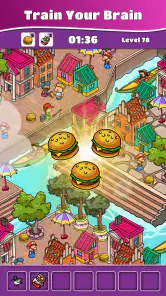
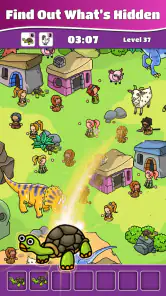
Triple Hunt is a free puzzle game from ENJOY GAMES that turns the familiar search for hidden objects into a matching challenge. I spent time with it expecting a simple distraction, and that is exactly where it works best: it gives me a small, focused task without asking me to learn a complicated rule set first. The basic idea is easy to understand, but the tiny-world presentation gives each round a little more personality than a plain tile-matching board.
The game is listed for Everyone, which fits its approachable design. Its store summary points toward exploring small scenes and finding objects that belong together, while the short title, Triple Hunt, captures the central action. I would recommend it most readily to players who enjoy visual searches, light pattern recognition, and short sessions. It is less suitable if you want a deep story, competitive multiplayer, or a puzzle game built around elaborate logic rather than observation.
How Triple Hunt feels in its current form
At its heart, this is a hidden-object matching game. I look across a compact scene, identify items that appear to form a set, and work toward clearing the available choices. The appeal comes from the combination of two mental jobs: noticing what is present and deciding what to select first. That second step matters because a careless choice can make the remaining board harder to read, even when the objects themselves are not especially difficult to recognize.
The tiny-world approach gives the game a more tactile feeling than a standard flat puzzle. Instead of staring only at rows of identical pieces, I am encouraged to scan a miniature environment and pick out details. That makes the experience a reasonable fit for a quick break, especially when I want something more active than scrolling but less demanding than a traditional strategy game.
I also like that the premise can be understood immediately. There is no need to memorize a long tutorial or study a complicated scoring system before playing. A new player can begin by looking for visual relationships, then gradually become more deliberate about the order of selections. That makes it accessible to children, casual players, and anyone who prefers games that explain themselves through interaction.
The current Android release is identified as version 26.08.12-google and requires Android 7.0 or later. That broad compatibility makes it practical for people using older phones, although the experience will still depend on how comfortably a particular device displays small visual details. On a compact screen, careful searching may feel more cramped than it does on a larger phone or tablet.
ENJOY GAMES has positioned the title as a free download, so trying it does not require an upfront purchase. The game includes optional in-app purchases ranging from $0.99 to $119.99 per item. I would keep that in mind before handing the device to a child or leaving purchase settings unattended. The free entry point is useful, but the presence of optional spending means the game should be treated like a free-to-play title rather than an entirely purchase-free experience.
The search-and-match loop is simple, but not empty
What kept me interested was not the rule itself but the way the rule changes my attention. When I first enter a scene, I tend to scan quickly and grab the most obvious objects. After a few selections, I naturally slow down and start grouping items mentally. I look for repeated shapes, colors, and visual themes rather than treating every object as an isolated target.
That creates a useful rhythm. The opening moments are about recognition, the middle is about managing what remains visible, and the final part is often about avoiding a rushed mistake. Even without a complex narrative, that progression gives a short round a beginning, middle, and end. It is a small design strength that a generic matching game does not always have.
My practical tip is to avoid selecting the first three plausible objects automatically. I get better results by scanning the entire scene first, especially when several items look similar. This is one of the more important habits for the game: search broadly before committing to a match. It reduces the chance of removing a useful option while leaving a harder-to-see object buried among visual clutter.
Another helpful approach is to use the edges of the scene as reference points. I mentally divide the miniature world into areas instead of repeatedly searching the whole screen. That prevents me from overlooking an object I already noticed and makes the hunt feel less random. It is a small workflow, but it turns the game from casual tapping into a more controlled visual exercise.
Who will enjoy it most
I can see Triple Hunt working well for players who like hidden-object books, match-three games, and relaxed mobile puzzles, but want those interests combined in one activity. Someone who enjoys spotting details in a busy picture may appreciate the search element, while someone familiar with matching games will understand the basic goal immediately.
It is also a good candidate for short everyday sessions. Imagine waiting for an appointment or taking a quiet break after lunch. I would rather open a game that lets me focus on one small visual task than start something that demands a long uninterrupted commitment. The tiny scenes make the experience feel contained, so I can stop without feeling as though I have abandoned a large campaign.
Families may also find the Everyone rating reassuring, but I would still introduce the purchase settings before giving the game to a younger player. The visual premise is approachable, yet the optional purchase range means the adult managing the device should decide whether buying is allowed. That is more useful advice than simply calling the game family-friendly and leaving the practical detail unexplained.
Players who need strong accessibility support should think carefully about the visual demands. The central activity depends on distinguishing small objects inside a scene, so anyone who struggles with tiny details, similar colors, or crowded layouts may find the experience tiring. A larger display can help, but it cannot remove the basic need for visual searching.
Where it differs from familiar puzzle alternatives
Compared with a conventional match-three game, Triple Hunt asks me to do more looking and less planning around falling pieces or chain reactions. There is no need to build a long sequence across a grid in the same way. The challenge is closer to visual organization: find the related objects, decide which group is safest to remove, and keep the scene readable.
Compared with a traditional hidden-object game, the matching requirement gives each discovery a purpose. I am not merely checking items off a list. I am searching for relationships between objects and thinking about how a selection affects the next one. That makes it more interactive than a static picture hunt, although players who prefer detailed story scenes may miss the narrative context found in some dedicated hidden-object adventures.
It also differs from pure logic puzzles. A number puzzle or deduction game usually rewards formal reasoning from fixed clues. Here, visual attention is the main tool. If I am in the mood for numbers, wordplay, or a puzzle with one carefully deduced solution, another category would probably suit me better. Triple Hunt is strongest when I want observation and light decision-making rather than a demanding intellectual workout.
That distinction helps set expectations. The game is not trying to replace a long-form puzzle collection. Its value is in combining a familiar matching goal with small environments that make the search more engaging. I would choose it for a relaxed visual challenge, not for deep strategic complexity.
What the current release means for players
The current version number gives existing players a clear reference point when checking whether their installation is up to date. For a game built around visual scenes, keeping the app current is sensible because improvements can affect how smoothly those scenes load or respond, even though I would not assume a particular change without seeing it documented directly.
The release date shown for the game is February 10, 2026. That places the title in a relatively early stage of its public life, and the audience size reflects that it is still a smaller discovery rather than one of the dominant names in mobile puzzle gaming. It has over ten thousand installs, an average rating of four and a half, and hundreds of ratings overall. Those figures suggest a promising reception, but I would still treat the game as something to sample personally rather than assuming it already offers the breadth of a long-established franchise.
For someone already playing, the important effect is continuity. The core appeal remains easy to recognize: miniature scenes, object discovery, and triple matching. A returning player should approach the current release as a focused casual game rather than expecting a completely different genre after an update. The version label is useful for troubleshooting with other players or checking that a device is running the same current build.
For a new player, the early-stage status can be both positive and limiting. A smaller game can feel less overwhelming and easier to understand than a huge puzzle platform filled with menus and systems. On the other hand, players who expect a large library, extensive progression, or years of accumulated content may find the experience more modest. I would download it when the central loop itself sounds appealing, not because I expect a massive ecosystem around it.
Small techniques that improve the experience
My first technique is to create a visual inventory before tapping. I quickly note the most distinctive objects, then search for their partners or related items. This prevents the common mistake of repeatedly scanning without a plan. It is especially useful when the scene contains several objects with similar silhouettes.
My second technique is to alternate between close inspection and whole-scene scanning. Looking only at one corner can make me miss an obvious match elsewhere, while looking at the entire picture continuously can become tiring. I use a short cycle: scan the whole scene, inspect one area, then rescan before making a selection. That balance keeps the hunt methodical without making it feel like work.
My third technique is to leave uncertain objects alone until I understand the board better. If two items seem like possible matches but I cannot confidently identify the third, I wait. In a game built around groups of three, premature selection can remove the clearest route forward. Patience is therefore more valuable than speed, even if the interface makes tapping the obvious object feel tempting.
A fourth useful habit is to play with the phone held steadily and the screen clean. That sounds basic, but it matters here more than it would in a large-button arcade game. Finger placement can cover a tiny object at exactly the wrong moment, and glare can make subtle visual differences harder to see. I get a more comfortable session when I give the scene enough room and avoid playing while walking or multitasking.
Where the game still has limits
The same simplicity that makes Triple Hunt approachable may leave some experienced puzzle players wanting more. If I am looking for layered mechanics, complex planning, or a story that carries me from one chapter to another, this is not the first game I would choose. Its strength is the immediate hunt, so the experience depends heavily on whether that loop continues to feel satisfying.
Visual concentration can also become the main source of friction. Searching a small scene is pleasant when I am relaxed, but less so when I am tired, in bright sunlight, or using a phone with a cramped display. The game asks me to notice details, and that means the quality of the screen and my surroundings have a direct effect on enjoyment.
The free model deserves a measured response as well. Being able to start without paying is convenient, particularly for a casual title, but optional purchases can change how comfortable the game feels for different households. I would check the purchase controls before allowing unsupervised play, and I would not assume that free access means every player will have the same tolerance for spending prompts or optional extras.
There is also a difference between a good short-session game and a game that can occupy an entire evening. Triple Hunt fits the first description more naturally. If I want a long, absorbing session with a strong sense of progression, I would look toward a larger puzzle adventure or a more system-heavy matching game. Choosing it for the wrong purpose would make its focused design feel like a weakness.
What I would watch as the game develops
Because the title is still building its audience, I would watch how ENJOY GAMES expands the variety of its tiny worlds without losing the clarity of the matching loop. More visual variety would be valuable only if the objects remain readable and the scenes do not become cluttered for the sake of difficulty. The best direction would be richer environments that reward careful observation rather than arbitrary confusion.
I would also pay attention to how the game serves returning players. A casual puzzle can remain enjoyable for a long time when it offers fresh reasons to revisit its basic idea, but repetition becomes noticeable if every scene demands the same kind of search. Any future evolution should preserve the immediate accessibility while giving experienced players a reason to refine their technique.
For current users, the practical thing to watch is the version shown on their device and whether the game continues to run comfortably on their phone. Since the current build supports Android 7.0 and newer, compatibility is broad, but older hardware may still provide a less pleasant visual experience than a modern screen. I would judge that by actual readability and responsiveness rather than by the operating-system requirement alone.
The rating of four and a half from 844 ratings is encouraging, and the game has 43 written reviews alongside its install base. I read that as a positive early signal, not a guarantee that every player will enjoy the same aspects. Ratings cannot tell me whether the visual density, purchase model, or session length fits my own habits, so the best test remains a short personal trial.
My recommendation after playing
Triple Hunt is a pleasant choice when I want a free, visually focused puzzle that can be understood quickly and played in manageable bursts. Its combination of miniature scenes and triple matching gives the familiar object hunt a more active structure, while the straightforward premise keeps it welcoming to casual players.
I would recommend it to people who enjoy scanning pictures, grouping similar objects, and improving through better observation rather than through complicated rules. I would also suggest using the scene-by-scene search habits described above, because the game becomes more satisfying when I stop tapping impulsively and start treating each board as a small visual problem.
I would skip it if my priority is a substantial story, competitive play, deep logic, or a completely purchase-free environment. Those are not flaws in the narrow sense; they are signs that this game has a specific purpose. It wants to be a compact matching hunt, and it is most successful when I approach it on those terms.
With a free starting point, an Everyone rating, support for Android 7.0 and later, and a promising early reception, it is easy to justify trying. My final view is favorable but measured: the current release offers a friendly visual puzzle with a clear identity, while its long-term appeal will depend on how much fresh variety ENJOY GAMES brings to those tiny worlds without making them harder to read than they are fun to explore.
Pros
- Simple triple-matching rules are easy for new players to understand.
- Short levels make it convenient for quick gaming sessions.
- Colorful item designs make the board pleasant to browse.
- Gradual challenges help introduce more complex matching situations.
- Casual gameplay suits players looking for a relaxed puzzle experience.
Cons
- Later stages may feel repetitive if you prefer constantly new mechanics.
- Limited space on the board can make some moves feel restrictive.
- Mistakes may become costly when several similar items appear together.
- Progress can feel slower without using optional boosts or extra moves.
- Small visual differences between items may occasionally cause confusion.
- Category
- Puzzle
- Version
- 26.08.12-google