Tonk Star Classic Card Game
- 912.00
- 4.6
- Installs
- 100.00K
- Price
- Free
Screenshots




Analysis by Reviewed
I approached Tonk Star Classic Card Game as a focused digital version of Tonk rather than as a broad collection of card games. That distinction matters. Its appeal comes from preserving the familiar rules and turning them into a quick, repeatable match that works well when I want something more thoughtful than a casual tap-through game, but less demanding than a long strategy session. Developed by Garia Games Ltd, it is a free card game for Android, with optional purchases ranging from $0.99 to $79.99 per item.
The central capability is simple to describe but more interesting to use: it gives me a way to play classic Tonk with its original rule structure in a mobile format. I do not have to reinterpret the game through a modern collectible-card system, build a deck, or learn a large set of special abilities. The challenge comes from reading the cards in front of me, deciding what to keep, and judging when a hand is strong enough to end. The real benefit is the short decision cycle: every draw and discard can change the value of the hand.
Why the classic Tonk rules matter on a phone
Many mobile card games add layers around the basic play: unlockable cards, elaborate progression, animated effects, or several connected modes. Tonk Star takes a narrower route. The store summary presents it as classic Tonk with the original rules, and that focus shapes my experience. I can concentrate on hand management instead of spending time learning a new economy or remembering a long list of character powers.
That makes the game especially approachable if you already know Tonk from playing with friends or family. The digital format removes the practical obstacles of setting up a table, finding a full group, or keeping track of the cards manually. At the same time, it does not make the underlying decisions disappear. A weak hand can remain weak, and a promising combination can become awkward if I draw the wrong card or discard something useful too early.
The game is listed in the card category, but it feels more specific than a general card-game app. I would not install it expecting solitaire variations, poker tables, or a large menu of unrelated diversions. Its value is in returning to one recognizable game and making that game available whenever I have a spare moment. That specialization is a strength for Tonk players and a limitation for anyone who wants constant variety.
What the capability changes in everyday play
Playing on a phone changes the rhythm of Tonk. At a physical table, I might talk between turns, handle the deck, and rely on memory to follow the state of the game. On a screen, the action is more concentrated. I look at my hand, evaluate the possible combinations, choose whether a new card improves my position, and discard with a clearer sense that every move is part of a limited sequence.
I found that this makes small decisions feel more important. Holding a card because it might complete a useful group can be tempting, but doing so may leave the rest of the hand poorly arranged. A card that looks unhelpful by itself may still be valuable because it keeps several possible combinations open. The best move is not always the one that produces the largest immediate reduction in points; sometimes it is the move that gives me the most flexible next turn.
This is where the classic rule set earns its place. Because the game is not built around a collection of special effects, I can improve by understanding patterns in my own play. I notice whether I hold onto uncertain cards for too long, whether I discard useful connectors, and whether I become too eager to finish a hand before the position is safe. Those lessons carry from one match to the next.
How a match works in practice
The basic workflow is easy to settle into. I begin by inspecting the cards I have and looking for natural groups or sequences. From there, each turn becomes a compact evaluation: does the available card improve my hand, should I keep a card for a possible combination, or is it better to release a high-value card and reduce the risk of being caught with it later?
That decision is more subtle than simply collecting pairs. A hand can contain the beginning of several possible arrangements, but pursuing all of them at once usually creates clutter. One practical habit I developed was to choose a likely direction early, then keep only a small number of alternatives alive. This prevents me from filling the hand with cards that are individually interesting but collectively difficult to organize.
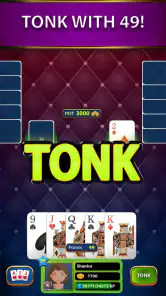
The interface is most useful when it stays out of the way. A digital Tonk game needs to make the current hand, the available draw, and the discard choice easy to understand without forcing me to decode decorative elements. When the presentation is clear, I can spend my attention on probability and timing rather than on remembering where a control is located.
There is also a useful mental difference between playing to improve and playing to finish. Early in a hand, I generally want flexibility. Later, I become more concerned with reducing exposure to expensive cards and recognizing whether my current arrangement is good enough. That transition is easy to miss when I play too quickly, so I recommend pausing briefly before each discard instead of treating every turn as an automatic action.
A practical routine for better decisions
My most reliable approach is to sort the hand mentally into three groups: cards already contributing to a likely combination, cards that could connect to more than one plan, and cards that are currently isolated. I protect the first group, examine the second carefully, and usually consider the third for disposal. This is not a rigid formula, but it helps prevent emotional decisions based on one attractive card.
A second useful habit is to watch what the discard choices suggest. I do not assume I know exactly what another player is building, but repeated interest in a certain kind of card can make some discards less appealing. Passing a card that looks harmless may give an opponent the missing piece for their hand. That means the safest discard is not always the card with the least personal value; it can be the card least likely to help the other side.
I also recommend treating a near-complete hand with caution. When I am one card away from a satisfying combination, it is easy to ignore the cost of waiting. If the remaining cards are unlikely to appear, holding the incomplete plan can be worse than taking a smaller but certain improvement. Tonk rewards adjustment, not loyalty to the first arrangement I imagined.
For new players, the best way to learn is to play several relaxed hands while observing why a card is being kept. The rules are familiar enough to pick up quickly, but the judgment about timing takes longer. Rather than trying to memorize a perfect opening strategy, I would focus on recognizing when a hand is becoming less flexible and acting before that problem grows.
The best everyday scenario for Tonk Star
The strongest use case for me is a short break when I want a complete game rather than an endless stream of disconnected actions. For example, I can play during a commute, while waiting for an appointment, or during a quiet evening when I have enough attention for decisions but not enough time for a long board-game session. The classic format gives the break a beginning and an end.
It also works well for someone returning to card games after a long gap. There is no need to learn a large fantasy setting or understand a complicated deck-building system before the first meaningful choice. If you remember Tonk, the app gives you a convenient way to revisit it. If you do not, the familiar structure of drawing, arranging, and discarding provides a manageable starting point.
I would be more cautious about recommending it as a social replacement for playing Tonk around a table. A phone can reproduce the rules and the turn structure, but it cannot fully reproduce conversation, table presence, or the small psychological details of watching friends react. For me, the app is better as a personal practice space and a convenient solo card-game option than as a substitute for every part of a face-to-face gathering.
Another good scenario is using it to sharpen patience. Because the game encourages me to compare immediate improvement with future possibilities, it can become a small exercise in resisting impulsive choices. I sometimes play a hand specifically to observe my habits: do I chase a combination too long, discard too quickly, or fail to notice that a modest hand is already worth protecting? That reflective use gives the game more staying power than a simple time-killer.
Where it compares well with other mobile card games
Compared with solitaire-style alternatives, Tonk Star offers more pressure from the opposing hand and more uncertainty about timing. Solitaire is often about solving a visible arrangement, while Tonk asks me to make decisions with incomplete information and to consider how my choices affect the other side. I prefer Tonk Star when I want interaction and judgment rather than a purely personal puzzle.
Compared with poker apps, it has a different source of tension. Poker usually emphasizes betting, bluffing, and reading opponents through wagers. Tonk Star keeps the focus on the cards I am organizing and the moment when I decide to commit. That makes it a better fit for players who enjoy hand construction but do not want a game centered on betting behavior.
Compared with collectible card games, its smaller scope is both refreshing and restrictive. I do not have to maintain a deck, chase new cards, or learn a shifting set of abilities. The trade-off is that players who enjoy customization, long-term collection goals, or highly varied matchups may find the experience too contained. Tonk Star is strongest when the rules themselves are the attraction.
Trade-offs, purchases, and device expectations
The game is free to install, which makes it easy to try without committing money at the start. Optional in-app purchases are available, with individual items priced from $0.99 to $79.99. I would approach those purchases carefully. The core reason to use the app is the Tonk experience, so I would first decide whether the basic play loop holds my interest before considering anything extra.
The Teen content rating is worth noting for families choosing games for younger players. I would not treat the card format as an automatic sign that it is intended for children. Parents should check the app’s current store presentation and device controls before handing it to a younger user, particularly because the game includes optional purchases.
Compatibility is relatively broad for Android users: the listed minimum operating system is Android 7.0. The current version is 3.9.9.409, so I would keep the installation updated through the normal app store process. On an older phone, the practical question is less about demanding graphics and more about whether the device handles the current build smoothly and whether the screen makes card selection comfortable.
The main limitation is repetition. A focused Tonk game can be satisfying because the rules are consistent, but that same consistency may feel narrow after several sessions. If I want a large variety of formats in one download, a broader card-game collection is a better choice. If I want to study one game, improve my decisions, and enjoy quick hands without extra systems, the narrow scope becomes an advantage.
Another trade-off is that classic rules can expose differences in prior experience. Players who learned a house version of Tonk may expect certain details to work differently. I would recommend approaching the app with an open mind and checking the in-game rule presentation before assuming that a remembered table rule applies exactly. This is especially important when teaching someone who learned from another group.
Who will get the most from it
The clearest audience is someone who already likes Tonk or wants a compact traditional card game with meaningful choices. It is also a good match for players who prefer learning one rule set deeply instead of jumping between many modes. The rating of 4.6 from around 5.9 thousand ratings suggests that the focused concept has found a receptive audience, while over 100 thousand installs show that it has reached a substantial group of mobile players.
I would recommend it to a friend who says, “I want a card game I can understand quickly, but I still want my decisions to matter.” I would also suggest it to someone who enjoys practicing alone between real-world games. The app gives that player a convenient place to work on hand evaluation, discard discipline, and timing without needing a deck or another person nearby.
I would skip it if my priority were rich visual spectacle, a large collection of unrelated card modes, or a deep progression system built around unlocking content. I would also skip it if I dislike games where a small decision can make the rest of a hand awkward. That uncertainty is part of Tonk’s character, but it can feel frustrating for players who want every move to produce obvious progress.
For me, the strongest reason to keep it installed is not that it tries to do everything. It does the opposite: it turns a recognizable Tonk rule set into a portable, repeatable card experience. The best results come when I play deliberately, keep my hand flexible, and accept that a good decision can still lead to an unlucky draw. If you want a concentrated Tonk experience rather than a general-purpose card arcade, this is the audience-specific choice I would make.
Pros
- Simple rules make it easy for new players to start quickly.
- Short rounds are convenient for casual play sessions.
- Offline play is useful when you have no internet connection.
- Classic card-game format offers a familiar
- relaxing experience.
- Lightweight gameplay runs smoothly on many older devices.
Cons
- Limited game variety may become repetitive after extended play.
- Artificial intelligence can feel predictable in some matches.
- Ads may interrupt the experience between or during games.
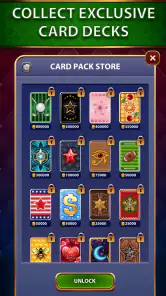
- Customization options for cards and tables are fairly limited.
- Online features and social interaction may be less extensive than expected.
- Category
- Card
- Version
- 3.9.9.409