Tonk - Classic Tunk ZingPlay
- 197.00
- 4.4
- Installs
- 10.00K
- Price
- Free
Screenshots

Analysis by Reviewed
I approached Tonk - Classic Tunk ZingPlay as a quick card game rather than a large, content-heavy mobile release. That distinction matters. The store summary is simply “Game For Us User,” while the short description identifies it as Tonk, so the appeal comes from the card-table format itself: compact rounds, decisions made from a changing hand, and the satisfaction of reading risk before committing. After spending time with it, I see a straightforward option for players who want a focused card experience on Android rather than a sprawling collection of modes.
The game is free to install, which makes trying it easy, but that does not mean every part of the experience is cost-free. Its listed in-app purchases range from $0.99 to $199.99 per item. I would therefore treat the download as an invitation to test the game, not as a promise that spending will never enter the experience. That is especially important for anyone who dislikes purchase prompts or prefers card games that keep the entire experience outside a monetized ecosystem.
How the card-table experience feels in everyday play
What I like most about Tonk is the way its basic idea encourages short, deliberate sessions. I can imagine opening it during a commute, while waiting for an appointment, or after dinner when I want something more interactive than scrolling but less demanding than a long strategy game. A Tonk round gives me a clear reason to pay attention: every card I draw, keep, or discard changes the shape of the hand in front of me.
That makes the game a better fit for players who enjoy decisions under incomplete information. You are not simply matching colors or clearing a board as quickly as possible. You have to consider what your current hand suggests, what an opponent may be collecting, and whether holding a potentially useful card is worth the risk of waiting. Even without a large amount of visual clutter, that kind of choice can make a small card game surprisingly absorbing.
At the same time, I would not recommend it to someone looking for a broad card-game hub. This is a specific style of game, and its charm depends on whether Tonk already sounds appealing to you. Players who prefer solitaire variations, collectible-card battles, elaborate deck construction, or a large social lobby may find the experience too narrow. The focused design is a strength when you want Tonk, but it is also the main limitation when you do not.
Learning the rhythm instead of chasing every card
My most useful early adjustment was to stop treating every draw as an opportunity. In a game like this, a card can be useful in isolation and still be a bad card to keep if it leaves the rest of the hand awkward. I found it better to look for a coherent direction, then discard cards that do not support it, rather than constantly changing plans whenever a new possibility appeared.
That approach also makes the game easier to explain to a friend. I would describe it as a compact contest of hand management and timing, not as a reflex game. The important moments are usually quiet ones: deciding whether to preserve a possible combination, whether to reduce the hand quickly, and whether an apparently safe move gives another player useful information. Those choices give the title more depth than its simple presentation might suggest.
More From Our News Desk

Clash of Clans Is Won Between the Battles

Android Auto Makes the Case for Quieter Car Software

MobiOffice: Transforming Mobile Productivity with Seamless Integration

EA SPORTS FC™ Mobile Soccer: Redefining Mobile Sports Gaming

How Microsoft OneDrive Became a Mobile Productivity Giant

How Google Translate Breaks Language Barriers Effortlessly
A practical tip is to pay attention to discarded cards instead of focusing only on what you hold. The discard area can help you notice which routes are becoming less realistic. If several cards that would support one plan have already gone, continuing to wait for that plan may be less sensible than switching early. This is not a flashy advanced feature; it is a habit that makes the existing card decisions more meaningful.
Where progress can create pressure
Because the game is free to install and includes optional purchases, I paid close attention to how spending might affect the feeling of progress. The purchase range is unusually wide, stretching from $0.99 to $199.99 for an item. That does not by itself prove that paying is necessary, nor does it establish that purchases create a competitive advantage. It does mean I would approach the game with a clear personal limit, especially if I were handing the device to a younger player.
The age classification is Everyone 10+, so families should still treat the purchase system as something to discuss before play. I would check the device’s purchase protections and agree on whether spending is allowed, rather than relying on the game being a card title to make the issue irrelevant. A free starting point is convenient, but a large upper purchase tier makes basic account discipline worthwhile.
For me, the healthiest way to use it would be to judge each session by the quality of the decisions, not by how quickly I can unlock or obtain something. If the game begins to make a losing streak feel like a reason to spend, I would pause. Card games naturally produce swings, and trying to buy a better result can turn a thoughtful pastime into a frustrating loop. The free entry is a genuine benefit, but it works best when the player keeps control of the budget.
Another useful trade-off is time versus attention. A short card session may be convenient, but the decisions are easy to play carelessly if I am distracted. I would not open it while doing something that requires continuous concentration. A better routine is to play a small number of rounds during a defined break, then stop, rather than letting the game become background activity that encourages impulsive choices or spending.
Fairness: what I can judge and what I cannot
Fairness is the question I would ask before recommending any competitive card game. With Tonk, the core standard should be simple: do the outcomes feel connected to card judgment and chance, or does progress appear to depend on payment? The available purchase information confirms that optional items exist, but it does not establish what those items do or whether they influence matches. I therefore would not claim that the game is pay-to-win, and I also would not describe it as definitively free from competitive pressure.
My advice is to observe the experience directly. If purchases are presented as conveniences or cosmetic additions, that is a different proposition from anything that changes a player’s access to stronger outcomes. I would also notice whether a losing run makes the game explain the result clearly or pushes me immediately toward buying something. That distinction matters more than the presence of a shop by itself.
Compared with a traditional physical Tonk game among friends, a mobile version offers convenience but gives me less control over the surrounding rules and economy. Around a real table, everyone agrees on the stakes and can see how the game is being handled. In an app, I have to trust the software’s presentation and the boundaries around purchases. The digital format is easier to start, yet the physical alternative remains better for players whose main priority is transparent, no-spend competition.
Compared with a typical solitaire app, this game is more appealing when I want opposition and uncertainty rather than a puzzle I can solve alone. Compared with a collectible-card game, it should be less about building a powerful collection and more about handling the hand in front of me. That makes it a potentially cleaner competitive experience, but only if its purchase structure stays separate from match strength. Since the listed information does not explain the role of purchased items, I would keep that question open rather than filling the gap with assumptions.
Small habits that improve a session
I found three habits particularly useful. First, I would decide what kind of hand I am trying to build before reacting to every new card. Second, I would treat the discard pile as information, not merely as a place where unwanted cards disappear. Third, I would set a stopping point before a frustrating streak turns into rushed play. These habits do not require extra equipment or spending, and they make the game feel more intentional.
I would also avoid copying an opponent’s apparent plan too quickly. Seeing one useful discard can tempt me to pursue the same pattern, but that card may be useful precisely because the other player no longer needs it. A better question is whether the card fits my current hand and whether keeping it leaves me with a sensible fallback. That small change in thinking reduces the number of turns where I am simply hoping for one exact draw.
For a casual group, the game could work as a low-preparation alternative to a physical deck, provided everyone is comfortable with the digital format and any purchase prompts. I would not use it as the only choice for a family gathering, though. A physical deck is easier to share across ages and does not place account settings in the middle of the activity. The app is more suitable when each person already has access to a device and wants a quick individual session.
Device fit, version, and practical expectations
The game requires Android 8.0 or later, so it is aimed at devices that are not extremely old. Its current version is 1.1, which suggests a relatively early stage for the release rather than a long-established platform with years of visible iteration. I would keep expectations realistic: install it because the Tonk format interests you now, not because you are expecting a huge catalogue of mature systems and extensive history.
VNG ZingPlay Studio is the developer behind the release. The game has an average rating of 4.4 from around 700 ratings, along with nearly 200 written reviews, and it has passed 10 thousand installs. Those figures indicate that people are trying it and that the overall reception is positive, but they are not a substitute for deciding whether the particular card format suits you. A smaller player base can also mean that the experience feels more specialized than the biggest mobile card brands.
I would be especially careful about the difference between a good rating and a complete picture of long-term use. Ratings can tell me that many players enjoyed what they encountered, while written reviews may reveal more about purchase prompts, matchmaking expectations, or the learning curve. Before committing money, I would play for free first and read recent comments in the store. That is the sensible approach for any early mobile release with optional purchases.
Who should choose it, and who should skip it
I would recommend Tonk to someone who already enjoys traditional card games and wants a portable way to play a Tonk-style experience. It is also a reasonable choice for a player who values short sessions, prefers hand decisions over fast reactions, and is comfortable treating the free installation as a trial. The game’s focused identity is useful here: there is no need to learn a large collection of unrelated systems before finding out whether the central card loop works for you.
I would suggest looking elsewhere if you want a fully offline card game, a broad single-player campaign, or a purchase-free environment with no need to monitor spending. I would also steer away from it if you are looking for a highly competitive scene where the rules around paid items are completely central and clearly documented before play. The listed information gives a purchase range, but not enough detail to promise that it matches those expectations.
Players who dislike luck should think carefully as well. Better decisions can improve how consistently you play, but card games still depend on the hand and draw. If an unlucky sequence makes you angry, Tonk may feel less like a relaxing break and more like a test of patience. In that case, a deterministic puzzle game or a strategy title with more control over outcomes may be a better fit.
My trust verdict after weighing the trade-offs
My overall view is cautiously positive. Tonk - Classic Tunk ZingPlay has a clear reason to exist: it brings a compact Tonk card experience to a phone, and the format can be genuinely enjoyable when I give each decision enough attention. The free installation lowers the barrier to testing it, while the positive average rating and growing install count suggest that the basic idea is connecting with players.
My caution is not about the card concept; it is about the spending context. A purchase range that reaches $199.99 per item deserves deliberate boundaries, particularly for younger users covered by the Everyone 10+ classification. Since the role of those purchases is not explained in the facts available to me, I would not make a strong claim about competitive fairness either way. I would play first, observe how the purchase system appears in practice, and avoid spending until I understood exactly what I was buying.
In the end, I would recommend giving it a fair trial if you want a focused mobile card game and already like the Tonk style. I would keep the first sessions free, use the discard pile as a source of information, and stop when frustration starts replacing thoughtful play. The best reason to keep playing is the quality of the card decisions, not pressure to purchase progress. With that mindset, it can be a convenient and enjoyable addition to a card-game rotation; without it, the optional spending structure may make a simpler physical deck or a more transparent alternative feel like the better choice.
Tonk - Classic Tunk ZingPlay Frequently Asked Questions
Can I install Tonk - Classic Tunk ZingPlay on my phone?
Tonk - Classic Tunk ZingPlay is a card game from VNG ZingPlay Studio, with a current version of 1.1 and a minimum operating-system requirement of Android 8.0. Check your device’s software version before downloading so you can confirm it meets that requirement. The game is free to download, and its age rating is Everyone 10+.
What is Tonk - Classic Tunk ZingPlay?
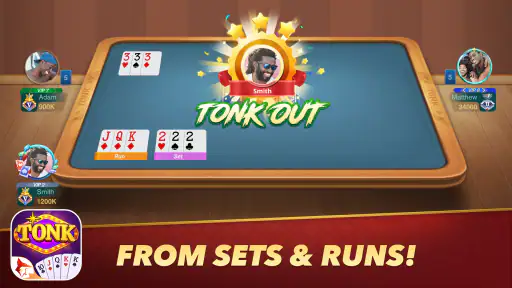
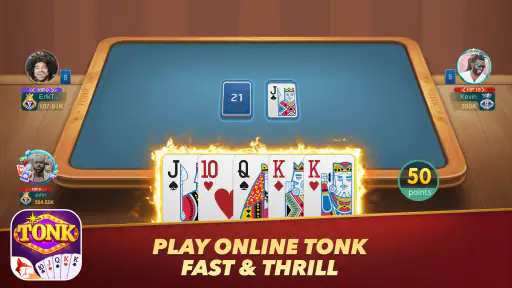
Tonk - Classic Tunk ZingPlay is a mobile card game based on the traditional Tonk, or Tunk, format. It lets you play against other participants in short rounds where the main objectives are to organize your cards into combinations, reduce your remaining points, and finish with a stronger hand than your opponents. The app is designed for casual play and includes a digital multiplayer experience rather than a physical card table.
How do you play Tonk - Classic Tunk ZingPlay?
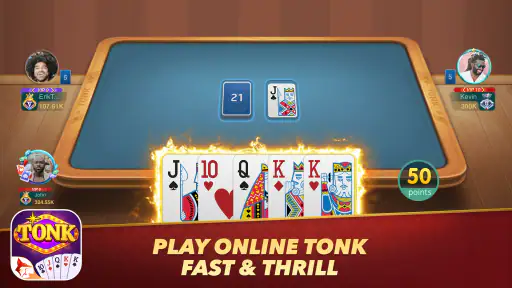
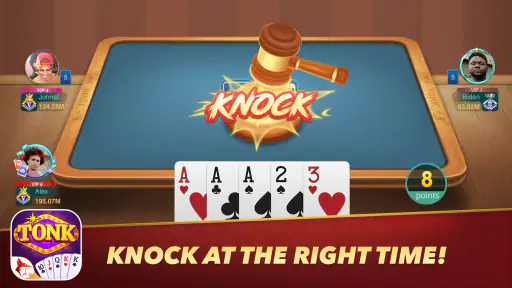
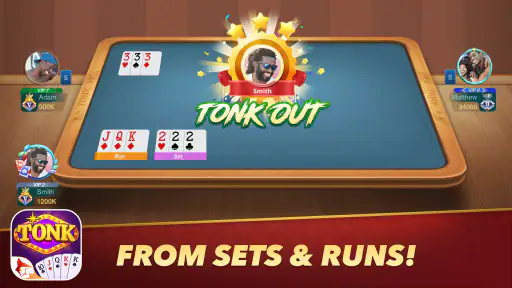
The basic gameplay revolves around drawing and discarding cards while trying to create valid groups or sequences. Depending on the round situation, you may choose to knock or end play when you believe your hand is competitive. Since Tonk rules can vary between versions, new players should read the in-game instructions carefully, especially the scoring, knocking conditions, and rules for declaring a winning hand before entering competitive matches.
Can I play Tonk - Classic Tunk ZingPlay offline?
The game is primarily built around online play, so an internet connection is generally needed for multiplayer features, account synchronization, events, and other server-based content. Offline availability may be limited or unavailable, and the exact behavior can depend on the current app version. If you plan to play while traveling, check the store listing and test the application beforehand rather than assuming that every mode works without a connection.
Is Tonk - Classic Tunk ZingPlay free to download and play?
Tonk - Classic Tunk ZingPlay is free to download, but it also offers optional in-app purchases ranging from $0.99 to $199.99 per item. Free access does not mean that every feature or purchase is cost-free. Before playing extensively, review the payment settings and purchase confirmation options on your device, particularly if children may use the same account.
Pros
- Quick matchmaking makes it easy to start a game anytime.
- Simple rules are suitable for both casual and experienced card players.
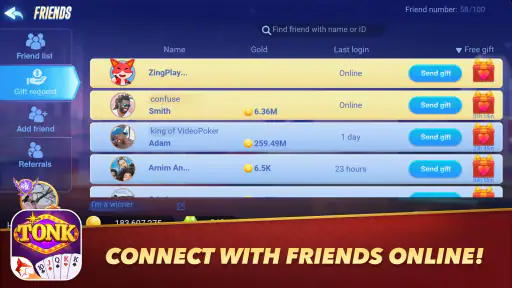
- Online matches add variety beyond playing against computer opponents.
- Short rounds work well for brief gaming sessions.
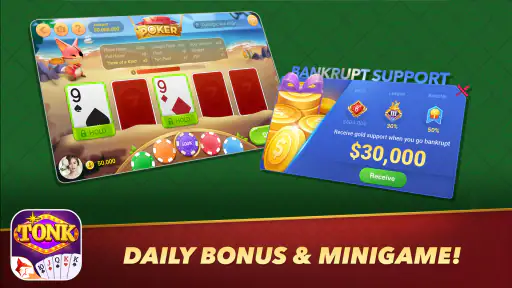
- Progression and rewards encourage regular play.
Cons
- Internet access is required for most online features.
- Ads may interrupt play or appear between completed rounds.
- Random card distribution can make some matches feel luck-dependent.
- Competitive play may become repetitive after extended sessions.
- Some features or rewards may be limited without in-app purchases.
- Category
- Card
- Version
- 1.1