Pusoy ZingPlay - 13 cards game
- 464.00
- 4.1
- Installs
- 5.00M
- Price
- Free
Screenshots



Analysis by Reviewed
I enjoy card games that reward a calm decision more than a fast finger, and Pusoy ZingPlay - 13 cards game fits that mood surprisingly well. It is a free card game from VNG ZingPlay Studio built around arranging thirteen cards, then trying to make better choices than the players around you. The basic idea is easy to understand, but the decisions become much less obvious once you start weighing the strength of each hand against the way it must be divided.
What makes this version worth considering is its competitive focus. It is not simply a digital deck for passing time; it asks you to read a hand, organize it carefully, and accept that a safe arrangement can sometimes be more valuable than a spectacular one. I found that the appeal comes from those small moments when a weak-looking hand still gives you a sensible route forward. The game is at its best when you treat every arrangement as a puzzle rather than chasing a flashy result.
It is available at no purchase cost, carries a Teen content rating, and has reached more than five million installs. Its average rating sits at 4.1 from roughly seventy-three thousand ratings, which suggests a substantial audience while also leaving room for individual preferences about the competitive format and presentation. The game was released on November 20, 2018, and the current version is 4.21.362.
How the thirteen-card format feels in everyday play
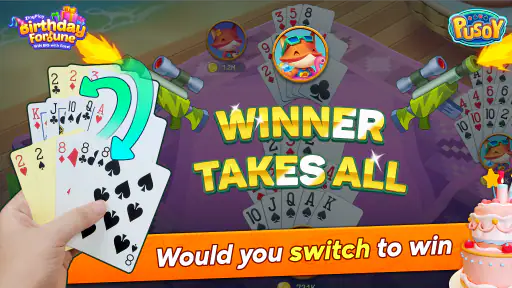
The central task is to arrange thirteen cards into a legal and competitive structure. That sounds simple until a hand offers several tempting possibilities at once. You may have a strong combination that belongs in one section, a useful pair that could support another, and a few awkward cards that need to be placed without weakening the whole arrangement. The challenge is not just identifying good cards; it is deciding where each card does the most work.
I like this format because it creates a different rhythm from familiar draw-and-discard card games. In a typical casual card game, the next draw often changes the entire plan. Here, the important thinking happens while examining what you already have. That gives the game a more deliberate personality. It is suitable for a short break, but it does not feel entirely mindless, especially when you begin noticing how often a modest hand can be improved through better distribution.
A useful beginner habit is to avoid committing immediately to the first attractive combination you see. I first look for the strongest possible group, then consider whether preserving it makes the remaining cards too weak. A pair may look helpful, but keeping it intact can leave the other sections with disconnected cards. Conversely, breaking a promising group can sometimes produce a more balanced overall hand. This trade-off is one of the first lessons the game teaches without needing a long tutorial.
Another practical tip is to judge the hand in layers. I separate cards that clearly belong together, cards that could support more than one plan, and cards that are mainly damage control. The flexible cards deserve attention because placing them too early can close off a better arrangement. This approach makes the opening seconds less chaotic and helps me avoid the common mistake of building one impressive section while neglecting the rest.
More From Our News Desk

Clash of Clans Is Won Between the Battles

Android Auto Makes the Case for Quieter Car Software

MobiOffice: Transforming Mobile Productivity with Seamless Integration

EA SPORTS FC™ Mobile Soccer: Redefining Mobile Sports Gaming

How Microsoft OneDrive Became a Mobile Productivity Giant

How Google Translate Breaks Language Barriers Effortlessly
The competitive nature also changes how I think about risk. A hand does not need to look perfect to be playable. Sometimes the best decision is to secure a reliable arrangement instead of gambling the entire result on a narrow possibility. That is especially relevant when I am playing casually and want consistent decisions rather than a dramatic but unlikely payoff. Players who enjoy analyzing trade-offs will probably find more depth here than players who only want instant matching or luck-driven rounds.
What a normal short session looks like
Imagine having ten minutes before an appointment. You open the game, receive a hand, and begin sorting mentally before making a move. The first round may be spent learning how the cards should be divided. In later sessions, the same amount of time feels more engaging because you are no longer just searching for combinations; you are comparing possible arrangements and trying to predict which one gives the strongest complete result.
That makes it a reasonable companion for a commute or a quiet evening, provided you are comfortable with competitive concentration. I would not choose it when I want something completely passive. Even a short session can pull me into reviewing a decision I made a few moments earlier, particularly when I realize that a card placed for convenience would have been more useful elsewhere.
The game is also a good fit for people who enjoy improving through repetition. You can develop a personal routine: inspect the whole hand, identify fixed groups, hold flexible cards aside, and only then finalize the structure. This does not guarantee a good outcome, but it reduces careless decisions. The improvement feels practical rather than abstract because the same types of mistakes appear repeatedly and become easier to recognize.
Where speed matters and where it does not
From a player’s perspective, the important speed question is not merely how quickly a screen opens. It is whether the game lets me move from receiving a hand to making decisions without unnecessary friction. Card games benefit from a clean pace: I want enough time to think, but I do not want routine actions to feel like work. Pusoy ZingPlay’s appeal depends heavily on that balance because the arrangement phase is the main event.
I would describe the expected pace as focused rather than frantic. The format naturally gives the player a reason to pause and inspect the hand, so a little thinking time feels appropriate. This is different from an arcade card title where speed itself is the challenge. If you prefer rapid taps and constant visual movement, the thirteen-card structure may feel slower than expected. If you enjoy making a plan before committing, that slower rhythm becomes an advantage.
One of my better habits is to make a provisional arrangement before trying to optimize it. I place the obvious groups mentally, then test two or three alternatives for the uncertain cards. This keeps me from repeatedly rebuilding the entire hand. It also makes the experience feel faster because I am comparing clear options instead of moving randomly between possibilities.
Heavy-use moments and resource expectations
The most demanding moments are likely to come during extended competitive sessions rather than during a single hand. Repeated rounds mean more time with the display active and more frequent interaction, so the experience may matter differently on a newer phone than on an older one. I would treat it as a game that deserves ordinary attention to battery and available storage, especially if you plan to play for long periods instead of fitting in occasional rounds.
The minimum operating-system requirement is Android 8.0, so very old Android devices are not the intended audience. That requirement does not by itself tell me how every phone will perform, but it gives a useful boundary when deciding whether an older handset is suitable. On a device that already struggles with modern games, I would not assume that a card title will automatically feel effortless simply because its subject is cards.
Heavy use can also mean mental load, not just hardware load. When I play several sessions in a row, the main fatigue comes from repeatedly evaluating similar-looking choices. My practical advice is to stop after a few frustrating hands rather than trying to force a better result. A short break often improves decision quality more than continuing while annoyed, because rushed placement is particularly costly in this format.
In-app purchases range from forty-nine cents to ninety-nine dollars and ninety-nine cents per item. That is worth keeping in mind before starting a long session, especially if you are reviewing optional purchases while focused on competition. I prefer deciding in advance whether I am playing purely for the free experience or whether any optional spending fits my budget. The free entry point makes trying the game easy, but the presence of purchases means families should still pay attention to how the device is used.
Reliability, recovery, and the practical experience
Reliability matters more in a competitive card game than in a disposable offline pastime. Losing concentration because of a pause, an interrupted session, or a need to restart can affect the entire experience. I therefore judge this kind of app by how comfortably it lets me return to play after ordinary interruptions, not just by how enjoyable the cards are when everything goes perfectly.
I would install it on the device I actually intend to use and give it a short trial before depending on it for regular play. That simple approach helps reveal whether the phone handles the current version comfortably and whether the game’s pace suits me. The current version is 4.21.362, so keeping the app updated is a sensible part of maintaining a smooth experience rather than assuming an older installation will behave identically.
Recovery is also about personal routine. If I am interrupted while considering a hand, I prefer to pause my decision-making rather than return and tap through quickly. The game rewards attention, and a distracted choice can be worse than a modest arrangement made carefully. For that reason, I see it as more reliable in a quiet setting than in a situation where notifications, conversations, or frequent app switching are likely to break concentration.
There is a subtle difference between technical reliability and competitive trust. Even when the app runs normally, a player may dislike a format if the result feels too dependent on uncertain outcomes or if the rules are not immediately familiar. New players should spend time understanding the arrangement logic before judging their performance. Early losses may reflect inexperience with hand organization rather than a problem with the game itself.
Device constraints and who should choose it
The Android requirement of version 8.0 or newer makes compatibility straightforward for many current devices, but it still rules out some older phones and tablets. I would also leave some room for the game and its updates rather than filling a device completely. A phone with limited free space or an aging battery may be a poor place for any regularly played competitive title, even one centered on cards.
Screen size affects comfort too. A larger display can make card arrangement easier to inspect, while a small screen may require more careful tapping and make similar cards harder to distinguish at a glance. I would choose a larger phone or tablet when possible if I expected to play for long periods. On a compact device, short sessions are more appealing because extended concentration can become tiring.
The Teen rating is another reason to think about audience. I would recommend it to teenagers and adults who already enjoy competitive card games, but I would not present it as a simple children’s game just because the rules use cards. The strategic pressure and in-app purchase range make it better suited to players who understand competition and can make sensible decisions about optional spending.
It is a strong match for someone who wants a thinking game that can be played in compact sessions, enjoys comparing arrangements, and does not need elaborate storytelling. It is less suitable for anyone looking for a relaxed solitaire experience, a traditional casino simulation, or a game where luck alone creates the excitement. Players who dislike losing because of a questionable decision may also find the format demanding, since the hand organization leaves plenty of room for self-inflicted mistakes.
How it compares with more familiar card alternatives
Compared with solitaire, this game asks for more forward planning and gives the hand a competitive purpose. Solitaire is often about clearing a layout through a sequence of available moves; here, I am trying to construct a strong arrangement from a fixed group of cards. That makes Pusoy ZingPlay more social in spirit, even when I am playing alone with a phone in hand, because the decisions are framed around outperforming other players rather than simply completing a puzzle.
Compared with fast matching games, it is less about reaction time. A matching title can be satisfying when I want immediate feedback, while this game makes me sit with uncertainty for longer. The trade-off is clear: matching games are easier to start without preparation, but the thirteen-card format offers more room for a personal strategy to develop.
Compared with standard draw-and-discard games, the key difference is the importance of arrangement before the outcome. In a draw-based game, I often respond to new information one turn at a time. Here, I need to assess the entire hand and understand how a decision affects several sections at once. I would choose this game when I want a compact strategic puzzle, and a more conventional card game when I want a familiar sequence with less emphasis on dividing one hand into competing priorities.
That distinction also explains why the title may not click immediately. The store summary emphasizes testing strategies and arranging thirteen cards, but the real learning curve comes from discovering that a strong individual combination is not automatically the strongest overall hand. New players should give themselves time to make imperfect arrangements. The game becomes more enjoyable once mistakes turn into recognizable patterns rather than feeling like random failure.
Small techniques that improve decision-making
My first concrete technique is to protect flexibility. When a card can support several possible groups, I delay placing it until the rest of the hand becomes clearer. This is more useful than simply building the first pair or sequence I notice. It keeps alternative plans open and reduces the chance that one early decision forces several weak placements later.
My second technique is to compare complete hands, not isolated sections. I ask which arrangement leaves the fewest awkward cards overall. A spectacular top section can be tempting, but if it makes the remaining sections unusually fragile, a more balanced version may be the better choice. This is the kind of trade-off that separates casual sorting from deliberate play.
My third technique is to review losses by decision point. Instead of saying that the hand was bad, I ask whether I committed too early, protected the wrong group, or ignored a flexible card. That review makes future sessions more useful. It also prevents the common habit of blaming every poor result on luck when the real issue was an avoidable arrangement choice.
A fourth useful workflow is to set a stopping rule. I stop after a few hands in which I notice myself making hurried choices or replaying the same mistake. This is not a feature of the app, but it is a practical way to get more value from it. Because the game is mentally focused, disciplined breaks can preserve the strategic part of the experience and prevent it from becoming a frustrating loop.
My performance verdict after weighing the trade-offs
Pusoy ZingPlay - 13 cards game is a focused choice for players who want competitive card strategy without committing to a large, story-heavy game. Its thirteen-card structure gives each hand enough complexity to feel meaningful, while the free price makes it easy to try. VNG ZingPlay Studio has built its identity around a format that rewards planning, balance, and patience rather than pure speed.
My main reservation is that the same structure that creates depth can make the game feel demanding. It is not the best pick for a quick, effortless distraction, and players on older or constrained devices should test it rather than assume every phone will feel equally comfortable. Longer sessions may also require more attention to battery, interruptions, and optional spending than a casual player expects from a card game.
Still, I would recommend it to a friend who enjoys studying a hand and improving through repeated decisions. The large existing audience, the 4.1 average, and more than five million installs show that it has broad reach, while the Teen rating and optional purchases are useful reminders to choose the right setting and play responsibly. If you enjoy turning thirteen cards into the best complete plan you can find, this is a worthwhile free download; if you want instant action or uncomplicated luck, another card game will suit you better.
For me, the deciding strength is not the promise of winning every hand. It is the satisfaction of seeing a messy set of cards become a coherent arrangement after a few careful comparisons. That feeling gives the game a clear purpose, and it is why I would keep it available for short strategic sessions rather than treating it as a one-time curiosity.
Pusoy ZingPlay - 13 cards game Frequently Asked Questions
Does Pusoy ZingPlay offer a tutorial or help for learning the rules?
Pusoy ZingPlay revolves around arranging 13 cards into hands that follow the game’s ranking rules, so understanding the hand order is important before competing. If you are new to this format, look for any introductory guidance or practice options available in the app and take time to learn how valid arrangements work. Starting with the rules in mind can make early matches easier to follow.
Can I play Pusoy ZingPlay with friends?
Pusoy ZingPlay is designed around online card matches, where you compete against other players. Playing with friends may depend on the matchmaking and social options available in your version of the app. Before downloading, consider whether you want a multiplayer experience and check the in-game menus for ways to connect with people you know. Online features can make the game feel more social, but they also rely on an internet connection.
What age rating does Pusoy ZingPlay have, and is it suitable for younger players?
Pusoy ZingPlay is rated Teen, so it is worth checking the age guidance and your family’s preferences before downloading it for a younger player. The game centers on competitive card play and online features, which may involve interacting with other players. Parents can also use device settings to manage access and require approval for purchases.
What is Pusoy ZingPlay – 13 Cards Game?
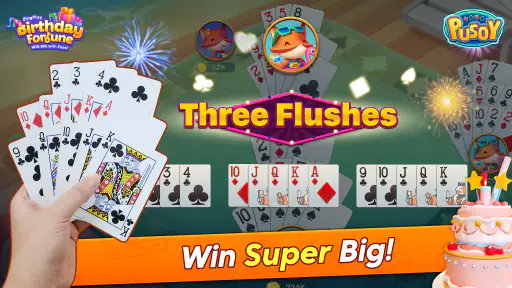
Pusoy ZingPlay is a mobile card game based on the popular 13-card poker format, also known as Chinese Poker in many regions. Players arrange their cards into three hands and compete against others according to the game’s ranking rules. The app combines traditional gameplay with online matches, virtual rewards, player profiles, and a colorful interface designed for quick sessions.
How do you play Pusoy ZingPlay?
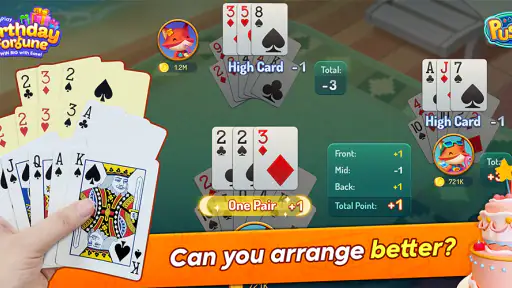
At the beginning of each round, you receive 13 cards and must divide them into three separate hands: a five-card front or back hand arrangement depending on the table rules, plus the required middle and remaining hand. Your hands must follow the correct strength order, or the arrangement may be considered invalid. After submitting, your combinations are compared with opponents’ hands, and points are awarded based on the results.
Pros
- Quick matchmaking keeps games moving with little waiting.
- Simple controls make it easy for beginners to learn the card layout.
- Competitive tables offer replay value for regular players.
- In-game chat adds a social element during matches.
- Works well for short gaming sessions on mobile devices.
Cons
- Online play requires a stable internet connection.
- Random card deals can make matches feel luck-dependent.
- Chat features may expose players to unwanted messages.
- Progress and rewards may encourage frequent daily play.
- Some tables or features may be limited without in-app purchases.
- Category
- Card
- Version
- 4.21.362