Tonk 12: Tunk Rummy ZingPlay
- 950.00
- 4.4
- Installs
- 100.00K
- Price
- Free
Screenshots



Analysis by Reviewed
I approached Tonk 12: Tunk Rummy ZingPlay as the kind of card game that might sit on a shared phone or tablet, ready for a quick round when someone has a few spare minutes. That setting matters because a game used around a household is judged differently from a private, long-session hobby. It needs to be easy to recognize, simple to hand over, and clear enough that another person can understand what is happening without needing a long explanation.
My first impression is that this is a focused digital version of Tonk rather than a broad collection of unrelated card activities. It is free to install, belongs to the card-game category, and comes from VNG ZingPlay Studio. The store page shows a 4.4 average from around 3,700 ratings, with more than 100,000 installs, so there is already a meaningful group of players trying it. That does not guarantee that every household will enjoy it, but it suggests the game has found an audience beyond a tiny niche.
How Tonk 12 fits into shared everyday play
The most natural use case for me is a short break: one person finishes a task, another is waiting for transport, and the phone becomes a quick way to play rather than a device reserved for a long evening session. A Tonk round can feel more purposeful than endlessly scrolling, while still being light enough to stop when the household needs the device back.
That shared-device scenario also exposes an important limitation. A card game is personal once progress, purchases, or play history enter the picture. Passing the phone from one person to another is convenient, but it can blur whose session is active. I would not treat a common household device as automatically suitable for several separate players. Before anyone begins, I would agree on who is playing, who is only watching, and when the device is being returned.
The game’s short store description, “Tonk 12,” is concise rather than explanatory. New players should therefore expect to spend a little time learning the particular rules and flow instead of assuming that familiarity with another rummy-style game will cover everything. That is not a serious flaw, but it changes how I would introduce it to a relative or friend: I would sit with them for the first session rather than simply handing over the phone and walking away.
For a household, that first shared session can be useful. One player can explain the purpose of each action while the other watches the turn structure. This is especially helpful when people have different levels of card-game experience. The stronger player should avoid making every decision for the beginner, though. Letting the new player make a few imperfect choices is a better way to discover whether the game’s rhythm actually suits them.
What the first session should establish
I recommend treating the opening round as a trial, not as a commitment. Notice whether the interface makes the current turn obvious, whether the cards are comfortable to read on the available screen, and whether the pace feels relaxed or demanding. These are practical questions that matter more than a store summary when a game is going to be used by several people.
More From Our News Desk

Clash of Clans Is Won Between the Battles

Android Auto Makes the Case for Quieter Car Software

MobiOffice: Transforming Mobile Productivity with Seamless Integration

EA SPORTS FC™ Mobile Soccer: Redefining Mobile Sports Gaming

How Microsoft OneDrive Became a Mobile Productivity Giant

How Google Translate Breaks Language Barriers Effortlessly
There is also a useful distinction between playing beside someone and playing on their behalf. If a child, partner, or older relative asks for help, I would explain the available choices but let the account holder tap them. That keeps the session understandable and avoids the common household problem where one person’s play becomes another person’s hidden activity.
Because the game is rated Teen, I would keep that age context visible when deciding who should use it. The rating is not a substitute for supervision or a complete description of every situation a player may encounter, but it is a clear signal not to present the game as automatically suitable for young children. In a shared home, adults should make the decision before installing it on a device used by younger family members.
Keeping setup separate from household habits
The technical entry point is reasonably broad: the current version is 1.10 and it requires Android 8.0 or later. That makes it accessible on many still-used Android phones, although compatibility is not the same as comfort. An older device may install the game and still feel less pleasant if the screen is small, the battery is tired, or other apps are competing for memory.
My practical advice is to install it on the person’s own profile or device whenever possible. If that is not possible, make a simple boundary before starting: do not change another player’s settings, do not spend anything without permission, and do not assume that a visible session belongs to the person holding the phone. These are household rules rather than game features, but they prevent avoidable confusion.
The free entry point is helpful for testing. I can see why someone would want to try a few sessions before deciding whether Tonk 12 deserves regular space on a device. At the same time, the presence of in-app purchases ranging from $0.99 to $199.99 per item means the word “free” should be understood as free to start, not as a promise that every optional transaction is small.
That price range is the biggest reason I would establish a purchase boundary before sharing the game. On a family phone, I would not leave payment decisions to whoever happens to be playing. The safest routine is to keep the device owner responsible for any transaction and to discuss spending openly. I would also avoid describing paid items as necessary until the player has experienced the basic game and decided whether they even enjoy it.
This is one of the less obvious trade-offs of a free card game. The low barrier makes casual experimentation easy, but the wide gap between the smallest and largest listed item means the financial side deserves more attention than the simple installation price suggests. For a solo adult player who is comfortable managing purchases, that may be manageable. For a shared device, it is a reason for firmer boundaries.
Coordinating play without turning it into a chore
Coordination works best when it stays simple. I would choose a regular playing window, decide whose turn it is to use the device, and stop at a natural break rather than interrupting someone in the middle of a decision. That approach is especially useful when one person is learning and needs more time to read the cards or understand the consequences of a move.
I would also avoid assuming that two people can safely share one active game identity. The available product information identifies the developer and the game, but it does not turn a shared device into a multi-user household system. In practical terms, that means each player should be clear about whether they are continuing their own session, observing someone else, or simply trying the game for the first time.
A small written note can help in a busy home: “This is Alex’s round,” or “Do not purchase anything.” It sounds excessive for a card game, but shared phones create exactly the kind of interruptions that make memory unreliable. A visible agreement is easier than trying to reconstruct who tapped what after the fact.
Another useful habit is to let the less experienced player choose the pace. Card games can look simple while hiding decisions that are not obvious to a newcomer. If an experienced player rushes through every turn, the beginner may learn only that the game is confusing. If the experienced player explains one choice at a time, the same session can become a relaxed introduction to Tonk.
For a couple or a group of adults, this can be a pleasant social activity even when everyone is not playing simultaneously. One person can play while another comments on the hand, then they can swap after the round. I would not expect the app alone to organize a full family game night, though. Its value in that setting comes from giving people a compact card-game activity, not from replacing face-to-face conversation or a physical deck.
Age, trust, and the limits of a shared screen
The Teen content rating makes the game a better fit for older players than for small children. I would use that rating as a starting point for a household conversation, especially if the app is being installed on a tablet that several age groups use. Adults should know who is playing, understand that optional purchases exist, and decide whether the game belongs on that shared device.
Trust is just as important as age. A teenager who understands the value of digital purchases may be perfectly capable of using the game responsibly, while an adult who taps quickly through unfamiliar screens could still make a mistake. The sensible boundary is not simply “older users may play”; it is “the person using the device understands the rules for play and spending.”
I would also pay attention to how the game affects mood. Competitive card play can be satisfying when a player accepts wins and losses as part of the format. It is less suitable when someone becomes frustrated by a poor hand, keeps chasing a better result, or feels pressured to spend after an unsuccessful round. A household should be willing to pause the game if the entertainment value has disappeared.
This is where Tonk 12 differs from a quiet solo puzzle. A card game invites comparison, prediction, and reaction, even when only one person is holding the device. If the household wants something completely calm and consequence-free, a traditional offline puzzle or a simple single-player card game may be a better choice. Tonk 12 is more appropriate for players who enjoy uncertainty and making decisions with incomplete information.
How it compares with physical cards and other mobile choices
Compared with a physical deck, the app is more convenient when nobody wants to shuffle, deal, or keep track of the table. It is also easier to use during a short break or while travelling, provided the device is available and comfortable to hold. The trade-off is that the digital format makes the experience less visible to everyone nearby. A physical hand naturally invites conversation; a phone can isolate the player unless others deliberately join in.
Compared with broad card-game collections, this title’s narrower identity may be an advantage for someone who already wants Tonk rather than a menu of unrelated games. A collection is better for a household with very different tastes, because one person can switch from solitaire to another familiar format. Tonk 12 makes more sense when the specific appeal is learning and repeating this style of play.
Compared with a purely offline card app, the free-to-start model and optional purchases deserve more attention. Offline play can be preferable for someone who wants a quiet, predictable activity with no transaction decisions. On the other hand, a dedicated Tonk experience can be more appealing to a player who wants a focused environment instead of a generic deck simulation.
I would also distinguish it from a physical Tonk game among friends. The physical version wins for direct conversation, flexible house rules, and transparent handling of the deck. The app wins for convenience and for removing the small chores that often prevent people from starting. Neither is universally better; the right choice depends on whether the priority is social presence or immediate access.
Small techniques that make the experience better
My first practical tip is to learn the turn rhythm before worrying about speed. New players often focus on the card values and overlook the sequence of actions. Taking a moment to identify what the game expects at each turn reduces accidental taps and makes later decisions easier to evaluate.
Second, I would use the first few sessions to observe personal habits rather than chase results. Do you hold cards too long, discard too quickly, or follow another player’s pattern without checking your own hand? A short note after a round can reveal more than a win or loss. This is particularly useful when introducing the game to someone who thinks card games are entirely luck-based.
Third, separate learning time from social time. If a household is trying to enjoy a relaxed evening, do not turn every move into a lesson. Agree on one or two ideas to discuss, then let the player continue. That balance keeps the game from feeling like homework while still helping a beginner improve.
Fourth, treat spending as a separate decision from playing well. Optional items can be tempting after a disappointing session, but a purchase should never be used as a response to frustration. I would wait until the player has used the free version enough to know whether the game itself is enjoyable, and I would keep the account owner in charge of any payment.
Finally, use a shared device only when the handoff is clear. Close the session or announce that the next person is taking over, rather than leaving the phone unlocked with the game open. That tiny habit protects personal boundaries and makes the game feel more orderly without requiring complicated household procedures.
Who should install it, and who should skip it
I think Tonk 12 suits adults and older teens who already like rummy-style card decisions and want a focused mobile version. It is also a reasonable choice for someone who wants a free way to test a Tonk game before buying or arranging a physical set. The compact format makes it easy to fit into spare moments, and the dedicated identity is more appealing than a large collection if Tonk is the main interest.
I would be more cautious recommending it to a young child, a player who dislikes competitive uncertainty, or anyone sharing a device where purchases are not carefully managed. I would also steer away from it for a household looking for a completely offline, conversation-first activity. In those cases, a physical deck or a simpler offline card app may create fewer boundaries to negotiate.
The game is free, but the optional purchase range means families should not confuse easy installation with zero financial risk. The Teen rating also makes it unsuitable as an automatic choice for every member of a household. Those are not reasons to reject it outright; they are reasons to match it with the right player and a clear setup routine.
My household verdict
After considering it as a shared-device game, I see Tonk 12 as a focused option rather than a universal family recommendation. VNG ZingPlay Studio has positioned it around the Tonk format, and the solid average rating suggests that many players find the core experience worthwhile. I like the fact that a person can begin without paying, explore the game, and decide whether its particular style fits their taste.
My recommendation comes with conditions: keep the player identity clear, respect the Teen rating, and agree on purchase rules before the first serious session. Those steps matter because the app may be passed around more easily than the account or payment responsibility should be. On a personal phone, the arrangement is straightforward. On a household tablet, a little coordination prevents most of the avoidable friction.
For me, the best role for this game is a short, focused card session with an adult or older teen who wants Tonk specifically. It is less convincing as a replacement for a physical family game night and less suitable for homes that want zero transaction concerns. If that distinction matches your situation, I think it is worth trying. Start with the free experience, learn the rhythm patiently, and decide based on how the actual sessions feel rather than on the promise of a quick download.
Tonk 12: Tunk Rummy ZingPlay Frequently Asked Questions
What age rating does Tonk 12: Tunk Rummy ZingPlay have?
Tonk 12: Tunk Rummy ZingPlay has a Teen content rating, which is worth checking before installing it for a younger player. The rating is a useful starting point for families, but it is still sensible to review the game together and consider your household’s preferences about online card games and in-app purchases.
What is Tonk 12: Tunk Rummy ZingPlay?
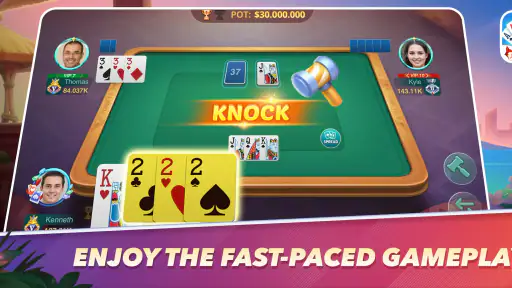
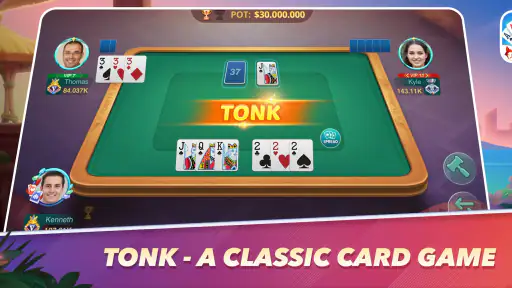
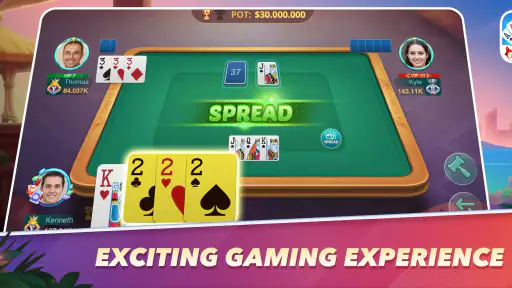
Tonk 12: Tunk Rummy ZingPlay is a digital card game inspired by the traditional Tonk or Tunk rummy format. It lets players create combinations, manage cards in their hand, and compete in fast-paced rounds against other users. The ZingPlay version presents the game in a mobile-friendly format with a polished interface, online matchmaking, and features designed for both casual sessions and more competitive play. It is developed by VNG ZingPlay Studio.
How do you play Tonk 12: Tunk Rummy ZingPlay?
The main objective is to organize your cards into valid groups or sequences while reducing the value of unmatched cards in your hand. Depending on the selected mode and table rules, players draw and discard cards until someone finishes or achieves the required result. Before playing for the first time, it is worth checking the in-game instructions because scoring, winning conditions, and available variations may differ from traditional Tonk rules.
Is Tonk 12: Tunk Rummy ZingPlay free to download and play?
The game is free to download, allowing users to install it and try its core gameplay without paying an upfront purchase price. However, it offers in-app purchases, so spending may be available for optional items. We recommend reviewing the payment settings on your device, especially if children also use the phone or tablet. Purchases range from $0.99 to $199.99 per item.
Can I play Tonk 12: Tunk Rummy ZingPlay offline?
Tonk 12: Tunk Rummy ZingPlay is primarily designed around online play, so an internet connection may be required for matchmaking, account features, events, rankings, and synchronization. Offline availability can depend on the specific version and game mode, and some functions may not work without a stable connection. If you plan to play while traveling, test the app beforehand rather than assuming every feature works offline.
Pros
- Quick matches are ideal for short breaks or casual mobile sessions.
- Simple rules make it easy for new players to learn the card game.
- Online multiplayer adds variety through matches against different opponents.
- The colorful interface makes cards and game actions easy to recognize.
- Progression and rewards encourage regular play without lengthy sessions.
Cons
- Matchmaking quality may vary depending on the time and number of active players.
- Online play requires a stable internet connection for a smooth experience.
- Frequent rewards and prompts can make the interface feel somewhat busy.
- Some competitive features may favor players who return more frequently.
- The game may become repetitive if you prefer deeper strategy or varied modes.
- Category
- Card
- Version
- 1.10