Tile Journey - Classic Puzzle
- 1.81K
- 4.5
- Installs
- 1.00M
- Price
- Free

Screenshots







Analysis by Reviewed
Tile Journey - Classic Puzzle is the kind of board game I open when I want my attention occupied without committing to a long session. Its central idea is easy to understand: arrange and match tiles until the board is cleared. That simplicity is a strength, but the experience depends heavily on how comfortably the visual style, sound, and pacing support the repeated puzzle loop. After spending time with it, I found a game that works best as a quiet, focused break rather than as a dramatic challenge-driven adventure.
It is a free game from Metajoy, available for players rated Everyone, and it belongs to the board-puzzle side of mobile gaming. The app has built a 4.5 average from around 14 thousand ratings, with more than 1 million installs, which makes its broad appeal easy to understand. It is also designed to work offline, an important detail for anyone who wants a puzzle during a commute, in a waiting room, or somewhere with unreliable reception.
My main recommendation is simple: try it if you enjoy visual sorting, gradual progress, and a relaxed tile-matching routine. I would be more cautious if you need deep strategy, a competitive multiplayer experience, or a game that constantly introduces new mechanics. Tile Journey is deliberately approachable, and that means its calm repetition will suit some players much better than others.
A gentle first impression built around clarity
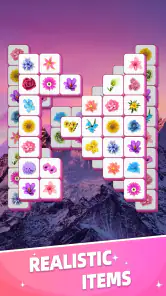
The first thing I noticed was how quickly the game communicates its purpose. There is no complicated rulebook to study before starting. The tile layout gives me an immediate visual problem, and the act of looking for matching pieces becomes the main invitation to play. That low barrier matters on a phone, where a game often has only a few seconds to convince me that it deserves space on my screen.
The presentation supports that first impression rather than competing with it. The board is the focus, and the artwork gives the tiles enough identity to make scanning feel natural. I never felt that decorative elements were more important than the puzzle itself. For this type of game, that restraint is valuable because crowded screens can turn a relaxing matching task into needless visual work.
At the same time, the simplicity means the opening can feel familiar to anyone who has played other tile-matching games. Tile Journey does not rely on a complicated premise to stand apart. Its appeal comes from the combination of accessible rules, offline convenience, and a soft, unhurried mood. I think of it less as a game that demands my full evening and more as a dependable pocket activity.
The free entry point also makes sense for this format. I can begin without paying, learn the rhythm, and decide whether the loop fits my habits before spending anything. The optional purchases range from $0.99 to $69.99 per item, so I would advise treating them as entirely optional until I know how long I expect to keep playing. A free puzzle should not become an impulse-purchase trap simply because a difficult board interrupts a relaxed session.
More From Our News Desk

Weather by Xiaomi Review: Clear at a Glance, Less Clear Up Close

X Under Pressure: Can It Recover When Posting Goes Wrong?

Clash of Clans Is Won Between the Battles

Android Auto Makes the Case for Quieter Car Software

MobiOffice: Transforming Mobile Productivity with Seamless Integration

EA SPORTS FC™ Mobile Soccer: Redefining Mobile Sports Gaming
Who gets the most from the opening hours
I see the strongest match for people who like sorting games, classic board-style puzzles, and short periods of concentration. It is also a reasonable choice for a player who wants something that does not require a constant internet connection. A parent looking for a simple game suitable for an Everyone audience may appreciate the straightforward presentation, while an older player who prefers clear visual goals may find the controls less intimidating than those of a more elaborate strategy title.
My everyday use case is a short break between tasks. If I have ten minutes before an appointment, I can start a board, focus on the available matches, and put the phone away without needing to remember a complicated story or maintain a team. That makes it more convenient than a larger strategy game, but also less absorbing if I am looking for a long-term world to explore.
The visual world gives matching a calm identity
Tile Journey’s setting is expressed more through its visual language than through a detailed narrative. The sense of travel comes from the way the game frames repeated boards as part of a continuing journey, while the individual tiles provide the immediate visual vocabulary. I found that this approach helps the game feel more cohesive than a bare grid of identical symbols, even though the matching rules remain the real engine.
Good tile art has to solve a practical problem: pieces need to be attractive without becoming difficult to distinguish. Here, the important question is not whether each image is elaborate, but whether I can quickly recognize what belongs together when the board becomes busy. The visual design works best when I stop admiring individual pieces and begin reading the entire arrangement as a set of possible decisions.
That reading process creates one of the more useful habits for playing well. I do not simply grab the first visible match. I scan the board for pieces that are likely to become awkward later, especially when a choice can either open space or leave a less flexible tile buried in the remaining layout. This is a small but meaningful shift from casual tapping to planning. The art direction helps because the board remains readable enough for these comparisons.
A practical tip is to pause before making an obvious match. I look at the available spaces and ask which tile will be hardest to pair after the move. This is especially helpful when several matches appear equally attractive. Choosing the pair that improves the board’s future visibility is often better than choosing the pair that merely looks convenient in the moment. That kind of decision gives the simple format more texture than the store summary suggests.
Where the visual approach may not be enough
The same clarity that makes the game welcoming can make it feel visually modest to players who expect a large fantasy setting, character development, or highly animated environments. The travel theme creates a pleasant frame, but it does not replace a story-heavy campaign. If I want a board game with a strong narrative identity, a collectible system, or a constantly changing cast of characters, I would look elsewhere.
I also would not choose this as my primary game for visual spectacle. Its art is there to support recognition and mood, not to deliver a stream of major set pieces. That is a sensible choice for a matching puzzle, but it means the experience depends on whether I enjoy the act of noticing patterns. Players who need novelty in every minute may find the visual language too restrained.
Sound and pacing make the routine easier to settle into
The audio direction matters because tile matching can become repetitive when every action feels isolated. In my experience, the sound works best as a gentle confirmation that keeps the board feeling responsive without turning each move into an event. The result is a playable mood that encourages concentration rather than urgency.
I appreciate that the game’s rhythm leaves room for my own pace. I can examine the arrangement, make a move, and continue scanning without feeling pushed into rapid decisions. That makes it suitable for low-pressure play, especially when I am using it to reset my attention after work or during a quiet pause. The game’s atmosphere is not built around tension; it is built around a steady sequence of small completions.
This pacing also changes how I think about mistakes. In a faster puzzle, I may act on instinct and only notice the consequences after the board becomes difficult. Here, the slower rhythm encourages me to treat each move as a visual decision. I can use the pause between actions to check whether I am opening useful space or creating a future blockage. That is one of the game’s understated strengths.
There is a trade-off, though. A calm tempo can feel flat if I am playing for excitement. The game does not appear designed to deliver the same rush as a timed arcade puzzler, nor does it offer the social pressure of a competitive board game. I would pick it when I want my mind occupied but not stressed. For a commute where I want fast reactions and a strong adrenaline loop, another category would probably be a better fit.
A useful way to manage short sessions
I found that the game fits naturally into a “one board, then stop” routine. Instead of opening it with the vague intention of playing until I am bored, I use a single puzzle as a defined break. That helps preserve the relaxing quality and prevents the repetition from becoming tiring. It is also a good approach for anyone who wants a casual game without allowing it to swallow a whole evening.
When I have more time, I play with a different goal: not simply clearing the board, but improving the quality of my decisions. I try to reduce careless selections, keep the remaining layout readable, and avoid making a match just because it is immediately available. This turns a familiar activity into a small concentration exercise without pretending that it is a full strategy game.
How the mechanics fit the mood
The matching system is easy to pick up, but the board still rewards attention. The basic action may be simple, yet the order of choices influences what remains visible and what becomes difficult to resolve. That gives the game a useful middle ground: I can play casually, but I can also engage more thoughtfully when I want a little extra challenge.
Its offline design is one of the most practical mechanical advantages. I can treat it as a reliable fallback when streaming, social games, and online services are inconvenient. This makes it different from many modern mobile games that assume a persistent connection for every meaningful action. For travel, low-signal areas, or a phone with limited data, that distinction is more important than flashy presentation.
The game is running in version 0.2.78 and supports Android 7.0 or later. That broad compatibility makes it accessible on older devices that may struggle with more demanding games. I would still judge the experience on the particular phone or tablet I use, especially if I care about touch precision or screen size, but the supported operating-system requirement is friendly to players who are not upgrading hardware frequently.
One advanced habit I recommend is to separate “safe” matches from “revealing” matches. A safe match removes pieces without changing my understanding of the board very much. A revealing match opens a section or exposes options that were previously hard to evaluate. When I have a choice, I often prefer the revealing move because it gives me better information for the turns that follow. This is not a complicated strategy, but it makes the game feel more deliberate.
Another useful trade-off concerns speed. Moving quickly can feel satisfying, but it can also hide the difference between a good match and a merely available one. I get better results when I scan in a fixed order: first the most constrained-looking tiles, then the pairs that open space, and finally the easy matches. That workflow reduces random tapping and makes the board easier to read as it develops.
Where it compares well with familiar alternatives
Compared with a traditional physical matching puzzle, Tile Journey is more convenient because it handles the board setup and lets me play almost anywhere. I do not need a table, a box of pieces, or a long uninterrupted session. The cost of that convenience is tactile satisfaction: a phone screen cannot reproduce the feel of moving real tiles across a table.
Compared with a classic match-three game, this feels more contemplative. Match-three titles often emphasize cascading effects, quick combinations, and immediate visual fireworks. Tile Journey asks me to inspect relationships among pieces and think about what remains. If I prefer chain reactions and rapid rewards, the usual match-three format may be more exciting. If I enjoy sorting and gradual board cleanup, this game is the closer fit.
Compared with a competitive online board game, it is much less socially demanding. There are no opponents waiting for my turn in the same way, and I can stop whenever I want. That is ideal for private, offline play, but it also means there is no direct rivalry to create pressure or motivation. Players who thrive on rankings and live matches should choose a more explicitly competitive alternative.
The purchase model is another point to consider. Because the game is free to start and includes items priced from $0.99 to $69.99, I would avoid buying anything during a frustrating moment. I would first see whether the core loop remains enjoyable without extras. If I am only playing occasionally, the free version may be enough; if I become a regular player, I should decide on a personal spending limit before exploring optional purchases.
The atmosphere verdict: a focused journey, not a dramatic one
Tile Journey succeeds when its art, sound, and pacing work together to make repeated matching feel comfortable. The travel framing gives the boards a sense of continuity, the visual language keeps the pieces readable, and the audio supports a steady rhythm instead of demanding attention for itself. None of these elements overwhelms the mechanics, which is exactly why the mood remains coherent.
My strongest positive impression is the balance between accessibility and small decisions. I can play without preparation, yet I still have reasons to pause and consider the next move. The offline format adds genuine everyday value, particularly for players who want a dependable puzzle away from a connection. The Everyone rating and simple presentation also make it easier to recommend across a wide range of ages, provided the player enjoys repetition.
The main limitation is equally clear: the game’s calm identity will not satisfy everyone. It does not replace a deep strategy board game, a story-rich adventure, a competitive multiplayer title, or a fast arcade puzzle. Its progression can also feel routine if I need constant mechanical surprises. I would skip it if I already know that tile matching loses its appeal after a few sessions, because the atmosphere cannot compensate for a loop I fundamentally dislike.
For me, the best way to approach it is as a quiet pocket ritual. I play when I want to notice patterns, clear a board, and let my attention settle for a while. Metajoy has made a free board game that is easy to enter and pleasant to revisit, with enough decision-making to reward care without turning every session into work. Tile Journey - Classic Puzzle is at its best when you want a calm, offline matching break with a clear visual mood.
That recommendation comes with one practical condition: keep expectations aligned with the design. Do not install it expecting a large world, dramatic storytelling, or endless competitive variety. Install it because a readable board, a measured pace, and the satisfaction of finding the right pair sound appealing. In that narrower role, it is a thoughtful and accessible choice.
Tile Journey - Classic Puzzle Frequently Asked Questions
Who developed Tile Journey - Classic Puzzle, and what kind of game is it?
Tile Journey - Classic Puzzle is a board game developed by Metajoy. Its focus is casual tile matching, with familiar rules that are easy to approach even if you do not usually play puzzle games. The store summary describes it as an offline matching puzzle game, making it a potential fit for players looking for a straightforward way to pass the time.
When was Tile Journey - Classic Puzzle released, and what is its current version?
Tile Journey - Classic Puzzle was released on January 3, 2021, and its current version is 0.2.78. These details can help you understand the game’s release history and identify the version when checking compatibility or troubleshooting. As with any mobile game, updating through the app store can provide the latest available build for your device.
Can I play Tile Journey - Classic Puzzle on my Android device?
Tile Journey - Classic Puzzle is an Android board game from Metajoy. It requires Android 7.0 or later, so check your device’s operating system before downloading. The game is free to install, and its content rating is Everyone. If your device meets the minimum requirement, you can try its tile-matching puzzles without paying upfront.
How much storage space does Tile Journey - Classic Puzzle need?
It is sensible to check the available storage on your phone before installing any game, especially if you keep many apps, photos, or videos on your device. Tile Journey - Classic Puzzle is a casual board puzzle, but the space it uses can depend on the device and installation. Leaving some room for app updates can help avoid storage issues later.
What is Tile Journey - Classic Puzzle, and how do you play it?
Tile Journey - Classic Puzzle is a relaxing tile-matching game based on the familiar mahjong-style mechanic. You tap identical tiles to place them in a limited tray and clear groups of three matching pieces. The challenge comes from choosing the right order, because the tray can fill up quickly. Levels usually become more complicated as new layouts, blockers, and tile arrangements are introduced.
Pros
- Simple matching rules make it easy to learn and play casually.
- Short levels are convenient for quick breaks or commuting.
- Relaxing gameplay offers a low-pressure alternative to timed puzzles.
- Progressive challenges help maintain interest beyond the opening levels.
- Offline play can make it useful when traveling without reliable internet.
Cons
- Repeated tile layouts may feel predictable after extended play.
- Later stages can become frustrating without careful planning.
- Some features or rewards may rely heavily on optional advertisements.
- Small tile details may be harder to distinguish on compact screens.
- The game offers limited variety compared with more feature-rich puzzle titles.
- Category
- Board
- Version
- 0.2.78