Zombie Roguebie: Survivor Game
- 153.00
- 4.6
- Installs
- 10.00K
- Price
- Free

Screenshots
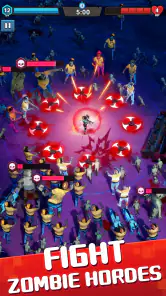
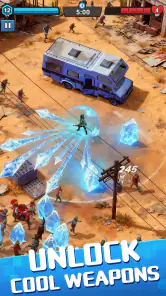
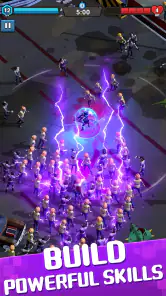
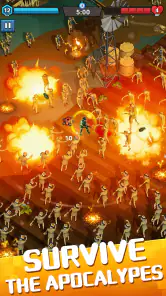
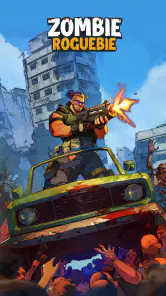
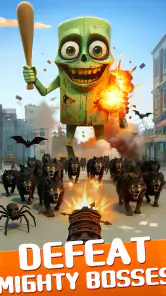
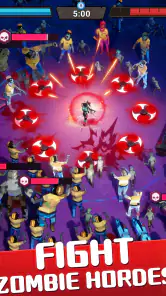
Analysis by Reviewed
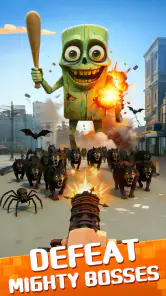
Zombie Roguebie: Survivor Game is the kind of adventure game I would open when I want a quick burst of pressure rather than a slow, story-heavy journey. Its central appeal is easy to understand: a zombie doomsday setting, shooting, defence, and survival folded into one roguelike package. That combination gives each session a clear sense of urgency, while the changing run structure encourages me to try again after a bad attempt.
My first impression is that Metajoy is aiming for immediate playability. The game does not need a complicated premise to get moving; the threat is obvious, the atmosphere is built around collapse, and the action is meant to keep attention on the next danger. That directness works well on a phone, especially when I have only a short break and want something more active than a puzzle or idle game.
It is free to play and rated Everyone 10+, which makes it approachable for a broad audience, although the zombie theme and survival pressure will still appeal most to players who enjoy light, stylised danger. The game has a 4.6 average from around 542 ratings, with roughly 153 written reviews, and has passed 10 thousand installs. Those figures suggest a small but positive audience rather than a massive mainstream hit.
How the game builds its doomsday mood
I find the game’s doomsday mood most convincing when I treat atmosphere as part of the challenge, not just a backdrop for combat. In this section, I look at how urgency, visual clarity, and pacing shape the feel of a run; next, I’ll turn to how its shooting, defence, and survival elements ask me to make decisions under pressure.
A first impression built around urgency
The strongest part of the opening experience is how quickly the game communicates its purpose. I am not looking for a quiet exploration game here. The setting exists to place me under pressure, and the three-part identity—shooting, defence, and survival—gives every encounter a practical question: should I focus on clearing the immediate threat, protecting my position, or lasting long enough to improve my chances?
That framing is useful because it avoids the common problem of a mobile action game feeling directionless. Even when the broader story is not the main attraction, the ruined-world premise gives the action a reason to exist. Every wave of danger belongs to the same mood, and the idea of surviving a zombie collapse makes repeated attempts feel like part of the design instead of simple repetition.
I also like that the roguelike structure fits the setting naturally. A survivor in a broken world should not feel perfectly prepared every time. Starting a run, adapting to what appears, and learning from failure creates a small narrative of its own. The game does not need lengthy dialogue to make a failed attempt meaningful; the next run becomes an opportunity to make a better decision.
More From Our News Desk
Weather by Xiaomi Review: Clear at a Glance, Less Clear Up Close

X Under Pressure: Can It Recover When Posting Goes Wrong?

Clash of Clans Is Won Between the Battles

Android Auto Makes the Case for Quieter Car Software

MobiOffice: Transforming Mobile Productivity with Seamless Integration

EA SPORTS FC™ Mobile Soccer: Redefining Mobile Sports Gaming
Still, this direct approach will not suit everyone. If you need a deeply developed cast, elaborate world history, or a long campaign with carefully staged story scenes, this is probably not the right adventure game. Its mood comes mainly from the situation and the rhythm of play, not from a large narrative framework.
Art direction that supports the action
The visual identity works best when it stays readable during pressure. In a zombie survival game, the screen can become busy quickly, so the art direction has an important practical job: enemies, hazards, and the player’s immediate goals need to remain distinguishable. I found the setting more effective when I treated it as a functional battlefield rather than expecting it to behave like a detailed open world.
That distinction matters. The ruined setting creates a recognizable emotional backdrop, but the game’s visual language is ultimately there to support decision-making. I can understand the basic mood at a glance—danger has arrived, space is limited, and the next few moments matter. This is a better fit for short mobile sessions than a visually dense presentation that hides useful information behind decoration.
One non-obvious benefit of the combined design is that the art can make defensive play feel as important as offensive play. Shooting naturally draws the eye toward enemies, while the survival and defence elements encourage me to watch the surrounding space. I found myself scanning for the next problem instead of staring only at the target directly in front of me. That change in attention is small, but it makes the game feel more tactical than a simple target-shooting loop.
The trade-off is that players who want a strong sense of place may find the setting more suggestive than expansive. The apocalypse is a mood and a gameplay context first. I would not choose this title expecting the environmental storytelling of a large console-style adventure. I would choose it for the way its visual presentation keeps the threat close and the objective understandable.
Sound and the feeling of a run
Sound has a quieter role than the visual setting, but it still affects whether a run feels tense or tiring. In this type of game, audio should help me recognize that danger is building without becoming exhausting after repeated attempts. The best mood comes when the sound reinforces the sense that I am holding out against something persistent, rather than making every moment feel equally loud.
The rhythm of the game is more important than any single sound effect. A run needs moments where I can assess the situation, followed by moments where the pressure rises and I have to react. That rise and fall gives the zombie setting its playable mood. Without pacing changes, shooting and defence can turn into a flat routine; with them, even a familiar encounter can feel like a test of attention.
I recommend playing with the audio on at least during the first few sessions. It helps the setting feel less like a list of mechanical tasks and more like a survival situation. After I understand the game’s visual cues, lowering the volume may be comfortable for commuting or shared spaces, but turning everything off can make the experience feel more detached. The atmosphere is strongest when sound and screen work together.
There is also a practical reason to pay attention to rhythm: it helps me decide when to take risks. When action is building, I am less likely to waste time chasing a minor advantage. When the pace relaxes, I can think about positioning and the next defensive choice. This is one of the game’s more useful atmospheric achievements, because the mood is not separate from strategy; it influences how quickly I make decisions.
Where the three-part design fits together
The shooting, defence, and survival elements make sense together because they pull me in different directions. Shooting gives me an immediate answer to a nearby threat. Defence asks me to protect something or hold a position rather than simply move toward the next target. Survival adds the longer view: I need to preserve enough control to keep going instead of treating every encounter as an invitation to attack without restraint.
That combination is more interesting than a pure shooting game when I am willing to slow down mentally, even if the action itself remains brisk. My best runs come from treating the screen as a space to manage rather than a queue of enemies to remove. I watch where pressure is gathering, avoid committing too early, and consider whether a short-term gain will leave me exposed a moment later.
A useful habit is to separate panic from genuine danger. The zombie theme encourages an immediate reaction, but not every threat deserves the same response. I try to identify which enemy or direction is actually restricting my options. Clearing that pressure first is often more valuable than attacking whatever is closest. This approach is especially helpful for players who usually struggle with roguelike games because they make decisions emotionally rather than by priority.
Another practical tip is to use each failed run as a review of one decision, not as a general judgement of skill. I ask myself whether I lost because I attacked too aggressively, ignored defence, or failed to prepare for the next escalation. That makes the repeat loop more rewarding. The game becomes a small experiment: change one habit and see whether the next attempt lasts longer.
The design is less suitable for someone who wants a predictable progression path. Roguelike play depends on adaptation, and that can feel unfair if I prefer to memorize a fixed sequence. It is also not ideal for players who dislike repeating sections after failure. The appeal comes from learning and adjusting, so the repetition is part of the experience rather than an inconvenience the game tries to hide.
Everyday use: a short break with a clear edge
I can imagine playing this during a short wait, such as before an appointment or while taking a break from work. The doomsday premise gives me an immediate reason to start, and the action does not require me to remember a complicated story thread after putting the phone down. I can focus on one run, notice one mistake, and stop without feeling that I have abandoned a major narrative moment.
That convenience has a limit. If I am already tired or looking for something relaxing, the constant survival pressure may be the wrong fit. The same urgency that makes the game engaging can make it feel mentally busy. For a calmer session, I would choose a slower exploration game or a puzzle title. For a quick challenge where I want my attention occupied, this game makes more sense.
It is also worth thinking about spending before installing. The game is free, but optional in-app purchases range from $0.99 to $99.99 per item. I would approach those purchases carefully and decide in advance whether I am comfortable playing without them. The free entry is a genuine advantage, but the wide purchase range means players who are sensitive to monetisation should pay attention to the shop and avoid treating every obstacle as a reason to spend.
Who should try it, and who should skip it
I would recommend Zombie Roguebie: Survivor Game to players who enjoy compact roguelike runs, zombie settings, and action that asks for more than constant attacking. It is particularly well suited to someone who likes learning through repetition, making quick defensive choices, and watching a run improve because of better judgement rather than because the story simply moves forward.
It is also a reasonable choice for mobile players who want an adventure game that can be understood quickly. The familiar zombie premise lowers the learning barrier, while the mixture of shooting and defence gives the sessions more shape than a basic wave shooter. The current version is 1.19.0, and the game supports devices using Android 7.0 or later, so compatibility should be considered before downloading.
I would skip it if my priority were a large story, carefully written character relationships, or a fully open world to explore at my own pace. I would also look elsewhere if I wanted a purely competitive multiplayer experience or a game with no pressure to repeat failed attempts. Those expectations point toward different types of adventure games, while this one is built around surviving the next run.
The age rating of Everyone 10+ makes it accessible, but parents should still consider whether a zombie survival theme is suitable for the individual child. The rating does not change the game’s basic identity: danger, collapse, and repeated combat are central to its mood. For older players, that presentation is likely to feel more playful than disturbing, but personal sensitivity will vary.
How it compares with familiar alternatives
Compared with a traditional story-driven zombie adventure, this game is faster to understand and easier to play in short sessions, but it offers less room for character development and exploration. Compared with a standard arcade shooter, it asks me to think more about defence and endurance, although players looking for elaborate weapon customisation or a large campaign may find it lighter.
Against a slower survival game, its advantage is immediacy. I do not need to spend a long time gathering materials or building a detailed base before the central tension becomes visible. The disadvantage is that I get less of the quiet survival fantasy—the feeling of living in a world over many in-game days. Here, survival is concentrated into the pressure of a run.
Its closest appeal is probably for players who enjoy the “one more attempt” feeling of roguelike design. However, the zombie setting gives that loop a more accessible surface than a highly abstract fantasy system. I can understand why I am fighting and why the situation is urgent, even when the deeper satisfaction comes from improving my choices rather than uncovering story secrets.
Final thoughts on the atmosphere
What stays with me is the way the game keeps its mood tied to its mechanics. The ruined-world setting is not merely decoration, and the sound and pacing are not separate from the action. Shooting creates immediate release, defence adds positional concern, and survival gives the whole run a longer arc. Together, they create a compact atmosphere of trying to stay in control while everything around me is becoming less manageable.
The experience is not flawless. Its focused structure may feel repetitive to players who need constant novelty, and the free-to-play model deserves a measured approach because purchases can reach $99.99 per item. The game also cannot replace a full narrative adventure for anyone seeking a rich story world. Those are important limitations, not reasons to dismiss it.
For me, the best reason to try it is the fit between presentation and play. The atmosphere works because every part of the design keeps returning to the same question: how long can I stay in control? If that question sounds appealing, Metajoy’s game is worth a look as a free mobile adventure. I would start with short sessions, keep the audio on long enough to understand its rhythm, and judge progress by better decisions rather than by rushing toward a perfect run.
In the end, I see Zombie Roguebie: Survivor Game as a focused choice for players who want zombie tension without committing to a long campaign. It is direct, replayable, and most enjoyable when I treat each attempt as a small lesson in prioritising danger. If I want atmosphere, action, and a little defensive thinking in the same package, I would recommend giving it a chance. If I want a peaceful game or a deep narrative, I would choose something else.
Zombie Roguebie: Survivor Game Frequently Asked Questions
What kind of game is Zombie Roguebie: Survivor Game?
Zombie Roguebie: Survivor Game is an adventure game built around surviving a zombie-filled doomsday. It brings together shooting, defence, and survival in a roguelike format, so the focus is on fighting enemies, protecting yourself, and making choices that help you last longer. It may suit players who enjoy action-driven runs and adapting their approach as they face groups of zombies.
Who developed Zombie Roguebie: Survivor Game, and what is its age rating?
The game is developed by Metajoy and is rated Everyone 10+. That rating can help families decide whether its zombie-themed action is suitable for younger players, but it is still worth considering a child’s comfort with cartoon-style combat and survival themes. Parents can also review the device’s purchase settings before letting children play, particularly because optional in-app purchases are available.
What is Zombie Roguebie: Survivor Game about?
Zombie Roguebie: Survivor Game is an action-packed survival title centered on fighting through waves of zombies while improving your character and equipment. The gameplay combines roguelike progression with fast combat, so each attempt can feel different depending on the upgrades, weapons, and abilities you choose. It is designed for players who enjoy short, intense sessions and gradually becoming stronger after every run.
How does the gameplay and progression system work?
You enter dangerous areas, defeat groups of zombies, collect useful rewards, and select upgrades that help you survive longer. When a run ends, some progress or resources can usually be used to improve your character for future attempts. This creates a rewarding loop: learning enemy patterns, choosing better combinations of abilities, and making smarter decisions as the difficulty increases. Randomized elements also help keep repeated runs interesting.
Can Zombie Roguebie: Survivor Game be played offline?
The game may allow parts of its core survival gameplay to work without a constant internet connection, which is useful when traveling or playing in areas with limited service. However, online access may still be required for advertisements, cloud-related features, events, updates, purchases, or account synchronization. Before relying on offline play, it is best to test the game after installation and check the current store description for the developer’s latest requirements.
Pros
- Quick runs make it easy to enjoy during short breaks.
- Randomized upgrades keep each attempt feeling different.
- Simple controls are accessible for new players.
- Zombie waves provide satisfying
- fast-paced action.
- Progression encourages repeated runs and experimentation.
Cons
- Later waves can feel repetitive without enough enemy variety.
- Some upgrades may seem unbalanced between different runs.
- Difficulty spikes can make progress frustrating for casual players.
- Extended sessions may drain battery on older devices.
- Limited offline features may reduce its appeal without internet access.
- Category
- Adventure
- Version
- 1.19.0