Arcadia Mahjong
- 594.00
- 4.9
- Installs
- 100.00K
- Price
- Free

Screenshots
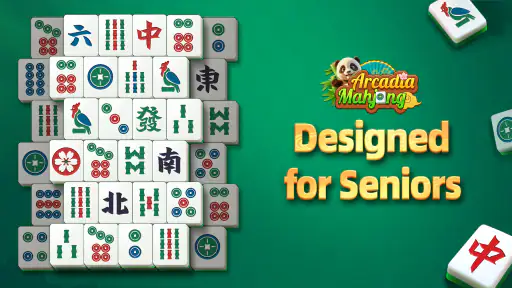
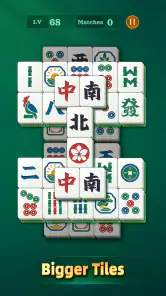
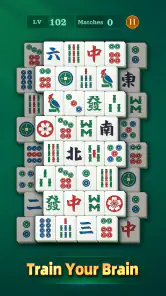
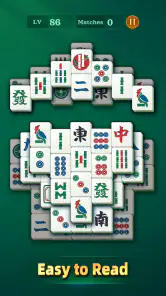
Analysis by Reviewed
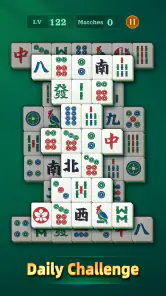
When I first opened Arcadia Mahjong, the appeal was immediate: it offers a familiar tile-matching puzzle in a format intended to be comfortable for older players. I found it easy to understand without needing a long tutorial, and the large tiles make the board feel less cramped than in many compact mobile puzzle games. That first-week ease is a real strength, though whether it earns a regular place on your phone depends on how much you enjoy repeating a calm, focused routine.
A low-friction game for short breaks
The basic loop is simple: scan the board, find matching available tiles, and clear pairs. That makes it a natural choice for a quiet break, such as waiting for an appointment or unwinding after dinner. I would recommend it particularly to someone who likes solitaire-style puzzles but finds small symbols tiring to distinguish. The large-tile focus is not just a decorative choice; it supports the practical job of reading the board at a glance.
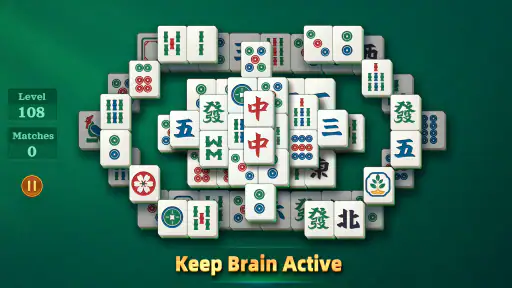
A useful habit is to pause before each match and look for pairs that might be covering other tiles. Taking that moment can help avoid clearing an easy-looking pair that leaves fewer useful choices later. If I am playing when distracted, I treat a round as a gentle exercise in attention rather than a score-chasing challenge. That approach suits the game’s measured pace better than trying to rush through a board.
Making a short session work
In an ordinary day, I would use it in the small gap between tasks: sit down with a cup of tea, play until I have had enough, then put the phone away. It does not demand that I remember a story or rebuild a complicated strategy after a break, which is useful if I only have a few minutes and may be interrupted. A quiet solo round also suits someone who wants a little focus without turning downtime into another competitive activity.
There is a practical trade-off to that convenience. A board can hold my attention longer than I planned because each move invites one more scan for a pair. I would decide before starting whether I have time for a brief pause or a longer sit-down, especially if I am fitting a round around chores or a commute. That boundary helps preserve the game as a pleasant break rather than letting a simple pastime crowd out something else.
Discovering the World of Arcadia Mahjong
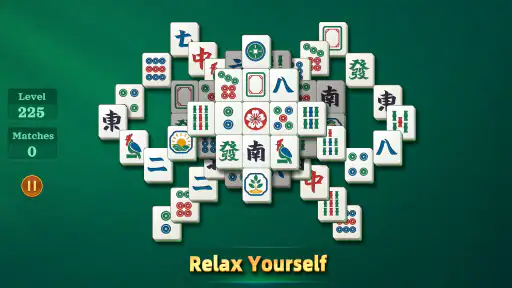
From the moment I launched Arcadia Mahjong, I was transported into a world of beautifully designed tiles and serene backgrounds. The game is a modern take on the classic Mahjong solitaire, where your goal is to match tiles to clear the board. But it's not just about matching tiles; it's about doing so in the most strategic way possible. The developers have managed to maintain the essence of traditional Mahjong while infusing it with vibrant graphics and smooth animations that make every game session a visual delight.
Gameplay Mechanics and Features
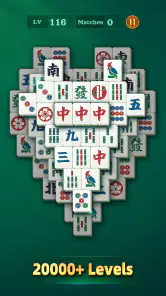
Diving into the gameplay, what really stands out is the plethora of levels available. Whether you're a beginner or a Mahjong master, there's something here for everyone. The levels range from easy to mind-bogglingly challenging, ensuring that you’re always on your toes. And let me tell you, the satisfaction of clearing a particularly tough level is unmatched!
More From Our News Desk

Weather by Xiaomi Review: Clear at a Glance, Less Clear Up Close

X Under Pressure: Can It Recover When Posting Goes Wrong?

Clash of Clans Is Won Between the Battles

Android Auto Makes the Case for Quieter Car Software

MobiOffice: Transforming Mobile Productivity with Seamless Integration

EA SPORTS FC™ Mobile Soccer: Redefining Mobile Sports Gaming
The app also boasts an intuitive user interface. With simple tap controls, it’s easy to get into the groove of the game. Plus, the hints and shuffle options are a lifesaver when you find yourself stuck. It’s nice to have a little help without feeling like the game is too easy.
Choosing help without giving up the puzzle
I get the most from a round when I treat a hint as a last nudge, not a button to press whenever I hesitate. First I scan the exposed tiles, then check whether a match will uncover something useful; only after that would I reach for help. This small order of operations keeps the decisions mine and makes a solved board feel earned. If I am tired or playing one-handed while waiting, using assistance sooner can be a reasonable convenience rather than a failure.
A shuffle serves a different purpose from a hint: it is useful when I feel stuck in the current arrangement, but it can also interrupt the process of learning to read the board. I would save it for a genuine stall rather than use it automatically after a few seconds. For players who enjoy working out the consequences of each move, restraint makes the game more satisfying; for someone who mainly wants a relaxed reset, convenience may matter more than extracting every bit of challenge.
When to use a hint, and when to step away
I would save a hint for a moment when I have checked the obvious pairs and still cannot see a sensible move. Using help too early can take away the small planning decisions that make tile matching satisfying; using it after a careful scan can get a stalled round moving again. A shuffle is a different kind of rescue: it may change what you can notice, but it does not replace the value of checking which tiles are actually available before tapping.
That makes the game suitable for players who want a quiet solo activity, including older adults who prefer larger tiles and straightforward controls. It is less suited to someone looking for a fast competitive match, social play, or a puzzle with a very different mechanic every session. Compared with word games, number puzzles, or more elaborate board-game adaptations, this is deliberately narrow: the pleasure comes from spotting pairs and thinking a few moves ahead, not from learning a new system.
Why You'll Love Arcadia Mahjong
One of the things I enjoyed most about Arcadia Mahjong is its ability to adapt to your gaming style. Whether you have five minutes to spare or want to engross yourself for an hour, the game accommodates all play sessions. The calming music and sound effects are perfect companions, making it a great way to unwind after a long day.
For a realistic routine, I can imagine playing one board while taking a break from household tasks, then putting the phone down rather than turning a short pause into a long session. If the music does not suit the moment, the game can still be approached as a visual puzzle; I would not make sound essential to enjoying it. The main trade-off is that a repeated matching format can feel familiar quickly. Players who need frequent novelty, a strong narrative, or changing objectives may find that the calm rhythm becomes repetitive.
Comparing it with other ways to unwind
Against a standard solitaire card game, this asks me to look for pairs in a layered arrangement instead of planning a sequence of card moves. That makes its visual search the main attraction, while card solitaire may be the better pick if I want a familiar deck and a different kind of decision-making. Word and number puzzles are stronger alternatives when I want language practice or arithmetic-style reasoning; this game does not try to serve those needs. Its appeal is more specific: a readable board, a quiet pace, and a small amount of forward planning.
I would also choose a richer board-game adaptation if I wanted opponents, social interaction, or a ruleset that changes the way each session unfolds. This is a better fit when I want to be alone with a clear, self-contained puzzle. That distinction is useful when deciding what to keep installed: it is not an all-purpose game for every mood, but it can fill the particular gap between doing nothing and starting a more demanding game.
What gives it staying power
Arcadia Mahjong is a board game from Metajoy, and its appeal rests more on an accessible routine than on a complicated learning curve. It is free to play, rated for Everyone, and has a 4.9 average from around 2,200 ratings, with over 100,000 installs. It was released in July 2024, and version 0.0.18 is listed for Android 5.1 and newer. Those details make it easy to judge whether it fits a device and audience, but they do not change the central question: do you enjoy returning to the same kind of visual problem?
For month-to-month value, I would focus on whether the game remains a pleasant habit rather than expecting every session to feel new. A player who likes short, self-contained rounds may keep it around as a low-pressure option. Someone who tires of repeated tile layouts should alternate it with a different kind of puzzle instead of expecting this one game to provide variety on its own. Keeping sessions brief can also preserve the relaxed feeling instead of making the matching loop feel like a chore.
Maintenance, fatigue, and the long-term choice
The maintenance burden is modest in the everyday sense: the controls are simple, and there is no complex strategy system to relearn after time away. Still, I would avoid assuming that an update schedule will always supply fresh reasons to return. The version number and release history can change, so the sensible long-term test is your own enjoyment of the core play, not an expectation of particular additions. If you stop for a while, the straightforward matching objective makes it easy to pick up again.
Tile visibility is central to this particular game, so I would play somewhere with comfortable screen brightness and take a break if close visual scanning becomes tiring. The large pieces help, but they do not make extended screen time effortless for everyone. Another source of fatigue is decision repetition: when every board starts to feel like the same search for pairs, switching to a word or logic puzzle is likely a better choice than forcing yourself to continue.
Who is likely to keep it installed?
I would point older players who find crowded mobile boards uncomfortable toward this one first, but its straightforward matching suits anyone who prefers a calm solo puzzle. It can also work well for a family member who wants an easy game to pick up without learning a long set of rules. The Everyone content rating broadens its audience, although the best fit still depends on whether the player enjoys visual searching and can comfortably use a phone screen.
I would skip it if I were choosing a game for a group, looking for a demanding head-to-head contest, or hoping each return would bring a fresh mechanic. I would also look elsewhere if small visual details are hard to distinguish even with larger tiles, or if extended close-up screen use is uncomfortable. The game’s central strength and its main limitation are closely connected: it keeps the experience focused, but that focus leaves little variation for a player who wants more than matching and planning.
Final Thoughts: A Must-Play for Puzzle Lovers
In conclusion, Arcadia Mahjong is a gem for anyone who appreciates a good puzzle game. It’s a harmonious blend of strategy, relaxation, and visual appeal. While it’s easy to get started, mastering it is a whole different story – and that’s what makes it so addictive. So, if you’re in the mood for a game that challenges your mind while soothing your senses, give Arcadia Mahjong a try. Trust me, you won’t regret it!
My more measured recommendation is to try it if you want a calm tile-matching game with large pieces and quick-to-understand play, especially for relaxed solo breaks. I would skip it if you want multiplayer interaction, a demanding competitive challenge, or constant mechanical surprises. Its lasting value comes from how neatly it fits into a quiet routine; when that routine stops being enjoyable, another puzzle style will serve you better.
Arcadia Mahjong Frequently Asked Questions
Is Arcadia Mahjong suitable for seniors or players who prefer easy-to-see tiles?
Yes. Arcadia Mahjong is described as a classic tile-matching game with large Mahjong tiles, which can make the pieces easier to see while playing. Its board-game format focuses on matching tiles, so it may appeal to players who want a straightforward, relaxed puzzle experience. The game is free to download and is rated for Everyone.
What is Arcadia Mahjong?
Arcadia Mahjong is a digital adaptation of the classic Mahjong game, designed for both Android and iOS devices. It offers a rich gaming experience with beautifully crafted tiles and immersive sound effects, allowing players to enjoy the ancient Chinese game of strategy and skill on the go. Suitable for all ages, it offers both single-player and multiplayer modes.
Is Arcadia Mahjong free to play?
Arcadia Mahjong is available as a free-to-play app with optional in-app purchases. While the core features and levels can be enjoyed without any payment, players have the option to purchase additional themes, hints, or remove ads to enhance their gaming experience. This allows players to enjoy the game at their own pace and according to their preferences.
Does Arcadia Mahjong require an internet connection?
Arcadia Mahjong can be played both online and offline. For single-player mode, an internet connection is not required, making it convenient for players who want to enjoy the game while traveling or in areas with limited connectivity. However, an internet connection is necessary for accessing multiplayer features and online leaderboards.
Are there any special features in Arcadia Mahjong?
Yes, Arcadia Mahjong includes several special features to enhance gameplay. It offers a variety of tile sets and backgrounds, daily challenges, and a hint system to assist players. Additionally, the game provides an engaging multiplayer mode where players can compete against friends or other players worldwide, making each game a unique experience.
Pros
- Engaging and challenging puzzles
- High-quality graphics and sound effects
- Variety of game modes available
- Regular updates with new levels
- User-friendly interface
Cons
- In-app purchases can be costly
- Requires internet connection
- Some ads are intrusive
- Limited free levels
- Occasional bugs in updates
- Category
- Board
- Version
- 0.0.18