Tile Family®:Match Puzzle Game
- 8.02K
- 4.8
- Installs
- 10.00M
- Price
- Free

Screenshots






Analysis by Reviewed
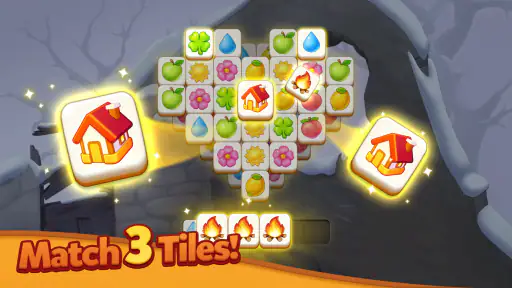
I’m drawn to puzzle games that give me a clear, satisfying task without demanding a long session, and the central idea in Tile Family®: Match Puzzle Game is easy to grasp: choose tiles and match sets of three. That familiar goal makes it approachable, but the real appeal is deciding which tiles to take now and which to leave available for later. For me, that small planning decision is what turns a quick match into a puzzle worth paying attention to.
Why the three-tile rule changes the feel
Matching three is simple to explain, yet it encourages me to look beyond the next obvious move. A tile that seems useful may cover or affect what I can work with next, so I try to scan the board before tapping rather than selecting pieces purely by appearance. Thinking one move ahead is a practical habit here: it helps keep choices deliberate and makes the game feel more considered than a basic reflex-matching activity.
This is a good fit when I want a puzzle I can understand immediately but still engage with mentally. It doesn’t ask me to learn a complicated rule set before starting. The trade-off is that people who want deep strategy, a narrative campaign, or a fast arcade challenge may find this style too focused on one repeating matching task.
How I approach a crowded board
The useful question is not only whether three tiles look alike, but what taking one of them might leave for the next turn. I try to notice which choices open up more possibilities and which ones make the remaining selection feel narrow. That doesn’t require a long calculation; a brief look across the available tiles is usually enough to make a more thoughtful choice than tapping the first familiar picture.
When I’m unsure, I treat a move as a small commitment rather than a harmless click. Matching a set can feel immediately satisfying, but the sequence of selections matters too. I find it helpful to prioritize combinations that seem likely to be completed soon, while resisting the urge to collect a tempting tile just because it matches something I can see. The aim is to keep my options workable, not simply to clear whatever catches my eye.
This way of playing also makes short sessions easier to enjoy. I can give a board a quick scan, make a few deliberate choices, and stop when I need to without having to study a complicated system first. If I return later, the basic challenge is still clear: look, compare, and decide. For me, that simple mental rhythm is a better fit for a spare moment than a game that expects uninterrupted concentration.
A Fresh Take on Tile Matching
At its core, Tile Family®: Match Puzzle Game is about matching tiles, but it offers a fresh twist to the familiar genre. As you progress through the levels, you'll find yourself matching not just simple tiles, but also engaging with a variety of themed boards that keep the gameplay vibrant and exciting. The developers have done a fantastic job of ensuring that the game remains challenging yet enjoyable, adding new elements as you advance.
More From Our News Desk

Clash of Clans Is Won Between the Battles

Android Auto Makes the Case for Quieter Car Software

MobiOffice: Transforming Mobile Productivity with Seamless Integration

EA SPORTS FC™ Mobile Soccer: Redefining Mobile Sports Gaming

How Microsoft OneDrive Became a Mobile Productivity Giant

How Google Translate Breaks Language Barriers Effortlessly
Visually Appealing
One of the first things you'll notice about this app is its stunning graphics. The vibrant colors and detailed tile designs are not just aesthetically pleasing but also make it easier to distinguish between different tiles. It’s clear that a lot of thought went into the visual aspect of the game, which greatly enhances the overall user experience.
Easy to Learn, Hard to Master
The intuitive controls make it easy for anyone to pick up and play, but don't be fooled by its simplicity. As you delve deeper into the game, you'll encounter more complex puzzles that require strategic thinking and careful planning. This balance ensures that both casual gamers and those seeking a challenge can find something to enjoy.
For a new player, I’d focus on learning the selection rhythm before worrying about speed. Since the task is built around groups of three, it’s more useful to ask what a move will make possible than to race through obvious matches. If I find a board harder than expected, I slow down and reassess instead of repeating the same hurried approach. That small change can make the puzzle feel fairer, even when the choices are not immediately clear.
The visual side matters for practical reasons, too. Distinctive tile designs can help me scan a board, but color and decoration are still part of the experience, so I wouldn’t recommend playing in a distracting setting if I want to make careful decisions. A quick glance between conversations or while juggling other tasks can lead to careless selections. I get more from it when I can give the board a few seconds of attention, even if the overall session is brief.
Moreover, the game doesn't bombard you with ads, which is a refreshing change from many free-to-play apps. The occasional ad is there, but it’s never intrusive, allowing for a more immersive gaming experience.
Social Features
Another aspect that adds an extra layer of fun is the social features. You can connect with friends, compete for high scores, and even exchange tips on tackling those tricky levels. It adds a sense of community and friendly competition that keeps you coming back for more.
That social angle will matter most to players who like comparing progress or talking through a difficult puzzle with someone else. I see it as a bonus rather than the reason to install: the core appeal remains the matching decisions, and a player who prefers to keep games private can still enjoy that central loop. If friendly competition makes a familiar task more motivating for you, it may give repeated play a welcome extra purpose.
A handy fit for short breaks
I find this kind of tile puzzle easiest to enjoy in small windows of free time: while waiting for an appointment, taking a quiet break, or settling down after a busy day. A useful approach is to pause before each selection and check whether the move leaves you with sensible options for completing a trio. That little scan is especially helpful when the board looks crowded; choosing quickly can feel tempting, but a moment of attention is often more rewarding than tapping at random.
A realistic use case is a short wait when I don’t want to start a story-heavy game and then have to remember where I left off. I can open a board, focus on the visible matching task, and put the phone away when my appointment is called. It suits that stop-and-start pattern better than a long-form puzzle that asks me to hold a chain of clues in my head across a lengthy session. I would still avoid playing while walking or doing anything that needs my attention; the selections are simple, but a crowded board benefits from looking before acting.
It can also work as a quiet reset after a busy stretch, provided I want light concentration rather than complete mental rest. Matching and planning give me something concrete to focus on, but the repeated format may not feel relaxing to everyone. If I’m already tired of visual decisions, I’d choose music or a passive activity instead. The best moment for this game is when I have a little attention to spare and want a contained task, not when I need a demanding challenge or no stimulation at all.
If you’re deciding between this and a word puzzle or a traditional jigsaw, the difference is the kind of focus it asks for. There’s no need to build a picture from scattered pieces or retrieve vocabulary; the challenge stays centered on recognizing matching tiles and planning selections. I’d choose it for a low-pressure visual puzzle, but I’d pick a word game when I want language practice or a jigsaw when I’m after a longer, image-building task.
Compared with many match-three games that emphasize swapping pieces on a grid, this one puts more weight on choosing tiles and managing the consequences of those choices. That distinction changes the pace: I’m less interested in making a chain of quick moves and more interested in keeping future matches available. Someone who likes brisk cascades, timed action, or a constantly changing board may prefer a conventional arcade-style match game. Someone who enjoys scanning a layout and weighing a small decision at a time is more likely to appreciate this format.
It is also different from a pure memory game. I’m not simply trying to remember hidden symbols; I’m responding to what is available and considering how a selection affects later opportunities. That makes it a reasonable middle ground for players who want a visual puzzle with some planning but don’t want the rules or setup of a larger strategy game. The trade-off is repetition: the central action stays recognizably similar, so changing board themes alone may not be enough for someone who needs a new mechanic in every session.
What to expect before installing
The game is free to download, and its Everyone content rating makes it suitable for a broad audience. Playflux is the developer. It has a 4.8 average from around 401,000 ratings, with more than 10 million installs, so it has clearly found a large audience. The current version is 1.64.0, and it runs on Android 5.1 or later. Optional in-app purchases range from $0.99 to $99.99 per item, so I’d check purchase prompts carefully if I’m handing the device to a child or trying to keep spending under control.
For a family device, I’d set expectations before handing it over: the game can be played without paying to download it, but optional purchases are part of the experience. I’d also make sure the player understands that a purchase prompt is not necessary just because a level feels awkward. This is especially useful for children, who may be more inclined to tap an offer while focused on finishing a puzzle. The Everyone rating helps make the game broadly approachable, while spending still deserves a little adult attention.
Those purchases are worth considering even if I plan to play casually: free entry does not mean every optional offer will suit my budget. I’d also avoid treating a difficult board as a reason to spend immediately. Taking a short break and returning with fresh attention is a sensible first move in a puzzle built around careful selection. The game is best for players who enjoy repeating a clear matching loop and gradually sharpening their choices; it is less suitable for anyone who dislikes tile-based puzzles or expects every session to deliver a radically different kind of gameplay.
Who is most likely to enjoy it?
I’d recommend it to someone who likes visual sorting, appreciates clear rules, and enjoys the feeling of making a better choice after noticing how a board is arranged. It can suit casual players who want a compact activity, as well as puzzle fans who prefer planning over quick reactions. The most satisfying sessions, in my experience, come when I’m willing to slow down enough to spot a sensible sequence rather than treating every visible match as an automatic move.
I’d steer away from it if you need a strong story, a broad range of activities, or a puzzle that keeps changing its basic rules. It is also not my pick when I want a highly competitive reflex test; the careful selection loop is more measured than that. And if matching tiles has already worn thin for you, a new board theme may not solve the underlying issue. A word puzzle, a jigsaw, or a more varied logic game would be a better choice depending on whether you want language, image-building, or a different kind of reasoning.
In the end, Tile Family®: Match Puzzle Game is a fantastic addition to any puzzle lover's collection. Its combination of beautiful graphics, challenging gameplay, and social elements make it stand out in a crowded market. Whether you're looking for a game to relax with or something to test your strategic skills, this app is definitely worth downloading. So why not give it a try and see if you can become the ultimate tile matcher?
Tile Family®:Match Puzzle Game Frequently Asked Questions
Is Tile Family® suitable for quick play sessions?
Tile Family® is a tile-matching puzzle game built around matching three tiles, making its basic idea easy to pick up when you have a little time to play. Each round still asks you to look at the available pieces and choose matches thoughtfully. It may appeal if you want a straightforward puzzle to dip into rather than a game that requires learning a complicated control scheme.
Who developed Tile Family®, and what type of game is it?
Tile Family® is a puzzle game developed by Playflux. Its central activity is matching tiles, with the store summary describing the challenge as matching three tiles. That gives you a clear idea of the core gameplay before you download: it is focused on observation and selecting matching pieces, rather than action or story-based play.
What kind of puzzle experience does Tile Family® offer?
Tile Family® is a tile-matching puzzle game for players who enjoy short, thoughtful rounds. Its central challenge is to match three tiles, so you need to pay attention to the available pieces and choose matches with care. It can suit casual play as well as moments when you want a simple brain-teasing activity.
Which devices and operating systems can run Tile Family®: Match Puzzle Game?
Tile Family®: Match Puzzle Game is available for Android and iOS devices. On Android, the listed minimum operating system is version 5.1, so it is worth checking your device settings before downloading. If you use an iPhone or iPad, check the game’s page in the relevant app store to confirm compatibility with your device.
What is Tile Family®: Match Puzzle Game about?
Tile Family®: Match Puzzle Game is a compelling puzzle game designed for both Android and iOS platforms. The game challenges players to match tiles in a strategic manner to complete levels. With colorful graphics and engaging gameplay, it offers a mix of fun and mental exercise, making it suitable for players of all ages looking to improve their problem-solving skills.
Pros
- Engaging puzzle mechanics.
- Colorful graphics.
- User-friendly interface.
- Daily challenges available.
- Offline play supported.
Cons
- Limited free levels.
- In-app purchases necessary.
- Ads can be intrusive.
- Requires internet for updates.
- Drains battery quickly.

- Category
- Puzzle
- Version
- 1.64.0