Tarneeb JOJO
- 312.00
- 4.2
- Installs
- 1.00M
- Price
- Free

Screenshots
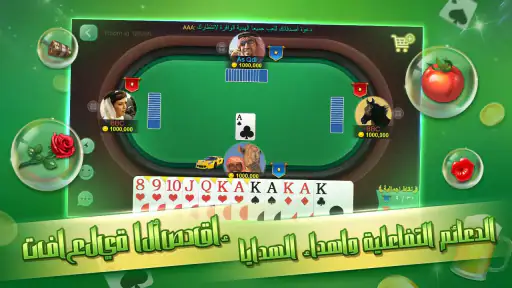

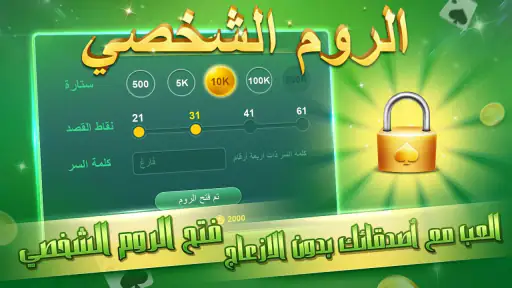
Analysis by Reviewed
I found Tarneeb JOJO most interesting as a focused way to play Tarneeb on a phone rather than as a broad collection of card games. It is a free card game from jogamer, built around the familiar idea of playing with friends on a mobile device. That narrow focus is important: people who already know Tarneeb can get to the part they enjoy quickly, while anyone expecting a large arcade-style package may find the experience deliberately simple.
My review centers on something that matters more than a store description: how comfortably the game can be followed in different situations and by people with different needs. A card game has to make the table state understandable, keep interaction manageable, and avoid turning every round into a struggle with the interface. Tarneeb JOJO does enough to make casual sessions appealing, but its suitability depends heavily on your eyesight, touch control, familiarity with Tarneeb, and the conditions in which you play.
How the table reads and how the game guides you
The main strength of a dedicated Tarneeb app is concentration. Instead of sorting through unrelated modes, I can approach it with one clear purpose: start a Tarneeb session and play. That simplicity is useful for a group of friends who already understand the rules, because the phone becomes the playing surface rather than something that demands constant explanation.
For a new player, the experience is less forgiving. Tarneeb has its own vocabulary, rhythm, and decisions, so knowing how to tap a card is not the same as knowing why a particular card should be played. I would be comfortable recommending it to someone who has learned the game from family or friends. I would be more cautious with a complete beginner who needs a detailed tutorial, extensive examples, or patient rule explanations inside the app.
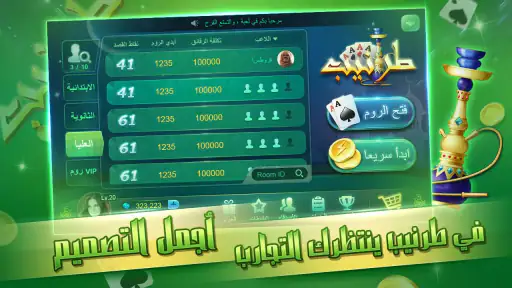
Readability is especially important in a trick-taking game. I need to distinguish suits, ranks, played cards, and the current state of the hand without pausing after every move. On a phone, that can become difficult when the device is small, the screen is bright, or several people are looking over one player’s shoulder. My practical advice is to use the largest comfortable display available, keep the screen clean, and avoid playing with the phone held at an awkward angle.
The game’s appeal also comes from reducing the physical clutter of a real deck. There are no cards to shuffle, gather, or accidentally knock onto the floor. That makes a quick session easier to organize, especially when friends are separated and want to play through their devices. At the same time, the digital layout removes some of the natural visual cues of a tabletop game. A physical deck lets me spread cards, point at a trick, or ask another player to look at a specific card. A phone demands more attention to the screen.
I would not treat the published rating as a substitute for personal testing, but the game’s average of 4.2 from around 18 thousand ratings suggests that many players find the basic experience worthwhile. It has also passed the million-install mark, which makes it a familiar option rather than an obscure experiment. Those figures tell me that the core concept has found an audience; they do not guarantee that the interface will suit every player or every phone.
Learning the rhythm without losing the social part
Tarneeb is often enjoyed because of the conversation around the cards, not only the cards themselves. When I play with friends, the best moments come from reading a partner’s choices, arguing about a bid afterward, and laughing at a surprising turn. The app can support that social habit when everyone already knows how to communicate outside the game, but it should not be mistaken for a complete replacement for face-to-face interaction.
This distinction matters for families introducing someone to the game. I would use the app as a practice table, then explain decisions aloud as the round develops. That approach is better than handing the phone to a beginner and expecting the interface alone to teach strategy. It also helps players who read slowly or need more time to understand the current hand, because another person can clarify the situation without making the game feel like a test.
A useful habit is to agree on the table’s communication rules before starting. Decide whether players will discuss bids openly, whether a round can be paused while someone asks a question, and how mistakes will be handled. These are not settings I would assume the app can enforce. They are simple social adjustments that make the game more welcoming to mixed-experience groups.
Touch, sight, sound, and the situations in which it works
Card games are often described as easy to control, but touch interaction still creates real differences between players. Someone with steady finger control can quickly select a card, while someone with tremors, limited dexterity, or difficulty making precise taps may need a slower, more forgiving pace. I would avoid treating fast play as a sign of skill. In a friendly session, giving people time to confirm their choice is more important than rushing through a hand.
The best physical setup is usually a stable surface with the phone positioned directly in front of the player. Holding it in one hand while walking, riding in a vehicle, or carrying on a conversation makes card selection less reliable. A stand can help by keeping the screen at a consistent angle, though I would still check that glare is not hiding the cards. If a player has trouble with small targets, a larger phone or tablet may make a bigger difference than changing their playing style.
Visual fatigue is another practical concern. Card ranks and suits need to be recognized repeatedly, and a long session can be tiring for anyone who is already sensitive to bright screens. I prefer shorter rounds with breaks rather than one extended sitting. Lowering surrounding glare, increasing the device’s text or display size where the operating system allows it, and keeping the screen clean are small changes that can improve comfort without altering the game itself.
Players with color-vision differences should pay attention to whether suit recognition depends too much on color. I would not rely on color alone when teaching or playing with a mixed group. Say the suit aloud when discussing a move, and make sure the card’s symbol and rank are visible before confirming a choice. This is a useful social workaround because it supports the player without singling them out or assuming that everyone reads the table in the same way.
Sound can also affect access, even in a quiet card game. A player may be in a noisy room, may not hear an alert, or may prefer not to use audio. I would plan the session so that important decisions are visible rather than communicated only through sound. Conversely, someone who benefits from audio cues should not be expected to depend on them if the environment is loud. The safest approach is to keep the group’s spoken communication clear and treat the phone as one part of the table, not the only source of information.
When a quick match fits naturally
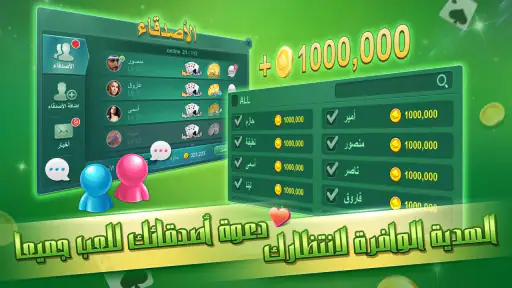
A realistic use case is a family group waiting for dinner or relaxing after work. One person can start a session, the others can join from their own phones, and the group can play a few hands without setting up a physical deck. The free entry point makes that experiment easy, although purchases are available from $0.99 to $99.99 per item, so I would review any purchase prompts carefully before handing the device to a child or a player unfamiliar with mobile games.
The Teen content rating is worth keeping in mind when choosing it for a household. It is not a reason to reject the game automatically, but it does mean parents should consider whether the rating fits the player and the way the device is shared. I would be especially careful with younger users who may tap through purchase screens without understanding that an item can cost real money.
The game is also a reasonable choice for friends who want a familiar Tarneeb session while apart. Its value in that situation comes from convenience: no one has to carry a deck, remember the score sheet, or find a large table. However, remote play is only enjoyable when everyone has a reliable way to coordinate. If the group cannot easily communicate, the app may feel more confusing than a physical game where players can immediately point, ask, and correct one another.
For travel, I would be selective. A phone-based card game is more portable than a deck, but a moving vehicle, poor reception, low battery, or a crowded waiting area can make it frustrating. I would start a session only when the phone is secure and the player can focus on the screen. It is a better fit for a quiet waiting period than for a busy commute where attention is constantly divided.
Where it compares well, and where another option wins
Compared with a physical Tarneeb deck, this game wins on portability and setup. There are no missing cards, no need to shuffle, and no debate about who is dealing. It is also easier to invite distant friends into a digital session than to gather everyone around one table. For a group that already knows Tarneeb, those advantages are substantial.
The physical deck remains better for teaching, accessibility through conversation, and shared visibility. A teacher can spread cards across a table, let a learner handle them, and explain the logic of a play with gestures. Players can also adjust the card size, spacing, and seating arrangement themselves. If someone has difficulty with a phone’s touch targets or screen glare, the physical alternative may be kinder.
Compared with broad card-game apps, Tarneeb JOJO’s specialization is both its attraction and its limitation. A general card app may offer more variety, more ways to practice, or a stronger learning path for people who are new to card games. This one makes more sense when Tarneeb itself is the reason you are opening the app. I would not install it expecting solitaire, poker, or a large menu of unrelated games.
Its current version is 1.5.9, and it supports devices running Android 5.0 or later. That gives it a potentially wide reach across older Android phones, which is useful for families who do not all upgrade at the same time. Still, an older device may have a smaller or less responsive screen, so compatibility alone should not be confused with comfortable play. The phone may run the game while remaining difficult for a particular player to use.
Remaining barriers before I would recommend it widely
The largest barrier is the gap between knowing Tarneeb and merely opening a Tarneeb app. New players may need another person to explain the rules, the meaning of a bid, and the consequences of each card. That is not a flaw unique to this title, but it changes who will enjoy it immediately. I would recommend it first to established players and to beginners who have a patient teacher nearby.
Another barrier is the limited physical flexibility of a phone screen. A player cannot enlarge the whole table by moving cards farther apart, and a group cannot all inspect the same hand as easily as they can around a real table. People with low vision, hand-control difficulties, or sensitivity to glare may need a larger device and a slower pace. Those adjustments can help, but I would not promise that they solve every problem.
Purchases are another point where I would set expectations. The game is free to start, but optional items range from less than a dollar to amounts close to a hundred dollars per item. I would enable purchase protections, discuss spending rules with younger players, and avoid assuming that free installation means every part of the experience is cost-free. That simple preparation prevents an otherwise pleasant family game from becoming an argument about an unexpected charge.
I would also skip it if my priority were a highly guided solo learning experience, a large selection of card games, or a tabletop simulation with maximum control over card placement. In those cases, a physical deck or a broader app may be a better match. Tarneeb JOJO is most convincing when the decision has already been made to play Tarneeb and the convenience of a phone matters.
My inclusive verdict for Tarneeb players
After looking at it as both a card game and a mobile interface, I see a practical option for friends who want Tarneeb available without carrying a deck. Its focused design can make starting a familiar game straightforward, and the free download lowers the barrier to trying it. The large audience and solid average rating reinforce the impression that the central idea works for many players.
My recommendation comes with a clear condition: choose the device and the playing environment carefully. Use a stable setup, reduce glare, give players time to make decisions, and explain the rules aloud when someone is learning. Those habits make a bigger difference to inclusion than simply installing the game. They also help friends with different levels of vision, dexterity, confidence, or experience participate without being pushed into a hurried pace.
My bottom line is that Tarneeb JOJO is best for known Tarneeb players who want a convenient digital table, not for people seeking a universal card-game platform. I would recommend trying it with a familiar group, checking how comfortably everyone can read and select cards, and agreeing on spending boundaries before play begins. If the screen feels cramped or the rules need extensive teaching, I would move to a physical deck or a more instructional alternative instead.
For the right group, though, it does what I want from a specialized mobile card game: it keeps the focus on the Tarneeb session and makes a spontaneous match easier to arrange. Its inclusive potential is real but practical rather than automatic. The experience improves when players adapt the surroundings, communicate clearly, and recognize that convenience on a phone does not remove the need for patience at the table.
Pros
- Fast-paced rounds keep matches engaging and easy to replay.
- Online multiplayer lets you challenge friends and other players.
- Simple card controls make the game accessible to new players.
- Competitive scoring adds tension and encourages strategic play.
- Small app size may suit devices with limited storage.
Cons
- A stable internet connection may be required for online matches.
- Random card deals can make some rounds feel heavily luck-based.
- Matchmaking quality may vary depending on the time and player pool.
- Ads or in-app purchases may interrupt the experience.
- Players unfamiliar with Tarneeb may need time to learn the rules.

- Category
- Card
- Version
- 1.5.9