sQworble : Crossword Scramble
- 1.22K
- 4.7
- Installs
- 500.00K
- Price
- Free
Screenshots

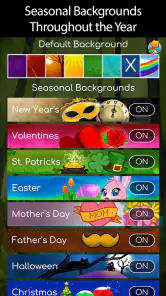
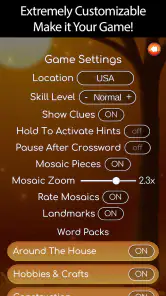
Analysis by Reviewed
I went into sQworble: Crossword Scramble expecting a familiar word-game routine, but its appeal became clearer after a few rounds: the pleasure comes from making one useful move, seeing the board respond, and immediately wondering whether the next word can improve the position. It is a free word game from A Perfect Partnership, aimed at Everyone, and it works best when you want a focused mental break rather than a long, story-driven game.
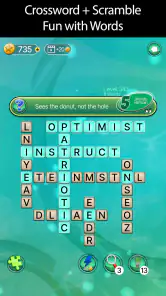
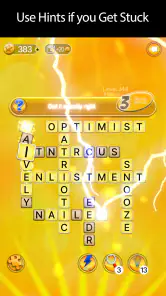
The central experience is easy to understand. You look at the available puzzle, search for a word that fits, and use that discovery to push the board forward. The action is simple, but the choice is not always obvious. A short word may solve an immediate problem, while a more ambitious answer can open a better route. That small tension is what keeps the game from feeling like a vocabulary worksheet.
After spending time with it, I see why the game has attracted over 500K installs and a 4.7 average from around 12K ratings. Those figures do not make it perfect, but they do match my impression that the basic loop is approachable, quick to start, and satisfying for people who enjoy word puzzles without a heavy learning curve.
How the puzzle loop feels in actual play
The first move is simple, but it sets the tone
The first action in a round is usually the most important psychological step: stop looking for the perfect answer and find a valid one that gives you information. I found that treating the opening as an experiment works better than trying to solve everything immediately. Once a word is placed, the resulting board state tells me more about which direction to explore next.
That makes the game feel different from a traditional crossword. In a standard crossword, clues tend to define the path and the grid gradually confirms your answers. Here, the scramble-like structure encourages active searching. I am not only recalling words; I am testing possibilities and judging whether a move improves the whole arrangement.
This is also where the game can challenge people who are good at spelling but impatient with uncertainty. Some turns invite an obvious answer, while others make me compare several plausible options. The right response is not always the longest word. A compact answer can be strategically useful if it connects the available spaces in a cleaner way.
My practical tip is to scan for familiar word endings and beginnings before chasing unusual vocabulary. Looking for patterns such as common letter pairs helps narrow the board without turning the session into random guessing. When I became stuck, I also benefited from changing my focus: instead of staring at one difficult area, I searched for a different opening and returned later with a fresher view.
Feedback keeps each action meaningful
The strongest part of the experience is the feedback rhythm. I make a move, the puzzle changes, and that change gives me a reason to reassess. Even when the result is not immediately spectacular, the board supplies a new question: did this word create a useful connection, remove an obstacle, or leave me with a tighter set of choices?
That rhythm is more important than any single answer. Word games can become dull when the player simply fills blanks until the screen is complete. This one has more energy because every placement feels like a small decision. The reward is not only finishing; it is understanding why one move was better than another.
I particularly liked the way this encourages a second look at words I might normally dismiss. In ordinary conversation, I use a small everyday vocabulary. In a puzzle, an unusual but valid word can suddenly become valuable because of its letters and position. The game therefore rewards flexible thinking more than memorizing a fixed list of impressive terms.
There is a trade-off, though. Players who prefer completely transparent clueing may find the open-ended searching less comfortable than a classic crossword app. The freedom is part of the fun, but it can also make a difficult round feel less guided. If you want every step to be explained by a clue, a conventional crossword is likely to feel more reassuring.
Why the reward is more than completing a board
The reward arrives in layers. First, there is the immediate satisfaction of finding a word that fits. Then comes the visual and mental confirmation that the puzzle has moved forward. Finally, there is the urge to see whether the next decision can produce an even cleaner result. I found that chain more motivating than a simple “correct” message because it connects success to the structure of the puzzle.
That design makes the game suitable for short breaks. I can play when I have enough attention for a problem but not enough time or energy for a larger game. It also works well as a quiet evening activity because the challenge comes from concentration rather than fast reactions. There is no need to learn complicated controls before enjoying the main idea.
For language learners, the game can be useful as a gentle vocabulary workout, but I would not treat it as a complete study tool. A puzzle can expose me to words and spelling patterns, yet it does not replace a dictionary, structured lessons, or deliberate practice. Its value is in making word recall active and playful, especially when I pause to check unfamiliar terms after a session.
Parents may also appreciate the Everyone content rating, particularly if they are looking for a non-action game that encourages reading and problem solving. Still, the difficulty of a word puzzle depends heavily on the player’s vocabulary and patience. A child who enjoys wordplay may stay engaged, while another may need encouragement to view a failed attempt as useful feedback rather than a dead end.
The reset is what makes another session tempting
A good puzzle loop needs a clean reset. Once a round reaches its conclusion, I want the next attempt to feel like a new problem rather than a repeat of the previous one. That separation matters because it lets me carry over a lesson—such as looking for connecting patterns earlier—without carrying over the exact solution.
The reset also changes my mood toward mistakes. A poor move does not have to ruin the entire experience. I can finish, reflect on where I became too narrow in my search, and start again with a different approach. That is a healthier structure than a game that makes one error feel permanently costly.
At the same time, the replay appeal depends on how much variety you personally want from a word game. If you need a large campaign, narrative progression, or a clearly visible long-term collection system, this is not the kind of experience I would choose first. Its strength is the repeatable puzzle decision, not a broad adventure wrapped around it.
My most useful routine was to stop after a frustrating round instead of immediately forcing another attempt. A short pause made the next session feel like a genuine reset. I also found it helpful to set a small personal goal, such as making fewer speculative moves or identifying a new word pattern, rather than measuring every session only by completion.
Who will enjoy it most
I would recommend this game to people who like crossword ideas but want a more active scramble. It suits players who enjoy testing words, adapting when the board changes, and finding satisfaction in incremental progress. It is also a good fit for anyone who wants a free game that can be opened for a brief mental workout without demanding reflexes or a complicated tutorial.
It is less suitable for someone seeking a relaxing word game with almost no uncertainty. If you dislike trying possibilities, revising your plan, or sitting with a difficult board, the open-ended nature may feel tiring. Likewise, players who want competitive multiplayer, a story, or a large collection of unrelated mini-games should look elsewhere rather than expecting this focused format to provide those things.
Compared with ordinary crossword apps, the main difference is the emphasis on manipulation and response rather than clue-by-clue solving. Compared with anagram games, it feels more concerned with how words work together on the puzzle than with producing as many rearrangements as possible. Compared with daily word-guessing games, it offers a less rigid rhythm: the satisfaction comes from developing a board, not simply identifying one hidden answer.
Practical details before you download
The game is free to download, with optional in-app purchases ranging from $1.99 to $38.99 per item. I would begin with the free experience and only consider spending if the core loop already fits your habits. A purchase should not be the reason to try it; the first question is whether you enjoy the action-feedback cycle without feeling pressured to continue.
The current version is 2.4.3, and the game requires iOS or Android 10 or later. That requirement is worth checking before installing on an older phone or tablet. The Everyone rating makes it broadly accessible from a content standpoint, while the simple word-game format means it is easy to recommend across different ages, provided the player enjoys this kind of mental challenge.
Around 1.2K written reviews give potential players more context than a star score alone, but I would still judge the game by the type of session you want. A strong rating cannot turn a word puzzle into an action game, and it cannot make an open-ended board feel like a guided crossword. Knowing that distinction will save you from downloading it for the wrong reason.
Small strategies that improved my sessions
My first strategy was to separate “useful now” from “interesting later.” When I noticed an unusual word, I did not automatically play it just because it was clever. I asked whether it improved the available connections. This reduced wasted moves and made the board easier to read.
My second strategy was to use the reset as a learning tool. After a round, I briefly considered the first moment when my choices became narrow. Often the problem was not a lack of vocabulary; it was committing too early to one area. Starting the next session by scanning the whole puzzle helped me avoid repeating that mistake.
My third strategy was to treat difficult positions as pattern exercises. I looked for repeated letter structures, likely endings, and places where a word could serve more than one purpose. This is more effective than cycling through random guesses because every attempt becomes a small test of the board’s logic.
Finally, I recommend playing in short, deliberate blocks. The loop is naturally inviting, so it is easy to begin another round without noticing that attention has dropped. When I played while tired, I blamed the puzzle for choices that were really caused by rushing. A pause preserves the satisfying part of the game: the feeling that each move was considered.
My verdict on the complete loop
The best reason to play is the compact chain of action, feedback, reward, and reset. I choose a word, watch the puzzle respond, learn something from the new arrangement, and then return for another attempt with a slightly better plan. That structure gives the game enough depth for repeated sessions without making the basic controls or rules intimidating.
Its limitations are closely tied to its identity. The focused word-puzzle format may feel repetitive to players who need story, competition, or constant novelty. The lack of a traditional clue-led path can also make some rounds feel demanding rather than relaxing. I would choose a classic crossword when I want a more explicit solving route, and an anagram game when I want faster, looser word production.
For me, however, the balance works. The game is approachable enough for a spare moment, yet thoughtful enough to reward better habits over time. A Perfect Partnership has built a word game around the pleasure of making a small decision and immediately receiving something useful in return. That is why another session begins: not because the previous one was unfinished, but because the next board offers a fresh chance to think differently.
If you enjoy word puzzles and want something more interactive than filling clues in a fixed grid, I think this free release is worth trying. Just approach it as a focused puzzle loop rather than a full-scale game platform. With that expectation, sQworble: Crossword Scramble becomes an easy recommendation for quiet breaks, vocabulary-minded players, and anyone who likes the feeling of turning a messy set of letters into a workable solution.
Pros
- Quick rounds make it easy to play during short breaks.
- Scrambled clues add a refreshing twist to standard crosswords.
- Simple controls are comfortable on both phones and tablets.
- Helpful hints can keep difficult puzzles from becoming frustrating.
- Offline play is convenient when you have no internet connection.
Cons
- Some puzzles may feel repetitive after extended play sessions.
- Hints can reduce the challenge for experienced crossword players.
- Small letter tiles may be difficult to use on compact screens.
- Progression may feel slow without frequent bonus or reward events.
- Occasional ads can interrupt the flow between completed puzzles.
- Category
- Word
- Version
- 2.4.3