Spider Solitaire - Card 2026
- 200.00
- 4.5
- Installs
- 100.00K
- Price
- Free

Screenshots

Analysis by Reviewed
I approached Spider Solitaire - Card 2026 expecting a familiar card game rather than a dramatic reinvention, and that turned out to be the right way to understand it. This is a free Spider Solitaire game from NiuAIGO, built around the classic rules and a straightforward playing experience. After spending time with it, I found its main appeal in how easily it fits into small breaks: the rules are recognizable, the pace is controlled by the player, and a round can feel satisfying without demanding a long commitment.
Its store presence is already fairly reassuring for a simple card game. It has a 4.5 average from around 1.2 thousand ratings, while more than 100 thousand people have installed it. Those figures do not make it automatically perfect, but they suggest that the basic formula is connecting with the audience it targets. My own view is that this is best treated as a calm, traditional puzzle-card pastime rather than as a feature-heavy alternative to every solitaire app available.
A familiar table with a surprisingly focused mood
The first impression is about clarity, not spectacle
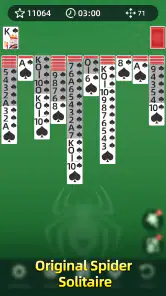
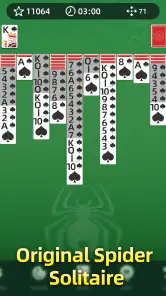
The first thing I noticed is how little the game needs to explain before I can start thinking about cards. Spider Solitaire works because the central challenge is immediately readable: arrange cards into descending sequences, manage empty spaces carefully, and build complete runs in the right order. A good version of the game should stay out of the way, and this one is most successful when I am looking at the layout rather than searching through menus or trying to understand an elaborate progression system.
That simplicity also shapes the visual mood. The presentation feels suited to a quiet solo session, where the cards are the subject and the surrounding design supports concentration. I would not choose this title for visual novelty or a strong fictional setting. Instead, I see it as a digital card table that gives the rules room to breathe. That is a strength for players who want a clean mental exercise, although it may feel plain to anyone looking for animated rewards, a story, or a more decorative game world.
The age rating is Everyone, which matches the accessible nature of the activity. There is no need to learn a complicated control scheme before playing. A newcomer can understand the broad objective quickly, while an experienced solitaire player can move straight into planning. The important distinction is that easy access does not mean every deal is easy. The challenge comes from making good decisions with limited space, not from learning obscure controls.
Why the setting works for short everyday sessions
I found the game particularly suitable for the moments when I want something active but not noisy. Imagine waiting for an appointment, sitting with a coffee, or taking a short break from work. A Spider Solitaire round gives my attention somewhere to go without asking me to remember a plot or coordinate with other players. Because the player controls the pace, I can pause mentally between moves and return to the same problem with a fresh look.
One useful habit is to avoid treating every available move as equally urgent. I first scan the tableau for moves that reveal a hidden card or create a genuinely useful empty column. Moving a visible card simply because it can move often makes the layout less flexible. That small change in approach turns the app from a casual card filler into a compact planning exercise, and it is one reason I think the traditional rules still hold up well on a phone.
The trade-off is that the experience depends heavily on whether you enjoy repetition. The familiar structure is comforting, but it also means the game does not provide the variety of a collection of unrelated card modes. If you want quick rounds with a changing objective, a broader solitaire package may suit you better. Here, the appeal comes from refining the same kind of decision-making over time.
The visual language keeps attention on the puzzle
Art direction in a card game is easy to overlook because the cards must remain legible above everything else. In this case, the restrained approach makes sense. The table functions as a quiet frame for the suits, ranks, and columns, while the arrangement itself supplies most of the visual movement. As cards shift and sequences become clearer, the board gradually changes from a crowded problem into a more ordered one. That transformation is the closest thing this game has to visual storytelling.
I also appreciate that the setting does not compete with the logic of the cards. A more dramatic background could make the game look distinctive in screenshots, but it could also make long sessions tiring or distract from small details. Spider Solitaire benefits from a visual identity that supports scanning. When I am deciding whether to uncover a card or preserve a sequence, I want the layout to be the most important thing on screen.
There is a subtle psychological effect here: the board starts each round as a mess of blocked possibilities, then becomes more open as I make careful choices. That gives the game a gentle sense of progress even without a narrative campaign. The visual payoff is not a flashy event; it is the moment when an empty column appears and suddenly several moves become possible. Players who enjoy orderly problem solving will understand the satisfaction immediately.
Sound and rhythm: a game that leaves room for thought
The strongest part of the audio direction is its relationship with pacing. Spider Solitaire is not the kind of game that needs to push me forward with constant sound cues. Its natural rhythm comes from the cycle of studying the board, making a move, checking the consequences, and planning again. That quiet rhythm is valuable because it lets the game feel like a break rather than another source of pressure.
In my experience, card games are often more pleasant when their audio does not demand attention. A loud or overly celebratory design would clash with the patient nature of Spider Solitaire. The mood here is better understood as focused and low-key: the satisfaction comes from solving a difficult arrangement, not from being repeatedly interrupted by spectacle. That makes it an appropriate companion for relaxed play, provided the player is comfortable with a deliberately modest presentation.
The pacing can change depending on how I play. A confident player may move quickly through obvious sequences, while a cautious player can spend much longer evaluating whether a move will close off an important column. The app supports that difference because the rules themselves create the tempo. This is an important advantage over games that force rapid decisions or build their identity around countdowns.
My practical tip is to use the natural pauses between moves instead of rushing to clear a visible sequence. Before committing, I check what the move exposes, whether it changes the number of available columns, and whether it leaves a useful card buried beneath a less useful one. That habit makes the sound and visual rhythm feel connected to the mechanics: every action becomes part of a calm process of opening space.
Classic mechanics with room for careful planning
The core rules are the reason to install this game. Spider Solitaire is familiar enough for experienced players to begin immediately, yet deep enough that careless choices can make a promising deal nearly impossible to manage. The key skill is not merely building descending runs. It is deciding when to preserve a partial sequence, when to break one apart, and when an empty column is worth more than a neat-looking stack.
One of the most useful strategies is to prioritize moves that reveal hidden cards. A completed-looking stack can be tempting, but it may not improve the board if it leaves several unknown cards untouched. I often compare two possible moves by asking which one increases future information. Revealing a card can be more valuable than making a longer sequence, especially early in a round when the layout is still difficult to read.
Another advanced habit is to protect empty columns. An empty space is not simply a place to park any card; it is a temporary tool that lets me rearrange blocked sequences. Filling it too quickly can remove the flexibility needed for the next stage of the deal. I try to use such a space to move a strategically important sequence, then consider how to reopen it rather than treating it as permanent storage.
This is where the game separates itself from very casual solitaire variants. The rules are easy to state, but the consequences of a move can appear several turns later. A player who only looks at the immediate gain may clear a small group of cards and still end up with a board that has no useful movement. The more rewarding approach is to think in terms of access, flexibility, and future reveals.
Who will enjoy it, and who may want another card game?
I would recommend this app to players who like traditional card puzzles, measured pacing, and the satisfaction of improving through better decisions. It works well for someone who wants a solo game that can be picked up without preparation. It is also a good fit for people who prefer a familiar ruleset over a constantly changing stream of objectives. The free entry point makes it easy to try without committing to a purchase.
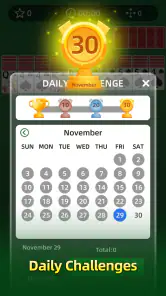
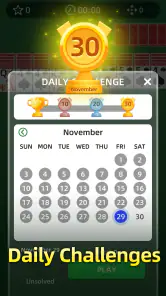
I would be more cautious about recommending it to someone who needs social play, a story, or a large collection of modes. This is not the right choice if your ideal card game includes opponents, chat, campaign progression, or a strong competitive structure. Players who want a strict daily challenge may also prefer an app designed around fixed puzzles or scheduled goals. Spider Solitaire - Card 2026 is more personal and repeatable than event-driven.
The in-app purchase range runs from $2.99 to $9.99 per item, so I would pay attention to the purchase screen before confirming anything. The game remains free to start, but players who want a completely purchase-free experience should be comfortable ignoring optional spending prompts if they appear during use. For me, that is an important part of the decision: the core appeal is already present in the card puzzle, so extra spending should only make sense if it adds something I personally value.
Device compatibility is also reasonably broad for an older Android phone, since the minimum requirement is Android 6.0. The current version is 1.0.8, and the app was released on November 29, 2024. Those details matter if you are installing on a device that is no longer current. I would still leave enough free space for a comfortable installation and keep the system updated where possible, but the stated operating-system requirement does not make this feel limited to recent hardware.
How it compares with familiar alternatives
Compared with a general solitaire collection, this game has a narrower identity. A collection may be better if you want Klondike, FreeCell, Pyramid, and other formats in one place. The advantage here is focus: I can open it knowing exactly what kind of mental activity I am getting. That makes the app easier to use when I want Spider Solitaire specifically, rather than browsing through a menu of unrelated options.
Compared with a competitive card game, it is far less stressful. There is no need to react to another person’s move or optimize around a live opponent. That makes it a better choice for winding down, but a weaker one for users who need tension and social interaction. Compared with a paper deck, the phone version is more convenient for solo play and automatically keeps the layout on screen, though some people will still prefer the physical feel and complete absence of a display.
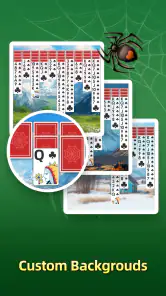
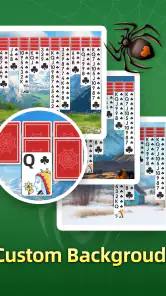
The most meaningful comparison is with other Spider Solitaire apps. The deciding factor is not the basic rules, since those are familiar across many versions. It is the overall mood, clarity, and willingness to stay focused on the central puzzle. I prefer this approach when I want a contained experience. I would choose another option if I needed extensive customization, several game modes, or a more elaborate reward structure.
Small habits that make the experience better
My first recommendation is to scan the entire board before making the opening move. The obvious move is not always the useful one, and a quick overview can reveal a way to expose a hidden card or preserve a valuable sequence. I also try to avoid building a long run simply for visual neatness when that run contains mixed suits that may later need to be separated. A tidy board is not necessarily a flexible board.
Second, I treat every empty column as a temporary investment. Before using it, I ask which sequence benefits most from being moved there and what I expect to do with the space afterward. This prevents the common mistake of filling an empty column with a card that does not improve access. The best use of the space is often the move that creates two or three future options, not the move that looks strongest immediately.
Third, I use failed rounds as information rather than simply starting over. If a deal collapses, I look for the moment when I reduced my options: perhaps I buried a useful card, spent an empty column too early, or completed a sequence before uncovering enough of the tableau. That review process gives the game more depth and helps justify returning to the same style of puzzle. The improvement is gradual, but it feels earned.
Finally, I would play in short sessions if the game starts to feel repetitive. Spider Solitaire can be relaxing, but extended play may make similar layouts blur together. A brief break often helps me see a better move when I return. This is not a flaw unique to this app; it is part of the trade-off that comes with a focused card game. Its strength is repeatable concentration, not endless novelty.
My atmosphere verdict
Spider Solitaire - Card 2026 succeeds because its art direction, sound, and pacing all support the same purpose: giving the player a quiet space to think through a classic card puzzle. It does not need a dramatic world to create a mood. The changing tableau provides the visual arc, the restrained rhythm leaves room for concentration, and the rules supply enough tension to make each decision matter.
I like it most as a dependable break-time game. It is free, rated Everyone, and developed by NiuAIGO, with a clear focus that makes it easy to understand before installation. The 4.5 average and over 100 thousand installs suggest a healthy audience, but my recommendation rests more on the experience itself: this is a sensible choice when you want traditional Spider Solitaire without unnecessary complexity.
It is not the app I would choose for multiplayer energy, narrative depth, or a large catalogue of card games. Its limitations are closely tied to its strengths: the focused design can feel repetitive, and the classic format will not surprise players who already know it well. Still, for a calm solo session where thoughtful moves matter more than flashy presentation, I would happily recommend it to a friend. If you want a clear, patient card puzzle that rewards planning rather than rushing, this is a worthwhile free option to try.
Pros
- Simple rules make it easy for beginners to start playing.
- Multiple difficulty levels provide a suitable challenge for most players.
- Quick rounds work well for short breaks or casual sessions.
- Card layouts are generally clear and easy to read on mobile screens.
- Offline play is useful when you have no internet connection.
Cons
- Frequent ads may interrupt games or appear between rounds.
- Some features may require in-app purchases or premium access.
- Random deals can occasionally feel frustrating or unwinnable.
- Advanced players may find the gameplay repetitive over time.
- Battery use may increase during longer playing sessions.

- Category
- Card
- Version
- 1.0.8