Solitaire Word Association
- 89.00
- 4.6
- Installs
- 50.00K
- Price
- Free
Screenshots
Analysis by Reviewed
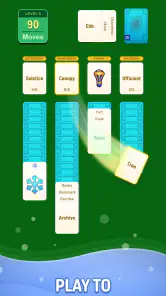
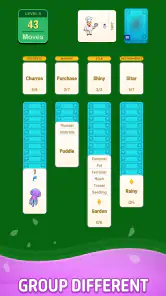
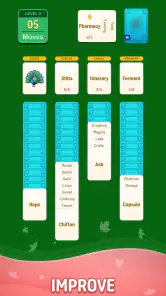
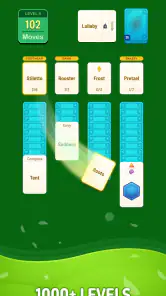
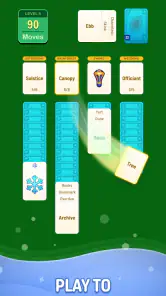
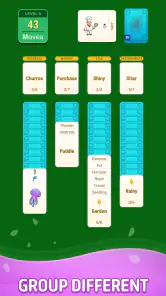
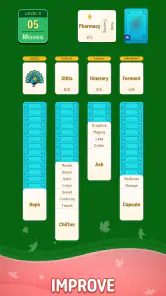
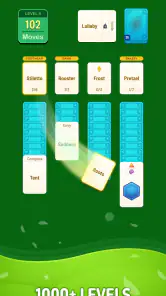
I came away from Solitaire Word Association with a simple impression: it is a word game for people who enjoy the calm rhythm of solitaire but want more mental involvement than matching cards. Instead of treating a deck as the whole challenge, it asks me to connect words, recognize relationships, and make choices that feel small at first but become surprisingly absorbing over a longer session. That combination gives it a more thoughtful pace than a typical quick puzzle.
PlaySimple Games presents it as a free game in the word category, and that description is accurate without telling the whole story. The appeal is not just forming words or clearing a board. The interesting part is the association between ideas: one answer can lead naturally to another, while a less obvious connection may require me to pause and look at the available choices differently. I found that this creates a pleasant balance between vocabulary, pattern recognition, and the familiar “one more round” pull of solitaire.
The game is available to a broad audience, with an Everyone content rating and support beginning with Android 7.0. Its current version is 1.26.0, and the listing shows a 4.6 average from around a thousand ratings. Those details suggest a game that is easy to approach rather than a specialist word challenge. After spending time with it, I would recommend it most strongly to players who want a relaxed daily puzzle with enough variety to keep the routine from feeling completely automatic.
Why the word-and-solitaire combination works
A familiar structure with a different kind of decision-making
What makes this game stand out is the way it borrows the emotional comfort of solitaire without simply reproducing a standard card-table experience. Traditional solitaire is often about sequencing, probability, and planning several moves ahead. Here, the mental work shifts toward language. I am not only asking which move is legal; I am asking which word belongs with another, which association is strongest, and whether a seemingly obvious answer is actually the best route forward.
That change matters because word games can sometimes feel like tests of obscure vocabulary. This one feels more approachable when I treat each puzzle as a chain of ideas rather than an examination. The best moments come when a connection suddenly becomes clear and the board seems to open up. I do not need to know rare dictionary entries to enjoy the basic loop, but I do need to stay attentive to meaning, context, and the way words can overlap.
I also like that the solitaire influence gives the game a measured pace. There is room to think before committing to a choice, which makes it suitable for short breaks, quiet evenings, or a few minutes before bed. It does not demand the reflexes of an action game, and it does not require the uninterrupted concentration of a long story-driven title. That makes the format particularly comfortable on a phone.
The strongest part is the change in mental perspective
My favorite quality is how the puzzles encourage me to move between literal and indirect connections. A word may suggest an object, an activity, a place, or an expression. If I focus too narrowly on the first meaning that comes to mind, I can miss the better answer. The game therefore rewards flexibility more than raw speed, and that gives the experience a little more depth than a basic word search.
A useful habit is to avoid locking onto the first association immediately. I found better results by scanning the whole set of visible possibilities, identifying the words that seem most versatile, and then considering which connection would leave the cleanest next step. This is a small but meaningful strategic layer. It turns the game from simple recognition into a process of managing uncertainty.
Another practical tip is to use a short pause when a puzzle feels stuck. Rather than repeatedly tapping at the most familiar answer, I mentally group the available words by theme. I might separate people, places, actions, objects, and descriptive terms. That quick sorting exercise often reveals a relationship that was hidden when I viewed the words individually. It is the kind of technique that makes the game more satisfying over time because my improvement comes from better thinking, not only from memorizing solutions.
It fits naturally into everyday play
I can easily imagine opening it during a commute, while waiting for an appointment, or during a coffee break when I want something more engaging than scrolling. A realistic session might begin with one puzzle and continue through several because the game does not require a large setup or a long explanation. The word format also makes it easy to stop between decisions, which is useful when my attention is interrupted.
For example, if I have ten quiet minutes before leaving home, I can play without needing to remember a complicated storyline or rebuild a strategy from the previous evening. I simply return to the current word challenge and start looking for relationships. That low entry cost is one of the strongest reasons to keep it installed. It works as a small mental reset rather than an activity that takes over the day.
It may also suit households where people enjoy comparing how they interpret words. I can imagine handing the phone to a family member after getting stuck and discovering that they see a connection I completely missed. Because associations can be personal, the game has a conversational quality that many solitary puzzle apps lack. It is still a single-player experience in spirit, but the answers can invite discussion.
Where it compares well with other word games
Compared with a crossword, this is less dependent on clues that require a precise answer and less tied to a fixed grid. A crossword is better when I want a detailed vocabulary workout or a longer, more traditional puzzle session. This game feels lighter and more fluid, especially when I want to make progress in short bursts.
Compared with a word-search game, it asks for more interpretation. Word searches reward visual scanning and persistence, while this title asks me to understand how ideas relate. If I enjoy spotting hidden letters but dislike ambiguity, a word-search format may be a better match. If I prefer deciding whether two concepts belong together, the association approach has more personality.
Compared with a standard solitaire app, the main difference is the source of tension. Card solitaire often makes me calculate sequences and manage available spaces. Here, the challenge is semantic: I am weighing meanings and anticipating how a choice affects the remaining puzzle. Players who already enjoy solitaire but want a fresh mental angle are likely to appreciate that shift.
The meaningful limitation: associations can feel subjective
The same feature that gives the game character can also create friction. Word relationships are not always equally obvious to every player. An answer that feels natural to me may not be the first interpretation another person would choose. When I make a mistake, the problem is not necessarily a lack of vocabulary; sometimes it is simply that the puzzle expects a particular relationship among several plausible ones.
That subjectivity can make the experience less satisfying for players who prefer strict, unambiguous rules. In a crossword, a crossing letter can confirm whether an answer fits. In a card game, the rules clearly define the legal move. Association puzzles leave more room for interpretation, so a difficult moment may feel like a disagreement with the puzzle rather than a clean test of skill.
I also would not choose this as my main game if I wanted deep strategic planning. The solitaire framing adds structure, but the experience remains centered on word connections. Players looking for elaborate deck-building, competitive matches, rapid scoring, or a large tactical system should look elsewhere. This is a focused word pastime, not an all-purpose strategy game.
The free entry point is welcoming, although the listing includes in-app purchases ranging from $1.99 to $69.99 per item. That range is worth keeping in mind before spending. I would begin by playing without buying anything and decide whether the core loop genuinely fits my habits. A free game can be enjoyable on its own, but optional purchases may become a consideration for anyone who plays frequently or wants to move through content more quickly.
Who should install it, and who should skip it
I think it is a strong fit for casual word-game fans, solitaire players who want a change of pace, and anyone who enjoys puzzles that reward reflection instead of speed. It is also a good choice for people who like games that can be played in short sessions without demanding a complicated tutorial. The Everyone rating makes it approachable for a wide range of players, though individual enjoyment will still depend on comfort with open-ended word relationships.
It may be especially useful for someone trying to replace passive phone habits with a small amount of active thinking. I noticed that the game encourages me to slow down and examine language, even when I am only playing briefly. That does not make it an educational tool in a formal sense, but it does provide a more mentally involved break than endlessly refreshing a feed.
I would skip it if I need a competitive word ladder, a multiplayer challenge, or a highly predictable ruleset. I would also choose a traditional crossword when I want a substantial, carefully structured puzzle that can occupy a full sitting. People who become frustrated by ambiguous clues may find the association mechanic more irritating than relaxing, especially on days when several answers seem equally reasonable.
Small habits that make the game more enjoyable
My first recommendation is to treat mistakes as information rather than immediately restarting mentally. When an association does not work, I look at what category or relationship I overlooked. Was the connection based on a phrase, a shared context, a type of object, or a broader idea? Identifying that pattern helps me approach the next puzzle with a more useful strategy.
Second, I try not to rush simply because the game feels casual. The relaxed presentation can make it tempting to tap the first answer that looks familiar. Taking a few seconds to compare alternatives usually produces a better experience and makes the eventual solution feel earned. This is one of the hidden trade-offs of the format: speed may feel efficient, but careful scanning is often more rewarding.
Third, I use it differently depending on my energy level. When I am tired, I play for the calming routine and accept that some puzzles will take longer. When I am more alert, I challenge myself to find connections without leaning on the most obvious interpretation. That flexibility helps the game avoid becoming either a chore or a mindless time filler.
My final recommendation
Solitaire Word Association succeeds because it combines two familiar ideas without allowing either one to completely dominate. The solitaire influence gives it an inviting rhythm, while the word-association mechanic supplies the personality and mental challenge. I found it most enjoyable when I approached it as a thoughtful break: not a race, not a vocabulary contest, and not a substitute for a full strategy game.
PlaySimple Games has made a free word game that is easy to pick up and broad enough for everyday use. Its reception is already reflected in over fifty thousand installs, and the current version keeps it positioned as an accessible choice for Android users on compatible devices. The purchase options mean I would still play with a little awareness around spending, but they do not change my view of the basic appeal.
My verdict is positive, with one clear qualification: you need to enjoy interpreting relationships between words. If that sounds satisfying, this is a pleasant companion for short breaks and quiet puzzle sessions. If you want exact clues, competitive play, or complex card strategy, a crossword, word-search, or traditional solitaire app will probably serve you better. For everyone in between, it offers a nicely balanced way to make a few spare minutes feel more purposeful.
Pros
- Combines classic solitaire with word puzzles for varied gameplay.
- Short rounds make it easy to play during brief breaks.
- Word challenges can help expand vocabulary and spelling skills.
- Simple card-and-word mechanics are easy for beginners to understand.
- Progression and rewards encourage regular play without complex controls.
Cons
- Some word answers may feel subjective or difficult to guess.
- Difficulty can vary noticeably between individual puzzles.
- Frequent play may become repetitive once the mechanics feel familiar.
- Hints or extra attempts may be limited unless earned or purchased.
- Requires attention to both cards and words
- which may feel mentally demanding.
- Category
- Word
- Version
- 1.26.0