Solitaire Tripeaks : Blooming
- 576.00
- 4.8
- Installs
- 100.00K
- Price
- Free

Screenshots
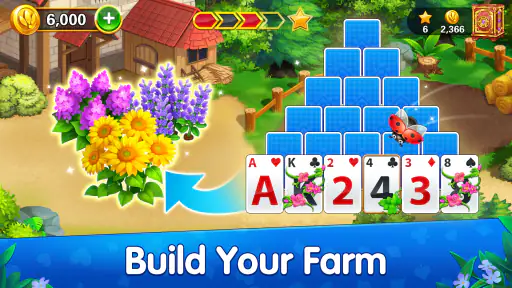
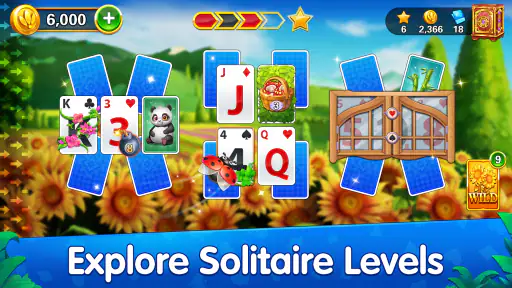
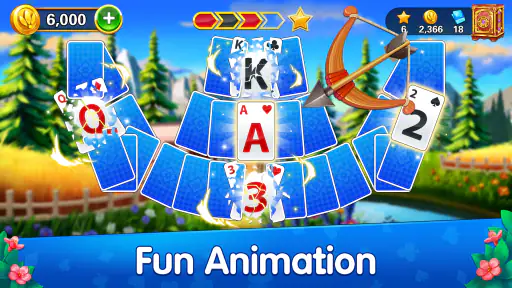
Analysis by Reviewed
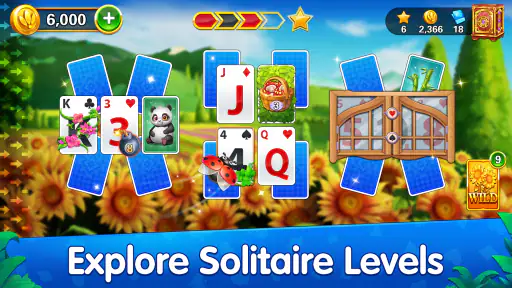
I started Solitaire Tripeaks: Blooming expecting a familiar card game that would fill a few spare minutes, and that is exactly where it fits best. This is a free card game from Brainit Games built around the Tripeaks version of solitaire: clear cards from the layout, make the next sensible move, and keep the chain going before the available choices run out. It is easy to understand almost immediately, but the small decisions become more interesting once a board gives me several possible cards to remove.
What makes the game worth discussing is not a complicated rule set. It is the rhythm created by one action leading to a visible response, a little progress, and then the temptation to try one more board. The presentation points toward a light, colorful experience, while the underlying appeal comes from managing the order of cards rather than simply tapping everything that is available. I found it most enjoyable as a short break, especially when I wanted something more active than watching a video but less demanding than a competitive game.
How the first move turns into a playable routine
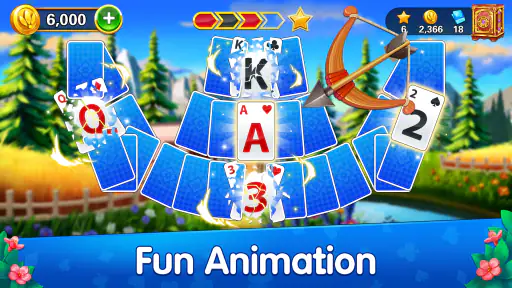
The first useful thing to know is that Tripeaks solitaire is not the same as the classic draw-and-build version many people know from desktop computers. The goal is to remove cards from the tableau by selecting a card that is one rank above or below the current card. That simple relationship gives every tap a purpose. I am not just exposing cards at random; I am looking for a route that lets one move create another.
For example, if the active card allows a six, choosing that six may reveal a seven or a five, which can extend the run. The best move is often not the card that is easiest to see. It is the card that opens a useful section of the layout while preserving a longer sequence. That is the first piece of strategy I noticed: the order of removal matters more than the speed of tapping.
The game is approachable because the basic action does not require a tutorial-heavy commitment. A player who already knows solitaire can settle in quickly, and someone new to Tripeaks can learn through the first few layouts. This makes it suitable for a casual audience, including people who want a card game that can be understood without studying a long rules screen.
At the same time, the simplicity should not be confused with complete randomness. Each board asks me to read the visible cards, check what the current card can accept, and decide whether to continue a run or use another option. When several cards are playable, I usually pause for a moment and consider which one is covering more of the layout. That tiny pause is where the game becomes more thoughtful than a basic matching exercise.
Why the action feels more deliberate than ordinary solitaire
Traditional solitaire often focuses on building suits and alternating colors in separate stacks. Tripeaks shifts attention toward clearing a shaped tableau and extending a sequence. That difference makes the game feel more immediate. I can see the board shrinking after each successful choice, so the consequence of a move is easy to understand.
The trade-off is that a Tripeaks game can feel less methodical to players who enjoy carefully organizing several foundation piles. If your favorite part of solitaire is planning a long chain of suit-based transfers, this may feel too direct. I would choose this game for quick decisions and visible board progress, not for a slow, highly structured card puzzle.
One practical habit helped me avoid wasting good opportunities: I look for cards that are blocking other cards before using an easy move elsewhere. Clearing an exposed card can feel satisfying, but removing a card that uncovers two or three more choices usually has greater value. This is not an advertised feature or a hidden rule; it is simply the kind of board-reading skill that makes repeated sessions more rewarding.
The feedback rhythm: tap, reveal, reassess
The strongest part of the experience is the feedback rhythm. I select a card, the layout changes, and I immediately reassess the next move. That cycle is quick enough to keep the game moving, yet it gives each decision a small consequence. When a sequence continues, the board appears to open up in a way that encourages me to keep looking rather than stop after a single successful play.
That rhythm also creates a useful distinction between a good move and a merely available move. A legal card advances the current sequence, but it may leave the layout with no helpful continuation. A stronger move can preserve flexibility by exposing a card that connects with the active card or by clearing a cover from an important part of the tableau. I began to treat every move as both a removal and a setup for the next decision.
The feedback is especially effective during short sessions. I can play for a few minutes, make several choices, and still feel that I have completed a meaningful task. There is no need to remember a large campaign story or maintain a complex build. The board itself supplies the immediate context, and the changing arrangement keeps the attention focused.
There is a downside to this compact loop. Once I understand the basic pattern, individual moves can start to feel familiar. The game depends on layout variety, boosters, and the satisfaction of clearing boards to keep the routine fresh. Players looking for deep narrative progression or a wide variety of card modes may eventually find the central action narrow.
Using the board instead of chasing every possible chain
A common mistake in this type of game is to treat a long chain as the only good outcome. I found that a shorter sequence can be better if it opens the right section of the tableau. Continuing a run is attractive because it feels efficient, but efficiency is not always the same as progress. Sometimes I stop a chain mentally, inspect the remaining exposed cards, and choose the move that gives the board a better shape.
This approach matters when the current card has more than one possible match. I first check whether one choice uncovers a card that could continue the sequence. If neither option is clearly superior, I favor the card that removes a blocker from a peak or central area. That small workflow makes the game feel less like guessing and more like managing limited access to the layout.
It also gives the game a natural learning curve without requiring a formal difficulty explanation. New players can concentrate on matching the current card. After a few rounds, they can start thinking one or two moves ahead. Experienced solitaire players may go further by tracking which ranks have already appeared and judging whether a remaining route is realistic.
Rewards that support another attempt
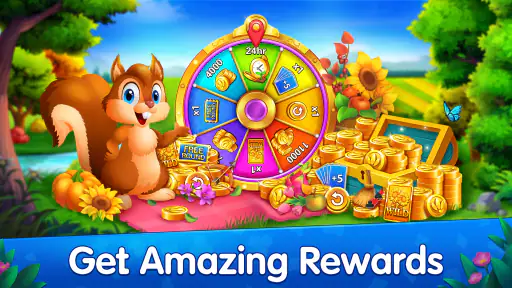
The reward in a Tripeaks game is layered. The immediate reward is seeing a card disappear and another part of the board become available. The next reward is completing more of the layout than expected. Beyond that, the game’s use of levels, boosters, and cards gives progress a broader sense of purpose than a single isolated hand.
I like that this structure gives a failed attempt some value. Even when I do not clear a board, I have usually learned which part of the layout became a problem and which early choice reduced my options. That makes the next attempt feel like a reset with information rather than a completely empty restart.
Boosters can be appealing when a board reaches an awkward point, but I would not use them automatically. The better habit is to reserve a helpful item for a position where it changes the board meaningfully, rather than spending it merely to extend a sequence by one move. This is one of the more important trade-offs in the game: a booster may rescue a difficult moment, but using one too early can reduce the satisfaction of solving the layout through planning.
The game is free to download and play, with optional in-app purchases ranging from $0.99 to $99.99 per item. That wide span makes it especially important to decide in advance how much optional spending feels comfortable. I would treat purchases as a convenience for players who want them, not as a requirement for understanding the core card loop. Anyone who prefers a completely purchase-free experience should be prepared to ignore optional offers and enjoy the basic play at its own pace.
The reward structure is therefore best for players who like gradual progress and small improvements. It is less convincing for someone who wants every reward to come from a difficult strategic breakthrough. Some rewards are connected to persistence and progression, not just to solving an especially clever board.
What happens when a session resets
The reset is a major part of the appeal. A round ends, the current layout is no longer demanding my attention, and I can put the game down without losing the thread of a larger story. When I return, the reason to begin again is straightforward: I want to clear a board more efficiently, see what the next level offers, or test whether a different opening choice produces a better result.
This makes the game a natural fit for everyday gaps in time. I can imagine playing while waiting for an appointment, during a short commute as a passenger, or after finishing a task when I want a gentle mental change. The session structure does not ask me to reserve a long uninterrupted block. It works better as a collection of small visits than as a game that demands an evening.
There is also a useful emotional reset after a poor round. Because the rules are familiar and the next board starts from a clean layout, frustration does not have to carry over for long. I can try a different order, pay more attention to covered cards, and see whether the result improves. That quick return to a known routine is one reason I kept opening it after an unsuccessful attempt.
However, the same reset can feel repetitive to players who need a strong sense of permanent change. If you prefer games where every session unlocks a new story beat, changes a character, or alters a strategic system, the repeated card-board cycle may not provide enough variety. The game’s motivation is deliberately modest: clear the current challenge, collect progress, and decide whether another hand sounds enjoyable.
Who will get the most from the game
I would recommend it first to people who already enjoy solitaire but want a faster, more visual format. It is also a good entry point for anyone who likes casual puzzle games and prefers decisions that can be understood at a glance. The Everyone content rating makes it suitable for a broad audience, and the low barrier to entry means family members with different gaming habits can understand the premise quickly.
It works particularly well for players who enjoy improving through observation. The most satisfying moments for me came from noticing that an apparently minor choice had exposed a useful card several moves later. If you like finding patterns, protecting future options, and making a short sequence last, there is enough decision-making here to keep the basic rules interesting.
I would be more cautious about recommending it to people who dislike boosters, progression systems, or optional purchase prompts in free games. Even if the central activity is simple, the surrounding reward structure may not suit someone who wants a plain, uninterrupted deck of cards. Likewise, players searching for multiplayer competition, rich storytelling, or a large collection of radically different modes should look at another category of game.
How it compares with familiar alternatives
Compared with classic Klondike solitaire, this game is quicker to read and more focused on clearing a visible tableau. Klondike gives me more satisfaction from rearranging foundations and building suits, while Tripeaks gives me a stronger feeling of momentum as cards vanish in succession. I would pick Klondike for a quiet, methodical puzzle and this game for a shorter burst of active decision-making.
Compared with Spider solitaire, the difference is even clearer. Spider asks for longer planning across suit sequences and can become a demanding exercise in managing blocked columns. Solitaire Tripeaks: Blooming is lighter and more immediately accessible. It offers less of that deep rearrangement challenge, but it is easier to start and easier to leave after a brief round.
Compared with a simple free-cell-style card game, the appeal here is the visible peaks layout and the chain-based tempo. FreeCell often rewards careful calculation from the opening position, whereas Tripeaks lets me respond to the current card and the cards it reveals. Neither approach is universally better; they serve different moods. This one is better when I want my progress to be visible after nearly every action.
The game’s rating of 4.8 from around 5.3 thousand ratings suggests that many players respond well to this accessible format, while its install count has passed 100 thousand. I see those figures as signs of a healthy audience rather than proof that every solitaire fan will enjoy it. The important question is whether the player wants a casual Tripeaks loop with progression, not whether the game resembles every other card app.
Practical details before downloading
Brainit Games released the game on May 9, 2024, and the current version is 3.4. It supports devices running Android 7.0 or later, which makes it available to people using older compatible phones as well as newer models. I would still check the device requirements before installing if the phone is especially old, but the stated minimum is relatively broad for an Android card game.
The game is free, so trying the core experience does not require an upfront payment. Optional purchases are available, and their prices range from $0.99 to $99.99 per item. My advice is to play several sessions before deciding whether any optional item adds enough convenience to justify spending. The card loop should be enjoyable on its own; otherwise, purchases will not solve the underlying mismatch.
The short store description calls it Solitaire Tripeaks, but the fuller experience is better understood as a casual progression game built around that rule set. That distinction matters because someone expecting a bare, traditional solitaire utility may find the levels, boosters, and card-focused rewards more prominent than expected. Someone seeking a colorful, repeatable card pastime will probably find the broader structure more fitting.
The loop verdict
The complete loop is easy to describe: I choose a playable card, watch the layout open, receive the satisfaction of progress or the lesson of a blocked route, and then decide whether to reset and try again. That sequence is the reason the game works. It does not rely on complicated controls or a large explanation; it relies on making the next card feel worth considering.
My favorite way to play is to treat each board as a small planning exercise rather than a race. I scan the covered cards, protect moves that could extend the chain, and keep boosters for moments when they genuinely alter my options. That approach makes the levels feel more strategic and reduces the urge to tap the first available card.
My main reservation is variety. The central Tripeaks action remains the focus, so players who need constant novelty may reach their limit. Free-to-play elements and optional purchases may also be a disadvantage for people who want a completely stripped-down solitaire experience. In those cases, a traditional offline card app could be a better choice.
For everyone else, Solitaire Tripeaks: Blooming is an easy recommendation when the goal is a friendly card game for short, repeatable sessions. I would install it for a coffee-break puzzle, a low-pressure evening activity, or a more approachable alternative to slower solitaire variants. Its best quality is the clean reason to make another move: the board changes immediately, the next possibility appears, and one more attempt feels close enough to be worth taking.
Pros
- Relaxing solitaire gameplay suitable for short sessions.
- Colorful blooming garden theme gives the game a pleasant visual style.
- Daily challenges add variety beyond the standard levels.
- Simple controls make it accessible for beginners.
- Progression and rewards encourage regular play.
Cons
- Some levels depend heavily on luck and may require retries.
- Hints and extra moves can become limited without resources.
- Frequent events may feel repetitive after extended play.
- The game may consume noticeable battery during longer sessions.
- An internet connection may be needed for certain features.
- Category
- Card
- Version
- 3.4