Solitaire Showtime
- 10.75K
- 4.8
- Installs
- 1.00M
- Price
- Free

Screenshots



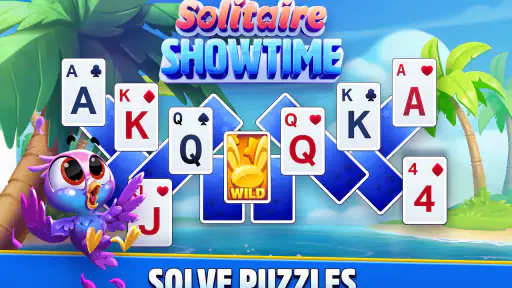

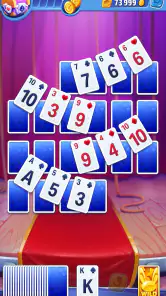
Analysis by Reviewed
I approached Solitaire Showtime expecting a familiar card game with a light change of scenery, but its main appeal is the way it turns a quiet solitaire session into something more theatrical and goal-focused. The basic pleasure remains easy to understand: arrange cards, clear the layout, and make the next useful move. What changes is the presentation and the sense that each hand belongs to a larger show rather than sitting alone as a disposable puzzle.
That distinction matters because ordinary solitaire apps often blur together after a few rounds. This one, developed by Jam City, Inc., is aimed at players who want the calm, recognizable rhythm of a card game while also enjoying a more playful atmosphere. I found it most convincing when I treated it as a short-break game rather than a serious strategy title. A few minutes can feel complete, but the format also gives me a reason to continue when I want a longer session.
The twist is turning solitaire into a small performance
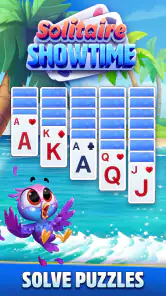
The verified capability I kept noticing is the game’s presentation of solitaire as a show. That does not replace the card-solving foundation; it gives the familiar activity a stronger sense of occasion. Instead of feeling like I am simply opening another standard deck, I feel as if the game is framing each successful decision as part of a colorful performance.
In practical terms, this changes my attention. With a plain solitaire app, I tend to play automatically, moving obvious cards without thinking much about the surrounding context. Here, the themed treatment makes progress feel more visible. A completed sequence is not only a tidy board; it feels like a small step forward in the game’s entertainment loop. That is a modest change, but it is exactly the kind of change that can keep a well-known card format from becoming flat.
The important point is that the twist is not a reason to expect a completely different genre. This remains a card game, and anyone who already understands solitaire will recognize the core logic quickly. The extra atmosphere is there to support the familiar play, not to transform it into a complex role-playing or action experience.
Why the familiar rules still matter
Solitaire works well on a phone because its decisions are naturally divided into small steps. I can inspect the visible cards, choose a move, and pause without losing the thread. That makes the game suitable for a commute, a waiting room, or a short evening break. The show-like framing adds personality, but the underlying card structure is what makes those small sessions comfortable.
I also like that the format does not demand constant concentration in the way a competitive multiplayer card game can. There is no need to coordinate with another person or protect a ranking during every hand. I can play at my own pace and stop when the board reaches a natural endpoint. For someone who wants a relaxing puzzle with a little more charm than a bare-bones deck, that balance is the strongest part of the experience.
What changes during an actual session
My preferred way to use it is to start a hand with one simple goal: make the best available move rather than rush toward the finish. That approach suits the game’s slower rhythm. I look for cards that open blocked spaces, preserve flexibility, and avoid using a helpful card too early when another move may reveal a better option.
This is also where the theatrical layer has a useful effect. It encourages me to treat progress as something worth noticing instead of tapping through the board mechanically. The game feels more welcoming than a strict utility version of solitaire, especially when I am tired and want something familiar without a completely plain interface.
There is a tradeoff, though. Players who want a minimalist card table may find the extra personality distracting. The same visual energy that makes the game approachable can make it feel less pure than a traditional solitaire client. If your ideal version is just cards, a neutral background, and nothing competing for attention, the show concept may not be an advantage.
How I would use it in everyday life
The best everyday scenario is a short gap that is too long for a single message but too short for a film or a substantial game. I can imagine opening it while waiting for an appointment, playing one hand, and closing it without feeling that I have abandoned a complicated campaign. The card format gives the session a clear beginning and end, while the presentation makes the few minutes feel more entertaining than repeatedly checking the same apps.
It also works for winding down. I would not describe it as a meditation tool, because the game still asks me to make choices, but it has a gentler pace than many mobile games. I can focus on the board, enjoy the themed atmosphere, and avoid the pressure of real-time competition. That makes it a reasonable choice for players who like puzzles but do not want every spare moment turned into a test of speed.
A useful habit is to decide in advance whether I am playing for relaxation or for a more careful solve. In relaxation mode, I accept that a hand may not work out and enjoy the flow. In careful mode, I pause before each move and think about which card will preserve the most options. Separating those two moods prevents frustration and helps the game serve different kinds of breaks.
A small strategy that improves the experience
One non-obvious benefit of mobile solitaire is that the board can become a quick exercise in managing uncertainty. I try not to judge a move only by whether it is immediately legal. A move that exposes a hidden choice or keeps a sequence flexible can be more valuable than one that simply clears a card. That way of thinking makes the familiar rules feel less automatic and gives the show framing something meaningful to support.
I also recommend resisting the urge to treat every visible move as equally good. When several cards can be played, I first consider which action opens the most space. If two options appear similar, I favor the one that leaves more possible follow-up moves. This is not a complicated system, but it prevents the common mistake of making a quick move that looks productive while quietly closing off the board.
Another practical tip is to use the game as a deliberate stopping point. Rather than continuing until I am bored, I can finish a hand and put the phone away. That works particularly well because solitaire naturally provides a completed unit of play. The theatrical presentation reinforces that sense of closure, making it easier to view one round as a satisfying activity instead of an invitation to scroll endlessly.
Who should expect a different kind of game
Someone looking for deep deck construction, direct competition, or a long strategic campaign should probably choose another card game. Solitaire Showtime is better suited to quick decisions and repeated hands than to building a specialized collection or learning a large ruleset. Its strength is accessibility, not complexity.
It may also be a poor fit for players who dislike any decorative layer around classic solitaire. The game’s identity depends on making the familiar format feel more like entertainment, so the presentation is not merely a background detail. If you want an austere tool that disappears while you play, a simpler solitaire alternative may be more satisfying.
On the other hand, beginners have a clear reason to try it. The basic card format is recognizable, and the lighter tone makes the first sessions less intimidating than a dense strategy game. Experienced solitaire players may appreciate the change of mood even if they do not find the underlying puzzle radically new. In my view, the sweet spot is the player who already likes solitaire but wants more personality around it.
The tradeoffs behind the free download
The game is free, which removes the main barrier to trying it. It is available for an Everyone audience, and its broad reach is reflected in more than a million installs. The average rating is 4.8 from roughly 167 thousand ratings, with about 11 thousand written reviews, so it has clearly found a substantial audience rather than remaining a niche experiment.
Free access does not mean the experience is entirely without commercial friction. In-app purchases range from $0.99 to $99.99 per item. That wide range is worth keeping in mind before spending, especially if the game becomes part of a daily routine. I would begin without buying anything and decide only after understanding how much the optional spending affects my own enjoyment.
For families, the Everyone rating makes the game easier to consider in a shared device environment, although I would still use normal judgment around purchases. A child may see a colorful card game as harmless entertainment, while an adult should remain aware that optional items can be priced very differently. The free entry point is convenient, but it is not a reason to make purchases casually.
What the version and device requirement mean
The current version is 27.4.0, and the minimum operating system is Android 6.0. That makes the compatibility requirement relatively approachable for people using older Android hardware, provided the device meets that system level. I would still expect the smoothness of the experience to depend on the phone or tablet itself, especially when a game places more emphasis on presentation than a plain card table would.
The release date of Nov 15, 2019, also helps explain the game’s position. It is not presenting solitaire as a brand-new concept; it is refining a familiar format through theme and atmosphere. That is a sensible direction for a casual card game, but it means the right expectation is a polished variation on a classic rather than a completely unfamiliar invention.
One practical consideration is storage and attention. Even when the rules are simple, a more decorated game can feel heavier than a stripped-down solitaire utility. If I only want to play a hand once a week, a basic alternative may be more efficient. If I want the game to feel like a small entertainment destination, the added presentation earns its place.
How it compares with ordinary solitaire apps
Compared with a conventional solitaire app, this game offers more mood and a clearer entertainment identity. A standard alternative usually wins on simplicity: it opens, presents the cards, and gets out of the way. Solitaire Showtime wins when I want the act of playing to feel more colorful and rewarding, even though the underlying activity remains familiar.
Compared with competitive card games, it is calmer and less socially demanding. There is no need to match another player’s pace or learn a complicated meta-game before feeling competent. That makes it better for casual use, but worse for anyone who lives for rivalry and rapid adaptation.
Compared with puzzle games built around levels or elaborate objectives, it has a more repeatable structure. The appeal comes from the combination of recognizable card decisions and the show atmosphere, not from a constant stream of radically different mechanics. I see that as a benefit when I want reliability, but it can become repetitive if I need frequent surprises.
My final recommendation
I recommend Solitaire Showtime to people who already enjoy solitaire and want a livelier way to play it on a phone. The strongest reason to install it is not that it reinvents card games; it is that the show-centered presentation gives ordinary hands more character and makes short sessions feel intentional.
I would skip it if I wanted a completely minimal interface, competitive play, or a deep strategic system. I would also approach the purchase options carefully and enjoy the free experience before deciding whether any optional spending is worthwhile. Those limitations are real, but they do not undermine the central idea.
For me, the game succeeds when I need a familiar puzzle with a little stage lighting around it. It is easy to pick up, comfortable to play in short bursts, and distinctive enough not to feel like an anonymous deck of cards. The most useful way to think about it is simple: choose it when atmosphere can make a familiar solitaire hand more enjoyable, not when you are searching for an entirely new card-game system.
Pros
- Easy-to-learn rules make it suitable for casual players.
- Short rounds work well for quick breaks or daily play.
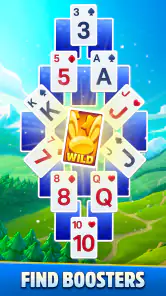
- Bright visuals and animations give the game a polished feel.
- Progression goals can add motivation beyond standard solitaire.
- Playable on mobile screens with simple touch controls.
Cons
- Frequent ads may interrupt the game between rounds.
- Some rewards or features may require in-app purchases.
- Limited variety if you only want traditional solitaire.
- Animations can feel slow when playing many hands.
- Offline availability may be restricted for certain features.

- Category
- Card
- Version
- 27.4.0