Solitaire Real Money: Win Cash
- 3.50K
- 4.6
- Installs
- 100.00K
- Price
- Free

Screenshots
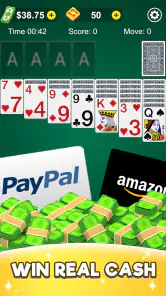
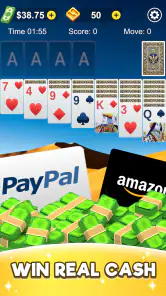
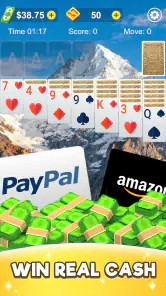
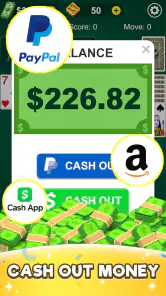
Analysis by Reviewed
I approached Solitaire Real Money: Win Cash as a card game first and a cash-themed experience second. That distinction matters. The familiar solitaire format is easy to understand, but the promise of winning real money changes how carefully I look at progress, pressure, fairness, and spending. My experience is that this game is most interesting for people who already enjoy quick solitaire sessions and want a more competitive reason to play, not for someone searching for a guaranteed source of income.
The game comes from Yalovarz LTD STI. It is free to download, carries a Mature 17+ rating, and runs on devices using Android 5.1 or later. The current version is 1.2, and it was released on September 29, 2025. Those details make it accessible to many older Android phones, although a compatible operating system does not automatically mean every device will feel equally comfortable during play.
How the cash-focused solitaire experience feels in everyday use
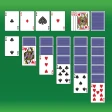
Solitaire works well as a short-session game because the basic rhythm is immediately recognizable: inspect the layout, uncover useful cards, make a move, and decide whether the next choice improves your position. I can imagine opening it while waiting for an appointment, taking a brief break from work, or relaxing at home without committing to a long campaign. The card format is less demanding than a full strategy game, yet it still gives each round enough decision-making to avoid feeling completely passive.
The cash angle adds a layer of attention that ordinary solitaire does not have. In a standard free version, an imperfect move may simply mean restarting. Here, the idea of real-money rewards can make the same mistake feel more significant. That can be motivating for a careful player, but it can also create pressure. I would not recommend treating every round as a financial decision; the healthier approach is to treat the game as entertainment and regard any reward as a possible outcome rather than an expectation.
One useful habit is to decide your time and spending boundaries before starting. If I had only ten minutes, I would use that limit to prevent a short break from turning into repeated attempts. I would also avoid making a purchase simply because a round went badly. A poor result is part of card play, and trying to recover immediately can turn a casual session into an emotional one.
What the free entry means in practice
The free price makes it easy to try the core experience without committing money at the download stage. That is a meaningful advantage over games that require an upfront purchase before you can decide whether their controls and pacing suit you. It also means I can evaluate the interface, the feel of the card layout, and the general tone of the experience before deciding whether it deserves regular space on my phone.
However, “free” should not be confused with “risk-free.” The game is explicitly built around real-cash play, so I would read every on-screen instruction carefully before entering any activity connected with rewards. I would pay attention to whether a button starts a free round, enters a competitive event, or involves a payment. Since purchase details are not established here, I would not assume that optional spending exists, that it is necessary, or that it improves the odds of receiving money. The sensible rule is simple: never spend to chase a previous loss.
That approach also helps answer a practical question many players have: can someone enjoy the game without spending? The free download allows an initial trial, but the exact relationship between free play, cash contests, and any possible purchase flow should be checked inside the app before participation. I would only use a payment method after understanding the amount, purpose, and conditions shown at the moment of purchase.
Progress feels different when the goal is money
Traditional solitaire rewards completion, improved speed, or the quiet satisfaction of clearing a difficult layout. A cash-oriented version changes the emotional balance. Winning may feel more valuable, but losing can feel more frustrating than it would in a purely recreational alternative. That is not necessarily a flaw in the card mechanics; it is a consequence of attaching financial meaning to a familiar pastime.
I find the best use case is a player who enjoys measured competition and can stop comfortably after a result. Someone who becomes irritated by near misses, keeps replaying to recover, or feels compelled to continue after losing should probably choose an ordinary solitaire app instead. The usual alternative is better when the main goal is relaxation, offline-style repetition, or a predictable experience without financial tension.
A practical workflow is to separate practice from competition. Spend the first few sessions learning how the layouts behave and how the controls respond. Only after that should you consider any activity involving rewards. This prevents unfamiliarity with the interface from being mistaken for poor card skill. It also gives you a clearer sense of whether the game is enjoyable on its own, which is important because a reward-focused design can otherwise hide a weak long-term fit.
Fairness needs to be judged carefully
For a game connected with real cash, fairness is more important than decorative presentation. I would want the rules of each relevant activity to be understandable before starting: what counts as a win, how results are compared, whether speed matters, and what happens after a tie or interrupted session. Those are the details that determine whether a competitive round feels meaningful rather than confusing.
I would also distinguish between a difficult layout and an unfair one. Solitaire naturally includes situations where the available cards limit your choices. A frustrating result does not by itself prove that the game is manipulating outcomes. To judge the experience responsibly, I would look for consistency in the rules, clear explanations, and a result that follows the stated conditions. If the app presents an outcome I cannot understand, I would pause rather than immediately entering another round.
Another important trade-off is the difference between skill and chance. Choosing when to uncover a card, preserving useful moves, and avoiding premature commitments can reward careful play. At the same time, the starting arrangement can influence what options are available. That combination means a strong player may make better decisions without controlling every result. Anyone expecting a reliable income stream is approaching the game with the wrong expectation.
I would be especially cautious about competitive situations where other players, rankings, or timed results are involved. The presence of competition can make a round more engaging, but it can also encourage rushed decisions. My preference would be to play deliberately, inspect the full board before moving, and avoid treating speed as the only measure of skill. A fast move is not a good move if it closes off better options.
Questions I would settle before regular play
Before using the cash-related parts, I would check the eligibility rules shown in the app, the available withdrawal conditions, and any restrictions attached to rewards. I would also look for the treatment of unsuccessful rounds and the exact point at which a transaction occurs. These are not minor details. They determine whether the experience matches what a new player thinks they are joining.
I would not rely on the phrase “win cash” as a promise that every player will receive money. It describes the intended attraction of the game, not a guaranteed result. A careful player should regard rewards as conditional on the rules and the outcome of play. If the terms feel difficult to understand, that is a reason to avoid the cash component, not a reason to press ahead and hope the details become clear later.
The Mature 17+ label is another reason to treat the app as more than a harmless card pastime. Age guidance matters when real-money activity is involved, and younger users should not be encouraged to participate. Adults should still set their own limits, especially if they are playing during stressful moments or using the game as a way to escape financial worries.
Who will enjoy it, and who should skip it
I think the strongest audience is an adult solitaire fan who likes short rounds, wants a more competitive atmosphere, and can separate entertainment from financial expectations. The free download lowers the barrier to testing the game, while the familiar card format means there is no large rulebook to study before the first session.
I would steer away from it if your priority is a completely calm, consequence-free card game. A conventional solitaire title is a better match for quiet repetition, casual practice, and play where a loss has no added emotional weight. I would also skip the cash-focused experience if you are looking for a dependable way to earn money, because card outcomes and contest conditions do not offer that kind of certainty.
It may also be a poor fit for players who dislike checking rules. Cash-related play demands more attention than a basic free solitaire game. You should be comfortable reading the conditions for participation, understanding what a result means, and stopping when the experience no longer feels enjoyable. That extra responsibility is the main cost of the game’s central idea, even though the download itself is free.
My trust verdict after weighing the trade-offs
The game has a clear appeal: it takes a familiar card pastime and gives it a reward-driven purpose. Its rating is a 4.6 average from around 46 thousand ratings, with roughly 3.5 thousand written reviews, and it has passed the 100 thousand install mark. Those figures suggest that many people have been willing to try it, although popularity alone cannot answer questions about fairness or whether the cash experience suits an individual player.
My recommendation is conditional rather than enthusiastic. I would try it as a free solitaire game, learn the interface, and decide whether the ordinary play is enjoyable before considering any reward activity. I would keep spending separate from emotion, read the rules at the point of entry, and stop if the conditions were unclear. That workflow gives the game a fair chance without allowing the promise of money to control the session.
In the end, Solitaire Real Money: Win Cash is best viewed as a card game with a financial incentive, not as a financial tool with cards attached. The free starting point is useful, the familiar format is approachable, and the competitive angle may keep experienced solitaire players interested. Its biggest limitation is also its defining feature: once real cash enters the picture, patience, rule-checking, and personal limits matter just as much as card skill. For adults who can maintain that balance, it is worth trying cautiously. For everyone else, a standard solitaire alternative will be the safer and more relaxing choice.
Pros
- Classic solitaire format is easy to learn and play in short sessions.
- Cash tournaments can add extra excitement for competitive players.
- Simple controls work well on both phones and tablets.
- Practice options help new players understand the game before competing.
- Regular challenges may keep gameplay feeling fresh over time.
Cons
- Cash prizes may be unavailable in some countries or regions.
- Withdrawals can require identity verification and payment details.
- Entry fees may lead to spending more than intended.
- Results depend partly on speed
- accuracy
- and competition from other players.
- Ads or promotional offers may interrupt the overall playing experience.

- Category
- Card
- Version
- 1.2