Solitaire Oasis
- 426.00
- 4.5
- Installs
- 100.00K
- Price
- Free
Screenshots


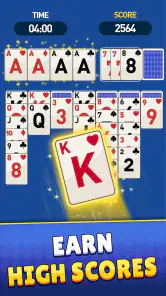
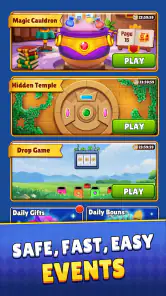


Analysis by Reviewed
Solitaire Oasis is the kind of card game I open when I want a quiet challenge rather than a long gaming session. It presents itself as a casual, skill-based multiplayer experience, but the familiar solitaire foundation is what makes it immediately approachable. I can begin playing without learning a complicated rule set, then gradually pay more attention to timing, card order, and the choices that separate a lucky round from a well-played one.
My first impression was that its appeal comes from the balance between relaxation and concentration. A short session can fit into a coffee break, yet the card decisions are meaningful enough to keep me from treating every round as background noise. It is free to download, rated for Everyone, and developed by FatMan Studio. The game reached the store on May 29, 2025, and its current version is 2.0.2.
That combination makes it easy to recommend to someone who already enjoys solitaire games but wants a more competitive or social flavor. I would not describe it as a replacement for every traditional card app, though. Players who prefer completely offline, endlessly customizable solitaire may find the multiplayer focus less comfortable, while people looking for deep deck-building or a large collection of card modes will probably want something broader.
How I settle into a reliable Solitaire Oasis routine
The basic round rewards attention more than speed
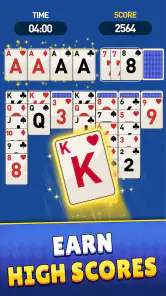
My usual workflow starts with one deliberate look at the layout instead of immediately tapping through the first available move. That small pause matters. In solitaire, an obvious move is not always the best move, and the temptation to clear a card quickly can hide a more useful sequence underneath. I try to identify which cards are blocking progress, which columns are likely to open soon, and whether a move creates flexibility or merely changes the appearance of the board.
This is especially useful when the game is being played as a multiplayer challenge. Speed may matter, but rushing every decision is not the same as playing efficiently. I have found that a consistent rhythm works better: scan the board, make the safest productive move, then scan again. It keeps the round moving without turning each tap into a guess.
For a new player, I suggest treating the first few rounds as practice in reading the layout. Rather than judging success only by whether the round is completed, notice which decisions leave several options open. A move that exposes a hidden card or frees a column is usually more valuable than one that simply places a card in a neat-looking sequence. This habit transfers well from ordinary solitaire to the more competitive feel here.
A practical everyday use case
I can see myself using Solitaire Oasis during a short wait at a bus stop or between tasks at home. The game does not demand the kind of uninterrupted attention required by a long strategy title, but it still gives that waiting time a clear purpose. I can play one focused round, stop, and return later without feeling that I have abandoned a complicated campaign.
It also suits players who want a gentle way to sharpen visual memory and planning. I would not present it as a serious training tool, but the repeated need to track card relationships does encourage concentration. The useful distinction is that the game remains entertainment first. If you dislike card layouts or find solitaire repetitive, the multiplayer framing will not completely solve that problem.
What the current audience suggests
The game has an average rating of 4.5 from around 5.8 thousand ratings, with more than 400 written reviews and over 100 thousand installs. Those figures suggest that it has already found a meaningful audience despite being relatively new. I would still read the written reactions with some care, because a strong overall score does not tell me whether every player enjoys the same balance between calm solitaire play and competitive pressure.
For me, the important takeaway is that Solitaire Oasis is not an obscure experiment with no established player interest. It has enough adoption to feel like a real choice in the card category, while its smaller scale may appeal to someone who does not want a huge, cluttered game hub.
Settings and habits worth checking before settling in
I make a point of looking through the available settings before judging the game too quickly. In a card game, small presentation choices can affect concentration: sound can be helpful for confirming a tap, but distracting when I am trying to compare several possible moves. If the game offers controls for audio or other presentation preferences, I would adjust them early rather than playing several rounds while tolerating an irritating default.
The same applies to notifications and connection expectations. A multiplayer-oriented game is more comfortable when I know whether I want interruptions during the day. I prefer to keep my play sessions intentional, especially when I am using the app during work breaks. Checking the settings at the start is a simple habit that prevents the game from becoming more intrusive than I intended.
I also pay attention to how the interface responds to taps. In a fast card game, a mis-tap can be more frustrating than a difficult layout. I slow down until I understand which parts of a card or pile are reliably selectable. That is not a flashy technique, but it is one of the most useful adjustments for avoiding avoidable mistakes, particularly on a smaller phone screen.
There is another practical point for families. The Everyone rating makes the game broadly suitable from an age-classification perspective, but I would still explain in-app purchases to younger players before handing over a device. Solitaire Oasis is free to play, while its optional purchases range from $2.99 to $99.99 per item. That wide range is a good reason to review the device’s purchase controls rather than assuming “free” means there can be no spending.
Settings cannot change the game’s central trade-off
Even a well-adjusted interface cannot remove the basic tension between solitaire’s calm pace and multiplayer competition. If I want a completely private, unhurried puzzle, a conventional solitaire app may be a better fit. If I enjoy having a reason to improve my speed and consistency, the competitive angle gives familiar card play more urgency.
That distinction is important before installing. I would choose this game for short, repeatable challenges, not for a large single-player campaign or a rich collection of unrelated card variants. Its strength is focus. Its limitation is that the same focus may feel narrow after many sessions for players who need constant novelty.
Patterns that help me play faster without playing carelessly
My first speed habit is to avoid scanning the entire layout after every single action. I identify the most constrained area, make a move that changes that area, and then inspect the new information. This keeps my attention directed toward progress instead of making me repeatedly reread cards that have not changed.
I also prioritize moves that reveal information. Opening a hidden card or freeing a working space can create several later options, while moving a card into an already comfortable sequence may offer little beyond visual tidiness. When two moves appear equally safe, I usually choose the one that tells me more about the remaining layout.
A second useful pattern is to preserve flexibility. I try not to fill a newly available space immediately unless doing so clearly improves the board. An empty column or open working area can be more valuable as a temporary resource than as a place to park the first available card. This is the sort of decision that separates quick tapping from purposeful play.
For multiplayer rounds, I would practice these habits outside intense sessions first. Trying to invent a strategy while racing another player can lead to rushed errors. A better routine is to develop a repeatable order of checks: look for forced moves, expose blocked information, preserve useful spaces, and only then chase speed. Once that sequence becomes familiar, faster play feels less frantic.
Why repeatable habits matter more than lucky rounds
Solitaire naturally includes uncertainty, so one successful round can create a misleading sense of mastery. I judge improvement by whether I make fewer careless decisions across several sessions. If I repeatedly lose because I commit an open space too early, that is a pattern worth correcting. If I lose after making sensible choices, I treat the result differently instead of assuming that faster tapping would have solved everything.
This mindset is particularly helpful in a game described as skill-based. Skill does not mean every layout is equally forgiving, nor does it promise that careful play will always win. It means the player’s choices have a meaningful role. Solitaire Oasis works best for me when I focus on decision quality, then let speed develop naturally from familiarity.
Where experienced play reaches its limits
The biggest limitation is that no personal routine can turn a focused card game into a deep strategy platform. Once I understand the basic flow and improve my scanning habits, the remaining appeal depends heavily on how much I enjoy repeating that core challenge. Players who need extensive progression systems, collectible cards, or many distinct modes may eventually find the experience too concentrated.
The multiplayer element can also change the mood. Some players will enjoy having a reason to move efficiently, while others may feel that competition takes away from solitaire’s traditional relaxation. I would skip this game if my ideal session involves taking as long as I like with no pressure at all. A standard solitaire alternative is better for that specific purpose.
In-app purchases are another point to consider. The game costs nothing to start, which lowers the barrier to trying it, but the available purchase range means families and cautious spenders should set boundaries in advance. I do not view optional spending as automatically negative, yet I prefer games where I know exactly what role purchases play before I become invested. Here, sensible device-level purchase protections are part of my recommendation.
Device compatibility is straightforward for many Android users because the game supports Android 7.0 and later. That makes it accessible on a broad range of phones, although the experience will still depend on screen size and responsiveness. On a compact display, I would use the slower scan-and-confirm approach rather than trying to imitate a player using a larger screen.
Who should choose it, and who should pass
I think Solitaire Oasis is a good match for someone who already understands classic solitaire, wants short sessions, and likes the idea of improving performance in a multiplayer setting. It is also approachable for a newcomer who prefers learning through familiar card rules instead of starting with a complex strategy game.
I would recommend looking elsewhere if you want a large catalog of card games in one app, a purely offline experience, or a long-form progression system. Traditional solitaire apps may offer a calmer and more customizable routine, while broader card collections provide more variety. This game makes more sense when its specific blend of familiar solitaire and competitive pacing is what attracts you.
My most useful advice is to give it several thoughtful rounds rather than judging it from the first quick attempt. Adjust the presentation settings, learn the tap behavior, and use a consistent decision order. Those steps reveal whether the game’s rhythm suits you far better than simply checking whether the first layout was easy or difficult.
My final view after settling into its rhythm
Solitaire Oasis succeeds because it keeps the entry point simple while giving experienced players room to refine how they read and clear a layout. I enjoy the way a familiar card format becomes more purposeful when speed and multiplayer context enter the picture. The game is free, broadly accessible, and supported by a healthy player response, but its narrow focus and purchase options deserve an honest look before committing to regular play.
I would install it for short breaks, repeated improvement, and a more energetic take on solitaire. I would not choose it as my only card game, especially if I wanted deep variety or completely pressure-free play. For the right player, though, the best experience comes from combining sensible settings with a steady routine: scan before tapping, open information, protect flexibility, and let speed follow accuracy. That is where this small card game feels most rewarding.
Pros
- Relaxing solitaire gameplay suitable for short or extended sessions.
- Simple controls make it accessible for beginners and casual players.
- Oasis-themed visuals create a pleasant
- calming atmosphere.
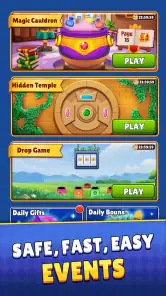
- Daily challenges can add variety beyond standard solitaire rounds.
- Offline play may be convenient when an internet connection is unavailable.
Cons
- Some features or rewards may be limited unless optional ads are watched.
- Gameplay can feel repetitive for players seeking deeper strategic variety.
- Progression and challenge balance may not satisfy experienced solitaire fans.
- Ads can interrupt the experience
- especially between completed games.
- Limited customization options may reduce long-term appeal for some users.
- Category
- Card
- Version
- 2.0.2