Bubble Vortex
- 29.00
- 4.4
- Installs
- 10.00K
- Price
- Free

Screenshots


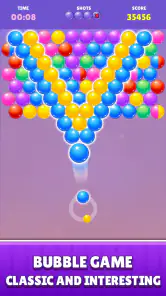
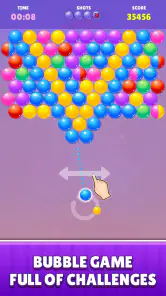

Analysis by Reviewed
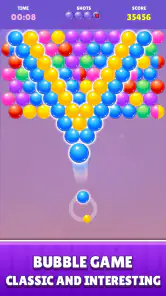
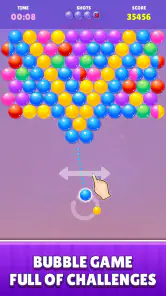
Bubble Vortex is the kind of trivia game I can imagine opening for a short break rather than setting aside a whole evening to play. Its central idea is easy to grasp: pop bubbles during matches while moving through a spinning vortex-themed world. That simple setup gives FatMan Studio a clear foundation, but it also creates an important question for anyone considering the download: does the presentation add enough personality to make familiar bubble-popping feel worth returning to?
After spending time with it, my answer is cautiously positive. The game is approachable, colorful in concept, and quick to understand, which makes it suitable for casual sessions. At the same time, it is not the best choice for someone looking for a deep quiz system, a long narrative campaign, or a highly strategic puzzle experience. Its appeal comes from the combination of trivia framing, visual motion, and short-form play, not from complexity.
Bubble Vortex is free to start and is listed for Everyone, so it is easy to recommend as a low-commitment experiment. FatMan Studio presents it as a game rather than a traditional knowledge app, and that distinction matters: the goal is not simply to answer questions in a quiet list. The bubble action gives the experience a more active surface, while the vortex setting supplies a sense of movement around otherwise compact rounds.
My first impression: quick to enter, easy to understand
The strongest first impression is how little explanation the concept needs. A player sees the bubble-popping premise and immediately understands the basic invitation: take part in a match, react to what appears, and keep moving through the game’s rotating world. That clarity is valuable on a phone, especially when the game is being used in small gaps between other tasks.
I would particularly suggest trying it during a commute, while waiting for food, or during a short rest when a larger game feels like too much work. A realistic use case is a player opening it for a few minutes before an appointment, completing a compact session, and closing it without feeling forced to remember a complicated control layout. The game’s value in that situation is its low entry barrier.
The visual idea also gives the title a more recognizable identity than a plain multiple-choice quiz. Bubbles imply movement, timing, and immediate feedback, while the vortex suggests that the player is moving through a connected space rather than simply jumping between unrelated questions. Even without turning the setting into a full story, that framing helps the activity feel like a game.
There is a trade-off here. A straightforward design can be welcoming, but it can also feel lightweight to players who want a strong sense of progression. If your favorite trivia games are built around detailed categories, extensive explanations, or competitive rankings, you may find this approach less satisfying. I see Bubble Vortex as an accessible arcade-trivia hybrid first, and as a serious knowledge test second.
The game was released on July 4, 2025, and the current version is 1.0.2. Those details make the experience feel like an early stage of a product that may still be establishing its identity. I would approach it with the expectation of a focused core idea rather than a huge, mature platform packed with years of accumulated systems.
A useful way to decide whether it suits you
Before installing, I would ask what kind of feedback I want from a trivia game. If I want a fast visual response and a playful setting, the bubble format is promising. If I want to study facts carefully, review mistakes, or build a structured learning routine, a dedicated quiz or flashcard app would probably serve me better.
This distinction also affects how I judge mistakes. In a learning-first app, an incorrect answer should ideally lead to a useful explanation or a chance to revisit the subject. In Bubble Vortex, the surrounding action and match flow are more important to the mood. That can make errors feel less like a lesson and more like a setback inside a game. For casual entertainment, that is acceptable; for deliberate study, it is a limitation.
The vortex world gives the game its own visual language
The setting is not just decoration in my view. A spinning vortex creates a natural visual language for transitions and movement. It gives the bubbles a reason to belong together, even though the basic action could otherwise take place against almost any background. That coherence helps the game avoid feeling like a trivia questionnaire with unrelated artwork pasted around it.
I like the way this kind of setting can make a short match feel like part of a larger journey. The player is not merely clearing one screen and disappearing; the surrounding idea suggests circulation, momentum, and a world that keeps turning. That is a modest storytelling device, but it is effective because it supports the mechanics instead of competing with them.
The art direction also needs to remain readable. Bubble games depend on quick recognition, and a busy vortex can easily become visual noise if every element demands attention at once. The best use of the theme is therefore not maximum decoration. It is a controlled backdrop that makes the action feel energetic while leaving the important bubbles and match information easy to follow.
This is one of the more interesting trade-offs in the design. A static quiz interface would likely be clearer, but it would also be less memorable. A highly animated world could feel more exciting, but it might make a quick answer or tap harder to interpret. Bubble Vortex works best when its spinning identity adds momentum without turning each round into a visual challenge unrelated to the trivia.
For younger players, the Everyone age rating makes the presentation feel broadly approachable. I would still encourage parents to try the game themselves before handing it to a child, not because the rating suggests a specific concern, but because the actual appeal depends on whether that child enjoys fast bubble interaction more than conventional question-and-answer play. The rating tells me the intended audience is broad; it does not mean every age group will find the same depth.
Why the theme matters more than it first appears
A useful tip is to judge the game by the relationship between its visual motion and your attention, not by screenshots alone. If you tend to lose focus in ordinary trivia apps, the vortex concept may help keep you engaged because the experience has a sense of motion around the questions. If you are easily distracted by animation, the same quality could work against you.
I also think the world framing makes the game more suitable for social handoffs than a dense quiz app. A friend can watch a round, understand the bubble objective quickly, and take a turn without reading a long explanation. That does not turn it into a full party game, but it gives the design a casual shared quality that a more academic trivia tool may lack.
On the other hand, players who need a strong fictional setting should keep expectations measured. The vortex is a mood and organizing idea, not a substitute for characters, lore, or a detailed narrative. I would not choose this game expecting an adventure story. I would choose it because the setting makes a compact trivia session feel more active and visually unified.
Sound and rhythm: the mood depends on momentum
Sound has an important job in a bubble-popping game because every action needs to feel immediate. A successful pop should ideally provide a small sense of completion, while the match as a whole should maintain a rhythm that encourages one more attempt. Even when the trivia content is the intellectual focus, the audio atmosphere helps determine whether the game feels lively or flat.
What I appreciate about the concept is that the vortex setting naturally supports a continuous rhythm. Spinning imagery, popping actions, and match-based progress all point toward movement rather than stillness. That gives the game a playable mood: light, active, and slightly hypnotic instead of formal or classroom-like.
The danger is repetition. Bubble sounds can be satisfying at first, but repeated effects become tiring when a player stays in the game for a long session. This is why I see Bubble Vortex as better suited to short bursts than to marathon play. The same compact pacing that makes it convenient can protect the presentation from becoming monotonous.
My practical advice is to pay attention to how you feel after several rounds rather than judging the sound after the opening minute. A game can make a strong first impression with bright effects and then lose energy if every moment has the same emphasis. If you enjoy quick sessions, that may never become a problem. If you want to play continuously for a long time, the limited scope of the format may become more noticeable.
Sound also changes how the trivia feels. In a quiet quiz app, a wrong answer can feel reflective and deliberate. In an active bubble match, it becomes part of a sequence of actions, closer to a missed opportunity in an arcade game. That is a good fit for players who prefer immediate feedback, but it may be less comfortable for someone who wants time to think without pressure from the surrounding pace.
Finding the right rhythm for everyday play
I would use the game in two different ways. For a quick break, I would focus on playing naturally and letting the match rhythm carry the session. For a longer attempt, I would pause between rounds and consider whether I am still enjoying the trivia itself or simply reacting to the visual motion. That small check helps reveal whether the game is holding my interest through knowledge, action, or atmosphere.
This is also where Bubble Vortex differs from many usual alternatives in the trivia category. A standard trivia app often emphasizes question volume, category selection, and score comparison. A conventional bubble-popping game emphasizes matching or clearing visual objects. Bubble Vortex sits between those expectations: its identity comes from using bubble action to make trivia feel more kinetic. That blend is its main reason to exist.
Players should not expect the same depth as a dedicated quiz platform or the same puzzle precision as a specialized bubble game. Instead, the game is appealing when you want a lighter mixture of both. That makes it a useful middle option for someone who finds traditional trivia too static and ordinary bubble games too repetitive.
How the mechanics fit the atmosphere
The mechanics and mood work together because the core action is immediately visible. Popping bubbles gives the player something active to do, while the trivia layer adds a reason to pay attention. This is more engaging than tapping through questions with no physical sense of progress, but it also means the design has to balance speed and comprehension carefully.
My main mechanical tip is to treat each match as a rhythm exercise rather than trying to rush every decision. The vortex atmosphere may encourage fast reactions, but accuracy still matters more than frantic tapping. Taking a brief moment to identify the relevant bubble or answer can prevent the visual energy from dictating your play style.
That approach is especially helpful for new players. Because the game is free, there is little reason to overthink the first session. Use the opening rounds to discover whether the bubble interaction feels natural on your device, whether the pace suits your attention span, and whether the trivia layer is strong enough to keep you interested after the novelty of the setting fades.
The game runs on Android 7.0 and later, which gives it a broad compatibility range for Android users with older supported devices. I would still judge performance on the specific phone or tablet rather than assuming every device will feel identical. Bubble movement and visual transitions can be more sensitive to hardware than a plain text quiz, and comfortable readability matters as much as basic installation.
Its free price makes that trial especially straightforward, but the in-app purchase range deserves attention. Items are offered from $2.99 to $99.99, so I would recommend deciding in advance whether I am treating the game as a free casual pastime or as something worth spending money on. A high-priced item can feel out of proportion if the player only wants occasional rounds, and younger users should have purchases managed carefully.
This is not an argument against spending. If a player enjoys the loop and finds optional items useful, a small purchase may feel reasonable. My point is that the game’s strongest value is available before making that decision. I would play enough free sessions to understand the pacing and replay appeal first, rather than buying immediately because the vortex presentation creates excitement.
Who will enjoy the hybrid design
I think Bubble Vortex is a good match for casual trivia fans, players who like colorful arcade presentation, and people who want a game that can be understood without a long tutorial. It may also suit families looking for a broad-audience title that combines simple interaction with general knowledge prompts.
I would be more hesitant to recommend it to serious trivia competitors. If your enjoyment comes from deep specialist categories, carefully balanced tournaments, or detailed post-question explanations, the usual dedicated alternatives are likely to be more rewarding. The same applies to puzzle enthusiasts who want sophisticated bubble strategy rather than trivia-driven interaction.
It is also not the right choice for someone who dislikes motion-heavy presentation or prefers calm, text-focused interfaces. The vortex concept is central to the game’s personality. Removing that energy would remove much of what distinguishes it from a basic quiz. If you want a quiet revision tool for studying on a train or before an exam, I would choose something designed around review instead.
For an everyday scenario, imagine finishing a short lunch break with a few minutes left before returning to work. A traditional console-style game may take too long to resume, while a full quiz session may feel repetitive. Bubble Vortex can fill that gap by giving you a visible action loop and a trivia prompt without demanding a major time investment. The important condition is that you are comfortable leaving the session without needing a long-term achievement structure.
Another useful workflow is to play it as a palate cleanser between more demanding games. After a strategy game or a difficult puzzle, the bubble-and-vortex format offers a lighter change of pace. I would avoid using it when I need focused learning, but I would happily use it when I want to keep my hands and attention occupied without committing to a complex system.
My atmosphere verdict after looking past the novelty
Bubble Vortex succeeds when its art direction, sound, and pacing support the basic trivia action. The spinning world gives the game a recognizable mood, the bubble interaction keeps question answering active, and the compact structure makes it easy to fit into ordinary routines. FatMan Studio has chosen a simple concept, but the combination is more distinctive than a plain quiz screen.
The limitations are equally clear. The game may not provide enough depth for dedicated trivia players, and the visual rhythm may not suit people who want a calm or study-oriented experience. The free entry point is welcoming, but the available in-app purchases mean I would keep spending intentional, especially when the game is being used casually or by younger players.
With an average rating of 4.4 from over 380 ratings, it has made a favorable early impression among the people who have tried it. The game has also passed 10 thousand installs, which places it in the category of a smaller title rather than a giant mainstream trivia platform. I read that as a reason to approach it on its own terms: not as a replacement for every alternative, but as a focused hybrid with a clear visual hook.
The current release, version 1.0.2, is worth trying if you have a compatible Android device and want a free game for short, energetic sessions. I would give it a chance when I want trivia with more movement and atmosphere than a conventional quiz app, while keeping a different app available for serious learning or competitive knowledge testing.
My final recommendation is therefore selective but genuine. Install Bubble Vortex if the idea of popping your way through a rotating world sounds more appealing than scrolling through a list of questions. Give yourself several sessions before judging its lasting value, and resist spending until you know whether the core loop fits your habits. Its best quality is the coherent mood created by simple mechanics, not an overload of features. For the right player, that focus is exactly what makes it enjoyable.
Pros
- Fast-paced levels make short play sessions enjoyable.
- Simple controls are easy to learn for new players.
- Colorful visuals give the game a cheerful
- polished look.
- Increasing difficulty keeps later stages challenging.
- Works well as a casual game for quick breaks.
Cons
- Some levels may feel repetitive after extended play.
- Progress can become difficult without careful planning.
- Ads may interrupt gameplay or appear between levels.
- Limited variety may reduce long-term replay value.
- Requires patience when clearing crowded bubble layouts.
- Category
- Trivia
- Version
- 1.0.2