Solitaire - 2026
- 628.00
- 4.7
- Installs
- 1.00M
- Price
- Free
Screenshots
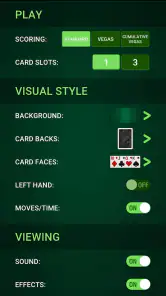
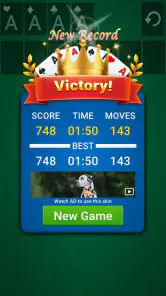
Analysis by Reviewed
I keep coming back to simple card games when I want something engaging without committing to a long session. Solitaire from Standard Puzzle fits that mood well: it is a free classic card game built around the familiar Klondike style, with a calm pace and rules most people can understand within minutes. I reviewed it as the kind of game you open between errands, while waiting for an appointment, or when you want a quiet break rather than a demanding challenge.
The central capability here is straightforward but important: it gives you a focused solitaire experience that turns a traditional deck into a repeatable solo puzzle. That sounds ordinary, yet the value is in how easily the game fits into small gaps in the day. It does not ask me to learn a complicated system before playing. I can begin a hand quickly, think through a few moves, and stop when my time is up.
Standard Puzzle released the game on May 23, 2023, and it has grown into a widely used option, with more than a million installs. Its average rating is 4.7 from roughly fourteen thousand ratings, which matches my impression that the basic experience is polished enough for people who specifically want traditional solitaire rather than a large collection of unrelated card modes.
The classic solitaire capability and why it matters
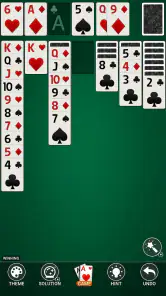
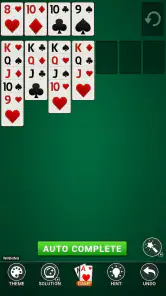
The main attraction is not novelty. It is the reliable structure of Klondike solitaire, where each decision affects the cards that become available later. You arrange cards in descending alternating colors, build the foundation piles by suit, and manage the hidden cards in the tableau. The rules are familiar, but the order of the deck keeps each hand from feeling completely automatic.
For me, the best part of this format is the balance between attention and relaxation. I need to notice possible sequences and avoid wasting useful cards, but I do not have to react under pressure. That makes the game suitable for a short mental reset. It is more active than simply scrolling, yet much less demanding than a competitive card game or a strategy title with timers and several systems to track.
The game’s store summary also presents it as a garden-themed solitaire experience. I would treat that as a gentle presentation layer around the card activity, not as a reason to expect a full simulation or an adventure campaign. The cards remain the heart of the product. If your priority is classic patience played in a familiar way, that focus is a strength.
A useful way to approach each hand is to think of it as a resource-management puzzle rather than a race to move cards. The tempting move is not always the correct one. Sometimes opening a hidden card matters more than immediately placing a visible card on a foundation. That small change in mindset makes the game more satisfying and gives experienced players something to consider beyond simply moving every legal card.
What a normal hand feels like
In practice, I start by scanning the tableau for moves that reveal a face-down card. That is usually more valuable than making a tidy-looking sequence somewhere else, because hidden information is what determines whether the hand can develop. When several moves are available, I try to preserve flexibility: a column with an exposed empty space can be more useful than one that is merely organized.
The familiar red-and-black alternating rule creates most of the tactical decisions. Moving a black card onto a red card may open a column, but it can also bury a card that would have helped another sequence. I found that the game rewards patience in a very literal sense. A move that looks productive now may reduce the number of options two or three turns later.
Building the foundation piles is equally nuanced. Sending an ace upward is usually safe, but pushing low cards too quickly can sometimes remove the only card that allows a tableau sequence to continue. I recommend checking whether a card is still needed to uncover another card before committing it. This is one of the small habits that separates a thoughtful hand from random tapping.
The experience works best when I treat the undo function, if available in the play flow, as a learning tool rather than a way to erase every consequence. I can test whether moving a sequence opens anything useful, then reconsider if the position becomes worse. That approach helps new players understand why a legal move may still be strategically poor. It also keeps the game from becoming frustrating when a single decision closes off the rest of a hand.
A realistic everyday use case
Imagine having ten quiet minutes before a train or during a lunch break. A game like this gives you a complete mental activity without requiring a team, a connection with other players, or a long narrative to remember. I can begin a hand, make several deliberate moves, and leave without feeling that I have abandoned a larger task. When I return, the objective is immediately clear: improve the tableau and finish the foundations.
That short-session quality is more important than it may seem. Many mobile games are designed around repeated rewards, social competition, or constant progression. This one is easier to use as a pause in the day because the basic pleasure comes from solving the current arrangement. For readers who want a quiet replacement for idle browsing, that makes it a practical choice.
It also suits people who enjoy familiar routines. I would recommend it to someone who already plays solitaire with physical cards and wants the convenience of a phone or tablet. The digital format removes the need to shuffle and deal, while preserving the recognizable decisions. On the other hand, if you want a large variety of card games, multiplayer tables, or a deep deck-building system, this narrow focus may feel limited.
Tips that improve the experience
My first practical tip is to prioritize information over neatness. A messy tableau with more face-up cards is often healthier than a perfectly ordered arrangement that leaves several cards hidden. Before moving a sequence, ask which action reveals the most new information. That question gives each turn a purpose and reduces the tendency to make attractive but unhelpful rearrangements.
Second, protect empty columns. An open space is not just a place to store any card; it can let you move a king-led sequence and expose a much larger part of the tableau. Filling it immediately with the first legal option may remove your best route forward. I usually wait until the move either reveals a card or creates a sequence that can be shifted again.
Third, delay foundation moves when the same card is still useful in the tableau. This is especially relevant with low cards that can support alternating-color stacks. Moving them upward feels like progress, but progress toward the foundation is not always progress toward solving the hand. The strongest play often comes from keeping options available until the hidden cards have been opened.
These habits are useful because they apply directly to the game’s central capability rather than relying on outside knowledge. They also give beginners a way to improve without turning a relaxing pastime into homework. After a few hands, I started noticing that my results depended less on luck alone and more on whether I had preserved enough choices.
Where the game feels strongest
The strongest situation for this title is a player who wants a calm, familiar puzzle in short sessions. The rules are accessible, the objective is visible, and the game does not need a complicated explanation before it becomes enjoyable. I can recommend it to casual players, older relatives who already know patience, and anyone looking for a low-pressure card activity on Android.
Its Everyone content rating also makes it broadly approachable for families, although the actual appeal will depend more on whether each person enjoys solo card puzzles. This is not a party game, and it does not create interaction between several people around the same screen. Its social value is indirect: it is easy to suggest to a friend because the rules are common and the learning curve is gentle.
The free price removes the main barrier to trying it. That matters for a traditional game, because there are many solitaire alternatives available and most users will want to test the feel before committing. I would still judge it by how comfortable the presentation and controls feel on your own device rather than assuming that a high rating guarantees a perfect match.
Trade-offs compared with other solitaire choices
Compared with a physical deck, the app is quicker and less messy. There is no setup, no accidental card pile collapsing, and no need to remember where the foundations belong. The trade-off is that the tactile pleasure of handling real cards disappears. If you enjoy the rhythm of shuffling and dealing by hand, a phone version will feel more functional than atmospheric.
Compared with a broad digital card suite, this game is easier to understand but less varied. A larger alternative may offer Spider, FreeCell, Pyramid, daily challenges, or competitive features, while this title’s identity stays centered on classic solitaire. That simplicity is exactly why I prefer it for a quick break, but it could become repetitive for someone who expects a new mode every few minutes.
It also differs from modern puzzle games that build a long progression around levels, characters, or visual rewards. Here, the satisfaction comes from solving the arrangement in front of you. Players who need constant unlocks may find the loop too restrained. Players who dislike pressure, countdowns, or complicated objectives may appreciate that restraint.
One limitation is inherent to the format: not every hand will feel equally satisfying. Sometimes the available choices narrow quickly, and the result can seem determined by the deal rather than by clever play. That is normal for solitaire, but it is worth knowing before installing. If you want a game where skill consistently overrides randomness, a competitive strategy title or a more deterministic puzzle may suit you better.
Device fit, access, and version details
The game is free and currently listed as version 1.958. It requires Android 9 or later, so people using older phones should check compatibility before planning around it. For supported devices, the low-commitment nature of the game makes it a sensible download for a spare handset or a tablet used mainly for casual entertainment.
I also like that the age classification is Everyone, because it reflects the straightforward nature of the card activity. Still, parents should choose games based on the child’s interests and the overall device environment, not only on an age label. A simple solitaire game can be appropriate without necessarily being exciting for a child who wants action or multiplayer play.
The developer is Standard Puzzle, and the title has attracted a substantial audience rather than remaining a niche card experiment. That does not change the rules, but it does make the app easier to consider when you want a conventional solitaire download with an established user base. I would install it for the core card experience, not because of the size of that audience.
Who should choose it, and who should skip it
I think this is a good fit for someone who wants a dependable solo card game, already understands or is willing to learn Klondike rules, and values quick access over elaborate content. It is particularly useful for quiet waiting periods, evening wind-downs, and moments when you want to exercise concentration without feeling tested by a timer.
I would be more cautious about recommending it to players who need multiplayer competition, a wide range of card variants, or a strong narrative reason to return. The garden presentation may add charm, but it does not transform the basic activity into a different genre. If your ideal mobile game is built around collecting, social events, or constant new objectives, another card app will probably hold your attention longer.
It is also not the best choice for someone who finds repeated solitaire deals frustrating. Even with good decisions, the nature of the game means that some sessions will end in a dead position. I see that as part of the traditional appeal, but not everyone enjoys replaying a hand or accepting that a promising start may lead nowhere.
My final recommendation
After spending time with it, I see Solitaire by Standard Puzzle as a focused, approachable version of a card classic rather than an ambitious reinvention. Its best quality is the way the central Klondike capability fits naturally into everyday gaps: open it, read the tableau, make a few thoughtful decisions, and leave when you are ready.
The game earns its strong reputation by staying close to what solitaire players actually want. It is free, broadly accessible, and supported on Android 9 and newer, with a current version of 1.958. Those details make it easy to try, while the familiar rules make it easy to understand. The main question is not whether it offers a huge amount of content; it is whether a repeatable solo card puzzle is enough for you.
My recommendation is positive for relaxed solitaire players who value simplicity and short sessions. I would choose it over a busier alternative when I want concentration without noise. I would skip it in favor of a broader card collection when variety, competition, or long-term progression matters more than the quiet satisfaction of solving one classic hand at a time.
Pros
- Simple rules make it easy for beginners to start playing.
- Offline access lets you enjoy games without a data connection.
- Short rounds are convenient for quick breaks or casual play.
- Multiple difficulty levels can provide a gradual challenge.
- Card animations make moves feel clear and satisfying.
Cons
- Some features may be locked behind ads or in-app purchases.
- Gameplay can become repetitive after extended sessions.
- Random deals may occasionally feel unfair or unwinnable.
- Small cards may be difficult to read on compact screens.
- Frequent notifications could become distracting for some players.
- Category
- Card
- Version
- 1.958