Search It - Hidden Objects
- 2.23K
- 4.9
- Installs
- 5.00M
- Price
- Free

Screenshots


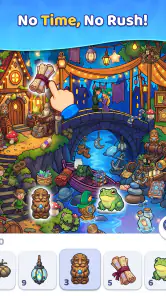
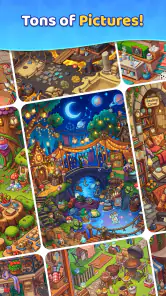
Analysis by Reviewed
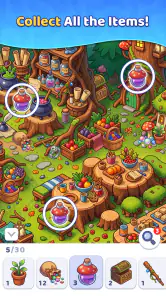
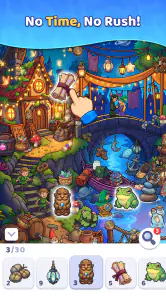
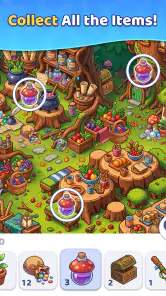
I like hidden-object games best when they give me a clear little problem to focus on, then let me put the phone down without feeling I have left a complicated task unfinished. Search It - Hidden Objects is built around that simple appeal: scan a scene, spot what belongs on your search list, and enjoy the small satisfaction of finding it. It is a puzzle game from Leap Game Studios, and its straightforward premise makes it easy to understand before you commit much time.
Small goals that make it easy to begin
The first appeal is the modest scale of the task. Rather than asking me to learn a complicated control scheme or remember a long sequence of rules, the game puts the emphasis on looking carefully. That makes it a natural choice for a short break: I can open it, focus on the objects in front of me, and get into the puzzle without a lengthy warm-up.
That low barrier is useful in ordinary situations. If I have a few quiet minutes while waiting for an appointment, I can use the game as a visual reset instead of starting a story-heavy game that expects a longer session. It also suits a relaxed evening when I want something more engaging than scrolling, but not something that demands quick reactions or intense concentration.
The basic loop is familiar to anyone who has tried a hidden-object puzzle, but familiarity is part of the point. I do not need to relearn a genre convention every time I return. The challenge comes from noticing details in the scene, not from juggling a complicated set of controls. For players who enjoy careful observation, that makes the act of searching feel like the main event rather than a hurdle on the way to it.
One practical way to get more out of this sort of game is to change how I scan. Instead of darting around the whole picture, I divide it into small areas and move across them systematically. I also look for outlines, colors, and shapes before trying to identify an object by its full meaning. That approach helps when a scene feels visually busy, and it turns a vague search into a repeatable method.
What progress feels like
In hidden-object puzzles, progress is usually most satisfying when each discovery gives a clear sense of movement. Search It’s central reward is the moment an item I had overlooked suddenly stands out. That small feedback loop can keep a session pleasant even when I am not chasing a large story or a competitive score. It is a different kind of momentum: less about racing forward and more about clearing the next visual question.
The game’s strong reception suggests that this style has found an audience. It holds an average rating of 4.9 from around 175,000 ratings, and it has passed 5 million installs. Those figures are useful context, but they are not a guarantee that every scene or pace will suit every player. I would treat them as a sign that the core idea resonates, then decide based on whether careful searching is the kind of low-pressure puzzle I actually enjoy.
For my own sessions, I would use completion of a search as a natural stopping point. That keeps the game from becoming an aimless time sink and makes it easier to fit around other things. If I am playing while tired, I would also stop when I notice that I am tapping randomly rather than looking. A short pause often works better than forcing a puzzle after my attention has faded.
How the challenge should fit your mood
Hidden-object games can be calming, but they are not automatically effortless. A crowded image can make a simple search feel slower than expected, particularly when several items blend into similar colors or shapes. The useful distinction is that the challenge is mainly visual patience: players who enjoy scanning and comparing details are likely to find that satisfying, while people who prefer fast action or a constant stream of new mechanics may find it too still.
I would not recommend this as a substitute for a more layered logic puzzle if what you want is to plan several moves ahead or solve an intricate chain of clues. Its appeal is more immediate and observational. Likewise, if you dislike searching a picture for small details, the core activity is unlikely to win you over simply because it is easy to start.
A helpful tactic when I get stuck is to stop staring at the item list and return to the scene as a whole. Looking away for a moment, then scanning a different section, can help break the tunnel vision that makes an obvious object seem invisible. I also avoid repeatedly tapping likely spots without a reason: that replaces observation with guessing and makes the puzzle less enjoyable. These habits are especially useful for a game designed around noticing rather than reflex.
The right session length depends on how alert I feel. If I am fresh, I can settle into a longer stretch of searching; if I am distracted, one completed puzzle may be enough. This flexible rhythm is one of the genre’s strengths. It does not require the player to be in a high-energy mood, though it still benefits from a little focus.
Relaxation, spending, and staying power
Search It is free to download, with in-app purchases ranging from $0.99 to $54.99 per item. That wide spread is worth keeping in mind before spending: I would first play at the natural pace and decide whether I am enjoying the searches enough to pay for anything. A purchase is easiest to justify when it solves a specific frustration for you, rather than being an automatic part of trying the game.
There is a trade-off in free-to-play puzzle games between keeping the experience relaxed and encouraging players to move faster. I pay attention to whether any interruption or purchase prompt breaks my concentration, because that matters more in a calm search game than it might in a quick arcade round. If I find myself feeling pressured to spend just to enjoy the basic activity, I would step back; the core appeal should be the pleasure of spotting objects, not a sense that I must keep up.
For comparison, a word puzzle is better when I want language-based clues, and a match-style game is a stronger pick when I want brisk turns and frequent bursts of feedback. Search It makes more sense when I want to slow down and inspect a picture. Compared with other hidden-object games, the main question is not whether the premise is familiar, but whether this particular presentation and pace keep me interested from one search to the next.
The game is rated Everyone, which makes its broad, casual puzzle format approachable for a range of ages. I would still choose it based on the player’s tastes: a child or adult who likes visual scavenger hunts may enjoy it, while someone who expects a deep narrative or elaborate character progression may prefer another game. It can also work as a shared activity, with one person reading the target and another scanning the scene, provided both enjoy taking their time.
Who should install it—and who should pass
The best fit is someone who likes visual details, wants a low-pressure puzzle, and appreciates being able to play in short sessions. I would suggest it to a friend who enjoys spotting patterns in illustrations or wants a quiet phone game for small pockets of free time. The fact that it is free to start makes it easy to try, though the optional purchase range is a reason to be deliberate if you are managing a budget.
I would steer action-focused players elsewhere. There is no point choosing a hidden-object game and hoping it will become a fast-paced challenge if the central pleasure is careful looking. I would also be cautious about recommending it to someone who gets frustrated by visual clutter or prefers every puzzle to have a sharply defined logical deduction. For those players, a number puzzle or a clue-driven mystery may offer a more rewarding kind of effort.
Leap Game Studios has kept the idea accessible, and the current version is 1.4.7. The game is available for devices running Android 8.0 or later. Those details make it easier to judge whether it fits an existing phone, while the simple premise makes the decision about personal taste: do you want to search scenes, or would you rather solve something through words, numbers, or speed?
My verdict on its progression
Search It - Hidden Objects works best as a focused, easy-to-enter puzzle rather than a game built around a demanding long-term journey. Its goals are immediately understandable, and each successful find supplies a small signal that I am making progress. That is enough to sustain a relaxing session for players who like observation, though it may not provide the escalating systems or strategic depth that keep other puzzle fans engaged.
My recommendation is simple: try it when you want a calm visual challenge, and judge it by whether the act of searching feels satisfying to you. Keep sessions short if your attention starts to slip, use a deliberate scan instead of random taps, and do not treat optional purchases as necessary before you have decided the game suits you. For the right mood, it is an approachable way to turn a few spare minutes into a small, satisfying puzzle; for a player seeking speed, story, or complex progression, a different kind of game will be a better use of that time.
Search It - Hidden Objects Frequently Asked Questions
What is Search It - Hidden Objects?
Search It - Hidden Objects is a hidden-object puzzle game in which you inspect illustrated scenes and look for items shown in a list or hinted at by the level. Its appeal comes from careful observation rather than quick reflexes: small details can blend into busy backgrounds, so scanning the scene methodically is often more useful than tapping at random. The exact selection of scenes and features may vary by version.
How do you play Search It - Hidden Objects?
Choose a level, study the scene, and tap the objects you can identify. Each scene generally asks you to find a set of targets, and completing the list lets you progress to another puzzle. If an item is difficult to spot, try checking areas with similar colors or shapes and zooming in if the game provides that option. Controls and available assistance can differ between updates.
Is Search It - Hidden Objects free to download and play?
The game may be offered as a free download, but that does not necessarily mean every part of the experience is free of charge. Some editions of mobile games include advertisements, optional in-app purchases, or paid content, and these details can change by platform, region, and version. Before installing, check the current Google Play or App Store listing for pricing, purchase information, and any notes about ads.
Can I play Search It - Hidden Objects offline?
Whether Search It - Hidden Objects works without an internet connection can depend on the version and on how its content is delivered. Some puzzle games let you replay downloaded levels offline, while ads, updates, or additional levels may require a connection. If offline play matters to you, check the store listing and test the game after installation with connectivity disabled; do not assume every feature will remain available.
Is Search It - Hidden Objects suitable for children, and what should I check before downloading?
Hidden-object puzzles are generally easy to understand and can suit players who enjoy visual challenges, but age suitability depends on the specific edition’s content and monetization. Parents should review the current age rating, privacy information, and any advertising or in-app purchase details on the official store page. Also check device compatibility, required permissions, and recent reviews so you know what to expect from the version available to you.
Pros
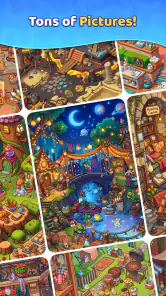
- A wide range of scenes gives each search session a different feel.
- Optional hints can help when an item is difficult to spot.
- Clear object lists make goals easy to understand.
- Relaxed play suits short sessions and casual players.
- Hidden-object challenges reward patience and careful observation.
Cons
- Small objects can be hard to see on compact phone screens.
- Some scenes may feel repetitive after extended play.
- Timed levels can make searching feel rushed.
- Ads may interrupt the flow of play.
- Progress can be frustrating when a required object blends into the background.

- Category
- Puzzle
- Version
- 1.4.7