Sand Drop
- 28.00
- 3.8
- Installs
- 10.00K
- Price
- Free

Screenshots
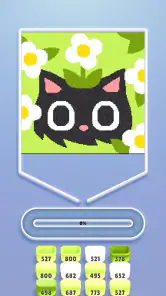
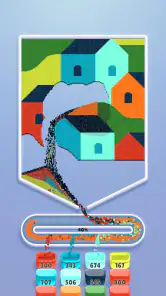
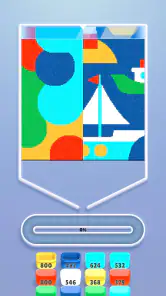
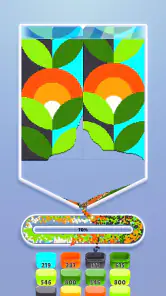
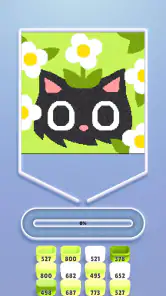
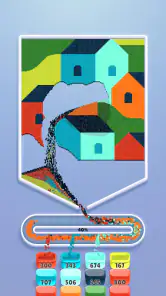
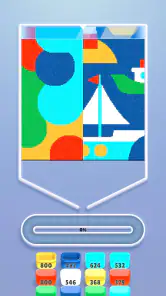
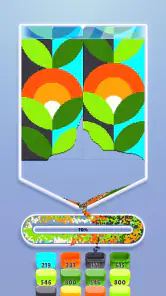
Analysis by Reviewed
Some puzzle games ask you to think several moves ahead, while others are mainly about giving your hands something calm and satisfying to do. Sand Drop sits closer to the second group, but it still rewards careful observation. Its central idea is simple: you swipe through colorful sand puzzles, guide the falling material, and try to bring the pieces into a workable arrangement. I found that this straightforward interaction is the reason to try it, not something that needs to be hidden behind a long list of modes or complicated rules.
Developed by Fingers Yoda, this free puzzle game is aimed at Everyone and runs on Android devices using version 7.0 or later. The current release is version 0.4.1. It has reached over ten thousand installs and holds a 3.8 average from around eighty ratings, which suggests a modest but real audience rather than a huge established community. That context matters: I would approach it as a small, focused game for short sessions, not as a complete replacement for a large puzzle collection.
Why the sand interaction is the whole experience
The most important capability here is the way swiping changes the path and placement of sand. Instead of tapping through menus or matching fixed tiles, I am working with movement and flow. A swipe is not just a command to select something; it helps shape what happens next on the puzzle board. That gives each action a slightly physical feeling, even though the game remains a simple mobile puzzle.
Color is also important to the experience. The bright sand makes the board easy to read and gives the game a softer personality than a dark, number-heavy logic title. I can understand the basic visual situation quickly, which is useful when I only have a few minutes. The presentation supports the relaxing side of the game without making the puzzle completely passive.
That balance is the strongest part of the design. If the challenge were too demanding, the colorful sand would only be decoration around a stressful task. If the interaction were too automatic, swiping would lose its purpose. In use, the appeal comes from making a small adjustment, watching the sand respond, and deciding whether the result is good enough or needs another attempt.
The useful skill is controlled experimentation. I do not need to memorize a large rulebook before beginning. I can try a direction, notice how the sand behaves, and then refine the next swipe. This makes the game approachable for people who enjoy tactile puzzle interactions but do not necessarily want a strict competitive timer or a complicated campaign structure.
What I pay attention to while playing
My first instinct in a sand puzzle is to swipe toward the most obvious open space. That is not always the best choice. A better approach is to look at the entire visible route before moving anything. I check where the sand can collect, which areas may become blocked, and whether a quick swipe will make the next move harder. This small habit turns the game from random finger movement into a more deliberate puzzle routine.
I also learned not to judge a move only by its immediate result. A neat-looking pile can still leave an awkward position for the following action. When the board begins to fill, I prefer shorter, more controlled swipes instead of making one broad gesture and hoping the sand settles favorably. This is one of the less obvious strengths of the concept: the game encourages patience without announcing itself as a serious logic exercise.
Another useful habit is to pause briefly after each meaningful change. The visual movement can make it tempting to swipe again immediately, but taking a moment to read the new arrangement helps me avoid turning a solvable position into a messy one. For casual players, that pause is also part of the relaxing rhythm. The game works better when I treat it as a sequence of small decisions rather than a race against my own impatience.
How it feels in an ordinary play session
I can imagine opening Sand Drop while waiting for a coffee, sitting on public transport, or taking a short break from work. The premise is easy to understand without a long explanation, so the game does not demand the same preparation as a deep strategy title. I can start with the visual layout, make a few swipes, and decide naturally whether I want another round.
The best everyday scenario is a player who wants a quiet distraction but still wants some involvement. A completely idle relaxation app may feel too passive, while a traditional match-three game can become repetitive because every move follows familiar patterns. Sand Drop offers a middle ground: the activity is calm, but the player still has to read space, anticipate movement, and correct mistakes.
It is particularly suitable for short attention windows. If I have only a little time, I do not need to build a long strategy around a complicated inventory or remember a story from a previous session. The sand itself is the focus. That simplicity also makes it easier to hand the game to someone who is new to mobile puzzles, including younger players who meet the Everyone content rating.
There is a practical trade-off here. Players who want a strong narrative, character progression, or a large collection of distinct mechanics may find the experience too narrow. The game’s identity depends on the sand interaction, so anyone who dislikes repeating a central gesture across puzzles may lose interest sooner than someone who enjoys refining the same type of movement.
A calmer way to approach difficult layouts
When a puzzle starts to feel unclear, I would not immediately restart or swipe faster. I first identify the safest area for the next amount of sand and consider whether the current arrangement can still be improved. This is more productive than trying to solve the whole board in one mental calculation. The game’s visual language makes small corrections feel natural, so I use that to my advantage.
I also recommend playing with a light touch. Broad gestures may be satisfying, but they can reduce control when the layout becomes crowded. Shorter swipes let me test an idea without committing the entire board to it. That approach is especially useful for new players because it reveals how much influence each gesture has before they begin taking larger risks.
For a more relaxing session, I focus on clean movement rather than perfect speed. For a more puzzle-oriented session, I deliberately look for the move that preserves the most options. These are two different ways to enjoy the same game. One treats the sand as a soothing visual response; the other treats it as a changing board that must be managed carefully.
Where the game compares well, and where it does not
Compared with a standard match-three puzzle, Sand Drop feels less dependent on spotting identical symbols and more dependent on understanding movement. That gives it a fresher physical quality. A match-three game is often about building chains, clearing colors, or using special pieces, while this game’s interest comes from guiding material through space. If I am tired of swapping tiles, that difference is meaningful.
Compared with a traditional logic puzzle, however, Sand Drop is less formal. A number-grid puzzle gives me fixed information and a clearly structured deduction process. Here, the visual flow and swipe response are more important than written clues. Players who enjoy exact deduction may prefer a classic logic format, while players who want a tactile and colorful board may prefer this one.
It also differs from physics-heavy sandboxes. I am not approaching it as an open-ended simulation where I can build anything I want. The appeal is in solving the presented puzzle interaction, not in creating a large personal world. That distinction helps set expectations: this is a focused puzzle game with a relaxing surface, rather than a construction toy or a full simulation.
The free entry point makes it easy to test without committing money at the beginning. At the same time, in-app purchases range from $0.99 to $99.99 per item. That is worth keeping in mind before treating the game as a completely cost-free experience. I would check the purchase flow carefully and decide in advance whether I want to spend anything, especially if the game is being used by a child on a shared device.
The rating also gives me a realistic expectation. A 3.8 average is respectable, but it is not a signal that every player finds the experience ideal. With around twenty-eight written reviews, there is some user feedback behind that score, yet the audience is still relatively small. I would use the free download as a trial: play long enough to decide whether the sand interaction remains enjoyable after the initial novelty fades.
The friction that may decide whether you keep it
The biggest possible limitation is repetition. Because the game is built around swiping and solving colorful sand arrangements, the same core pleasure must carry the experience. That is excellent when the interaction feels satisfying, but less convincing for players who need frequent changes in rules or presentation. I would skip it if I already know that I quickly abandon minimalist puzzle games once I understand their main mechanic.
Another consideration is precision. A gesture-based puzzle can feel less predictable than a tap-only game if I am careless with the direction or length of a swipe. That is not necessarily a flaw, since control is part of the challenge, but it means the experience may not suit someone looking for completely effortless relaxation. The game is calm in mood, not entirely mindless in execution.
The lack of a broader genre structure may also matter. If I want daily challenges, competitive rankings, a deep progression system, or an extensive story, I would choose a different puzzle game. Sand Drop makes more sense when the goal is a compact activity centered on one distinctive capability. Its restraint is attractive to some players and limiting to others.
Who gets the most from Sand Drop
I would recommend it first to people who enjoy visual puzzles, gentle experimentation, and short mobile sessions. It is a good fit for someone who likes watching a board change after each gesture and prefers learning through interaction rather than reading instructions. The Everyone age rating also makes it approachable for family use, although adults should still keep an eye on the available purchase range if children use the device.
It may also work well for players who normally avoid demanding puzzle games. The colorful sand gives the experience a welcoming surface, and the basic idea is easy to grasp. A beginner can start by observing where the sand moves, then gradually develop better timing and planning. That learning curve is more inviting than a puzzle that begins with a wall of rules.
More experienced puzzle fans may enjoy it for a different reason. They can treat each layout as a small exercise in preserving options. Instead of asking only, “Can I make this move work?” they can ask, “What will this move leave me?” That shift creates extra depth without changing the simple controls. It is not the same kind of depth as a complex strategy game, but it gives careful players something to improve.
I would skip it if my priority were constant novelty, competitive pressure, or a story-driven reason to return. I would also choose a more conventional logic puzzle if I wanted every answer to be based on fixed deduction rather than gesture control and visual timing. Sand Drop is strongest when I want the act of moving the sand to be the reward as much as the completed puzzle.
My practical recommendation before downloading
Because it is free, I would start with a short test session rather than deciding from the store summary alone. Pay attention to whether the swipe response feels natural on your phone and whether you enjoy examining the board before each move. If those two things click, the game has a clear place in a casual puzzle folder. If they do not, extra content or a longer session is unlikely to change your opinion.
I would also decide what kind of session I want. For a quick break, I would make conservative moves and enjoy the visual flow. For a more focused challenge, I would plan around future space and use smaller gestures. That simple change in approach reveals more of the game’s value than rushing through it. It also helps separate genuine interest in the mechanic from the first-minute novelty of colorful sand.
Overall, Sand Drop is a focused puzzle game whose success depends on one clear idea: swiping sand should feel both relaxing and worth thinking about. In my experience, that combination gives it a pleasant identity among more familiar tile and logic games. It is not the right choice for players seeking a huge system-filled package, and the in-app purchase range deserves attention, but it is easy to approach, visually friendly, and capable of making a short break feel more engaging.
For me, the deciding question is simple: do you like puzzles where the board responds to your hand, and are you happy to spend time mastering one central interaction? If the answer is yes, this free release from Fingers Yoda is worth trying on a compatible Android device. If you need constant variety or a more structured challenge, another puzzle category will probably serve you better.
Pros
- Simple one-touch controls make it easy to pick up and play.
- Short levels are well suited to quick gaming sessions.
- Relaxing visuals create a pleasant
- low-pressure atmosphere.
- Physics-based puzzles offer satisfying moments of experimentation.
- The minimalist interface is easy to understand without a tutorial.
Cons
- Some levels may feel repetitive after extended play.
- Progress can depend heavily on trial and error.
- The game may be too simple for players seeking deep strategy.
- Limited variety can reduce long-term replay value.
- Ads or in-app purchases may interrupt the experience
- depending on version.

- Category
- Puzzle
- Version
- 0.4.1