Reigns: Her Majesty
- 2.14K
- 4.6
- Installs
- 100.00K
- Price
- $2.99

Screenshots



Analysis by Reviewed
When I want a game that gives me a small decision to chew over rather than a long session to prepare for, Reigns: Her Majesty is an unusual fit. Its short, swipe-led choices make it easy to pick up, but the consequences give each ruling a little weight. I enjoy the contrast between the simple interaction and the sometimes awkward business of trying to keep a kingdom from tipping out of balance. It is not a conventional strategy game, and that difference is central to deciding whether it suits you.
A Royal Experience with a Swipe
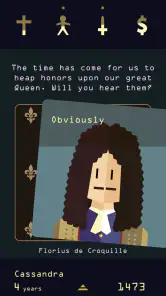
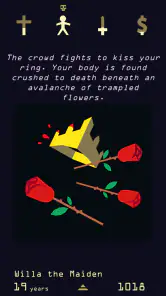
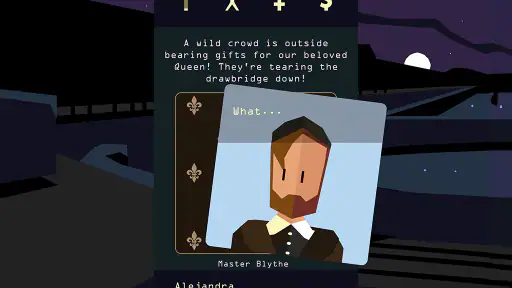
Now, let me tell you, the gameplay is as simple as swiping left or right. But don't be fooled by its simplicity! Each decision you make impacts the four pillars of your kingdom: the church, the people, the army, and the treasury. It's your job to maintain a balance among these factions, or it's off with your head! The decisions range from political alliances to personal relationships and even dabbling in a bit of magic. The moment you think you've got it all figured out, the game throws a curveball, keeping things refreshingly unpredictable.
Readable at a Glance, Not a Conventional Card Table
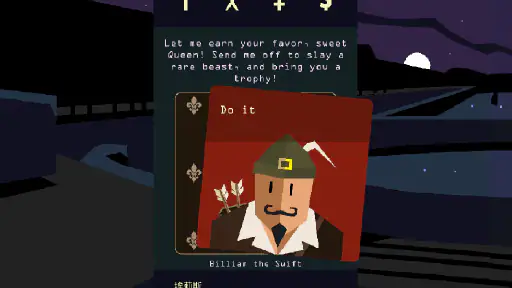
The compact card format makes each choice quick to scan: read the situation, weigh the two responses, then swipe. I find that easier to approach than a dense strategy interface full of menus, maps, and resource panels. The trade-off is that the choices are brief, so anyone who wants long conversations or detailed explanations of every consequence may find the presentation spare. Paying attention to names and recurring situations helps the story feel more connected than a series of isolated prompts.
The game is a card title from DevolverDigital, but it plays differently from the usual deck-builder. You are not spending a long session arranging a deck or planning a sequence of combat turns; the focus is on making successive rulings and watching their consequences. That makes it a better fit when I want a compact narrative decision game than when I want deep tactical card play. Its 4.6 average from around 29,000 ratings suggests it has found an audience, while the 100,000-plus installs give a sense of its reach.
Keeping Track of Choices Without Turning Them into Homework
One useful way to approach the cards is to look for the tension in a choice before swiping. A response that seems generous or amusing may still shift the balance of power, so I try to notice which interest could benefit and which might be displeased. That is more useful than treating every prompt as a puzzle with one obviously correct answer. The game’s appeal comes partly from accepting that a queen cannot please everyone indefinitely.
When a familiar person or situation returns, remembering what happened last time can make the next decision more legible. I sometimes pause on a repeated name rather than tapping through on autopilot; that small habit makes the unfolding events feel more like a story and less like a stack of unrelated cards. It also helps when I resume after a break, since the wording itself can remind me of an earlier choice. If I rush, I lose some of that connective thread.
Touch, Attention, and the Moment You Play
Swiping is the central input, which keeps the interaction direct, but it also means the game asks for deliberate touch control. If precise swipes are uncomfortable or difficult, the core action may become a barrier rather than a convenience. I would take a moment to get comfortable with the direction of each choice before moving quickly; the pressure to react fast is usually less useful than reading the wording carefully. The restrained visual style keeps the screen from feeling crowded, though it does not remove the need to focus on text and distinguish the two responses.
More From Our News Desk

Weather by Xiaomi Review: Clear at a Glance, Less Clear Up Close

X Under Pressure: Can It Recover When Posting Goes Wrong?

Clash of Clans Is Won Between the Battles

Android Auto Makes the Case for Quieter Car Software

MobiOffice: Transforming Mobile Productivity with Seamless Integration

EA SPORTS FC™ Mobile Soccer: Redefining Mobile Sports Gaming
For someone who uses a phone with one hand, the simple gesture may feel less demanding than navigating a crowded set of controls, but I would not assume that makes it universally accessible. The game still relies on seeing and reading each card and making a deliberate touch. If hand movement, screen glare, or small text makes that difficult, a less gesture-dependent game may be a better choice. I would also test the feel of the interaction early, while I can still decide whether it is comfortable for me.
There is a sensory trade-off in the uncluttered presentation. It gives the decisions room to breathe and makes the screen easier to parse than a busy strategy dashboard, yet the focus on text means that reading is unavoidable. If you find sustained screen reading tiring, the short prompts may help, but they do not turn the game into an audio-first experience. I would play in a setting where I can comfortably read rather than relying on quick glances.
That makes it easy to fit into a short break, a commute when you can safely look at your phone, or a quiet stretch at home. A realistic way to play is to make a few decisions while waiting for an appointment, then stop when you need to give someone your attention. It is less suitable in noisy or interrupted situations if you tend to lose track of a story after putting a game down. I would also avoid playing while walking or doing anything that competes with reading and touch input.
Small Sessions, and When They Work Best
Because decisions arrive in bite-sized form, I can play for a few minutes without needing to set aside a full evening. That makes it a good companion for a quiet queue or a short wait, provided I am somewhere I can look at the screen without distraction. I would not open it during a conversation or while crossing a busy street: a swipe is quick, but choosing well still asks for attention.
When I have more time, I find it works differently. Instead of stopping after a handful of cards, I can follow the consequences of a run of choices and notice how one decision shapes the tone of the next. The same compact format can therefore serve a quick pause or a longer stretch, but it does not provide the expansive world or continuous action that some players want from a longer session. Its flexibility is about session length, not about offering several styles of play.
The Charm of Reigns: Her Majesty
One of the most charming aspects of Reigns: Her Majesty is its narrative. The dialogue is witty and filled with humor that adds a light-hearted touch to the otherwise grim task of ruling. The characters you interact with, from bishops to diplomats, are all unique and bring their own flavor to the story. Plus, the game's art style is minimalistic yet captivating, making it an absolute delight to play.
That humor is more than decoration for me: it gives the choices personality, so even a small ruling can feel memorable. The writing also sets expectations. If you enjoy dry, slightly absurd situations, the tone can make the brief prompts land; if you want a solemn political drama with detailed world-building, the playful voice may not be what you are after. I would choose it for wit and compact storytelling, not for historical realism.
What Keeps You Hooked?
What really keeps you hooked is the sense of progression and discovery. As you unlock new cards and characters, you uncover more of the game's lore and secrets. It's like peeling back the layers of an onion, each layer more intriguing than the last. The game also includes some clever Easter eggs and hidden achievements that add an extra layer of depth for the more observant players.
A useful habit is to treat each decision as a clue, not just a vote for one faction. When an unfamiliar character or odd request appears, I pause long enough to consider what the wording might imply; choosing instantly can make the story harder to follow, and maintaining every interest at once is not always possible. Letting one side gain ground occasionally can be part of navigating a reign, rather than a sign that every choice has to be perfectly optimized. That tension is where the short format earns its strategic edge.
There is a small but important trade-off here: trying to keep every measure perfectly balanced can make play feel like constant damage control. I get more from accepting that some decisions will have an unwanted effect and then responding to what happens. If you enjoy experimenting, a choice that goes badly can still teach you something about the characters or the kingdom. If you prefer a transparent system where every consequence is explained before you commit, this uncertainty may feel unfair rather than intriguing.
Who Will Enjoy the Trade-Offs?
I would recommend it to players who like dry humor, concise storytelling, and decisions that invite a second attempt. It can also suit someone new to strategy games who would rather learn through small choices than study a large rule set. If you prefer a long campaign with direct control over armies, a sprawling world to explore, or conventional card battles, this is probably not the right pick. The appeal is in interpreting situations and accepting consequences, not mastering a complex battlefield.
It is also a strong match for people who enjoy narrative games but do not always have time for lengthy dialogue scenes. The cards make each moment self-contained enough to approach casually, while recurring characters and discoveries reward paying attention. On the other hand, players who mainly want to build a deck, collect cards for tactical combat, or compete through carefully planned turns should look elsewhere. Calling it a card game describes its presentation, but not the sort of card strategy it offers.
For a first session, I would avoid trying to make every choice “right.” Read the options, notice the interests they may affect, and see what the game does with your decision. On a later run, I can be more deliberate about remembering recurring situations and testing a different response. That gives replay a purpose beyond repeating the same sequence, without turning the experience into a checklist of perfect outcomes.
It is a paid game at $2.99, so I would consider whether that focused, replayable style is what I want before buying. The Teen age rating is worth checking for younger players, and the game is listed for devices running version 8.0 or later of its minimum operating system. Its current version is 1.0, and it was released on December 6, 2017. Those details aside, the practical question is whether brief, text-led decisions sound enjoyable to you; if so, the format is easy to understand from the start.
For accessibility, I see a useful simplicity in having one main gesture and uncluttered presentation, but that is not the same as meeting every player's needs. Reading short prompts still requires sustained visual attention, and touch-based choices may not work well for everyone. If you need alternative input, adjustable text, or specific sensory accommodations, check that the game works for your needs before paying. I would choose another title if those requirements are essential and cannot be confirmed on your device.
A Clear Choice for the Right Kind of Player
For me, the most inclusive way to judge this game is to separate low complexity from easy access. The rules and interface are approachable, which can help someone who is new to strategy games or wary of a screen crowded with controls. But a simple interface can still depend on abilities that not every player shares. The key question is whether reading the prompts and using the swipe input are comfortable in your own setup.
If you play on a small phone, try a few cards in ordinary lighting before settling into a long session. If you play in short bursts, pause at a natural point and give yourself a moment to remember the people and decisions when you return. Those small adjustments are practical rather than special features, and they can make the game easier to follow. If they do not address your needs, it is sensible to pick a title with controls or presentation better suited to you.
In conclusion, Reigns: Her Majesty is not just a game; it's an experience. Whether you're a fan of strategy games or just looking for something fun to pass the time, this game is worth checking out. The combination of humor, strategy, and a touch of the unexpected makes it a standout in the mobile gaming world. So, go ahead, put on your crown, and see if you have what it takes to rule!
Reigns: Her Majesty Frequently Asked Questions
Who developed Reigns: Her Majesty, and when was it released?
Reigns: Her Majesty was developed by DevolverDigital and released on December 6, 2017. It is a standalone card game centered on making choices as a queen, with a swipe-based format that keeps its interactions simple. If you enjoy narrative games where decisions shape what happens next, its premise offers a clear idea of the kind of experience to expect before downloading.
Is Reigns: Her Majesty a good choice for players who prefer short, casual sessions?
The game’s swipe-based decisions are straightforward to pick up, so it can suit players who want an accessible card game rather than a complicated deck-building system. Its changing situations keep choices connected to the story and the queen’s rule. The decision-making gives each swipe consequences, making it a better fit for someone who enjoys thinking through options than for someone seeking an action-focused game.
What kind of game is Reigns: Her Majesty?
Reigns: Her Majesty is a card game built around quick choices and consequences. Its swipe-based format makes it easy to understand, while the changing situations give each decision a wider effect on the story and your rule. The store tagline sums up the premise neatly: “Swipe and be the Queen!” It suits players looking for a narrative-focused game rather than a traditional deck-building challenge.
Does Reigns: Her Majesty work on my device, and what does it cost?
The game is available for Android and iOS, and the listed minimum operating system is version 8.0. It is a paid download priced at $2.99, so you can take that cost into account before installing. Reigns: Her Majesty is published by DevolverDigital and has a Teen content rating, which is also useful to check if you are choosing a game for a younger player.
What is the main objective of Reigns: Her Majesty?
Reigns: Her Majesty is a strategic card-swiping game where you play as a queen who must navigate the complexities of ruling a kingdom. Your main objective is to maintain balance among the kingdom’s factions, including the church, the people, the army, and the treasury, by making decisions that will impact the fate of your reign. The game challenges you to survive as long as possible while uncovering the mysteries of your predecessors.
Pros
- Engaging storyline with rich character development
- Unique card-based decision-making gameplay
- High replay value due to multiple story paths
- Beautiful and artistic visual design
- Intuitive controls for easy gameplay
Cons
- Can be repetitive after extended play
- Limited save options can frustrate players
- Occasional bugs and glitches
- In-app purchases can enhance gameplay
- Requires a stable internet connection
- Category
- Card
- Version
- 1.0