Puzzle Page - Daily Puzzles!
- 9.53K
- 4.3
- Installs
- 5.00M
- Price
- Free

Screenshots

Analysis by Reviewed
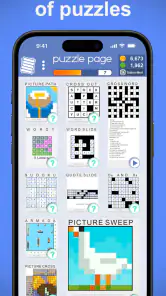
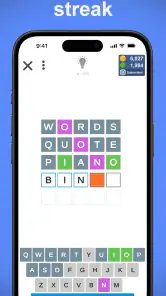
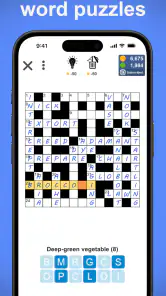
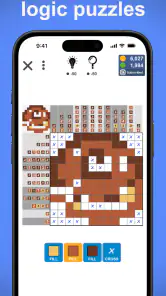
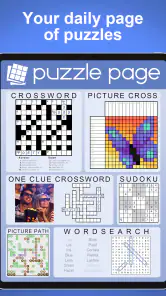
I came away from Puzzle Page - Daily Puzzles! with the feeling that it understands a simple truth about puzzle games: sometimes I want a thoughtful few minutes, not a huge adventure, a competitive ladder, or a complicated tutorial. This is a free puzzle game from puzzling.com that brings together word, logic, and number challenges in one daily routine. Its strongest quality is variety. I can move from a vocabulary exercise to a reasoning problem and then try something more numerical without changing apps.
That broad mix also explains why the game has found a sizeable audience. It holds an average rating of 4.3 from around 76 thousand ratings, with more than 5 million installs. Those numbers do not automatically make a game good, but they fit my experience: this is an accessible, low-pressure choice for people who enjoy puzzles but do not want to commit to a single format. It is available for free and rated Everyone, so it is easy to recommend for casual household use, short breaks, or a quiet evening.
Why the daily format works so well
The daily structure gives the game a useful sense of purpose. Instead of opening an enormous catalogue and wondering what to play, I can simply start with the current selection. That small decision matters when I am using a puzzle game during a commute, while waiting for an appointment, or between other tasks. The experience feels more like checking in with a compact mental workout than beginning an endless campaign.
The selection of word puzzles, logic puzzles, and number puzzles is the main reason I would choose this over a narrowly focused alternative. Word games are a natural fit when I want something language-based and quick. Logic challenges suit a more deliberate mood, while number puzzles give me a different kind of concentration. Switching between these styles helps prevent the repetition that can make single-format puzzle apps feel stale.
I also like that the game can serve different energy levels. On a tired day, I can choose a familiar type of challenge and stop after a short session. When I am more alert, I can treat the puzzles as a longer concentration exercise. That flexibility is more valuable than it sounds because it makes the app easier to keep installed. I do not need to be in exactly the right mood for one particular mechanic.
A practical way to use it is to make the daily puzzle part of a routine rather than trying to finish everything at once. I might play one challenge with breakfast, another during a break, and return later when I have more patience for a tougher problem. This approach also reduces the temptation to rush. Puzzle games are less enjoyable when I treat every screen as something to clear as quickly as possible.
A useful alternative to specialised puzzle apps
Compared with a dedicated crossword app, Puzzle Page has less of a single-minded identity, but that is also its advantage. A crossword specialist may be better for someone who wants deep grids, a particular clue style, or a large archive built around that one tradition. Here, I get a wider rotation. The trade-off is that players who already know exactly which puzzle form they love may find the broader selection less satisfying than a specialised app.
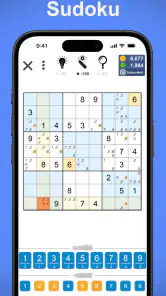
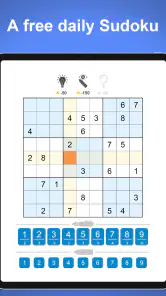
The same comparison applies to number-focused games. A dedicated Sudoku app usually makes it easier to practise one system repeatedly, track a particular skill, or choose a very precise difficulty. Puzzle Page is more appealing when I want numbers to be one part of the experience rather than the entire experience. I would pick it for variety and convenience, not for intensive training in one puzzle discipline.
It also differs from large puzzle collections that rely on hundreds of tiny arcade-style levels. Those games often reward rapid tapping and constant progression. This one is better suited to a calmer pace. If I want colourful effects, fast rewards, or a strong sense of unlocking new worlds, I would look elsewhere. If I want to sit with a clue or a pattern for a moment, the daily approach is more comfortable.
What I noticed during everyday use
The most useful habit I developed was to separate solving from checking. When I reached a difficult puzzle, I tried writing down the possibilities mentally or on paper before making a move. That is especially helpful with logic and number challenges, where a careless guess can make the rest of the problem feel confusing. The app works best when I treat each puzzle as a small reasoning exercise rather than as a test of speed.
Another good workflow is to change puzzle type after getting stuck instead of forcing the same challenge. Because the game combines several formats, a difficult word problem does not have to end the session. I can move to a logic or number puzzle, keep the habit going, and return to the original challenge later with a fresher mind. That variety is not just cosmetic; it gives the app a practical way to handle different levels of concentration.
For families, the Everyone rating makes it a reasonable shared option, but I would still expect differences in enjoyment between players. A child who prefers immediate action may not be interested in a slower word or logic challenge, while someone who enjoys clues and patterns may happily spend much longer on it. The game is most successful when players can choose puzzles that match their interests instead of being pushed into one fixed style.
It can also work well for adults who want a screen activity that feels more purposeful than scrolling. I would not describe it as a replacement for serious study, but it offers a convenient way to practise attention, vocabulary, deduction, and numerical thinking in small portions. The important point is consistency: a few thoughtful sessions are more useful than opening it once, rushing through everything, and abandoning it.
The limits behind the convenience
The same variety that makes the game approachable can make it feel uneven. Not every puzzle type will appeal equally to every player, and a user who prefers a very specific format may spend time skipping or tolerating parts of the selection. I enjoyed the change of pace, but I can see why a specialist might want more control over the exact kind of challenge presented.
The daily emphasis may also be less attractive to people who want a large, self-directed backlog. Some players prefer to choose from a long list of difficulty levels, replay old puzzles, or work through a clearly ordered progression. Puzzle Page feels more natural as a recurring daily stop than as a traditional level-based game that I can systematically complete from beginning to end.
There is another trade-off with the free model. The game is free to download and play, but in-app purchases range from $2.99 to $49.99 per item. That does not make the app unsuitable, yet I would advise checking the purchase flow carefully if children use the device or if you prefer a completely purchase-free experience. The free entry point is helpful, while the optional spending range means the game deserves the same basic budget awareness as other free mobile games.
I also would not install it expecting a rich narrative, character development, or a competitive social world. Its appeal comes from the puzzles themselves and the routine of returning to them. Players who need a story to create momentum may find the experience plain. In my view, that simplicity is intentional, but it still limits the audience.
Who should download it
I would recommend this game to someone who likes switching between different kinds of mental challenges and wants something easy to pick up. It is particularly suitable for casual players who do not want to learn a complicated control system. The combination of word, logic, and number content means there is a good chance that at least one section will match the player’s mood on a given day.
It is also a good fit for people who prefer short sessions. I can use it during a coffee break without feeling that I have started a major commitment. At the same time, the puzzles can provide enough resistance for a longer session when I want to concentrate. That range makes it more versatile than a game designed only for rapid five-minute bursts.
Older phones and tablets are not automatically excluded: the game supports Android 8.0 and later. The current version is 7.8.1, which makes it a practical option for users who are not running the newest operating system. I would still keep the app updated when possible, especially if I depend on a smooth daily routine, but the minimum system requirement is not unusually demanding.
I would skip it if my main goal were expert-level practice in crosswords, Sudoku, or another single puzzle tradition. A focused alternative will usually provide more depth in that one area. I would also look elsewhere if I wanted an action game, a story-driven experience, or a highly social competition. This is a quiet puzzle companion, and its strengths become weaknesses when measured against those expectations.
My final assessment
After using it as a mixed daily puzzle game, I think Puzzle Page succeeds because it removes unnecessary friction. I do not have to decide which specialist app to open, and I am not locked into one type of problem. The best moments come when I use the variety deliberately: a word challenge for a quick start, a logic problem when I want deeper focus, and a number puzzle when I need a change of mental rhythm.
It is not the ultimate choice for dedicated puzzle experts, and the free model deserves attention when purchases are involved. The daily format can also feel restrictive for players who want a huge customisable archive. Still, those limitations are clear and manageable. For a person asking me for a free, approachable puzzle game that can become part of an ordinary routine, I would recommend it.
The developer, puzzling.com, has built something more useful than a single gimmick: a compact collection that gives casual players several ways to think. With an Everyone age rating and a broad selection of challenges, it is easy to share or suggest. My main recommendation is to treat it as a daily mental break, not as a game you must rush to complete. Used that way, it delivers the variety and gentle challenge I would want from a dependable puzzle app.
Pros
- Offers a wide variety of daily puzzles in one convenient app.
- New puzzles provide a consistent reason to return each day.
- Suitable for short play sessions during commutes or breaks.
- Includes familiar puzzle formats that are easy to understand.
- Can help keep word
- logic
- and number skills active.
Cons
- Some puzzles may feel repetitive for frequent or long-term players.
- The daily content schedule may limit options on quieter days.
- Certain features or puzzles may require a subscription or purchases.
- Small text and grids can be uncomfortable on compact phone screens.
- Performance and available puzzle types may vary between devices.

- Category
- Puzzle
- Version
- 7.8.1