Pokerrrr 2: Texas Holdem Poker
- 5.63K
- 4.1
- Installs
- 1.00M
- Price
- Free

Screenshots



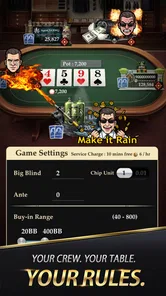

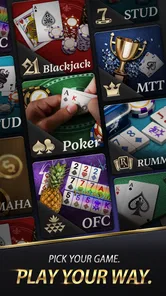


Analysis by Reviewed
The first few sessions with Pokerrrr 2: Texas Holdem Poker are easy to enjoy: I can join a table for a quick hand or set up a private game when friends are free. That flexibility is the main reason I’d try it before a more formal poker app. It is a free card game from Mondraw Limited, and its appeal is less about a long solo campaign than having a place to play with other people.
Why the first week feels lively
Early on, the mix of familiar poker and table options gives me room to find a comfortable pace. A casual player can focus on learning the flow of a hand, while someone who already knows Texas Hold’em can use a private room to make a get-together feel more organized. The game is aimed at teens, so it is not an adults-only poker space; anyone choosing it for a household should keep that audience in mind.
A useful habit is to agree on the table’s rules before inviting people. Poker groups can have very different expectations about blinds, pace, and how serious a session should be. Setting those details together helps avoid the awkward moment when a friendly game turns more competitive than one person expected. I’d also treat in-game purchases as optional, not as a shortcut to better play: the game is free to start, while individual purchases range from $0.99 to $204.99.
What gives it staying power
After the novelty wears off, the strongest reason to keep it installed is a recurring social routine. A weekly game with friends is a better fit than opening it with no plan and hoping the experience stays fresh on its own. If your group has uneven schedules, a private table can make it easier to turn spare time into a shared activity; if you mostly want to play alone, this social emphasis may feel like a limitation rather than a benefit.
Compared with many card games built around puzzles, missions, or solo progression, this is more about sitting down at a table and reading opponents. That makes it appealing to people who already enjoy poker’s decisions and conversation, but less compelling for someone who wants a varied single-player game. I’d choose a teaching-focused poker app if my main goal were structured lessons, or a simple offline card game if I wanted a distraction without coordinating with other players.
Keeping the habit comfortable
My practical advice is to decide how long you want to play before joining. Poker can stretch on when everyone is engaged, and a planned stopping point keeps a casual session from taking over an evening. If you’re arranging a game for friends, send the room details and expected start time in advance; that small bit of preparation matters more than hunting for a perfect table once everybody is waiting.
The game has a 4.1 average from around 35,000 ratings, with about 5,600 written reviews and over a million installs. It launched in April 2014, and version 7.6.4 supports Android 6.0 and later. Those figures suggest an established audience, but they don’t guarantee that every table will suit your tastes. I’d use the first few visits to decide whether the community and pace are right for me rather than assuming popularity means a perfect match.
More From Our News Desk
 Instagram
’s Power Comes From Its Place in Your Phone
A close look at how Instagram turns Meta’s reach, recommendation systems and everyday camera habits into durable platform power—and what that costs users.

 Gmail
Gmail in a Busy Inbox: Who Benefits Most?
From first account to crowded workday, Gmail earns its place through dependable search and flexible sorting—but its best fit depends on how much inbox maintenance you can tolerate.

 Prime Video
Switching to Prime Video: What Changes in Your Viewing Routine
Prime Video can make a compelling second home for streaming, but switching means learning a different catalog, rental layer, and route from browsing to playback.

 Universal TV Remote Control
 Works Best as a Reliable Backup
A phone remote earns its place through quick setup and reliable habits. Here is how to get more from Universal TV Remote Control—and where its limits show.

 Weather - By Xiaomi
Weather by Xiaomi Review: Clear at a Glance, Less Clear Up Close
Xiaomi’s weather app makes everyday forecasts quick to scan, but its calm surface can leave useful details and recovery paths harder to find than they should be.

 X
X Under Pressure: Can It Recover When Posting Goes Wrong?
A resilience-focused review of X, examining setup, mistaken posts, interruptions, weak connections, and the gaps that matter when recovery needs to be dependable.
Latest News



The Virtual Poker Experience
First things first, Pokerrrr 2 isn’t just about playing poker; it’s about recreating that unique atmosphere of a live game. The app's interface is sleek and user-friendly, making it super easy to navigate through various game modes. You can join a random table or, better yet, create a private room to invite your friends for a more personal game night. Trust me, it’s as close as you’ll get to a real-life poker table from the comfort of your couch.
Game Modes Galore
What’s fantastic is the variety of game modes available. Of course, there’s the classic Texas Holdem, but if you’re feeling adventurous, you can switch it up with Omaha or even Short Deck. The app also offers tournaments and sit-and-go games, which can really test your skills. And let’s not forget the super fun SNG tournaments where you can truly get competitive.
One feature I absolutely love is the ability to customize the rules. Want to up the ante? You can adjust the blinds or even set up a straddle. It’s these little touches that make the game feel uniquely yours.
Social Features
Playing poker is as much about the banter as it is about the cards, right? Pokerrrr 2 keeps that social aspect alive with its in-game voice chat feature. It’s a blast to bluff your friends while actually hearing their reactions. Plus, the app supports up to nine players at a table, so you can have quite the party.
If you’re someone who loves to flaunt their poker prowess, the app has a leaderboard feature that tracks your progress and ranking. It’s a pretty neat way to see how you measure up against the global Pokerrrr 2 community.
Play Anytime, Anywhere
One of the standout aspects of this app is its accessibility. Whether you’re on Android or iOS, Pokerrrr 2 ensures a smooth gaming experience. The app runs seamlessly, and I’ve never encountered any lags, even during intense games. It’s perfect for those moments when you’re waiting for a friend or just need a quick poker fix.
In-App Purchases
Now, let’s talk about the in-app purchases. While you can enjoy the game for free, there are chips and membership packages available for purchase. They’re not necessary to enjoy the game, but if you’re planning to become a regular, they might be worth considering. Just remember to play responsibly!
Final Thoughts
In my opinion, Pokerrrr 2: Texas Holdem Poker is a fantastic app for poker enthusiasts. It brings the thrill of a live poker game straight to your device, complete with customization options and social features that enhance the experience. Whether you’re a poker pro or just starting, this app has something for everyone. So, gather your friends, download the app, and let the games begin! You won’t be disappointed.
How it fits into an ordinary week
The clearest everyday use is not a marathon session but a planned gap-filler: a few friends have half an hour free after dinner, one person starts a private table, and everyone joins when ready. That is where the app’s social setup has a practical advantage over a physical deck, which requires everyone to be in the same place. It also works for a family or friend group that already has a regular poker night and wants a remote option when schedules or distance get in the way.
For a casual player, I’d make the first gathering deliberately low-pressure. Choose familiar Texas Hold’em, agree on the stakes and pace, and let newer players ask questions between hands rather than trying to turn the first session into a tournament. A private game is useful here because the group can settle into its own rhythm instead of adapting to strangers. If the goal is simply to learn hand rankings or basic strategy, though, I would pair play with a dedicated guide; a table gives practice, not necessarily a step-by-step lesson.
Choosing the right kind of table
There is a meaningful difference between joining a public table and arranging one for people you know. A public game is the faster route when nobody is available to invite, but the experience depends more on who happens to be playing and what pace they prefer. A private room takes coordination, yet lets a group set expectations before the cards are dealt. I’d pick the first when I want spontaneous play and the second when the point is conversation with friends.
That distinction also helps answer whether this is suitable for beginners. Someone who understands the basic sequence of a hand can learn by playing, especially with patient friends. A complete beginner may find an open table less forgiving, since other players might not want to pause while every decision is explained. For that person, a slower learning tool or a friendly private game is a better starting point than jumping straight into unfamiliar company.
Where the social design helps—and where it asks more of you
Voice chat can make a remote game feel warmer because reactions and conversation happen alongside the action. It is most useful with people you already know, where table talk is part of the fun, rather than as a feature that automatically makes every random table sociable. I’d also treat conversation as optional: if I’m playing in a noisy place or would rather concentrate, the core card decisions matter more than recreating a loud room.
The trade-off is that social play needs coordination and a little etiquette. Before a session, I’d settle who is hosting, what pace the group wants, and whether people are stepping away between hands. Those small agreements prevent one player from waiting while another treats the game as a quick distraction. If nobody in my circle can commit to the same window, an offline card game or a solo-focused poker option would be less effort.
Keeping purchases in perspective
The purchase range is wide enough that I would set a personal spending limit before browsing any optional items, especially if I’m introducing the game to a younger player. Buying something does not replace learning when to fold, noticing betting patterns, or deciding when to stop. I’d first play enough to learn whether the group returns regularly; only then would I consider whether any paid option actually improves the way we use the app.
It is also worth separating the fun of poker from the appeal of keeping up with a leaderboard. Rankings can give a competitive player a reason to return, but they can also turn a relaxed evening into a score-chasing habit. My rule would be to treat results as a record of play, not a measure of personal skill after a handful of sessions. If a table stops being enjoyable because everyone is watching their standing, I’d switch back to a friend-focused game or take a break.
What may wear thin over time
The main fatigue risk is repetition, not a lack of ways to play. Even with different formats and adjustable rules, the central activity remains poker: making decisions with incomplete information, waiting through other players’ turns, and accepting that a strong hand can still lose. That rhythm is satisfying if I enjoy the game itself, but it will not become a varied entertainment app just because I open it often.
Another possible friction point is the difference between a quick visit and a full table session. A hand may be brief, but a social game tends to last as long as the group wants to stay. That makes it less convenient than a puzzle game that can be paused after a minute. I’d avoid opening it during a moment when I need to leave immediately, and I would not rely on it as a dependable short break unless the other players have agreed to a clear stopping time.
Who will get the most lasting value
I see the best fit as a poker fan who wants a recurring place to play, a group of friends comfortable with the game, or a host who enjoys setting up a shared table. Its different formats give experienced players room to change the texture of a session, while the familiar Hold’em option keeps the basic invitation easy to understand. The lasting value comes from the people who return, not simply from having more modes available.
I’d be more cautious if I wanted a fully solo experience, a structured course, or an app that stays fresh through unrelated activities. I’d also skip it if I dislike competitive uncertainty or do not want to coordinate with other players. Those are not small preferences in poker: they shape nearly every session. A simpler offline game is the more comfortable choice when I want to play at my own pace without social obligations.
A sensible way to try it
My recommendation is to start with one planned private session rather than treating installation as a commitment to play every day. Invite a small group that already knows the basic rules, keep the first game relaxed, and agree on a finish time. Afterward, ask whether everyone enjoyed the pace and whether they would genuinely make room for another session. That quick check is more useful than judging the app by a busy first evening.
If the group wants another round, rotate who hosts or choose a different format only after everyone is comfortable with the basics. Changing too many things at once can make it hard to tell whether a session was enjoyable because of the app, the rules, or simply the company. For a regular group, a predictable format is often more valuable than constant novelty; experimentation works best as an occasional change of pace.
My long-term verdict
For me, this earns lasting space only when poker already has a place in my social life. The private-table option, voice chat, and range of poker formats give a group several ways to shape a game, while the free entry makes it easy to test whether that routine suits them. But its strength is also its boundary: it is a poker gathering in app form, not a broad collection of diversions or a replacement for structured instruction.
I would keep it installed for a dependable group that likes to meet online, and I would let it go if sessions became sporadic or started feeling like an obligation. The 4.1 average and audience of over a million installs show that it has found a substantial following, but what matters more to me is whether my own table wants to return. If you enjoy poker and have people to play with, it is worth trying; if you mainly want solo entertainment, I’d choose something designed around that instead.
Pokerrrr 2: Texas Holdem Poker Frequently Asked Questions
Is Pokerrrr 2 a good fit for someone who is new to poker?
Pokerrrr 2 is built around online poker, with play involving friends and people from around the world. That makes it a social way to spend time with the card game, but new players should be comfortable learning as they go and making decisions in a multiplayer setting. If you are looking for a poker-focused game rather than a general collection of card games, its central idea is easy to understand.
Does Pokerrrr 2 support playing with friends?
Yes, playing with friends is part of the experience described for Pokerrrr 2, alongside taking part in poker action with people around the world. That social focus may appeal if you want to share a game with people you know instead of playing only on your own. The app is designed for online multiplayer play, so an internet connection is needed when you sit down to play.
What is Pokerrrr 2, and what kind of poker experience does it offer?
Pokerrrr 2 is a card game centered on online poker. Its description invites players to enjoy poker action with friends and people from around the world, so it is aimed at those who want a social, multiplayer experience rather than a solo card game. If you are considering downloading it, expect poker to be the central activity and an internet connection to be part of playing.
Who develops Pokerrrr 2, and how established is the game?
Pokerrrr 2 is developed by Mondraw Limited and has been available since April 4, 2014. It has attracted more than a million installs, alongside around 35,000 ratings and about 5,600 written reviews. Those figures suggest that it has reached a substantial audience over time, though individual players’ experiences can differ. The game is free to download, with optional in-app purchases.
What platforms is Pokerrrr 2 available on?
Pokerrrr 2 is available for both Android and iOS devices. You can download it from the Google Play Store or Apple App Store, depending on your device. Make sure your device meets the app's system requirements to ensure smooth gameplay and access to all features. The Android version requires Android 6.0 or later, so check compatibility before installing.
Pros
- Engaging multiplayer experience
- Wide variety of poker games
- User-friendly interface
- Customizable avatars
- Frequent updates and events
Cons
- In-app purchases can be pricey
- Occasional connectivity issues
- Limited offline features
- Ads can be intrusive
- Learning curve for beginners