PlaySimple Cryptogram
- 1.41K
- 4.7
- Installs
- 1.00M
- Price
- Free
Screenshots
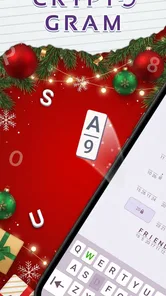
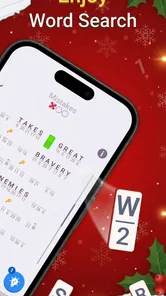
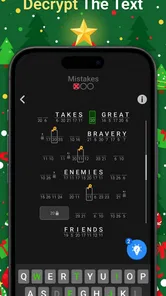
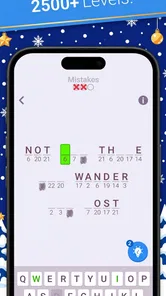
Analysis by Reviewed
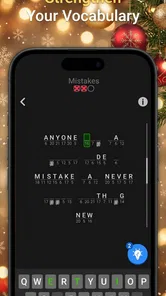
Cryptograms appeal to me most when I want a small, self-contained puzzle rather than a long game that demands my full attention. I can work through a coded quote a few letters at a time, pause to think, and return when I have a fresh idea. PlaySimple Cryptogram takes that familiar word-puzzle format and gives it a quote-focused setting, making it a good fit for quiet breaks and anyone who enjoys spotting patterns.
A practical way to approach each cipher
My most reliable routine is to start with the structure, not a guess at the quote. I look for repeated symbols, short words, and patterns that might represent common English words, then test whether a letter substitution makes sense across the whole line. A promising guess should explain more than one isolated spot. This keeps me from filling the board with assumptions that later need undoing.
The quote format gives each solution a satisfying payoff, but it can also tempt you to guess based on a familiar saying. I get better results when I treat the wording as a language puzzle first and use the quote’s meaning only as a final check. If I reach a dead end, I leave the puzzle for a moment rather than repeatedly trying the same idea; a short reset often makes a repeated-letter pattern easier to notice.
Settings and habits that make play easier
Customization is worth checking before settling into a longer session. Adjusting the background and text colors can make the puzzle more comfortable to read, especially if the default contrast does not suit your screen or surroundings. Dark mode is another option for a different visual feel. I would choose whichever setup keeps the letters clear; atmosphere matters less than being able to scan the cipher without strain.
I also recommend treating hints as a deliberate tool rather than an automatic escape hatch. First try a few pattern-based deductions, then use a hint when you can explain what you have already ruled out. That way, help can move a stalled solve forward without taking away the thinking that makes a cryptogram enjoyable. If you prefer solving entirely unaided, you can simply keep working through the letter relationships instead.
The tracking features can support a repeatable practice habit: notice which puzzles you finish comfortably, then pay attention to where you tend to slow down. A faster time is not the only useful measure. Recognizing a common word pattern more quickly, or making fewer unsupported guesses, is meaningful progress even if you are playing in short sessions and not chasing a personal best.
How the game fits into everyday play
For a realistic routine, I would open it during a coffee break, work through a section of a quote, and stop when I need to get back to something else. The daily puzzle gives regular players a natural reason to return, while the share option can turn a tricky cipher into a friendly challenge with someone who enjoys word games. Neither approach needs a long uninterrupted session, which is part of the appeal for me.
More From Our News Desk

 Gmail
Gmail in a Busy Inbox: Who Benefits Most?
From first account to crowded workday, Gmail earns its place through dependable search and flexible sorting—but its best fit depends on how much inbox maintenance you can tolerate.

 Prime Video
Switching to Prime Video: What Changes in Your Viewing Routine
Prime Video can make a compelling second home for streaming, but switching means learning a different catalog, rental layer, and route from browsing to playback.

 Universal TV Remote Control
 Works Best as a Reliable Backup
A phone remote earns its place through quick setup and reliable habits. Here is how to get more from Universal TV Remote Control—and where its limits show.

 Weather - By Xiaomi
Weather by Xiaomi Review: Clear at a Glance, Less Clear Up Close
Xiaomi’s weather app makes everyday forecasts quick to scan, but its calm surface can leave useful details and recovery paths harder to find than they should be.

 X
X Under Pressure: Can It Recover When Posting Goes Wrong?
A resilience-focused review of X, examining setup, mistaken posts, interruptions, weak connections, and the gaps that matter when recovery needs to be dependable.

 Clash of Clans
 Is Won Between the Battles
Its raids are quick; its community is a long-term project of coordination, teaching, rivalry, and shared responsibility—with all the friction that entails.
Latest News



Making a short session count
On a busy day, I would treat a puzzle as a small exercise in attention rather than something I must finish before closing the game. Before pausing, I mentally note one clue that has held up—perhaps a repeated-letter pattern or a short word that fits the surrounding substitutions. That gives me a useful starting point next time and reduces the temptation to restart from random guesses. It is a simple habit, but it makes an interrupted session feel continuous.
This approach also helps when I am playing in a noisy place. Instead of trying to solve the whole quote while people are talking around me, I can scan for a few dependable relationships and leave the more ambiguous words alone. The game suits these brief windows better than a puzzle that relies on remembering a complicated board state, though I still get more satisfaction from solving when I can give the text a little focused attention.
Where it stands among word games
Compared with crosswords, this asks less about general knowledge and more about substitution patterns and how letters repeat. Compared with word searches, it is slower and more analytical: the goal is not to spot a word already visible but to infer the message behind the cipher. If you enjoy anagrams, you may like the same feeling of testing possibilities, although cryptograms reward consistency across a whole sentence rather than rearranging a single set of letters.
That focus is also a limitation. Someone looking for varied game modes, fast action, or a story that unfolds between levels may find a quote-based cryptogram too narrow. And if you dislike having to reason through letter patterns, hints may soften the challenge but will not change the basic activity. I would choose another kind of word game when I want rapid rounds or a broader mix of tasks.
Who will get the most from it
This is a strong match for people who like language puzzles, enjoy a measured mental challenge, or want something they can set down and pick up again. Beginners can use hints when a cipher becomes frustrating, while experienced solvers can make the process more systematic by checking repeated letters before committing to a full-word guess. Sharing a puzzle also works well when you want to compare approaches rather than simply compete on speed.
I would skip it if quote-solving does not appeal to you or if you need a game with a changing pace and lots of different mechanics. A cryptogram is intentionally focused, so its strengths come with repetition: the satisfaction is in finding a reliable deduction, not in unlocking a new kind of activity every few minutes. That distinction helps set expectations before you install it.
Small decisions that improve the solve
One useful discipline is to avoid changing several assumptions at once. When a candidate letter seems plausible, check every place it appears before treating it as settled. If the pattern creates an impossible-looking word elsewhere, back up and reconsider rather than forcing the quote to fit. This is especially helpful for experienced players, who may recognize common phrases quickly but can be misled by a familiar opening.
I also find it useful to separate confidence from completion. A letter can be a strong possibility without making the entire word certain, and keeping that distinction in mind prevents a chain of guesses from taking over the board. Hints are most valuable after this check: they can help break a genuine impasse, but using one before testing the evidence may leave you with an answer and less understanding of why it works.
What to know before installing
PlaySimple Games makes this free word game for players of all ages; its age rating is Everyone. It was released on August 29, 2024, and version 1.28.0 requires Android 7.0 or later. The game has a 4.8 average from around 329 ratings, with over 10,000 installs. Optional in-app purchases range from $2.99 to $5.99 per item, so the free price does not mean every optional purchase is included at no cost.
If you are deciding whether to spend money, I would first see whether the basic puzzle loop suits you. The core appeal is the act of solving coded quotes, so purchases make sense only if you find the game worth returning to and want whatever optional items are offered in play. The price range gives a useful expectation, but I would not treat buying anything as necessary to learn whether cryptograms are your kind of puzzle.
A satisfying niche, with clear limits
What I like about PlaySimple Cryptogram is its straightforward invitation to slow down, test a theory, and enjoy the moment when a sentence clicks into place. Its quote selection, hints, visual customization, daily puzzle, progress tracking, and sharing give that central activity a few useful ways to stay engaging. The best results come from playing patiently and treating each letter as evidence rather than guessing the message too early.
For a word-game fan who wants a calm, repeatable puzzle, I would recommend giving it a try. For someone who wants broad variety or a more energetic game, another option will probably fit better. I see it as a focused little codebreaking habit: rewarding when I want to think, easy to pause when life interrupts, and at its best when I let the patterns—not a hunch—lead me to the answer.
How the quote format shapes the experience
The message gives the puzzle a destination, which changes the way I read the clues. In a standalone letter game, I may be satisfied once the pattern is solved; here, the sentence itself can offer a final sense check. I try not to let that become a shortcut, though. A quote that sounds familiar can pull me toward a wrong word, so I trust the letter relationships first and use meaning only when the substitutions already support it.
This makes the game a better fit for players who enjoy language and phrasing than for people who simply want a mechanical code to crack. The wording can make a solve feel more personal, but it also means a player who dislikes quotes as puzzle material may find the format repetitive. I would choose a broader word-game collection if I wanted different kinds of reasoning in the same sitting.
Gameplay That Keeps You Hooked
The gameplay is easy to settle into because the central task remains clear: use the substitutions to uncover the quote. The hint system can nudge a solve forward when I have run out of sensible deductions, but I get more out of it when I try to identify the uncertain part first. That small pause helps me understand what the help is resolving rather than tapping through the puzzle without learning from it.
The daily puzzle gives me a natural prompt to return, while the range of quotes keeps the central activity from feeling like one long repeated sentence. I would still describe the game as deliberately narrow rather than endlessly varied. That is a strength when I want a familiar, low-pressure challenge and a drawback when I am in the mood for changing objectives or a more energetic pace.
Features That Stand Out
The tracking system gives me a way to notice how my approach is changing, especially if I look beyond the fastest time. I pay attention to whether I am making fewer speculative substitutions or spotting repeated patterns sooner. Those are practical signs of improving at this specific puzzle, and they matter more to me than turning every session into a speed test.
The background and text color options are worth trying before a longer session. I would favor legibility over novelty: clear letter shapes make it easier to compare repeated symbols and catch patterns without tiring my eyes. Dark mode offers another visual choice, but the best setting is whichever lets me read the cipher comfortably in the light where I usually play.
Sharing a puzzle can shift the experience from private deduction to comparing methods. I would send one to a friend who enjoys word puzzles and discuss which clue unlocked it, rather than making speed the only measure. That is a more rewarding use of sharing when one person spots a repeated pattern and the other notices a likely short word.
Why You Should Download It
If you enjoy letter-based reasoning and want a puzzle that fits around ordinary routines, this is worth trying. It works particularly well for a quiet break, a waiting-room pause, or a few minutes before moving on to something else. The free entry point makes it easy to find out whether coded quotes hold your attention, while the optional purchases are something to consider only after you know you want to keep playing.
I would not recommend it as a substitute for every kind of word game. It does not change its basic premise into a fast arcade challenge or a varied collection of unrelated puzzles. But if you like steadily testing a theory, checking it against the whole sentence, and seeing a quote emerge from the cipher, its focused design is exactly the point.
My mastery verdict
My best advice is to build a repeatable routine: scan for repeated patterns, test short words cautiously, check every consequence of a likely letter, and use a hint only after you have identified what is blocking you. Adjust the display for comfortable reading and use progress tracking as a way to notice better reasoning, not just faster completion. These habits make the game more satisfying without requiring a complicated strategy.
For someone who likes measured word puzzles, PlaySimple Cryptogram offers a clear, approachable way to practice codebreaking through quotes. It is not the right choice if you need lots of mechanics, rapid rounds, or a story-driven game, and that limitation is worth taking seriously. When I want a calm puzzle I can return to in small pieces, though, I find its focused loop rewarding—and the moment a sentence finally makes sense is a good reason to keep it in rotation.
PlaySimple Cryptogram Frequently Asked Questions
Who makes PlaySimple Cryptogram, and what kind of game is it?
PlaySimple Cryptogram is a word game developed by PlaySimple Games. Its focus is solving encoded phrases by working out which letters stand for others, so it may appeal to players who enjoy vocabulary, patterns, and careful deduction. The game is called Cryptogram by PlaySimple, and its simple premise makes it easy to understand before tackling the puzzles.
What device does PlaySimple Cryptogram need to run?
PlaySimple Cryptogram is available for Android and iOS devices. On Android, it requires Android 7.0 or later, so it is worth checking your device’s operating system before downloading. The game is free to install, and the app is rated for Everyone. If your device meets the operating-system requirement, you can try its word puzzles without needing to buy the game upfront.
What is PlaySimple Cryptogram and how does it work?
PlaySimple Cryptogram is a fun and engaging word puzzle game available for Android and iOS. Players are presented with encrypted phrases, and the goal is to decipher them by swapping letters back to their original form. It's a challenging yet rewarding experience for those who enjoy word games, making use of logical reasoning and problem-solving skills. The app provides hints and allows players to track their progress, offering a mix of entertainment and cognitive exercise.
Is PlaySimple Cryptogram free to play?
Yes, PlaySimple Cryptogram is free to download and play. However, the app may offer in-app purchases for additional hints or to remove ads. These purchases are optional and are designed to enhance the gaming experience. Players can enjoy the full range of puzzles without spending money, though some may find the extra features helpful in progressing through tougher levels. Optional purchases range from $2.99 to $5.99 per item.
What are the main features of PlaySimple Cryptogram?
PlaySimple Cryptogram features a variety of puzzles that increase in difficulty, ensuring a challenging experience for players of all skill levels. The app includes daily challenges, leaderboards, and achievements to keep players engaged. It also offers a user-friendly interface with customizable settings, such as changing the theme or enabling dark mode, to enhance the gaming experience.
Pros
- Engaging puzzles keep the mind sharp.
- Clean
- user-friendly interface.
- Variety of cryptogram categories.
- Regular updates with new puzzles.
- Offline play mode available.
Cons
- In-app ads can be intrusive.
- Limited hint system might frustrate.
- No multiplayer mode available.
- Some puzzles are too easy.
- Occasional app crashes reported.