Play Nine: Golf Card Game
- 926.00
- 4.5
- Installs
- 100.00K
- Price
- Free

Screenshots

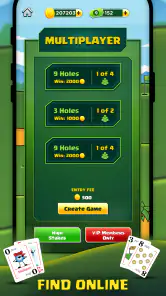
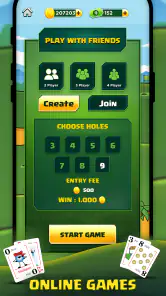
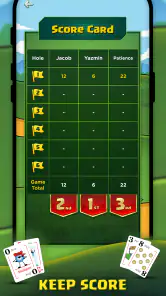

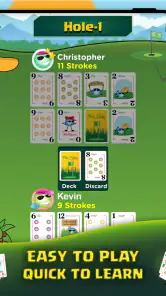
Analysis by Reviewed
I picked up Play Nine: Golf Card Game expecting a light card game I could explain quickly, and that is exactly where it works best. It takes the feel of a casual round of golf and turns it into a compact numbers-and-decisions game for a phone. I do not need a long tutorial or a large block of free time, and I can enjoy it with people who would not normally choose a traditional card game.
The game is free to download, made by Bonfit, and sits in the card category rather than trying to be a full golf simulation. That distinction matters. There are no clubs to swing or courses to master here; the fun comes from arranging cards, reducing a score, and deciding when a risky move is worth taking. After spending time with it, I found that its strongest quality is how quickly it gets a group involved.
How the current version feels to play
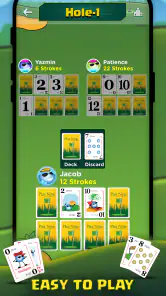
The central idea is easy to understand: treat each round like a miniature golf scorecard, with the aim of finishing on a low total. Cards become the holes in that scorecard, and each turn gives me a choice between improving what I already have and accepting uncertainty for a potentially better result. That creates enough tension to keep a short session interesting without making the rules feel heavy.
What I like most is the difference between learning the rules and learning the decisions. The first part is almost immediate. The second part takes longer because a low card is not automatically useful if it leaves the rest of the layout awkward. I have had turns where replacing one visible problem seemed obvious, only to realize that I had given up a safer position for a small possible gain.
The game works particularly well when everyone is sitting together. A family can pass a device around, friends can compare their choices, and a casual player can join without studying a rulebook beforehand. It also suits a quiet solo break, although its social character is more noticeable when several people are reacting to the same unlucky draw or unexpectedly clever play.
The presentation supports that relaxed purpose. I never felt that I was being asked to manage a complicated collection, build a deck, or memorize a large set of special effects. That simplicity is a strength for newcomers, but it also explains why someone looking for a deep competitive card system may find the experience limited after the novelty fades.
The small decisions that make each round matter
My best practical tip is to stop treating every turn as a hunt for the lowest individual card. The layout matters more than one attractive replacement. Before drawing, I look at which cards are creating the largest total and whether a change could improve more than one part of the arrangement. That habit prevents me from chasing a tempting low number while ignoring a larger problem elsewhere.
I also learned to separate information from hope. A face-up option gives me something concrete to evaluate, while a hidden draw may offer a better result but can just as easily make the layout harder to manage. When my current position is already respectable, I prefer the known option. When one or two cards are clearly damaging the total, I am more willing to accept the unknown.
Another useful approach is to watch the pace of the round rather than playing as though there will always be many more turns. If another player is close to ending the round, a conservative improvement can be more sensible than waiting for a perfect card. This is one of the game’s less obvious lessons: the best move depends on the table’s timing, not only on the cards in front of me.
What Bonfit’s version gets right
Bonfit has kept the experience approachable. I can introduce it to someone who rarely plays mobile games and explain the goal without turning the first session into a lesson. That accessibility is a major reason the game has attracted a 4.5 average from around 11K ratings and passed 100K installs. Those figures do not replace personal experience, but they fit what I noticed: it is easy to recommend for informal play.
The age rating of Everyone also matches the tone. The game is suitable for a broad household audience, and its appeal does not depend on aggressive competition or complicated themes. I would still explain the scoring before starting with younger players, because the rules are simple but the best choices are not always intuitive.
The current version is 5.13, and the game was released on August 28, 2021. I see that as evidence of an established product rather than a brand-new experiment. At the same time, a version number by itself does not tell me that every part of the experience has been transformed. My judgment is based on how polished and usable the current play loop feels, not on assuming that each update introduced a major new system.
For existing players, the value of continued development is likely to be felt most in reliability and comfort. A game built around quick rounds benefits from smooth transitions, clear card states, and rules that remain understandable after updates. Those details may sound minor, but they decide whether I want to play another round or put the phone away.
A realistic everyday session
Imagine waiting for dinner while two friends are already at the table. One person has never played before, another enjoys card games, and nobody wants to commit to a long match. I can start a round, explain the low-score objective, and let everyone learn by watching the first few turns. The experienced player can think about risk, while the newcomer can simply focus on replacing an unfavorable card.
That same situation shows why this game is more flexible than many traditional alternatives. A standard deck can support countless games, but choosing one often requires agreeing on rules, dealing cards, and remembering special cases. A dedicated digital version handles the structure for me. In exchange, I give up the freedom to invent house rules or use the same physical cards for other games.
For a solo player, I would use it as a short mental reset rather than a major long-term project. It gives me a small decision loop: inspect the layout, judge the risk, make a change, and see whether the score improves. That is satisfying when I want something active but not demanding. It is less suitable when I want a story, a large progression system, or a game that rewards hours of continuous investment.
How it compares with familiar card-game choices
Compared with patience-style games, Play Nine has a stronger shared-table feeling. Patience is excellent when I want complete control over my own pace, but it usually does not create the same anticipation around another person’s decision. Here, I pay attention to the changing scores and the moment someone decides to close out a round.
Compared with collectible card games, it is much easier to enter. I do not need to learn a large card pool, understand a constructed deck, or worry about building a strategy around rare pieces. That makes it friendlier for occasional players. The trade-off is obvious: people who enjoy deck construction, extensive customization, or a deep competitive meta will find fewer layers to explore.
Compared with playing a physical golf-themed card game, the phone version is convenient and tidy. It removes setup and keeps the scoring visible. However, the screen can also make the interaction feel less personal. If my group enjoys shuffling, dealing, and physically moving cards, a tabletop version may create a warmer atmosphere than passing a device around.
Where the free model fits
The game is free, which makes trying it with friends an easy decision. It also includes in-app purchases priced from $1.99 to $39.99 per item. I would approach those purchases carefully. The basic appeal of the game comes from its round-to-round decisions, so I would first play enough free sessions to decide whether the format genuinely fits my habits rather than buying anything immediately.
This is especially important for families. Because the age rating is Everyone, a parent may reasonably let a child explore it, but the presence of optional purchases means I would still use the device’s normal purchase controls. The game’s accessible tone and its purchasing options are separate issues; one should not be mistaken for the other.
For me, the best value is the ability to start playing without a financial commitment. If someone expects a completely purchase-free experience, they should check the purchase prompts for themselves and decide whether those interruptions are acceptable. If someone is comfortable with optional spending, the free entry point remains a useful way to test the game before making any decision.
Limits that become clearer over time
The same simplicity that makes the first rounds welcoming can become the main limitation for experienced players. Once I understand the core rhythm, I may want more variety in the situations I face. A player who needs constant unlocks, elaborate progression, or a broad range of modes may eventually feel that the basic loop is not enough.
There is also a social limitation. The game is best when the people around me are willing to share the moment. If everyone is playing separately, the experience loses part of its charm. A solo session still works, but it does not fully replace the conversation and reaction that make a casual card game memorable.
Another trade-off is the balance between luck and judgment. I can make a sensible choice and still draw something unhelpful. That unpredictability is part of the fun, but it may frustrate players who want every result to reflect skill. I would not choose this as my main game for highly controlled competition; I would choose it for light strategy where luck keeps the mood relaxed.
The minimum operating requirement is Android 8.0, so anyone using an older Android device should check compatibility before planning a group session. For supported devices, the important question is less about technical ambition and more about whether the interface makes the cards and score easy to follow. In a game this compact, clarity matters more than flashy presentation.
Who should try it and who should skip it
I recommend it to families, casual card players, and friends who want a game they can explain quickly. It is also a good fit for someone who likes making small probability judgments without committing to a long match. The low-score objective gives each round a clear purpose, while the changing layout prevents the turns from feeling completely automatic.
I would steer away from it if you want a campaign, a strong narrative, or a deep deck-building system. I would also choose a physical card game instead if the main pleasure for your group is handling cards and sitting around a table without a screen. Players who dislike luck influencing the outcome may prefer a more deterministic puzzle or strategy game.
One practical way to decide is to play it with the exact group you expect to use it with. A game can feel excellent alone and awkward with friends, or the reverse. If your group enjoys commenting on risky choices and laughing at a bad draw, the format has a good chance of working. If everyone wants separate, uninterrupted play, its strongest social feature will not matter much.
What I would watch in future updates
Because the current version is already 5.13, I would watch for changes that improve the long-term rhythm rather than simply adding noise. Better onboarding, clearer explanations for first-time players, and dependable handling of round transitions would be more valuable to me than features that make the game feel busier.
I would also pay attention to how the balance between free play and optional purchases develops. The free starting point is important because it lets families and casual groups test the experience together. Any future change should preserve that low-pressure first step, especially for players who only open the game occasionally.
For returning users, the most meaningful evolution would be variety that respects the short, friendly identity of the game. New ways to keep rounds fresh could help regular players, but adding complexity just for its own sake would weaken the reason I recommend it. The best direction would preserve quick learning while giving experienced players a reason to return.
My final view is straightforward: this is a friendly, focused card game that succeeds when I want a short round with real choices and a little luck. It is not trying to replace a full tabletop collection or a deep competitive card app, and I would not judge it by those standards. If you want an easy game for shared breaks, family play, or quick solo decisions, it is worth trying before spending anything. Its limits are real, but they are closely tied to the simplicity that makes it enjoyable in the first place.
Pros
- Quick rounds make it ideal for short breaks or casual play.
- Simple rules are easy for newcomers to learn.
- Strategic card choices add depth beyond ordinary golf games.
- Works well for relaxed multiplayer sessions with friends.
- Bright
- clean visuals keep the gameplay easy to follow.
Cons
- Luck can strongly influence results despite careful decisions.
- Games may feel repetitive after extended play sessions.
- Some features may require in-app purchases or advertisements.
- The golf theme is fairly abstract compared with real golf games.
- Multiplayer enjoyment depends on having available opponents.

- Category
- Card
- Version
- 5.13