Pirates Outlaws
- 1.73K
- 4.3
- Installs
- 500.00K
- Price
- $0.99

Screenshots
Analysis by Reviewed
I tend to enjoy card games most when a short stretch of free time can turn into a meaningful decision, and Pirates Outlaws has that pull. Its pirate setting gives each run a clear identity, while the roguelike structure means I can’t rely on a fixed route or a single perfect deck. It is a paid card game from Fabled Game, and its age rating is Everyone 10+. I’d consider it for someone who likes learning through repeated attempts rather than expecting every voyage to go smoothly.
Readable at a glance, with a learning curve underneath
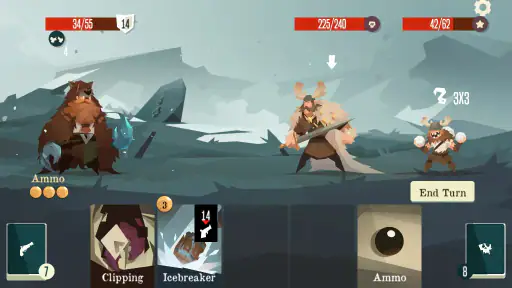
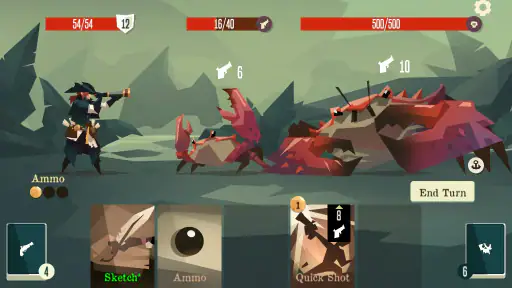
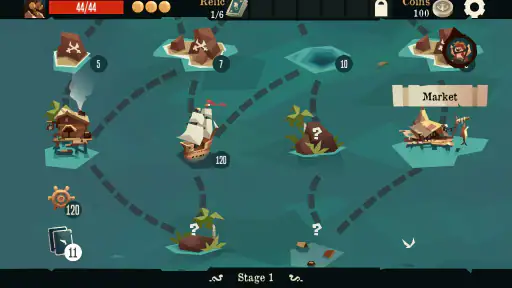
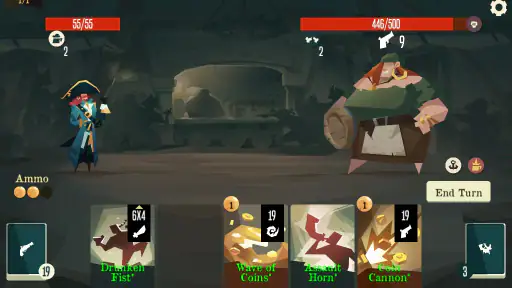
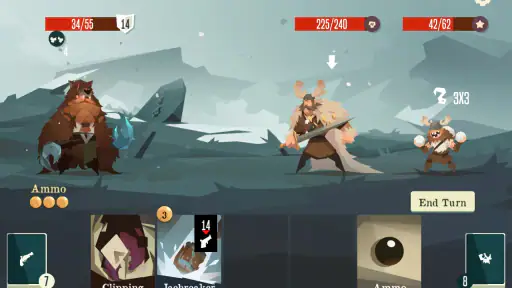
The rustic, map-like artwork gives the game a strong visual personality without making its setting feel cluttered. In my experience, the overall presentation helps me stay focused on the cards and the encounter in front of me. The game moves quickly into its decisions, though, so a newcomer may need a little patience to work out how card choices fit together. I’d take time to read what each option does instead of treating early battles as a race to play everything available.
The basic navigation is built around moving through a voyage and making choices along the way. That keeps the central loop easy to grasp: prepare a deck, face encounters, and adjust your approach when the situation changes. The trickier part is not finding the next screen but understanding the consequences of a choice. If you prefer a card game that explains every strategic implication before you act, this one may feel demanding at first.
Setting Sail: First Impressions
From the moment I launched Pirates Outlaws, I was greeted by a charmingly rustic art style that carried the essence of old pirate tales. The game transports you into a world where the seas are as treacherous as they are rewarding. The visuals are a delightful mix of simplicity and detail, reminiscent of hand-drawn maps, which instantly sets the stage for the adventures to come.
As a player, ye start as a fledgling pirate with dreams of fame and fortune. The game wastes no time in throwing you into the action, urging you to craft a deck of cards that will be your best ally on this journey. But beware, the seas are unforgiving, and every decision counts. It’s a roguelike, so each voyage is a fresh start, and that adds an exhilarating sense of unpredictability.
Navigating the High Seas: Gameplay and Mechanics
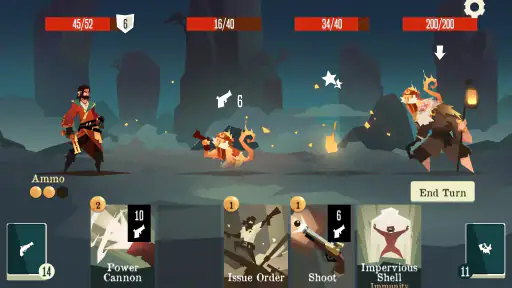
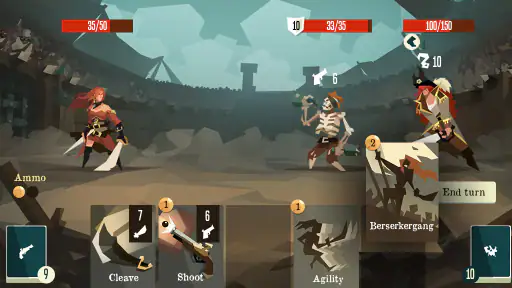
The core of the game lies in its strategic deck-building mechanics. You’ll find yourself constantly tweaking your deck to suit your playstyle. The cards represent different actions, from attacking foes to defending against their onslaughts. Each card is a cog in the grand machinery of your adventure, and knowing when to play your hand is crucial.
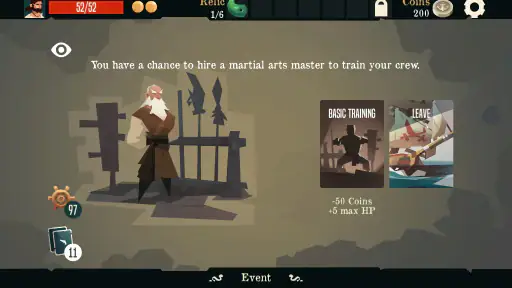
What really hooked me was the balance between strategy and luck. As you progress, you encounter various events, some beneficial, others downright dastardly. It’s this unpredictability that keeps the adrenaline pumping. One moment, you’re plundering a merchant ship, and the next, you’re caught in a whirlpool of trouble. The game’s AI is clever, making battles challenging yet fair.
More From Our News Desk

Weather by Xiaomi Review: Clear at a Glance, Less Clear Up Close

X Under Pressure: Can It Recover When Posting Goes Wrong?

Clash of Clans Is Won Between the Battles

Android Auto Makes the Case for Quieter Car Software

MobiOffice: Transforming Mobile Productivity with Seamless Integration

EA SPORTS FC™ Mobile Soccer: Redefining Mobile Sports Gaming
Ports of Call: Diversity and Challenges
Pirates Outlaws doesn’t skimp on content. Each region you explore brings new challenges and enemies, ensuring you’re always on your toes. From the lush and mysterious islands to the barren, cursed shores, the game offers a variety of settings that are as dangerous as they are beautiful.
What I found truly engaging was the diversity in enemy types and strategies. You can’t sail through on autopilot; each encounter demands a different tactic. And if ye think ye can rely on the same strategy throughout, ye’ll be walking the plank soon enough!
A game for pauses, not just quick taps
A useful way to approach each run is to treat card selection as a plan rather than a collection exercise. When an enemy changes the pressure on a battle, I look at what my current deck can answer before chasing a card that merely seems powerful. That small habit makes the roguelike resets feel informative: even a failed voyage can show which part of my approach was too narrow. It also helps prevent the common frustration of building around one tactic and discovering that it does not fit every encounter.
For an everyday session, I can imagine starting a run while waiting for an appointment, then continuing when I have a quieter stretch. The game’s turn-based card decisions suit that stop-and-think rhythm better than a real-time action game, but I wouldn’t assume every run will fit into a tiny break. If I’m likely to be interrupted, I’d avoid beginning when I need to leave immediately; the appeal comes from following a chain of choices, not from tapping through a disposable round.
Touch, pace, and different play contexts
Because the central activity is choosing cards and responding to encounters, the game does not demand the same rapid physical reactions as an action-heavy mobile title. That makes it a more comfortable fit for players who prefer deliberate input. Still, card games require repeated visual attention and touch interaction, so someone who finds small screen details tiring or tapping uncomfortable should try a short session before committing to longer play.
The hand-drawn presentation is pleasant, but visual style alone does not guarantee that every card or detail will be easy for every player to distinguish. I’d play somewhere with enough time to focus, especially while learning unfamiliar cards and enemy patterns. A busy commute or a bright, distracting environment may make it harder to weigh choices carefully. The game is best when I can pause mentally, inspect the situation, and decide rather than playing by reflex.
Practical trade-offs before setting out
One useful question is whether a run-based structure fits the way you like to play. I find the repeated attempts satisfying when I can treat each one as a chance to understand a different tactical problem. If losing progress feels like wasted time rather than part of the appeal, the format may wear thin. I’d approach the first sessions as experiments: notice which cards help in a difficult encounter, and resist judging the whole game by one unlucky sequence.
There is also a difference between being able to play in short bursts and having a run that feels complete in a short burst. A few deliberate decisions can make a quick check-in worthwhile, but the larger voyage may be more satisfying when I have enough breathing room to follow its changing demands. For a phone game I want to open, finish one self-contained match, and close immediately, I’d choose a more match-based card title instead.
How it compares with familiar card games
Compared with a straightforward digital card battler built around repeated matches, this roguelike format places more weight on adapting over the course of a voyage. That is the main reason I’d choose it: the changing encounters make deck decisions feel connected to a larger journey. It is less suitable if what I want is a quick, predictable match with a clean endpoint, or a game whose main pleasure comes from competing against other people. The appeal here is working through uncertainty, not relying on a familiar matchup every time.
It also asks for a different kind of commitment than a collectible-card game where the central pleasure is assembling a preferred roster and taking it into familiar contests. Here I’m more interested in responding to the hand and challenges in front of me than pursuing a single ideal build. That makes it a strong alternative for players who like tactical improvisation, but a weaker fit for anyone who wants their collection or a competitive routine to be the main focus.
Cost, compatibility, and what to expect
The game costs $0.99, with optional in-app purchases ranging from $1.99 to $8.99 per item. I’d decide whether its run-based card strategy suits me before considering any extra spending; the core question is whether I enjoy building and revising a deck through changing challenges. Its current version is 4.12, and it requires Android 6.0 or later. It has an average rating of 4.3 from around 31,000 ratings, with over 500,000 installs, which gives a prospective player useful context without telling them whether its particular pace will suit them.
Because the initial purchase and optional purchases are separate, I’d treat the extra spending as a choice rather than part of the entry decision. First I’d see whether I like the basic rhythm of choosing cards, meeting unpredictable situations, and adapting after a setback. The game has been available since March 5, 2019, and its mature presence in the mobile card-game space can be reassuring, but popularity cannot tell me whether its learning curve or reset structure will feel rewarding on my own device.
Who I’d recommend it to
I’d point this toward someone who enjoys card tactics, accepts that a run can go badly, and likes figuring out why a plan failed. It may also work for a player who wants a pirate-themed alternative to more abstract deck builders, since the voyages and changing regions give the decisions a setting to belong to. I’d steer away anyone who dislikes restarting, prefers low-pressure play with little to learn, or wants a game that can be enjoyed without sustained attention to card choices.
For a realistic use case, I’d choose it for a quiet evening when I want something more thoughtful than scrolling but don’t want the demands of a real-time action game. I can focus on the choices, take a moment to consider a card, and come away with a clearer sense of what I might try next time. If I’m tired, distracted, or looking for background entertainment, I’d save it for later: the strategy is the point, and it loses some of its value when I’m not paying attention.
Fabled Game’s title has been available since March 5, 2019, and the game’s established run-based design is its clearest draw. With an age rating of Everyone 10+, it may be appropriate for a broad audience, but the strategic demands still matter more than the rating when deciding who will enjoy it. I’d start with modest expectations, learn the card interactions one encounter at a time, and judge the experience by whether each attempt leaves me with a better idea for the next one.
Final Thoughts: A Treasure Worth Seeking
In conclusion, Pirates Outlaws is a gem in the rough seas of mobile gaming. It’s a game that doesn’t just invite you to play, but to strategize, adapt, and conquer. Whether you’re a seasoned deck-builder or a newcomer to the genre, this game offers a rewarding experience for all.
So, if you’re ready to don your pirate hat and set sail, Pirates Outlaws beckons. With its captivating art, strategic depth, and replayability, it’s a voyage worth taking. Just remember, the sea is a fickle mistress, and fortune favors the bold. Happy sailing, matey!
Pirates Outlaws Frequently Asked Questions
How much storage space should I set aside for Pirates Outlaws?
Before downloading Pirates Outlaws, make sure your device has enough free storage for the game and its installation. The amount of space an app needs can vary with its version and device, so checking the download page and your device’s available storage is a practical step. Keeping some extra room free can also help avoid installation interruptions.
Is Pirates Outlaws a good fit if I enjoy roguelike card games?
Pirates Outlaws is described as an indie roguelike card game, making it a natural option for players who like combining card choices with runs that challenge them to adapt. Its pirate setting and strategic battles give the genre a distinctive theme. If you prefer games built around careful deck decisions and replayable challenges, it may suit your tastes.
Can I adjust the difficulty or play at my own pace?
Pirates Outlaws centers on strategic card battles and progression through enemies, maps, and quests, so players can take time to consider their choices during play. The challenge comes from building a deck and adapting as a run unfolds. If you are new to this style of game, expect to learn through play rather than relying on a simple action-only experience.
What is Pirates Outlaws, and who developed it?
Pirates Outlaws is an indie roguelike card game developed by Fabled Game. It combines deck-building decisions with battles and exploration, so success depends on choosing cards carefully and adapting your strategy as a run unfolds. If you enjoy card games with a pirate theme and replayable challenges, its mix of planning and combat may be a good fit.
What should I know about the price and optional purchases before downloading Pirates Outlaws?
Pirates Outlaws costs $0.99 to download and also offers optional in-app purchases priced from $1.99 to $8.99 per item. The base game can be played without making additional purchases, so spending beyond the download is optional. Consider your preferred budget before installing, especially if you want to avoid extra purchases while exploring the game.
Pros
- Engaging card-based gameplay.
- Variety of pirate-themed adventures.
- Challenging yet rewarding experience.
- Offline play available.
- Diverse character options.
Cons
- Can become repetitive over time.
- In-app purchases can be pricey.
- Steep learning curve initially.
- Limited multiplayer interaction.
- Graphics may feel dated to some.
- Category
- Card
- Version
- 4.12