Peek a Phone - Detective Game
- 9.53K
- 4.8
- Installs
- 1.00M
- Price
- Free

Screenshots






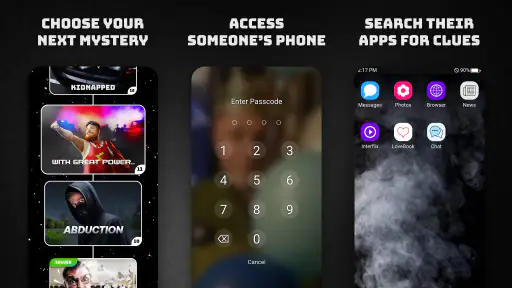
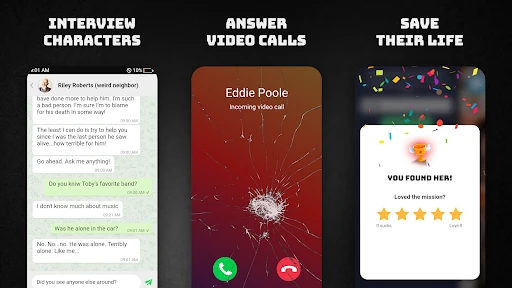
Analysis by Reviewed
I can see Peek a Phone - Detective Game working best as a shared, turn-taking mystery: one person explores a clue, then hands the device to someone else to compare theories. That makes an ordinary evening or a quiet stretch of weekend downtime feel a little more interactive than passing around a phone to watch clips. I’d treat it as a game played together, though, rather than a reason to inspect anyone’s real messages or device.
Choose the right device and boundaries
The cases are presented through a simulated phone, so the central pleasure is examining fictional conversations and other clues as a detective. That distinction is useful in a household: agree that the game is the only phone being investigated, and keep personal accounts and notifications out of the activity. I would also avoid handing over an unlocked personal device if other people might tap into unrelated apps; using a device set aside for play can make the experience more comfortable for everyone.
Before starting, decide whether you want to solve each case together or let one person investigate while the others watch. The first approach encourages discussion; the second suits someone who likes to work through details without hints. If a younger player is joining, an adult can take the lead and discuss the fictional situation as it unfolds rather than assuming that a Teen rating makes every case suitable for every child.
A low-key way to share a case
A realistic use for this game is a short family or roommate session after dinner, when people want something more engaging than background television but are not in the mood to set up a board game. One person can hold the phone and read a clue aloud, while the others listen for details and offer theories. That keeps the device in one person’s hands without making the whole activity solitary, and it gives quieter players room to contribute without needing to navigate the screen themselves.
I’d agree on a few practical ground rules before passing the device around: who is navigating, whether people can suggest where to look next, and whether the group wants to discuss clues as they appear or save theories until later. These small choices matter because the game’s appeal comes from interpreting evidence. If one player reads ahead or takes over every interaction, the rest can end up watching rather than solving.
Make the shared-device setup comfortable
For a phone that belongs to one person, I would keep the session in the game and avoid handing it around while personal messages or notifications might appear. A device used specifically for shared play is an easier choice when one is available, but the important point is not to confuse the fictional phone in the mystery with anyone’s real privacy. The game invites investigation as a premise; that does not make real-device snooping part of the fun.
There is also a useful account-boundary question for households: who is allowed to make purchase decisions on the device? Since the game is free to start and offers optional purchases, I would decide that in advance, especially if a child or guest is playing. That conversation is more useful than assuming that a shared screen automatically means shared permission to spend.
More From Our News Desk

Weather by Xiaomi Review: Clear at a Glance, Less Clear Up Close

X Under Pressure: Can It Recover When Posting Goes Wrong?

Clash of Clans Is Won Between the Battles

Android Auto Makes the Case for Quieter Car Software

MobiOffice: Transforming Mobile Productivity with Seamless Integration

EA SPORTS FC™ Mobile Soccer: Redefining Mobile Sports Gaming
Keep the group working as a team
When several people are solving the same case, a simple running note can prevent the conversation from circling around the same suspicion. I’d write down names, possible timelines, and questions that remain unanswered, then revisit the list when a new clue changes the picture. This is particularly helpful when one person remembers a detail from earlier and another has a different interpretation; the note gives the group something concrete to compare instead of relying on whoever speaks most confidently.
It can also help to ask everyone for a theory before the group opens or discusses the next clue. That gives players a chance to commit to an idea and then reconsider it as the evidence develops. If somebody is stuck, I’d first invite them to explain what seems inconsistent rather than immediately supplying an answer. The goal is not to turn a relaxed session into a test, but to preserve the satisfying moment when a small detail finally makes sense.
Diving Into the Mystery
The concept of Peek a Phone - Detective Game is pretty straightforward but oh-so-engaging. You’re given a lost phone and your job is to snoop around and solve the mystery behind it. Sounds a bit snoopy, right? But trust me, it’s all in good fun!
As I navigated through the various text messages, photos, and apps, I felt like a real-life detective. The game cleverly uses everyday apps and scenarios to create a realistic experience. It's like finding a diary and piecing together a story from snippets of information. I was surprised by how quickly I got sucked into each case, eager to uncover the truth.
What Keeps You Hooked?
One of the coolest aspects of the game is its attention to detail. Every little clue matters, so you really have to pay attention. The developers have done a fantastic job at creating scenarios that are both challenging and rewarding. And let’s not forget the satisfaction of cracking a particularly tough case!
For a better group solve, I’d suggest taking turns opening parts of the fictional phone and asking everyone to state what they think a clue means before moving on. Keep a simple note of names, timelines, and unanswered questions; it helps separate a genuine connection from a guess made because a message feels suspicious. If someone gets stuck, compare interpretations before reaching for help, since talking through the evidence is often the most enjoyable part of playing together.
Reading clues without jumping to conclusions
The phone format encourages you to treat each message as evidence, but I find it more rewarding to hold off on deciding who is at fault until several details line up. A tense conversation can look decisive when read on its own, yet its meaning may shift once you consider who sent it, when it appeared, and what other clues suggest. That habit makes the cases feel less like a hunt for one dramatic clue and more like a small exercise in weighing context.
For a group, this is a good place to separate observation from interpretation. “This message is late” is an observation; “that proves someone is hiding something” is a theory. Keeping those apart makes disagreements more useful and lets the mystery unfold without one confident guess becoming the group’s answer too early. It is a simple approach, but it suits a game built around reading and connecting details.
The variety of mysteries is another big plus. Each new phone presents a fresh story, and I loved how diverse the cases were. From simple relationship dramas to more complex corporate conspiracies, there's never a dull moment. It’s like binge-watching a detective series, only you’re the star of the show!
Who will enjoy investigating together?
This is a good fit for people who like reading between the lines, spotting inconsistencies, and discussing motives. It can also work for a household with different play styles: a patient reader can track details while someone more impulsive offers theories. If your family prefers quick action, competition based on reflexes, or puzzles with clear visual mechanics, this may feel slow. Its appeal rests on attention and interpretation, so it is not the right pick for someone who dislikes reading fictional conversations.
Compared with a standard hidden-object adventure, the fun here comes less from scanning a busy scene and more from treating phone content as evidence. Compared with a conventional detective story, you have a more active role in connecting the details, but that also means the pace depends on how carefully you investigate. For a relaxed shared session, that slower rhythm is a strength; for a short break when nobody wants to concentrate, a simple arcade game may be a better choice.
What to expect from the pace and format
This is not the kind of adventure I’d pick when I have only a minute and want immediate action. Its rhythm asks for attention, and a session can feel stop-start if players keep switching between other activities or rushing through the material. On the other hand, that measured pace makes it easier to pause a conversation, let someone catch up, and resume when the group is ready. It works better as a focused little activity than as something to leave running in the background.
The phone-based presentation is also a trade-off rather than a universal advantage. It makes clues feel like pieces of someone’s everyday digital life, which is exactly what gives the mystery its distinctive texture. But players who prefer maps, animated environments, or hands-on object puzzles may find the interface less varied than a conventional adventure. I’d choose it for a story to unpack, not for visual spectacle or constant movement.
Why You'll Love It
So, if you're into mystery games or just looking for something a bit different to pass the time, this app is a no-brainer. It’s perfect for those moments when you want to challenge your brain and unravel a mystery at your own pace. Plus, it’s totally free to start, with options to purchase additional content if you’re as hooked as I was.
The game is free to begin, while optional in-app purchases range from $0.99 to $49.99 per item, so I’d check purchase settings before letting a child play on a shared device. FaintLines, Inc. developed it, and it sits in the adventure game category. It has a 4.8 average from around 88,000 ratings and over 1 million installs, which suggests that many players have tried it, though popularity alone cannot tell you whether its reading-and-deduction style suits your household.
Age, trust, and household expectations
It is rated Teen, a detail I would take seriously when choosing a game for younger family members. The release date was June 19, 2020, and the current version is 80, with a minimum OS requirement of 10. If you are deciding whether an older device can run it, check that requirement first; for anyone sharing a device, also agree who is responsible for purchases and keep each person’s account boundaries clear.
For parents, the useful question is not only whether a young player meets the age guidance, but whether the themes and style feel right for that particular child. I’d play alongside them at first if I were unsure, and pay attention to how they respond to the fictional situations. That gives an adult a chance to offer context without treating a game’s rating as a substitute for knowing the player.
For siblings or friends sharing one device, it is worth agreeing that theories stay about the fictional characters. The premise can make searching a phone feel like a normal detective action, so I would be explicit that it does not translate into permission to open someone else’s messages or accounts. That boundary is especially valuable with younger players, but it is just as sensible among adults.
On a side note, I found myself recommending it to a bunch of friends, just to see if they could solve the cases faster than I did. Spoiler: they couldn’t. But hey, that’s half the fun!
For a household, I’d recommend it when everyone is comfortable with a reading-focused mystery and willing to take turns rather than race through clues. I’d skip it for very young players, anyone sensitive to fictional relationship or conspiracy themes, or a group that wants fast, hands-on action. A shared-device session works best when one person navigates and the others discuss, with clear limits around personal accounts and spending.
Who should choose something else?
I would steer away from this if the group wants a game that rewards quick reactions, can be understood without much reading, or keeps every player busy at the same time. A single person holding and navigating the phone can make a shared session uneven unless the group deliberately takes turns or reads clues aloud. If that arrangement sounds like a chore, a party game with simultaneous choices or a more physical puzzle may fit a living room better.
It may also be the wrong pick for someone who dislikes stories built around private conversations, even when the phone and characters are fictional. The format depends on inspecting messages and interpreting personal details as clues, so the theme is central rather than incidental. I’d choose another adventure if that framing feels uncomfortable, or if a player would rather solve a mystery through environments and objects than through written exchanges.
A practical way to decide before playing
If you are wondering whether it will suit your household, I’d use three quick checks: does everyone enjoy reading clues, can the group agree on turn-taking, and is the Teen-rated subject matter appropriate for the youngest person present? If those answers are yes, it is a reasonable choice for a shared mystery session. If one answer is no, that does not make the game poor; it simply means its particular strengths do not match this group’s needs.
For a solo player, the same decision is simpler: choose it when you want a story to examine at your own pace, and skip it when you are looking for a quick, action-led distraction. The ability to pause and think is part of the pleasure, but it also means the experience depends on your willingness to read carefully. I would not recommend it just because someone likes detective fiction in general; the phone-investigation format is the specific appeal.
Overall, Peek a Phone - Detective Game turned out to be a delightful surprise. It's the perfect blend of mystery, challenge, and entertainment, and I'm sure you'll find yourself sneaking in a few minutes (or hours) here and there to play detective. So go ahead, give it a try and see if you can crack the case!
Peek a Phone - Detective Game Frequently Asked Questions
Does Peek a Phone - Detective Game work well for players who prefer story-driven games?
Yes. Peek a Phone - Detective Game is built around investigating mysteries rather than action-heavy play. You examine clues through a simulated phone interface and use them to work through cases, so the appeal comes from following the story and thinking through what you find. It may suit you if you enjoy unraveling a mystery at your own pace.
What should I know about the game’s difficulty before downloading it?
The game asks you to pay attention to details, examine clues, and solve puzzles as you investigate. That makes it a better match for players who enjoy using logic and critical thinking than for someone looking for a simple, fast-paced experience. Its cases are presented as mysteries to work through, so taking time to consider the evidence is part of the experience.
Is Peek a Phone - Detective Game suitable for younger players?
The game has a Teen content rating, which is worth considering when choosing it for a younger player. Its focus is on detective work, mystery-solving, and examining clues through a simulated phone interface. Parents or guardians should use the Teen rating as a guide and decide whether those themes and puzzle-based gameplay are appropriate for the player in question.
Who develops Peek a Phone - Detective Game, and what kind of game is it?
Peek a Phone - Detective Game is an adventure game developed by FaintLines, Inc. Its mystery-solving approach puts you in the role of a detective, using a simulated phone interface to examine clues and work through cases. If you enjoy investigating a story at your own pace and piecing together details, its format offers a distinctive alternative to more action-focused mobile games.
What devices and operating systems can run Peek a Phone - Detective Game?
Peek a Phone - Detective Game is available on Android and iOS, so it can suit players using either major mobile platform. On Android, the minimum operating system requirement is version 10. Before downloading, check that your device meets that requirement and has enough available storage for the game. The game is free to download, with optional in-app purchases available.
Pros
- Engaging and immersive detective storyline.
- Challenging puzzles to solve mysteries.
- High-quality graphics and sound effects.
- Frequent updates with new content.
- Multiplayer mode for social interaction.
Cons
- Requires constant internet connection.
- In-app purchases can be costly.
- Some puzzles are too difficult.
- Occasional bugs and crashes.
- Limited free-to-play content.
- Category
- Adventure
- Version
- 80