Once Upon A Galaxy
- 759.00
- 4.1
- Installs
- 100.00K
- Price
- Free

Screenshots
Analysis by Reviewed
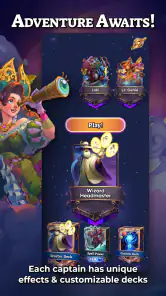
I approached Once Upon A Galaxy expecting a light fantasy card game, but its appeal is more thoughtful than its short store description suggests. This is a free card battler from Million Dreams Games, built around drafting choices and short tactical decisions rather than the slower rhythm of a traditional collectible card game. I found it easiest to enjoy when I treated each match as a small puzzle: choose the cards that fit the situation, build a useful combination, and accept that a flashy pick is not always the sensible one.
That distinction matters because this is not simply a digital version of a familiar card deck. The fantasy setting gives the battles personality, while the drafting format keeps me making decisions throughout a run instead of relying only on a deck prepared beforehand. It is available to players rated Everyone, costs nothing to download, and has already attracted over 100 thousand installs. Its current version is 2.0.25, so the experience feels like an actively shaped game rather than a forgotten one-off release.
How the current version feels to play
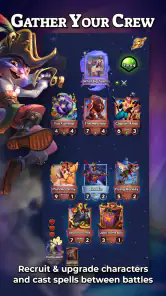
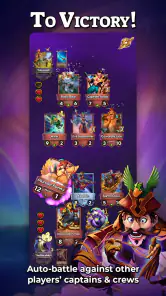
The first thing I noticed is how much the drafting element changes the usual card-game mindset. In a standard deck battler, I often spend more time refining a list outside the match than making meaningful choices during it. Here, the value of a card depends heavily on what I have already selected and what kind of plan is beginning to form. A card that looks average in isolation can become a strong choice when it supports the direction of the rest of the draft.
That makes the opening decisions important without making them feel permanently punishing. I can start with a broad idea, then adjust when the available choices point somewhere else. In practice, I found myself looking for a stable core before chasing clever combinations. That is a useful habit for new players: secure cards that help the deck function, then experiment with more specialized picks once the basic plan is reliable.
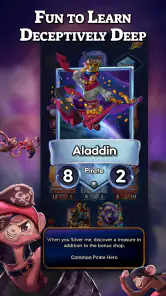
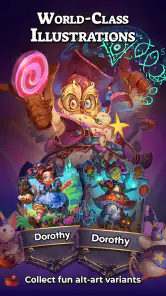
The fantasy theme also helps the game avoid feeling like a spreadsheet with artwork attached. The setting gives the cards a recognizable identity, and the battles have a more approachable tone than many serious competitive card games. I would recommend it to someone who likes card strategy but does not want to begin with a huge wall of complicated terminology.
Still, “approachable” does not mean effortless. The real challenge is learning which choices are valuable now and which ones are only attractive in a perfect future situation. New players may initially select cards because they look powerful, then discover that a deck full of individually impressive options can lack a coherent way to win. My most useful early adjustment was to ask what each pick contributes to the next few turns, not whether it is the strongest-looking card on the screen.
Drafting rewards a flexible plan
The best way I found to approach a new match was to keep the first selections flexible. Rather than committing immediately to one imagined combination, I watched for repeated themes and supporting cards. Once a direction became clear, I became more selective. This reduced the number of awkward cards that looked exciting but did not work with the rest of the deck.
That workflow gives the game a nice middle ground between luck and control. The available choices influence the run, but my response to those choices still matters. A player who insists on forcing one favorite strategy may feel unlucky more often than necessary. A player who adapts can usually turn an imperfect selection into something playable.
One non-obvious strength is that drafting makes experimentation less expensive in terms of preparation. I do not need to spend a long session constructing a perfect deck before testing an idea. I can learn by playing, notice which kinds of cards actually support one another, and use that experience in the next attempt. For me, that makes it more inviting than a game where experimentation requires collecting a large pool first.
The trade-off is that the same format can make outcomes feel less predictable. If you prefer complete control over every card in your list, this may feel less satisfying than a conventional constructed battler. The uncertainty is part of the design, but it also means that players who want to execute a carefully rehearsed strategy every match may prefer another type of card game.
What version 2.0.25 means in practice
The current version is 2.0.25, following the game’s release on July 30, 2024. I see that as useful context when judging the app: it is still a relatively young game, and the present experience should be viewed as a current stage in its development rather than a final historical snapshot. The version number signals ongoing iteration, but it does not by itself guarantee that every rough edge has disappeared.
From a player’s perspective, the important question is whether the current build gives the core loop enough room to stand on its own. In my experience, it does. The draft, battle, review, and retry cycle is the reason to return, not merely the promise of future additions. That is reassuring for someone deciding whether to install it now, because the game does not need to be treated only as a preview of what it might become.
At the same time, I would keep expectations measured. A newer card battler may still be finding its balance, its long-term rhythm, and the best way to introduce its systems. Players who enjoy watching a game evolve may appreciate that process. Those who expect a mature competitive ecosystem with years of established content should approach it differently and consider whether a more established alternative better matches their priorities.
The current build is compatible with Android 6.0 and later, which makes it accessible to a broad range of Android devices. That does not tell me how every older phone will perform, so I would still be sensible about storage, battery, and general device age. The important practical point is that the minimum operating-system requirement is not unusually demanding for an Android card game.
How existing players benefit from the evolution
For someone who started near release, the move toward version 2.0.25 gives the game a different feel from a first-week experiment. Existing players are likely to judge it less by the novelty of the fantasy theme and more by whether the drafting decisions remain interesting after repeated sessions. That is where the format has its strongest chance: the same broad activity can produce different problems depending on the cards offered and the direction a player chooses.
I also think returning players should resist the temptation to repeat one successful drafting pattern forever. A strategy that worked early can become a habit that prevents learning. I had better results when I treated each return as a chance to test a different balance between dependable cards and riskier options. This is especially useful if the game’s balance changes over time, because rigid routines can become outdated even when the underlying rules remain familiar.
Another practical tip is to judge a card by the number of situations in which it helps, not only by its best possible outcome. Consistent value is often more useful than a dramatic effect that requires several conditions. When a draft offers a choice between a safe card and a spectacular but narrow one, I usually favor the safe option unless the rest of my selections already support the narrow plan.
That approach also makes the game more comfortable for short sessions. I can play with a clear objective—try a new direction, learn from a failed combination, or simply complete a few battles—without needing to dedicate an entire evening. It suits a commute, a quiet break, or the moment when I want strategy but not a long story campaign.
Where the experience still asks for patience
The biggest limitation is the learning curve hidden behind the friendly presentation. The basic idea is easy to understand, but recognizing why a draft succeeds or fails takes practice. Players who want immediate clarity may feel that the game expects them to learn through mistakes. I consider that acceptable for a strategy title, though better explanations would always make the first sessions less intimidating.
There is also a tension between free access and long-term progression. The game is free to play, but purchases are available from $4.99 to $99.99 per item. That range is worth keeping in mind before becoming invested. I would begin without spending, learn whether the draft-and-battle loop actually holds my attention, and only then decide whether optional purchases fit my budget and play style.
This is not a criticism of the free entry itself; being able to try the core experience without an upfront price is a real advantage. The concern is more personal: card games can make collecting and improving feel rewarding, and that can encourage spending before I have decided whether I genuinely enjoy the game. Setting a limit in advance is a sensible way to keep the experience comfortable.
Players seeking a purely offline pastime should also think carefully about their expectations. The game’s appeal is tied to its repeatable card-battling structure, so it is better suited to someone who enjoys returning to the same strategic loop than to someone looking for a single complete adventure. Likewise, it is not the right choice for a player who dislikes chance influencing available cards or who wants a fixed, fully controlled deck every time.
Who should install it, and who should skip it
I would point this game toward players who enjoy fantasy themes, card drafting, and decisions that become clearer through repeated attempts. It is especially suitable for someone moving from simple mobile card games toward deeper strategy, because the format encourages learning without requiring a massive commitment before the first match.
It also fits players who like discussing choices with friends. Even without turning every match into a competition, drafting creates natural questions: would a reliable card be better here, should I commit to this theme, and is this powerful option worth the risk? Those are the kinds of decisions that make a card game interesting after the initial novelty fades.
I would skip it if my main goal were a richly scripted role-playing game, a fast reflex challenge, or a traditional card table simulation. The fantasy presentation may attract those audiences, but the heart of the experience is strategic selection and battle planning. Someone who dislikes replaying similar structures to improve will probably find the loop repetitive rather than satisfying.
Compared with a conventional collectible card game, the strongest advantage is the reduced pressure to arrive with a perfectly prepared deck. Compared with a simple solitaire-style card game, it offers more planning and adaptation. The compromise is that it may provide less direct control than a constructed format and less immediate relaxation than a purely casual card app.
Questions worth answering before downloading
If I were explaining the game to a friend, the first question would be whether it is genuinely free to try. Yes, the listed price is free, so there is no purchase required to begin. I would still remember that optional in-app purchases exist, with individual items ranging from $4.99 to $99.99, and I would make a spending decision separately from the installation decision.
The next question would be whether it is suitable for younger players. Its content rating is Everyone, which makes it broadly accessible from an age-rating perspective. Parents should still consider the presence of optional purchases, especially on a shared device, because an age rating and spending controls address different concerns.
Someone with an older Android phone may ask whether installation is possible. The minimum requirement is Android 6.0, so devices running that version or newer meet the stated operating-system requirement. Performance can still vary between phones, but the software baseline itself is relatively inclusive.
Another likely question is whether a newcomer can enjoy it without understanding advanced card-game theory. I think so, provided that the player is willing to learn from a few imperfect drafts. The early goal should not be to discover the strongest possible strategy. It should be to notice which cards work together, which picks are too narrow, and how a stable plan develops.
Finally, a returning player may wonder whether there is a reason to revisit it after learning the basics. For me, the answer is the draft variability and the chance to test a different approach. That appeal will be strongest for players who enjoy gradual improvement. If I want a fixed campaign with a clear ending, replaying the same style of match is less compelling.
What I would watch as the game continues
The future health of a drafting card battler depends on whether its choices remain meaningful. I would watch for how the balance develops between safe, broadly useful cards and specialized cards that reward commitment. If one approach becomes obviously superior, the drafting system could lose the flexibility that currently makes it interesting.
I would also pay attention to how clearly the game teaches its interactions. A growing card pool can create depth, but depth is only helpful when players can understand why a result happened. New players need enough explanation to turn a loss into a lesson rather than a mystery. That will be particularly important as Million Dreams Games continues shaping the experience beyond the current 2.0.25 build.
For existing users, the best sign would be continued variety without unnecessary complexity. More content is not automatically better if it makes drafting feel noisy or makes older choices irrelevant. I would prefer additions that create new decisions while preserving the value of learning the current foundations.
My final advice is to approach Once Upon A Galaxy as a flexible, replayable fantasy card battler rather than as a guaranteed replacement for every other card game. I enjoyed the way drafting forced me to adapt, and I found the free entry helpful for deciding whether the loop suited me. The game still asks for patience, especially while learning which attractive choices are actually useful, and the purchase range deserves a deliberate approach.
Overall, I think it is worth trying for Android players who want a strategic mobile game that can fit into short sessions while still offering room for better decision-making. It is not ideal for people demanding complete deck control, a finished story campaign, or a totally purchase-free progression path. For everyone else, the strongest reason to install it is simple: each draft gives me a fresh problem to solve, and the answer depends as much on adapting well as on finding a powerful card.
Pros
- Quick matches make it easy to play during short breaks.
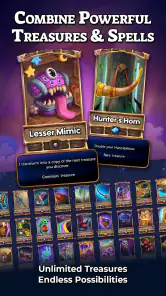
- Distinct card abilities create satisfying tactical combinations.
- Colorful artwork gives the game a polished
- welcoming style.
- Regular events can provide extra goals beyond the main progression.
- Simple controls make the game approachable for new players.
Cons
- Some upgrades and card unlocks may feel slow without extra spending.
- Random draws can make certain matches depend heavily on luck.
- Limited energy or timers may interrupt longer play sessions.
- The interface can feel crowded as more cards and systems unlock.
- Online features may be less enjoyable with an unstable connection.

- Category
- Card
- Version
- 2.0.25