Night of the Full Moon
- 5.47K
- 3.9
- Installs
- 1.00M
- Price
- Free

Screenshots
Analysis by Reviewed
I approached Night of the Full Moon expecting a compact card game with a dark storybook mood, and that is exactly where its appeal begins. It presents a witch’s-forest adventure through a darker take on Little Red Riding Hood, but the setting is more than decoration: it gives each run a sense of moving through a strange illustrated tale rather than simply clearing a sequence of unrelated card battles. I found it easiest to enjoy when I treated it as a thoughtful solo game for short sessions, not as a replacement for a fast multiplayer card game.
It is a free card game from Giant Network, rated Teen, and it has been available since October 19, 2017. The game has built a substantial audience, with over one million installs, an average rating of 3.9 from around 79 thousand ratings, and roughly 5.5 thousand written reviews. Those figures suggest a well-established title with plenty of player interest, while the rating also hints that it will not suit everyone equally.
How the free entry point affects the value
The most important cost detail is simple: the game is free to download. That makes it easy to try without committing money first, which matters for a card game because the central question is not just whether the artwork looks appealing, but whether the battle rhythm and deck decisions hold your attention after the first few encounters. I would recommend using the free access as a genuine trial rather than assuming that the initial download tells you everything about the long-term value.
There are in-app purchases, listed at amounts ranging from $0.29 to $209.99 per item. I would therefore separate two decisions. The first is whether the free portion gives you enough enjoyment to justify keeping the game. The second is whether any optional spending feels worthwhile to you after you understand the systems. Those are different questions, and I would not make the second decision during the first few minutes.
The purchase range is broad enough that families and younger players should pay attention to device purchase controls, especially because the Teen content rating does not mean the game is aimed at children. I would also avoid treating the highest listed purchase as a normal requirement for playing. The confirmed price information establishes that purchases exist and vary considerably, but it does not turn the game into a paid subscription or tell me that spending is mandatory.
For me, that creates a sensible low-risk starting point but a less predictable long-term budget. A free card game can be excellent value when the basic loop remains satisfying without spending, yet the presence of optional items means a player should decide on a personal limit before browsing purchase screens. If you are specifically looking for a completely purchase-free experience, this is not the cleanest choice.
The first sessions are about learning the rhythm
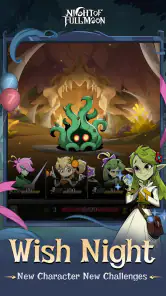
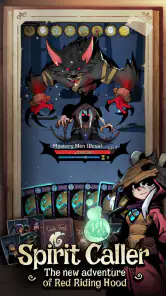
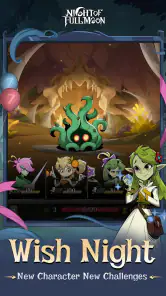
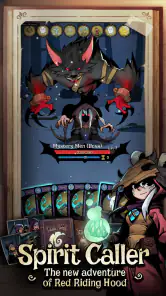
The game makes a stronger first impression through atmosphere than through instant action. The dark fairy-tale framing gives the cards and encounters a recognizable identity, and I liked the contrast between a familiar children’s story and the more ominous direction. It is a useful change of pace from card games that rely on bright fantasy colors, competitive sports themes, or comic presentation.
That mood also affects how I recommend playing. I would not rush through the opening while distracted by another app. The early decisions are easier to understand when you notice how the game presents its story, encounters, and card choices together. Even when a particular decision seems small, it contributes to the feeling that you are shaping a journey through the forest rather than merely pressing the most obvious attack button.
One practical tip is to keep a short mental note of choices that caused trouble instead of immediately blaming luck. In a run-based card game, a weak result can come from several sources: an awkward hand, an unbalanced selection of cards, or a decision made too early without understanding its later cost. I found that reviewing the sequence after a defeat was more useful than restarting instantly.
The strongest value here comes from the combination of repeatable card decisions and a distinct fairy-tale atmosphere. If you only want a story you can read once, the card play may feel like an obstacle. If you only want rapid tactical matches, the narrative framing may slow you down. The game works best for someone who enjoys both sides reinforcing each other.
Why the card format suits short mobile play
Card games are naturally convenient on a phone because a turn can be paused mentally while you inspect the available choices. I found this especially useful in an everyday situation such as waiting for an appointment. I could begin a session, make a few careful decisions, and stop when I needed to put the phone away without feeling that I had abandoned a live opponent.
That same quality makes it a good evening game for players who want concentration without the commitment of a long action session. The dark setting gives the experience more personality than a generic puzzle, while the card format keeps the controls approachable. You do not need fast reflexes to appreciate the game, but you do need patience when a run develops in an inconvenient direction.
There is also a useful mental distinction between a good card and a good card at the wrong moment. New players often focus on collecting individually impressive options, yet a deck or run can become less reliable when its choices do not work together. My advice is to value consistency over novelty during early attempts. Once you understand what your current approach is trying to do, experimenting becomes more informative and less frustrating.
This is one of the less obvious strengths of the game: it can turn a defeat into a small planning lesson. That will not happen automatically. You have to resist the temptation to choose whatever looks strongest and instead ask what the choice does for the rest of the run. Players who enjoy that kind of self-correction will probably get more value than players who want every outcome to feel immediately controllable.
What makes it different from ordinary card alternatives
Compared with a conventional digital card battler focused mainly on head-to-head competition, Night of the Full Moon feels more personal and exploratory. You are not depending on another player to be online, matching your skill level, or finishing a turn before you can continue. That makes it easier to fit into a private routine, but it also removes the tension and unpredictability that live competition provides.
Compared with a simple solitaire-style card game, it asks more of you than arranging cards for a quick win. The storybook setting and adventure structure give decisions a stronger sense of consequence. The trade-off is that someone seeking a purely relaxing, low-pressure pastime may find the darker tone and failed runs less comfortable than a traditional casual card app.
It also occupies a different space from large collectible card games built around constant deck expansion and competitive communities. Those alternatives may be better if your main goal is ranked play, social competition, or following a regularly changing metagame. This game is more appealing when you want a self-contained fantasy journey that can be played at your own pace.
Where the friction appears
The 3.9 average rating is a fair reminder not to treat the game as universally polished or universally satisfying. A card adventure can lose its appeal when early choices feel unclear, when a run ends in a way that seems difficult to learn from, or when the player wants more direct control than the format allows. I experienced the game as more rewarding after accepting that uncertainty is part of the design, but that acceptance will not come naturally to everyone.
The darker presentation is another matter of taste. The Little Red Riding Hood inspiration is recognizable, yet the tone is not a gentle bedtime interpretation. The Teen rating is relevant here: I would not choose this as a casual game for a young child simply because the central character comes from a familiar fairy tale. Adults who prefer cheerful fantasy may also find the mood heavier than expected.
Mobile card games can create a second kind of friction through their purchase structure. Since this title is free with item purchases, I would pay attention to how much of your enjoyment depends on options that sit behind spending. I am not going to claim that payment is required, because that is not established by the available facts. The practical advice is to play first, decide what you actually use, and keep purchases separate from the excitement of a difficult run.
Device compatibility is reasonably broad for an older Android release: the listed minimum is Android 6.0, and the current version is 1.6.25.14. That does not guarantee identical performance on every phone, so I would still expect the experience to vary with hardware and operating-system condition. The age of the release can be an advantage for accessibility, but it also means players who expect the newest visual presentation should moderate their expectations.
Small habits that improve the experience
My first recommendation is to play in focused bursts rather than trying to force a long marathon. A short session gives you enough time to make meaningful choices while limiting the frustration that can build after several unlucky outcomes. If you are playing before bed, the ominous storybook mood may be less relaxing than a bright puzzle game, so the atmosphere should influence when you open it.
Second, avoid changing your approach after every setback. Give a strategy enough time to reveal whether the problem was a poor choice or a temporary run of bad outcomes. This is a particularly useful habit in card games because constant switching can prevent you from learning the relationship between your decisions and the result.
Third, use the free access to answer specific questions rather than vaguely asking whether the game is “good.” Ask yourself whether you like reading the adventure presentation, whether you enjoy planning around imperfect options, and whether a solo structure is enough to keep you engaged. Those answers predict your satisfaction better than the fantasy artwork alone.
Finally, if you share a device with someone else, decide in advance who is allowed to make purchases. The low end of the purchase range may look harmless, while the upper end makes casual tapping a poor substitute for a clear budget. That is not a criticism unique to this title; it is simply the responsible way to approach any free game with optional paid items.
Who will get the most from it
I would recommend it to someone who enjoys card-based planning, solo progression, and a moody reinterpretation of a familiar fairy tale. It is particularly suitable for players who like discovering how choices interact over repeated attempts. You do not need to be a competitive expert, but you should be comfortable with the idea that not every run will unfold according to plan.
It is also a good fit for commuters, casual evening players, and anyone who wants a game that can be approached in small pieces. The absence of a need to coordinate with other players is a meaningful advantage when your free time is unpredictable. A player who likes pausing to think will probably appreciate it more than someone who measures fun by speed.
I would skip it if your priority is real-time multiplayer, a bright and harmless fairy-tale tone, or a completely purchase-free environment. I would also point competitive card-game fans toward a more explicitly multiplayer alternative if ranking, opponent variety, and social rivalry are the reasons they play. This title’s value is tied to its solitary adventure identity, not to being the most demanding competitive card platform.
My verdict on the free experience
After spending time with it, I see Night of the Full Moon as a worthwhile free trial for readers who want a card adventure with a distinctive dark-fairy-tale personality. Giant Network has built a game that is easier to remember than a generic deck battler because its setting and card decisions belong to the same journey. The experience is not frictionless, and the purchase range means I would approach optional spending carefully, but the free entry point gives curious players a practical way to judge the core appeal for themselves.
The game delivers the most value when you enjoy learning from imperfect runs, making deliberate choices, and letting the atmosphere slow the pace down. It delivers less value when you need direct control, constant competition, or a cheerful storybook presentation. My recommendation is therefore conditional but positive: try it for free, play long enough to understand the decision loop, and only consider spending after you know that the solo adventure genuinely fits your habits.
With its Teen rating, Android 6.0 minimum, established player base, and current version 1.6.25.14, it remains an accessible option for compatible Android users who want something more memorable than a basic card pastime. I would keep it installed for thoughtful short sessions, but I would not present it as the right card game for everyone. Its best audience is the player who enjoys a little uncertainty, a darker fairy-tale world, and the quiet satisfaction of improving one run at a time.
Pros
- Engaging deck-building combat with plenty of strategic choices.
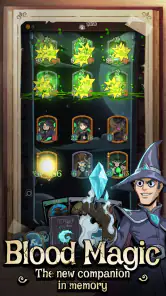
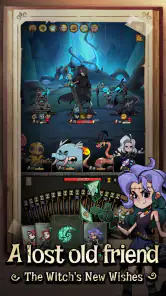
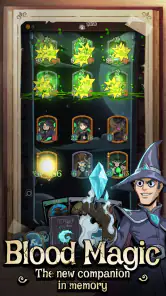
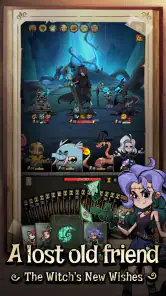
- Hand-drawn storybook visuals create a distinctive fairytale atmosphere.
- Many classes and card combinations encourage replayability.
- Works well for short sessions with a satisfying progression loop.
- Offline play makes it convenient for travel or limited connections.
Cons
- Some advanced classes and content may require additional purchases.
- Random card draws can make certain runs feel overly luck-dependent.
- The large amount of content can feel overwhelming for new players.
- Repeated encounters may become familiar after extended play.
- Text-heavy story sections may not appeal to players seeking nonstop action.

- Category
- Card
- Version
- 1.6.25.14