Monster Train
- 705.00
- 4.7
- Installs
- 100.00K
- Price
- Free

Screenshots
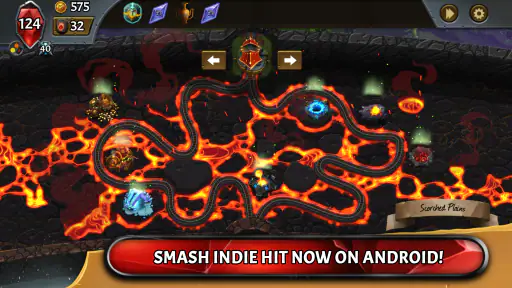
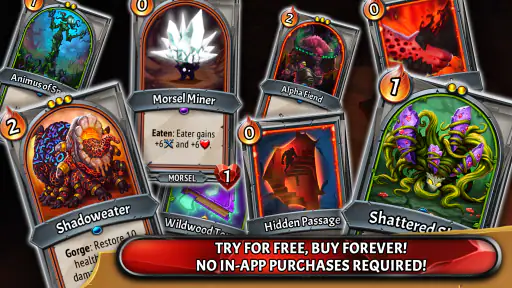
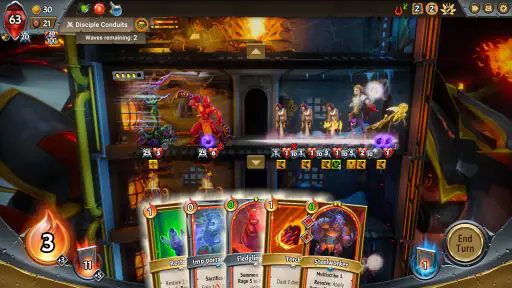
Analysis by Reviewed
I approached Monster Train expecting a card game I could play in short bursts, but it quickly showed me that its real appeal is planning under pressure. This is a roguelike deckbuilder from Good Shepherd Entertainment, and each run asks me to make a chain of decisions rather than simply assemble a powerful hand. I choose how to develop my deck, react to changing battles, and accept that a promising strategy can still collapse if I become too greedy.
That makes it a useful choice for someone who enjoys card games but wants more variety than a fixed campaign can provide. It is free to start, aimed at players aged Everyone 10+, and the Android release requires at least OS 9. The store page shows a 4.7 average from around 5.3 thousand ratings, with more than 100 thousand installs, so there is already a substantial audience trying it. My recommendation, though, depends less on those figures than on whether you enjoy repeating runs and learning from failed decisions.
What to consider before choosing this card game
The important question is how you like to lose
Monster Train is not built around a gentle sequence of levels where progress always feels permanent. Its roguelike structure means that a run can be exciting precisely because it is temporary. I may begin with a clear plan, discover a useful combination, and then have to abandon part of that plan when the next encounter demands a different answer. If the idea of starting again after a defeat sounds frustrating, this is the first warning sign.
On the other hand, repeated attempts make sense here because each run teaches me something. I learn which cards are worth building around, when an upgrade is more valuable than adding another card, and why a defensive option can matter even when my damage looks impressive. The game rewards attention more than reflexes, so I never feel disadvantaged by playing at a relaxed pace. My best sessions have been the ones where I stopped chasing an ideal deck and started making sensible decisions with the tools available.
Short sessions are possible, but the thinking is not lightweight
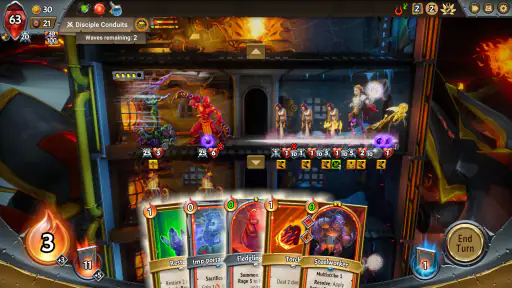
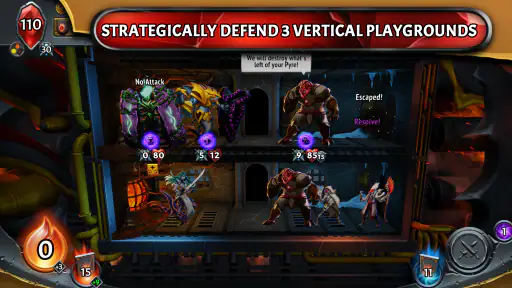
I can pick up a run when I have a little free time, yet the mental commitment is greater than the simple presentation suggests. A battle may be easy to understand at first glance, but positioning, card order, resource use, and the likely threats in later turns all influence the result. I often pause before committing to a move because using a strong card now can leave me without the answer I need moments later.
This makes the game suitable for a commute, a break, or a quiet evening, provided I am comfortable stopping at a natural point rather than expecting every session to feel casual. It is not a good fit when I want something that can be played almost automatically while watching another screen. The cards are the interface, but the experience is closer to a compact strategy puzzle than to a passive time filler.
How I judge a deckbuilder like this
When I compare it with other card games, I look at four things: how meaningful the choices feel, how well the game handles failed runs, how much repetition becomes boring, and whether the free entry point feels fair. Monster Train performs strongly on the first two. Its changing run structure encourages experimentation, while failure usually gives me a reason to adjust my approach instead of simply telling me to grind.
Repetition is more personal. Players who enjoy discovering interactions can spend a long time testing different approaches, but anyone who prefers a carefully authored story may find the repeated framework less satisfying. The game also asks me to tolerate uncertainty. I cannot always follow the exact route or build I imagined, and the fun comes from adapting rather than forcing every run toward the same result.
Learning the rhythm of a run
My early attempts became easier once I stopped treating every card as valuable merely because it was new. A larger deck can look impressive, but extra options are not automatically useful. I started asking whether a card supported the central plan, solved a weakness, or was simply tempting because it had a flashy effect. That small change made later turns more predictable and helped me understand why selective choices matter.
A practical habit is to review the deck after major decisions instead of immediately choosing the most exciting reward. I look for gaps: reliable damage, protection, ways to recover from a bad turn, and cards that remain useful when the ideal sequence does not appear. This is one of the less obvious strengths of the game. It teaches deckbuilding through consequences, not through a long lecture.
Where Monster Train wins against familiar alternatives
It turns every run into a decision guide of its own
The strongest part of my experience is the way the game keeps asking what kind of risk I am willing to accept. A safe choice may preserve a run but limit its potential, while an ambitious choice can create a powerful deck or expose a serious weakness. Because the structure is roguelike, these decisions do not feel like isolated puzzles. They build a story of my mistakes and adjustments.
That is where it stands apart from a traditional collectible card game. In a competitive card game, I may spend time acquiring or refining a fixed collection before facing other players. Here, the focus is on the run in front of me. I do not need to arrive with a perfectly prepared deck to enjoy the central challenge. The game is more about improvisation and evaluation than maintaining a long-term collection.
It is more strategic than its mobile format suggests
Many mobile card games are designed around quick rewards, simple matches, or constant progression. Monster Train gives me more room to think. I can examine the situation, consider several turns, and decide whether a card is useful now or better saved for a more dangerous moment. That slower rhythm gives the battles weight without requiring complicated controls.
I also appreciate that the challenge comes from choices rather than fast tapping. A player who prefers turn-based planning can enjoy the game without needing perfect timing. This is especially helpful on a phone, where a clear pause-and-think structure feels more comfortable than a real-time game demanding uninterrupted attention.
Three habits that improved my results
First, I stopped spending resources merely because I had them available. Holding something back can be the correct move when the next turn is likely to be more dangerous. Second, I began evaluating upgrades by consistency rather than maximum power. A modest improvement that makes a key card reliable can be more useful than an impressive effect that rarely fits the deck.
Third, I treated defensive tools as part of the win condition. It is easy to focus on damage and assume the run will succeed if enemies fall quickly. In practice, surviving an awkward turn can preserve the entire strategy. These habits are not obvious from the short store description, but they are the difference between randomly playing cards and understanding the game’s economy.
A realistic everyday session
Imagine that I have twenty minutes before leaving home. I start a run intending to test a new direction rather than chase a perfect result. The first few battles reveal that my initial idea is unreliable, so I choose a card that covers a weakness instead of taking the most dramatic option. Later, I reach a difficult encounter with fewer ideal tools than expected. Because I kept a defensive answer and avoided filling the deck with distractions, I survive and continue.
That session may not end in victory, but it still feels productive. I have learned which part of the plan failed and can make a more informed choice next time. This is a better use case for Monster Train than playing while distracted. Even a short session benefits from attention, and the game respects a player who enjoys gradual improvement more than instant success.
Where the free model helps and where it may irritate
The free price makes it easy for me to test the core experience before deciding whether it belongs on my device. That matters for a demanding roguelike deckbuilder because the format is not universally appealing. I would rather discover that through play than commit immediately to a purchase. The game includes in-app purchases priced at $9.99 per item, so I would approach optional spending carefully and decide based on how much I am actually playing.
For me, the sensible approach is to treat the free download as an evaluation period. I would not spend simply because a run went badly or because I felt pressure to improve quickly. If I am already enjoying the decision-making and returning voluntarily, an optional purchase may feel easier to justify. If I am still unsure about repeating runs, spending more will not solve the underlying mismatch.
What the current release tells me
The game is currently listed as version 2.3.9 and was released on May 14, 2025. Those details are useful when checking compatibility or deciding whether an older device can run it, especially since the minimum operating system is Android 9. I would still make sure my phone has enough free space and battery for comfortable sessions, but I would not confuse technical compatibility with enjoyment. A device can run the game perfectly and still be the wrong place for someone who dislikes strategic repetition.
Where another type of card game may fit better
Choose a traditional card battler if you want a fixed collection
A conventional card battler may suit you better if your favorite part of the genre is building a permanent collection, refining a known list, and learning a stable competitive environment. Monster Train does not give me that same feeling. Its attraction is the changing run, so the satisfaction comes from adapting to what appears rather than polishing one deck until every choice is familiar.
This difference also affects the emotional shape of progress. In a collection-focused game, progress can feel visible through new cards and a growing library. Here, progress is more internal: I recognize patterns sooner, understand risk better, and make fewer careless decisions. That is rewarding, but it may not satisfy someone who wants a clear inventory of permanent rewards.
Choose a story-driven card adventure if narrative is your priority
If you want characters, scripted events, and a campaign that moves toward a defined ending, a story-first card adventure may be a better match. Monster Train gives me a framework for repeated strategic runs rather than a conventional journey with a carefully paced plot. Its memorable moments come from unexpected combinations and narrow escapes, not from following a fixed narrative arc.
I would also steer away from it if I need a game that always tells me exactly what to do next. Part of the pleasure is interpreting the situation and accepting that a run may develop differently from the one before it. Players who prefer clear objectives and predictable progression may find that freedom less exciting.
Choose a faster casual game if you want instant relaxation
There are simpler card games that work better when I want to fill a few minutes without concentrating. Monster Train can be played in small portions, but it does not become mindless just because it is on a phone. The need to plan turns and protect a run means I remain mentally involved. That is a strength for strategy fans and a limitation for anyone seeking a low-effort distraction.
It is also not my first choice for a social card-game night. The experience is centered on my decisions within a run, not on the table talk or direct competition that makes multiplayer card games appealing. I would choose it for solitary experimentation, not for replacing a group game with friends.
The cost of switching from another deckbuilder
Moving from a familiar deckbuilder requires a change in expectations. I cannot assume that a strategy that worked elsewhere will transfer directly, because the value of a card depends on the run’s circumstances and the surrounding choices. The first few attempts may feel less efficient than expected, but that is part of learning the game’s language.
The good news is that the learning process is practical. Instead of memorizing a huge rulebook, I can improve by reviewing why a battle went wrong. Did I add too many cards? Did I spend a resource too early? Did I ignore protection because the damage option looked more exciting? Asking those questions makes the transition easier and turns defeat into useful feedback.
My advice is to begin with a narrow goal for each run. I might focus on improving consistency, learning how to handle a difficult encounter, or testing whether a particular style can survive without forcing it. This reduces the pressure to win immediately and gives each attempt a clear purpose. It also prevents the common mistake of copying a strategy without understanding why it works.
My recommendation after playing
Who should download it
I recommend Monster Train to players who enjoy turn-based strategy, card combinations, and the tension of making a good plan with imperfect information. It is especially appealing if you like games where a failed attempt can still teach you something valuable. The free entry point makes it easy to find out whether the roguelike structure suits you, and the Everyone 10+ rating makes it approachable for a broad audience.
I would also recommend it to someone who wants a serious single-player card game on mobile rather than a collection-driven or heavily social experience. The developer, Good Shepherd Entertainment, has shaped the release around replayable decision-making, and that focus comes through in the way each run asks me to adapt instead of repeat a script.
Who should skip it
I would skip it if you dislike starting over, prefer a fixed story, or want every session to be effortless. The game can be generous with learning, but it does not remove the frustration of making a poor choice several turns earlier and watching the consequences arrive. That delayed responsibility is part of the appeal for me, yet it can feel harsh if you want immediate control over the outcome.
I would also hesitate if your main reason for playing card games is collecting permanent items or competing directly with other people. Monster Train is better understood as a strategic run-based experience. Choosing it for the wrong reason could make its strongest feature feel like a limitation.
The answer to the practical questions I would ask
Can I try it without paying? Yes, the game is free to start. Should I expect a simple casual experience? Not really; the controls are approachable, but the decisions deserve attention. Is it suitable for an older Android phone? It supports devices running Android 9 or later, so compatibility depends on that baseline as well as the device itself. Are purchases required for me to understand whether I like it? I would not treat them as the first step. I would play enough to decide whether the core run-based loop is genuinely enjoyable.
How long should I give it before deciding? I would complete several attempts rather than judge it from one unlucky run. The first session can be dominated by unfamiliar choices, while later sessions reveal whether learning from those choices feels rewarding. If I still dislike the cycle after I understand it, another category of card game will probably serve me better.
Final verdict
Monster Train succeeds because it makes card play feel like a series of connected judgments. I am not merely searching for the strongest card; I am deciding what kind of risk the whole run can support. Its free availability, broad age rating, and established player response make it easy to try, but its real audience is narrower: people who enjoy thoughtful repetition and can accept that a clever plan may need to change.
My final advice is simple: download it if you want a demanding solo deckbuilder that rewards patience, experimentation, and careful resource use. Give it a fair chance by playing with your full attention and reviewing your mistakes instead of rushing through battles. If you want a permanent collection, a scripted story, or a relaxed filler game, choose another card-game category. For everyone else, this is a strong choice when the fun is in improving the run, not merely finishing it.
Pros
- Deep deck-building system with many strategic combinations
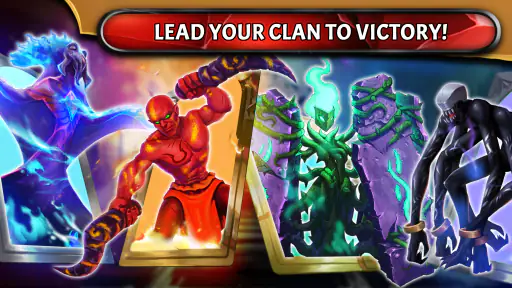
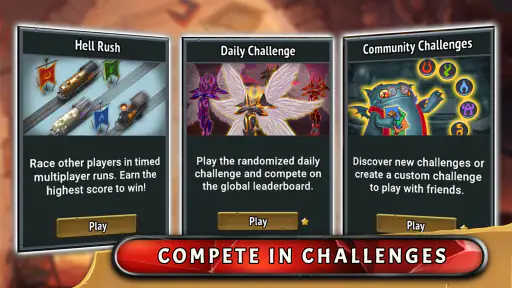
- Excellent replayability through varied clans
- cards
- and challenges
- Runs are engaging and offer meaningful decisions at every stage
- Distinctive monster-themed art style and memorable unit designs
- Supports offline play
- making it convenient for travel or commutes
Cons
- The learning curve can feel steep for players new to roguelike deck-builders
- Some advanced strategies require experimenting with many card interactions
- Runs may become repetitive after extended play sessions
- The interface can feel crowded on smaller phone screens
- Certain content and features may depend on the purchased edition or DLC

- Category
- Card
- Version
- 2.3.9