Mary’s Promotion - Word Game
- 2.26K
- 4.1
- Installs
- 1.00M
- Price
- Free
Screenshots
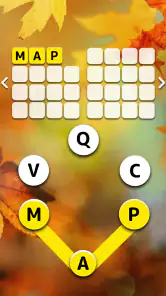
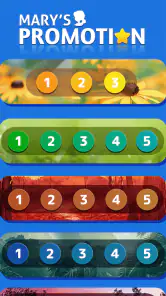
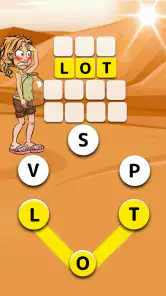
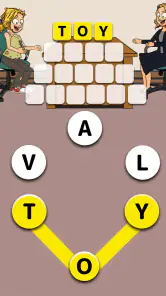
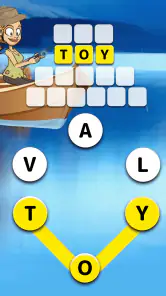
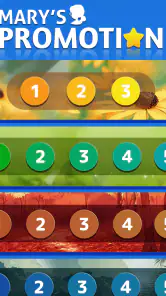
Analysis by Reviewed
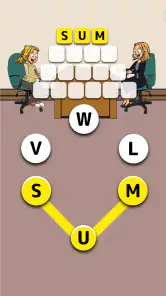
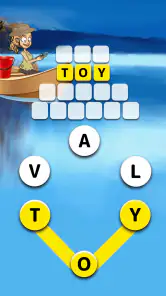
I approached Mary’s Promotion as a word game for short, focused sessions rather than as a vast vocabulary course. Its central idea is easy to understand: solve word challenges while helping Mary move toward a better job. That framing gives each puzzle a little more purpose than a disconnected list of letters, and it makes the game approachable when I want something light but still mentally active.
The game is free to start, belongs to the word category, and comes from Wonderful.Word. It has reached over a million installs, which feels consistent with its accessible premise. I also found the Teen content rating worth keeping in mind for families, especially when choosing games for younger players. It is not presented as a children’s learning tool, so I would treat it as a general audience word game with a story wrapper rather than as an educational app for small children.
How the promotion theme shapes the first sessions
The opening appeal comes from having a clear reason to keep solving. Instead of asking me to complete puzzles with no context, the game connects progress to Mary’s working life. That small narrative hook gives the early stages a direction: I am not merely clearing another board, I am working toward the next step in her career.
That matters because early word games can feel interchangeable. A familiar letter challenge may be enjoyable once, but without a visible goal it is easy to stop after a few rounds. Here, the promotion theme gives the first sessions a simple rhythm. I solve a puzzle, see progress toward Mary’s objective, and decide whether I want to continue for another stage.
I think the best way to approach the beginning is to avoid rushing through every available challenge. I use the early levels to identify how the game expects me to think: whether it rewards obvious short words, encourages looking for less common combinations, or asks me to reconsider letters that initially seem unhelpful. Building that habit early is more useful than treating the opening as something to skip.
The game’s store summary, “Get a new job with words!”, captures the tone without requiring a complicated explanation. That simplicity is one of its strengths. I can hand it to someone who already enjoys casual word puzzles and they understand the basic motivation quickly. It does not need a long tutorial concept to make the first goal clear.
At the same time, the theme will not be enough for everyone. Players who want a deep narrative, character development, or a large strategic layer should keep their expectations modest. The employment premise is a motivating frame around word play, not a substitute for a story-heavy adventure. I see it as a useful nudge to continue, especially during short sessions, rather than the main reason to install the game.
Why the early goals work for casual players
The early objective is approachable because it combines two familiar ideas: solving words and moving toward a personal goal. That combination is particularly suitable for people who like puzzles during a commute, while waiting for an appointment, or during a brief break. I do not need to prepare for a long campaign before I can enjoy the basic loop.
For a friend who says they want a word game but dislikes complicated rules, this is the kind of premise I would recommend trying first. The appeal is immediate, and the career framing gives a little emotional continuity between puzzles. It also makes stopping and returning feel natural; I can leave after a small burst of play without losing the sense of what I am working toward.
My practical tip is to treat each early puzzle as a vocabulary warm-up. Rather than entering every round with the expectation of solving instantly, I look for patterns, test the most obvious possibilities, and then deliberately revisit the remaining letters. That approach helps me learn the game’s preferred style while keeping the experience relaxed.
Progress signals and the feeling of moving forward
A good casual game needs to show progress clearly, even when the individual challenges are small. Mary’s Promotion benefits from tying advancement to Mary’s goal. The player has a reason to care about the next step, and that makes a successful puzzle feel more meaningful than a score that disappears into a menu.
I pay attention to how a game communicates momentum. In this case, the promotion concept acts as the broad progress signal: solving words is connected to a visible personal journey. That is useful for players who are motivated by completion and milestones rather than by competition with strangers. It also gives me a natural stopping point when I feel I have made enough progress for one session.
The important trade-off is that a thematic progress signal is not the same as a complex progression system. If you are looking for extensive customization, branching choices, or a detailed management layer, this is probably too straightforward. The satisfaction comes from the relationship between solving and advancing, not from building a separate career strategy.
I also would not judge the game only by how quickly the first stages move. Early progress in a word game can be generous because it is teaching the player how to recognize its patterns. The more meaningful test is whether the later challenges make that progress feel earned. If the puzzles remain too easy, the promotion theme may begin to feel decorative. If the difficulty rises too sharply, the sense of steady advancement can turn into frustration.
One useful habit is to notice which kinds of mistakes repeat. If I keep searching for long words when the board is encouraging several shorter answers, the problem is not necessarily a lack of vocabulary. It may be that I am using the wrong search order. Keeping track of that distinction gives the progress system more value: I am improving my approach, not simply waiting for an easy puzzle.
What the current version means for prospective players
The current version is 2.0.4, and the game supports devices running Android 6.0 or later. That makes it relevant to people who keep an older compatible phone rather than upgrading frequently. I would still check the device’s available space and general performance before installing any game, but the stated operating-system requirement is not especially demanding by modern standards.
The game has an average rating of 4.1 from around nine thousand ratings, alongside roughly two thousand reviews. I read that as a sign of a generally positive reception with enough room for individual preference to matter. Word games are unusually personal: one player may enjoy a demanding vocabulary test while another wants a gentle, predictable rhythm. A solid average does not guarantee that the pacing will suit everyone.
Because it is free, the initial decision is low risk. I can try the opening experience without paying first, then decide whether the challenge and progression justify spending anything. That is the right way to evaluate it, especially since in-app purchases range from $0.99 to $99.99 per item. The upper end makes it important to review purchase choices carefully rather than assuming every optional transaction is minor.
Difficulty, learning, and the shape of the challenge
The core difficulty in a word game comes from balancing recognition and uncertainty. If every answer appears immediately, I lose interest. If too many puzzles depend on obscure vocabulary, the game stops feeling like a fair test of reasoning and starts feeling like a guessing exercise. Mary’s Promotion works best when it asks me to look again at familiar letters and change my assumptions.
I prefer to solve these puzzles in layers. First, I scan for the most natural words. Next, I examine leftover letters and consider alternate arrangements. Finally, I return to the board with a less literal interpretation of what might fit. This three-pass method is more reliable than staring at one difficult possibility for too long, and it helps preserve the game’s casual pace.
The promotion theme also changes how I experience difficulty. A hard puzzle is not just an obstacle between unrelated screens; it feels like a delay in Mary’s advancement. That can increase motivation, but it can also make a stubborn round feel more irritating. When I reach that point, I prefer to pause and return later instead of forcing a solution while tired.
That is one of the game’s realistic use cases. I can play it during a short break when I want to wake up my attention without committing to a full action game. A difficult word may stay in my mind while I handle something else, and returning later often makes the answer easier to see. The format suits this stop-and-start style better than games that punish interruption or require a long uninterrupted session.
Players who already spend time with crossword puzzles, anagrams, or other vocabulary games may find the basic mental process familiar. The difference is the career framing and the way progress is attached to Mary’s objective. Someone looking for a completely new puzzle mechanic may find less novelty here than someone who simply wants another approachable word challenge.
Who will enjoy the curve and who may not
I would recommend it to casual word-game players, people who like goal-based puzzle sessions, and anyone who enjoys improving through repeated pattern recognition. It can also suit a player who wants a free starting point before committing to a paid word title. The simple theme makes it easy to understand, while the word challenges provide enough mental activity for short daily use.
I would be more cautious with expert crossword fans who want consistently demanding clues, broad factual knowledge, or a highly competitive environment. I would also hesitate to recommend it to someone who dislikes repetition. A promotion storyline can make repeated puzzle solving feel more purposeful, but it cannot remove the underlying repetition of the genre.
It is not my first choice when I want a rich narrative game, a social word battle, or a carefully structured language-learning curriculum. Those alternatives serve different needs. Mary’s Promotion is better when I want a compact puzzle loop with a personal goal attached, not when I want lessons, multiplayer pressure, or a large fictional world.
Retention pressure, purchases, and healthy pacing
The game’s strongest retention tool is the desire to see Mary continue progressing. That is a softer form of pressure than a competitive leaderboard, and I appreciate that it can encourage another round without demanding that I compare myself with other players. The danger is that any progression goal can tempt me to keep playing beyond the point where the session is still enjoyable.
I try to set a simple boundary: stop after a natural milestone or when I notice that I am guessing rather than thinking. This is especially useful in word games because fatigue makes every puzzle seem harder. A short pause protects the satisfying part of the loop and prevents the promotion objective from turning into a chore.
The free price also means the game may be supported by optional purchases, and the listed purchase range is wide. I would not make a purchase merely because a difficult puzzle interrupts progress. First I would ask whether I am enjoying the game without spending and whether the item solves a genuine annoyance or only encourages me to continue immediately.
That is a meaningful trade-off for families and shared devices. The Teen rating already suggests that parents should make their own judgment about suitability, and the presence of in-app purchases means I would review device purchase settings before letting a younger player use it freely. This is not a criticism of the word challenges themselves; it is practical advice for avoiding unwanted spending in any free-to-start game.
For adults, the purchase range is a reason to use the free version as a trial rather than as a promise of unlimited value. I would play enough to understand the pacing, the types of obstacles, and how much the progression matters to me. If the game only feels enjoyable when I am pushing through quickly, I would probably keep it as an occasional free pastime instead of investing heavily.
Small habits that make the loop more enjoyable
My first tip is to change the time of day rather than assuming every session should be long. A few puzzles during a break can feel refreshing, while the same number played late at night may feel unnecessarily demanding. The game’s word-focused structure makes it well suited to this flexible routine.
My second tip is to separate vocabulary knowledge from board-reading skill. When I fail, I ask whether I did not know a word or whether I overlooked a familiar arrangement. That distinction helps me improve without turning every mistake into a judgment about my language ability.
My third tip is to use the career goal as motivation, not as a timer. I enjoy the game more when Mary’s progress encourages me to return later, rather than when it pressures me to clear everything in one sitting. This is a small change, but it keeps the narrative frame supportive instead of demanding.
My fourth tip is to test the free experience on the device that will actually be used most often. Since the minimum requirement is Android 6.0, compatibility is broad, but comfort depends on the phone’s screen, responsiveness, and battery condition. A word game is only relaxing if entering and reviewing letters feels effortless on that particular device.
How it compares with familiar word-game alternatives
Compared with a traditional crossword, Mary’s Promotion feels more immediately goal-driven and less dependent on clue interpretation. A crossword fan may miss the satisfaction of solving a connected grid with layered clues, but a casual player may appreciate not needing specialist knowledge before beginning.
Compared with a pure anagram game, the promotion framing gives the sessions more continuity. A standalone anagram title may be cleaner for someone who wants nothing beyond word manipulation, while this game is the better fit for someone who likes seeing puzzles connected to a character’s objective.
Compared with a language-learning app, it should be approached as entertainment first. Solving words can strengthen attention to spelling and combinations, but the game’s main promise is a promotion-themed puzzle experience, not a structured course with lessons and measurable language instruction. Choosing it for formal study would create expectations the format is not designed to meet.
Compared with competitive word games, it is appealing to players who prefer private progress. There is less need to perform under another person’s time pressure, which makes it friendlier for relaxed sessions. On the other hand, players who rely on head-to-head competition to stay engaged may find the personal promotion goal less powerful than a live opponent.
My verdict on the progression experience
Mary’s Promotion succeeds when its simple career objective gives ordinary word puzzles a reason to continue. I like the way the theme can turn a quick round into a small step in Mary’s journey, and I find that especially effective during everyday moments when I want a focused distraction rather than a demanding game.
Its limitations are equally clear. The premise does not transform the word-game formula into a deep story or a complex strategy experience. Players who need constant novelty, advanced crossword-style clues, or competitive interaction may be happier elsewhere. The wide in-app purchase range also means I would approach optional spending carefully and judge the free experience on its own merits.
For me, the progression is most convincing when I play at a measured pace. Early goals make the game approachable, progress signals give successful puzzles meaning, and a gradual challenge can encourage improvement without requiring a large time commitment. The retention pressure is manageable as long as I treat the promotion as a reason to return, not an obligation to keep going.
Wonderful.Word has made a free word game that is easy to understand and specific enough to have its own personality. With a 4.1 average and a substantial player base, it is a reasonable candidate for anyone browsing casual word games, but the real question is whether the promotion theme adds enough motivation for you. If you want relaxed word solving with a clear personal goal, I think it is worth trying; if you want deep narrative or serious competition, choose a more specialized alternative.
Pros
- Relaxing word puzzles suitable for short
- casual play sessions.
- Simple controls make it accessible for a wide range of players.
- Progressive challenges provide a steady sense of achievement.
- Helpful hints can assist when a level becomes difficult.
- Offline play is convenient when an internet connection is unavailable.
Cons
- Some puzzles may feel repetitive after extended play.
- Difficulty can vary noticeably between consecutive levels.
- Hints or extra moves may be limited without in-game resources.
- The visual design may feel basic compared with newer word games.
- Players seeking competitive multiplayer features may find it lacking.
- Category
- Word
- Version
- 2.0.4