Loop Master™: Color Jam Sort
- 622.00
- 4.8
- Installs
- 1.00M
- Price
- Free

Screenshots

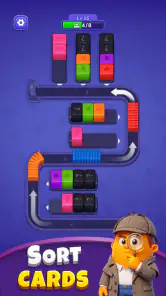



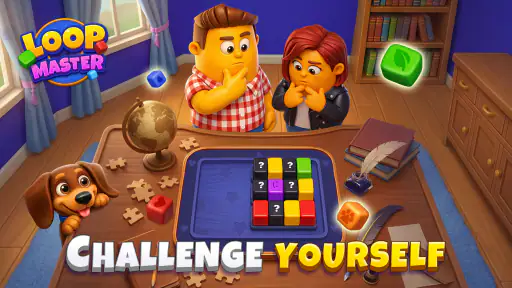

Analysis by Reviewed
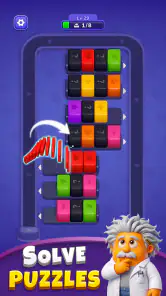
I like puzzle games that explain their appeal in seconds and still leave me thinking a little after I put the phone down. Loop Master™: Color Jam Sort has that kind of compact premise: colored cubes travel through a looping conveyor-style flow, and the challenge is to get each one to the box that matches. It is easy to grasp, but keeping the flow organized is where the satisfying part begins. I found it most appealing as a quick, focused diversion rather than a game I would plan an evening around.
A quick test for whether the loop suits you
If you are unsure whether a sorting puzzle will hold your attention, I would judge this one by the first few decisions rather than by how long you play. The useful question is whether watching the moving colors makes you want to plan the next choice. If the appeal is only the instant visual neatness of a match, the simple loop may feel familiar quickly; if you enjoy spotting what could jam the route, that extra bit of anticipation gives the puzzle more staying power.
It is also a better fit for a phone session when you can give the screen your eyes for a little while. The colors and destinations make the aim easy to understand, but the interesting part is noticing how one action affects what follows. I would not start a round while trying to carry on a conversation or manage another task that needs constant attention. This is light play, not no-attention play.
Why the conveyor puzzle clicks quickly
This is a color-sorting puzzle with a distinctive visual idea: instead of treating every piece as a static item on a board, the game frames the task around movement and a loop. That gives each decision a sense of timing. You are not merely spotting a color match; you are considering how the pieces move through the route and whether the next choice will help or complicate the flow.
The basic objective is clear enough to make the game approachable for casual players, including people who do not usually play elaborate logic games. I would recommend trying a level when you have a few spare minutes and want something more engaging than scrolling but less demanding than a long strategy session. The puzzle format gives your attention a concrete job, while the color and conveyor theme make the goal easy to read at a glance.
That clarity is also the game’s main promise and its main constraint. If you enjoy sorting puzzles, the loop gives a familiar activity a small change of perspective. If you want a story, character progression, or a wide variety of puzzle mechanics, this is probably not the game to choose. Its identity rests on making this one kind of color-routing problem enjoyable to repeat.
A useful way to approach each puzzle
I get more from this sort of game by looking ahead before making a move. Rather than reacting only to the cube nearest its destination, I try to notice which colors are approaching and whether acting now could make the next part of the route awkward. That small pause turns the puzzle from a reflex exercise into a planning task without making it feel heavy.
More From Our News Desk

Clash of Clans Is Won Between the Battles

Android Auto Makes the Case for Quieter Car Software

MobiOffice: Transforming Mobile Productivity with Seamless Integration

EA SPORTS FC™ Mobile Soccer: Redefining Mobile Sports Gaming

How Microsoft OneDrive Became a Mobile Productivity Giant

How Google Translate Breaks Language Barriers Effortlessly
A practical habit is to identify the immediate match, then check whether the surrounding flow leaves room for the colors still waiting. That is especially helpful when several pieces appear to compete for attention. Even without treating every level like a formal logic problem, a quick scan can prevent the familiar mistake of solving the obvious match while overlooking what it does to the rest of the loop.
Short sessions with a real stopping point
The game suits short play because its central rule does not require a long explanation each time you return. I can imagine opening it during a coffee break, while waiting for a ride, or in the few quiet minutes before another task. The appeal in those situations is that the puzzle gives me a clear focus right away, rather than asking me to remember a complicated plot or resume a long sequence of actions.
A realistic use for it is a few quiet minutes while waiting for a takeaway order or sitting in a lobby. I would start a puzzle only when I can look at the screen, then use the next natural pause as a stopping point instead of trying to squeeze in another round while walking or getting ready to leave. That approach suits the game’s small, readable task and avoids turning a pleasant distraction into one more thing to rush.
That does not mean every session will feel equally effortless. A puzzle can still demand concentration, particularly when I am trying to keep several colors and their destinations in mind. If I am distracted or rushing, I am more likely to make a careless choice. For a truly mindless break, a simple word search or a passive arcade game may be a better fit; this one rewards at least a little attention.
The most satisfying rhythm is to play a small number of puzzles, then stop while the sorting still feels fresh. Because the core interaction is so direct, it is tempting to continue simply because starting another round feels easy. I would treat that as a strength for convenience, but not as proof that the game offers endless variety. The best measure is whether I still enjoy thinking through the conveyor flow, not whether I can keep tapping for a long time.
Pausing is easy; restarting your focus takes a moment
For an interruption-heavy day, the simple premise is an advantage. If I have to put the phone away, I do not need to retain a complicated set of rules to understand the next puzzle I play. Returning to the game should feel more approachable than returning to a dense campaign or a multi-stage strategy match, because the color-matching goal is immediately legible.
Still, interruptions can break concentration at the exact moment a puzzle requires a little planning. If I am pulled away mid-decision, I may need to scan the pieces again rather than assume I remember the best move. My advice is to finish the current action, take a quick look at the flow, and then pause when possible. That gives me a cleaner point to return to than leaving while I am weighing several possible moves.
This makes the game a reasonable companion for waiting rooms and brief gaps, but less ideal when I know I will be interrupted every few seconds. The distinction matters: the rules are easy to revisit, yet the enjoyment comes from following the puzzle’s arrangement. A game can be simple to resume without being completely interruption-proof.
For a parent or anyone sharing a device, I would treat the purchase setting as a separate practical question from whether the puzzle itself feels suitable. The game is rated Everyone, but optional purchases can still matter on a phone used by several people. Checking the device’s purchase controls before handing it over is a straightforward precaution; it lets the child try the sorting without making accidental spending part of the decision.
Where repetition helps, and where it can wear thin
Sorting games naturally build pleasure from small acts of order: identify a color, route it correctly, and watch the arrangement become more manageable. The conveyor-loop framing gives that familiar satisfaction a visual theme that feels more active than moving pieces around a plain grid. For players who enjoy spotting patterns and correcting a growing tangle, that can make repeated rounds pleasantly absorbing.
The trade-off is that the basic task remains recognizable. If you need each session to introduce a substantially different mechanic, this may feel repetitive sooner than a puzzle collection with word, number, spatial, and physics challenges. I would not choose it as my only puzzle game if variety were my priority. I would choose it as a focused option for the particular mood of wanting to sort, plan, and tidy a flow of colors.
Compared with a standard match-style puzzle, the appeal here is less about scanning a static arrangement for combinations and more about thinking through a route. A word puzzle is a better choice when I want language-based problem solving; a grid-based logic game may suit someone who prefers a fixed layout to follow. This game occupies a narrower middle ground: visual sorting with a little forward planning. That distinction is more useful than calling one format better overall, because the right choice depends on what kind of attention I want to spend.
One way to keep the repetition enjoyable is to set a small personal goal for each session: make deliberate choices rather than rush, or notice how early you can see a potential bottleneck. That does not add a new feature to the game; it simply changes what I pay attention to. It also helps me tell the difference between a puzzle that is genuinely engaging and one I am continuing out of habit.
That small self-imposed focus is particularly handy if you already know you enjoy sorting games but tend to lose interest once their basic pattern becomes familiar. I would use it to make a brief session more deliberate, not to pretend the game has a broader set of mechanics than it does. If the challenge still feels satisfying when you slow down and anticipate the route, the loop is doing its job; if it does not, a puzzle game with more varied tasks is likely a better use of your time.
What to expect before installing
Pleasure City developed this free puzzle game, and its current version is 1.1.3. It is rated for Everyone, with a minimum operating-system requirement of version 7.0. Those details make it easy to assess whether it fits a household device or an older compatible phone before deciding to try it.
Its audience response is strong: the game has a 4.8 average from around 62,000 ratings, and more than a million installs. I see that as a useful sign that the straightforward color-sorting idea has found an audience, though popularity alone cannot tell me whether its repeated loop will suit my taste. The more relevant question is whether I enjoy solving this specific kind of routing puzzle.
The game is free to download, with in-app purchases ranging from $0.99 to $99.99 per item. I would keep that range in mind if I am installing it for a child or prefer to avoid optional spending. The age rating is Everyone, but that does not by itself decide whether in-app purchases are appropriate for a particular device or family; checking purchase controls is a sensible step before handing over a phone.
Who will enjoy this loop—and who may prefer another puzzle
I would point casual puzzle fans toward Loop Master™: Color Jam Sort if they like color matching, orderly visual problems, and sessions that can begin without a long tutorial. It is also a good candidate for someone who wants to fill a short wait with a task that is more mentally active than a basic time-killer. The most rewarding player is likely to be someone who enjoys planning one or two moves ahead and does not need a new puzzle format every few minutes.
I would steer players elsewhere if they want wordplay, numerical deduction, a narrative campaign, or puzzles that rely on a broad range of mechanics. A traditional grid-based match or sorting game may feel more familiar, while a mixed puzzle anthology will likely offer more variety. The conveyor concept is the reason to try this one, but it is not a substitute for every other kind of puzzle experience.
It may also be the wrong pick if your ideal phone game must be playable while you are barely glancing at the screen. Its short-session appeal should not be confused with automatic play: I still need to follow the colors and consider the route to get the satisfying part out of it. In that situation, a passive game or a puzzle that can be paused at any instant without losing your train of thought may be a more comfortable companion.
For everyday use, I think it works best as a small, intentional break: open it, concentrate on the color flow, and stop when the repetition stops feeling satisfying. Its accessible premise and focused format are genuine strengths; the narrow core loop is the honest limitation. If that trade-off sounds appealing, the game is worth a try, especially for anyone who finds a little pleasure in bringing a busy-looking stream of pieces into order.
My casual verdict is positive, with a clear qualification. This is a tidy choice for short bursts of color-sorting and light planning, not a deep puzzle suite or an endlessly changing challenge. I would keep it installed for those moments when I want a quick, readable problem to solve, while reaching for a broader game when I want more variety. Its appeal is immediate, and whether it lasts depends on how much I enjoy repeating that satisfying act of getting the flow under control.
Loop Master™: Color Jam Sort Frequently Asked Questions
What is Loop Master™: Color Jam Sort?
Loop Master™: Color Jam Sort is a casual sorting puzzle game built around organizing colored pieces or loops into matching groups. Its main appeal is the simple rule set: inspect the colors on the board, plan a sequence of moves, and sort them to complete each level. The game is designed for short sessions, though later puzzles may require more careful planning as the layouts become more involved.
How do you play Loop Master™: Color Jam Sort?
The core gameplay is to move available colored pieces between spaces and group matching colors together, following the limits and rules shown in each puzzle. A level is generally completed once the pieces are sorted into the required arrangement. Take a moment to study the board before moving: using a space too early can make later moves harder, so thinking several steps ahead is often more useful than tapping quickly.
Is Loop Master™: Color Jam Sort free to download and play?
The game may be available to download without an upfront purchase, but that does not necessarily mean every feature is free. Mobile puzzle games commonly offer optional in-app purchases, such as hints, extra moves, or other conveniences, and may also display advertisements. Check the current Google Play or App Store listing for the exact pricing, ad details, and purchase options in your region before installing.
Can I play Loop Master™: Color Jam Sort offline?
Whether the game works without an internet connection can depend on its current version and which features you want to use. Basic levels may be playable offline if they have already been made available on your device, while advertisements, store purchases, online events, or progress synchronization may require a connection. If offline play matters to you, check the store listing and test a level with your device disconnected.
Is Loop Master™: Color Jam Sort suitable for children, and what should I check before downloading?
Color-sorting puzzles are generally easy to understand and can suit players who enjoy calm, logic-focused challenges, but suitability depends on the game’s current content and monetization. Before downloading, review the age rating, privacy information, permissions, and details about ads or in-app purchases on the official store page. Parents may also want to enable purchase restrictions and check whether the app includes advertising or links to external content.
Pros
- Simple tap controls make the sorting gameplay easy to pick up.
- Short levels suit quick play sessions on the go.
- Colorful visuals make the loops easy to distinguish.
- Sorting challenges offer a satisfying
- puzzle-like break.
- No complicated controls or lengthy tutorials to learn.
Cons
- Later puzzles may feel repetitive if you prefer varied gameplay.
- Color-based sorting can be harder for players with color-vision deficiencies.
- Some levels may require several attempts to find the right move order.
- Frequent interruptions can disrupt a focused puzzle session.
- The relaxing pace may not appeal to players seeking action or competition.

- Category
- Puzzle
- Version
- 1.1.3