كملنا - Kammelna
- 498.00
- 4.1
- Installs
- 1.00M
- Price
- Free

Screenshots
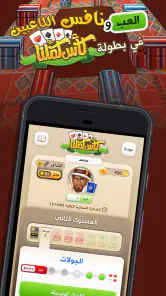
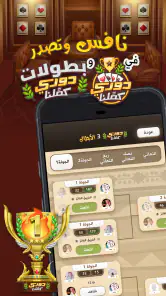
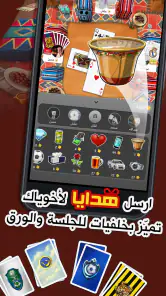
Analysis by Reviewed
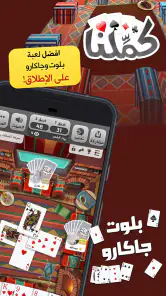
When I first opened كملنا - Kammelna, I understood its appeal quickly: this is a card game built around familiar social play rather than a complicated campaign or a long list of systems to learn. The presentation points toward belotte and jackaroo, two formats that depend as much on reading the table and coordinating with other players as they do on knowing the rules. That makes it feel closer to a quick gathering with friends than to a solitary mobile game.
It is developed by Remal Information Technology and is available as a free game for everyone. The store rating sits at a 4.1 average from around 104 thousand ratings, while its install count has passed one million. Those figures suggest that it has found a substantial audience, but they do not tell me whether it will suit every card player. My experience is that its strongest quality is its directness: you can get into a familiar match without first spending time learning an elaborate interface.
The game is currently listed as version 3.9.5 and supports devices running Android 7.1 or later. That makes it accessible on a fairly broad range of Android phones, although the actual comfort of play will still depend on screen size, performance, and how easily you can distinguish cards and table actions. It remains free to install, with optional purchases ranging from $0.99 to $74.99 per item, so I would approach it as a free starting point rather than assuming every part of the experience is included without spending.
My first impression of the table
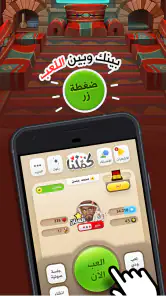
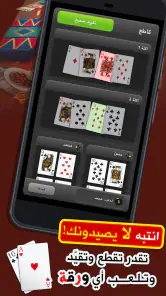
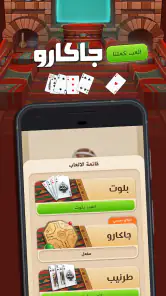
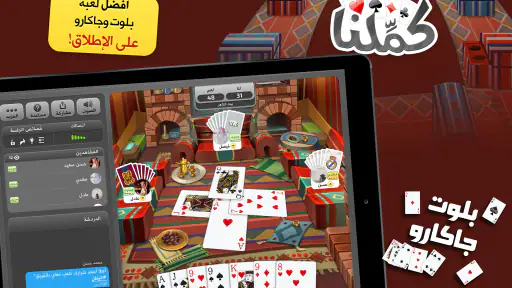
The first thing that matters in a card game is whether the table is readable. Kammelna benefits from having a clear central focus: the cards, the current turn, and the changing state of the hand. I do not want decorative clutter competing with the information I need to make a decision. In this kind of game, a small delay in understanding whose turn it is or what has already been played can be more frustrating than a difficult opponent.
The opening experience is best for players who already recognize the basic language of belotte or jackaroo. If those names are familiar to you, the attraction is immediate because the game promises a digital place to continue a style of play that is often associated with groups, conversation, and repeated rounds. If you have never played either format, I would expect a short adjustment period. The challenge is not only learning what each card does, but also learning when a safe-looking move is actually a poor choice for the whole team.
That distinction is important. Kammelna is not the sort of card game I would choose when I want a dramatic story, a collection of characters, or constant visual spectacle. Its first impression is quieter and more practical. The mood comes from the table and the decisions, not from a large fictional setting. This restraint works when I am looking for a quick match, but it also means players who need a strong progression system may find the opening less immediately exciting.
Designed for short visits, not endless distraction
I find the format particularly suitable for small breaks. A realistic use case is waiting for a friend at a café or taking a few minutes after dinner to play a round while chatting. Because the core activity is a hand of cards, the game does not need to occupy my entire attention with constant movement. I can focus on the current play, discuss a move with a companion, and return to the table without feeling that I have missed a cinematic sequence.
There is a trade-off here. A card match can be easy to start but harder to abandon halfway through. If I only have a very brief moment, beginning a round may not be sensible unless I am comfortable leaving at a natural stopping point. This is one reason I see it as a better fit for a short sit-down session than for a ten-second distraction between notifications.
What the setting communicates without a story
The setting is essentially the card table, and that simplicity gives the game a coherent identity. Instead of asking me to follow a plot, it asks me to read a shared space. The cards become the scenery, the partner’s choices become the conversation, and the order of play creates the tension. That is a useful design decision for a game based on traditional formats because it keeps attention on the social logic of the match.
I also appreciate that the atmosphere does not need to pretend the game is something else. Kammelna is not dressed up as an adventure or a fantasy quest. Its appeal comes from the recognizable ritual of dealing, observing, choosing, and waiting for the next turn. For players who enjoy the mental texture of classic card games, this can feel more inviting than a heavily themed alternative that buries the rules under decoration.
The visual language and the feeling of play
Art direction in a card game has a practical job before it has an expressive one. Cards need to be identifiable, actions need to be understandable, and the table should preserve a sense of order as the hand develops. In my view, Kammelna’s visual identity works best when it supports that hierarchy. The game feels built around the table rather than around a collection of distracting effects, which helps me stay aware of the match.
This also shapes the mood. The experience is more social and competitive than dramatic. I am not waiting for a story reveal; I am waiting to see whether another player has anticipated my plan. That creates a low-key tension that grows through small decisions. A card placed at the right moment can matter more than a flashy animation because it changes how I interpret the rest of the hand.
One practical tip is to spend the first few rounds learning the visual signals before trying to play aggressively. I pay attention to how the game marks the current player, how played cards remain visible, and how the interface separates my cards from the shared table. Once those cues become familiar, I can spend more attention on strategy. Trying to make clever plays before I fully understand the table presentation is an easy way to misread a situation.
Why restraint helps the mechanics
A visually restrained card game can age better than one that depends on constant spectacle. The important question is whether I can inspect the table quickly and make a decision without fighting the interface. Kammelna’s strongest visual contribution is therefore not a particular decorative flourish; it is the way the presentation supports the repeated cycle of observing, choosing, and evaluating.
That cycle gives the game a steady playable mood. The table feels active even when nothing dramatic is happening because I am tracking possibilities. A quiet screen can still be tense when I know that one card may reveal the strength of an opponent’s hand or disrupt a partner’s plan. This is where the art direction and mechanics meet: the visual calm leaves room for the player’s attention to create the drama.
The limitation is that players who prefer a sense of constant reward may see the same restraint as plainness. A traditional card game does not automatically provide the visual variety of a board game with changing maps or a collection-focused title. I would not recommend Kammelna to someone who judges a mobile game mainly by animated spectacle. Its presentation is there to make the match legible and comfortable, not to replace the match.
Sound, rhythm, and the pace of a hand
Sound in this type of game should reinforce the rhythm of the table rather than overwhelm it. The natural pace comes from turns: I watch, consider, play, and then wait. Audio can make those transitions feel clear, but the game’s real rhythm remains mechanical. That is a strength because the match does not depend on a soundtrack to manufacture excitement. The decisions themselves provide the rise and fall.
I tend to think of Kammelna as a game that works well in shared spaces because its mood is not built around demanding constant audio attention. If I am playing near other people, I can concentrate on the cards and the timing of the hand instead of treating the phone like a miniature cinema. That makes it a comfortable companion for casual social situations, especially when the main enjoyment comes from discussing the game or reacting to a clever play.
At the same time, a quiet, measured card game can feel slow if I approach it with the expectations of an action title. The pacing is deliberate because each turn needs room for thought. I would not call that a flaw, but it is a genuine compatibility issue. Players who want rapid-fire rounds and immediate feedback may prefer a faster arcade card game. Kammelna is more rewarding when I allow the hand to develop instead of rushing every decision.
Reading tempo as part of strategy
One of the less obvious pleasures is that pace changes how I read the table. A quick move may suggest confidence, habit, or a routine response, while a pause can make me reconsider what an opponent might be holding. I would not treat timing alone as proof of a strategy, but it becomes part of the social texture of a match. This is especially noticeable when playing with people who have different levels of experience.
My practical advice is to avoid filling every pause with a random move. Use the waiting time to review which cards have already appeared and which options remain plausible. In a team-oriented format, this also helps me avoid making a play that looks strong in isolation but removes a useful option for my partner. The game becomes more interesting when I treat the pause as information-gathering time rather than dead air.
There is another everyday consideration: card games can expose differences in patience. If I am playing with a friend who dislikes slow turns, I would agree on a relaxed pace before starting. If I am alone and want to unwind, the measured rhythm is easier to appreciate. The same design choice can therefore feel welcoming or frustrating depending on whether I am looking for conversation, competition, or instant stimulation.
How the mechanics fit the mood
Belotte and jackaroo are a strong foundation for a mobile card game because they offer depth without requiring a huge rulebook once the basics are understood. The decisions are compact, but their consequences can extend across the hand. I have to think about the card I can play now, the information I reveal, and the options I may leave for later. That makes each turn feel connected to the wider shape of the match.
The team element is particularly important. A player who only tries to maximize the value of the current card can accidentally undermine the partnership. I find the game more satisfying when I think in terms of communication through play: what does this move tell my partner, what does it deny the opponents, and what can I reasonably infer from earlier turns? This is a more demanding style of attention than simply matching cards or collecting points.
That also explains why the game is not ideal for every audience. If you want a purely solo experience with predictable rules and no dependence on another player’s judgment, a solitaire-style alternative may be a better fit. If you prefer a collectible card game with deck construction and long-term customization, Kammelna’s traditional structure may feel limited. Its appeal is the hand itself, not building a personal library of cards or unlocking a new combat system.
A useful way to learn without becoming overwhelmed
For a new player, I recommend separating learning into three stages. First, learn the legal actions and the basic objective without worrying about perfect play. Next, watch how played cards change the remaining possibilities. Finally, pay attention to partnership decisions and the timing of stronger moves. Trying to master all three layers immediately can make a familiar card format seem more complicated than it really is.
Another useful habit is to review the hand after it ends. I ask myself which decision changed the direction of play, not simply whether I won. Did I spend a valuable card too early? Did I ignore what my partner’s previous move was communicating? Did I assume an opponent had a certain card without enough evidence? This kind of short review turns repeated matches into actual improvement rather than a cycle of random wins and losses.
I also avoid judging the game from a single unlucky round. Traditional card games naturally include moments where the available hand restricts what I can do. The meaningful skill appears over repeated decisions: recognizing risk, preserving flexibility, and adapting when the original plan stops working. Kammelna is better understood as a game of judgment under imperfect information than as a test of whether every round can be controlled.
Free access and the question of spending
The free entry point is a clear advantage for anyone who wants to try the formats before committing. I can see whether the pace, rules, and social style suit me without paying at the door. The presence of optional purchases means I would still check what is offered before spending, especially if I am introducing the game to a younger player or using it casually.
Because the content rating is Everyone, the game is positioned for a broad audience. That does not remove the need for sensible supervision around purchases, particularly on a shared device. I would set expectations early: the basic appeal should come from learning the card game and enjoying the match, not from feeling pressured to buy something to make a short session worthwhile.
For me, the best value comes when the game replaces a physical deck during moments when one is not available. It is less compelling if I already have a regular group, a preferred physical deck, and no interest in playing digitally. The app’s convenience matters most when access to people or cards is the obstacle.
Who will enjoy it, and who should choose another card game
I would recommend Kammelna to players who already enjoy belotte or jackaroo, people who like partnership-based card decisions, and friends looking for a compact game to share during an ordinary break. It is also a sensible choice for someone who wants a traditional card experience on an Android device without turning the hobby into a large collection project.
I would be more cautious about recommending it to players who need a strong solo campaign, deep deck customization, or fast visual action. The game’s identity is tied to the table, the hand, and the pace of turns. If those elements are exactly what you want, the focus feels refreshing. If you are searching for exploration, character progression, or constant novelty, the same focus may feel narrow.
Compared with solitaire games, Kammelna asks for more social and strategic awareness. Compared with collectible card games, it offers less emphasis on building a personalized deck and more emphasis on using the situation in front of me. Compared with a physical gathering, it provides convenience but cannot fully reproduce the conversation, gestures, and shared atmosphere around a real table. I see it as a practical digital companion to traditional play, not a universal replacement for every card-game format.
One especially good use case is a small group of friends who already know the rules but cannot meet with a physical deck. Another is a learner who wants repeated practice before joining more experienced players in person. In both cases, I would focus on playing several relaxed rounds rather than treating the first match as a final judgment. The game rewards familiarity with its rhythm, and that familiarity arrives through repetition.
My atmosphere verdict after repeated play
Kammelna succeeds because its art direction, sound, setting, and pacing point in the same direction. Everything serves the feeling of a focused card table: calm enough to think, active enough to remain tense, and social enough to make partnership decisions matter. The mechanics stay visible instead of being hidden beneath a large theme, which is exactly the right choice for belotte and jackaroo.
Its limitations are equally clear. This is not the game I would open for a story, a visual tour, or a constantly changing set of challenges. The measured pace can test impatient players, and the traditional structure may feel modest beside more elaborate card alternatives. Optional purchases also mean that free installation should not be confused with every possible item being included at no cost.
Still, I think the game earns its place for the right audience. The version currently available is 3.9.5, it has been around since June 14, 2015, and its long presence gives it the feel of an established card destination rather than a passing experiment. The age rating of Everyone also makes it approachable for households that want a straightforward card game, provided purchases are handled thoughtfully.
My final recommendation is simple: choose it if you want the decisions, rhythm, and social tension of belotte or jackaroo in a convenient mobile form. Start slowly, learn the table signals, review your choices after each hand, and treat partnership play as the heart of the experience. If you want spectacle or a deep collection system, look elsewhere. If you want a focused digital card table that respects the mood of traditional play, كملنا - Kammelna is a convincing free place to begin.
Pros
- Simple interface makes it easy to browse and join available games.
- Supports social interaction with friends and other players.
- Useful for users looking for Arabic-language gaming communities.
- Game sessions can provide a quick way to meet new opponents.
- Suitable for casual players who prefer competitive group activities.
Cons
- The number of active players may vary depending on your location.
- Some features may require account registration or personal information.
- Matchmaking quality can depend on the size of the current player base.
- Notifications may become distracting if many game invitations arrive.
- The experience may be less useful without friends already using the app.

- Category
- Card
- Version
- 3.9.5