Joking Hazard
- 835.00
- 4.4
- Installs
- 100.00K
- Price
- Free

Screenshots
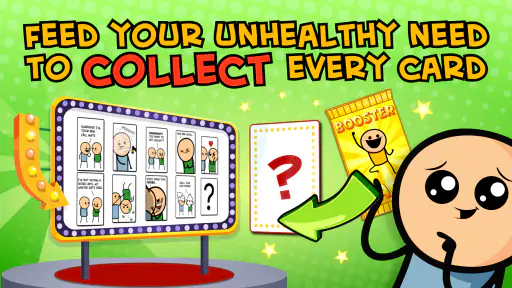
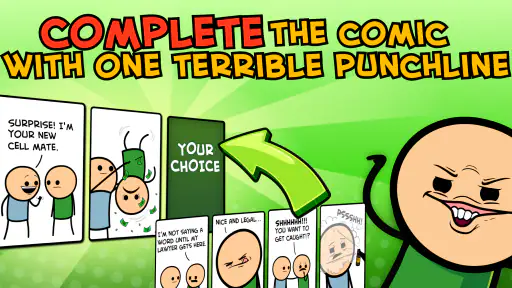
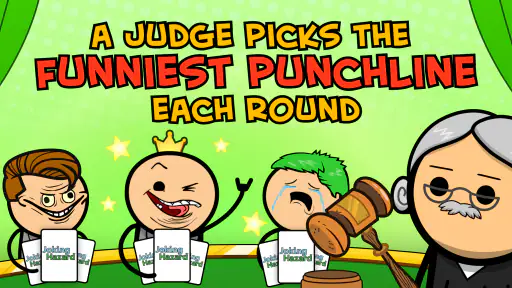
Analysis by Reviewed
I came to Joking Hazard expecting a quick digital party game, but its real appeal is more specific: it turns the comic-strip idea behind the card game into a shared exercise in timing, taste, and deliberate bad judgment. The app is a free card game from Goliath Poland Sp z o.o., built as the official online adaptation of Joking Hazard, and it works best when everyone in the room already enjoys rude humor and spontaneous storytelling.
My overall view is positive, with an important condition. This is not a relaxing solo card game, a strategy title for careful planners, or a family-friendly option. It is a social game for people who want to make deliberately inappropriate comic situations and argue about which ending is funniest. When the group is right, a single turn can create the kind of ridiculous moment people remember after the session. When the group is wrong, the same format can feel repetitive, uncomfortable, or dependent on one player's sense of humor.
Why the comic-strip format works so well
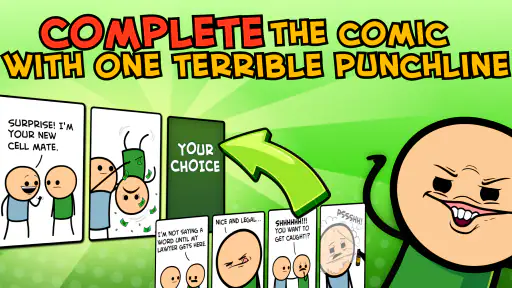
The central idea is easy to understand: players build a short comic sequence from cards, then judge the result through the lens of humor. That simplicity is a major strength. I did not need a long explanation before starting, and new players can usually understand what they are trying to do after watching a single round.
What makes the format more interesting than ordinary card matching is the gap between what a card literally shows and what the group imagines around it. A card can be harmless in isolation but become absurd, suggestive, or unexpectedly dark when placed after another one. The best turns are not necessarily the most shocking. They are the ones where the final panel changes the meaning of the setup in a way nobody saw coming.
That makes the game feel closer to collaborative comedy than to traditional card strategy. I am not trying to build the strongest hand or calculate probabilities several turns ahead. I am looking for the card that creates the funniest escalation for this particular group. A choice that would fail with one audience can be perfect with another, which gives the game a personal quality that many digital card titles lack.
The short-round structure also suits casual gatherings. It is easy to play a few rounds while waiting for friends, then stop without feeling that I abandoned a campaign. It can also fill a longer evening, although the quality depends heavily on whether the group keeps inventing fresh reactions. The app provides the framework; the players provide most of the entertainment.
The strongest moments come from reading the room
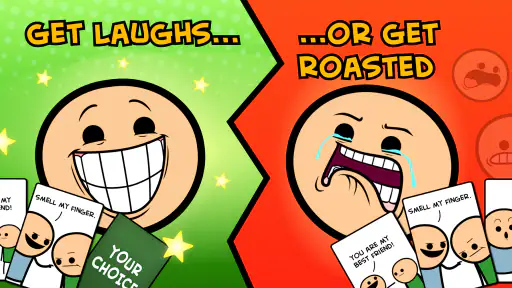
One of my favorite aspects is that success is partly about knowing the people playing. A technically clever joke may fall flat if it does not match the group's mood. Meanwhile, an apparently simple combination can win because everyone understands the exact kind of awkwardness it creates.
This gives the game a useful social layer. I pay attention not only to the cards in my hand but also to how other players react. Are they enjoying exaggerated nonsense, deadpan humor, surreal turns, or darker punchlines? After a few rounds, those reactions become information. I can choose cards more intelligently without the game ever turning into a serious strategy exercise.
That is also why the app is stronger with people who already know one another. Friends tend to understand each other's boundaries and comic preferences, so they can take bigger creative risks. With strangers, I would play more cautiously at first. The mature rating is not a minor detail here: the humor can be unsuitable for children and uncomfortable for players who expected a clean party game.
The game is rated Mature 17+, and I would treat that as a practical warning rather than a decorative label. Before starting at a mixed-age gathering, I would make sure everyone knows what kind of humor to expect. That small bit of preparation can prevent the most common failure: spending the first several rounds discovering that the group wanted completely different entertainment.
It is easy to teach, but not empty
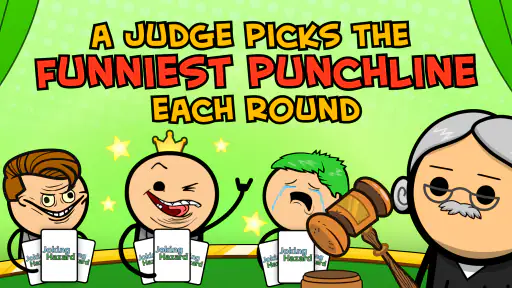
Simple rules do not mean every decision feels meaningless. The interesting choices are social and editorial. Do I play the obvious punchline, or do I choose a card that leaves more room for the group to imagine? Do I make the sequence chaotic, or do I create a clean setup with a sharp final turn? Do I aim for a laugh from everyone, or target the one person whose judgment decides the round?
I found that the best approach is to avoid explaining the joke too much. Once a player starts defending a combination before anyone reacts, the humor often loses its force. The cards work better when the group can see the sequence, pause, and fill in the missing logic themselves. That is a small but useful table habit: let the comic strip breathe before discussing it.
Another practical tip is to avoid playing every turn at maximum intensity. If each sequence tries to be outrageous, the effect becomes flat. Alternating between absurd, understated, and unexpectedly grim combinations gives the session more variety. The app's format supports that rhythm because the humor is created by combinations rather than by a fixed story or campaign.
For a newcomer, I would recommend observing one round before trying to optimize a hand. The first lesson is not which card is strongest; it is how the group interprets the cards. Once that social language is clear, the game becomes much more enjoyable.
Where the digital adaptation earns its place
Moving this type of game onto a phone or tablet makes it easier to bring into situations where a physical box would be inconvenient. I can imagine using it during a casual visit, on a shared break, or as a quick activity when people are already gathered with their devices nearby. The free entry point also lowers the barrier for a group that is curious but does not want to buy a physical party game first.
That convenience matters because party games live or die by setup time. If the group has to sort cards, explain complicated phases, or organize a large table, enthusiasm can disappear before the first joke lands. A digital version handles the card presentation and keeps attention on the comic sequence.
Still, I would not assume that digital is automatically better than physical. A boxed card game creates a stronger shared object in the room. People can reach for cards, react to the artwork at the same time, and feel the table changing as the deck moves around. The app is more portable and immediate, while the physical alternative may feel warmer for a dedicated game night.
That trade-off is worth considering before downloading. If the main goal is to own a party-game centerpiece for repeated gatherings, the physical version may offer a more satisfying ritual. If the goal is to try the concept quickly or keep a compact option available, the app makes a convincing case for itself.
The meaningful weakness: humor cannot be automated
The biggest limitation is not a technical issue I can solve through settings. It is the dependence on the group. Because the game asks players to create and judge humor, there is no guarantee that a round will be funny. A weak combination can produce silence, and a joke that one player considers clever may seem forced to everyone else.
This also creates a repetition problem over longer sessions. Once players learn the broad types of combinations that usually get attention, they may start reaching for similar patterns. The surprise can fade if the same people play frequently without changing the group or their approach. I would rather play it in focused bursts than treat it as a daily game with a long routine.
The mature tone narrows the audience further. People who want a light, all-ages card game should choose something else. Even adults may have different boundaries around sexual references, offensive humor, or deliberately uncomfortable situations. The right group can turn that edge into freedom, but the wrong group can make every round feel like a negotiation.
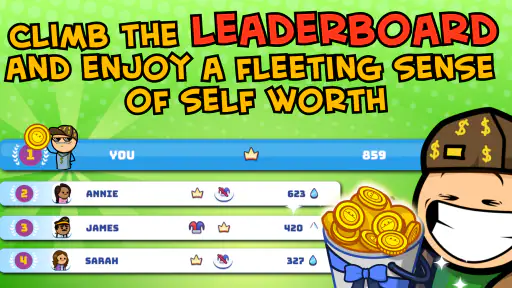
There is also a financial consideration. The game is free to start, but optional purchases range from $1.99 to $48.99 per item. That does not make the initial download a bad value, but I would be careful before spending heavily on a party game whose replay value depends more on the players than on collecting additional content. I would first see whether my regular group actually enjoys the core experience.
The current version is 1.7.6, and the app runs on Android devices using version 6.0 or later. Those requirements are relatively approachable for people using older compatible phones, but a small screen can still be less comfortable for a group than a tablet or a device that everyone can see. For a shared session, display size and visibility matter more than they would in a private card game.
How I would use it in an ordinary evening
Imagine four friends meeting after dinner with no plan beyond talking. Instead of opening a competitive multiplayer game that demands concentration, one person starts Joking Hazard and explains that the aim is to create the funniest comic sequence. The first rounds are cautious because everyone is learning the tone. Someone plays an unexpectedly literal ending, another person chooses a darker twist, and the group begins to understand what makes the others laugh.
After that, the conversation changes. Players start predicting who will enjoy a particular combination. Someone saves a card because it could work as a final punchline later. Another player deliberately creates a strange setup that seems weak until the last panel transforms it. The game becomes a source of conversation rather than a separate activity competing with it.
That is the ideal use case: a small group that wants a shared prompt for improvisation, not a contest requiring constant focus. I would keep the first session short, especially if the group is unfamiliar with the humor. If everyone is engaged, continuing is easy. If reactions become polite rather than spontaneous, stopping early is better than forcing another hour.
Who should download it, and who should skip it
I would recommend it to adults who enjoy irreverent comic-strip humor, party games with quick rules, and situations where the players' personalities matter more than formal strategy. It is particularly suitable for friends who like improvising explanations, debating punchlines, and laughing at combinations that are funny precisely because they are badly constructed.
It is also a reasonable choice for someone who wants to test the Joking Hazard concept before committing to a physical edition. The free price makes that experiment straightforward, although the mature tone should be discussed before introducing it to a group.
I would skip it if I mainly play alone, want a deep tactical card game, or prefer a predictable competitive structure. It is not designed to reward careful deck mastery in the same way as a collectible card battler. I would also choose another option for children, family gatherings, workplace events, or mixed groups where nobody has agreed on adult humor.
Compared with a standard digital card game, this one offers less strategic control but more social authorship. Compared with a traditional party game, it gives players a clearer creative task: build a comic sequence and make the ending land. Compared with the physical version, it is more convenient but may feel less tactile and less central to the room. Those differences make the choice fairly clear rather than confusing.
Small habits that improve the experience
I found three practical habits especially useful. First, establish the tone before the first round. A quick agreement that players can reject a joke or change the mood keeps the mature material from becoming an awkward surprise. Second, judge the whole sequence rather than the most shocking individual card. The setup and timing usually matter more than sheer offensiveness.
Third, rotate the social focus. If one person always determines what is funny, quieter players can disappear. Giving everyone a chance to shape the mood keeps the session from becoming a performance by the loudest participant. This is not a rule change; it is simply a better way to use the format.
I would also avoid treating every card as a precious resource. The game's pleasure comes from seeing combinations fail as well as succeed. A strange card played at the wrong moment can still produce the funniest discussion of the round. Trying to protect every promising option can make the game feel more calculated than it needs to be.
My final assessment
Joking Hazard succeeds because it understands that the cards are only half the game. The real content comes from the audience: its boundaries, shared references, timing, and willingness to accept a ridiculous premise. The adaptation is at its best as a convenient, quick-start social activity for adults who already know they enjoy this kind of humor.
The average rating of 4.4 from around 5.8 thousand ratings and more than 100 thousand installs suggest that the concept has found a sizeable audience, but those figures should not replace personal judgment. The mature rating, optional purchases, dependence on group chemistry, and limited appeal for solo players are all meaningful parts of the decision.
My recommendation is simple: download it if you have a compatible device, a willing adult group, and an appetite for improvised comic chaos. Start with a short session, set expectations about the humor, and resist the temptation to buy extra content before you know whether your friends keep laughing. If that first gathering produces arguments over which ending was funniest, awkward pauses followed by sudden laughter, and at least one combination nobody could have planned, the app has done exactly what it needs to do.
Pros
- Easy-to-learn rules make it accessible for casual game nights.
- Dark
- unpredictable humor creates memorable and funny moments.
- Players can combine cards creatively for unique comic strips.
- Compact card format makes it convenient to take on trips.
- Works well with different group sizes and play styles.
Cons
- Humor may feel offensive or immature for some players.
- Replay value can depend heavily on the creativity of the group.
- Some card combinations are much funnier than others.
- Not ideal for players who prefer strategic or competitive gameplay.
- Requires a suitable audience
- so it may not fit family gatherings.

- Category
- Card
- Version
- 1.7.6