Jewels Adventure Match Blast
- 2.17K
- 4.5
- Installs
- 10.00M
- Price
- Free
Screenshots







Analysis by Reviewed
I spent time with Jewels Adventure Match Blast as the kind of puzzle game people open for a quick break but may keep installed for much longer. It is a free match-three game from Lynn Mobile Puzzle Games, built around colorful jewels and a large collection of challenges. My first impression was straightforward: it is easy to understand within a few moves, but the appeal depends on whether you enjoy repeating a familiar puzzle format and gradually working through increasingly demanding boards.
That makes the important decision less about whether the game is accessible—it is—and more about what you want from a mobile puzzle. If you like short sessions, simple controls, and a steady stream of boards, this is an inviting choice. If you want a story-heavy adventure, unusual mechanics, or a puzzle game that constantly reinvents itself, you may find the basic match-three structure limiting.
What to consider before choosing it
The game is rated for Everyone, so it is suitable for a broad audience, including players who do not normally play games. It runs on Android devices using version 6.0 or later, which makes it a practical option for people with older phones or tablets. I would still treat the screen size and touch responsiveness of your device as more important than the operating-system requirement: small jewels and quick taps are simply more comfortable on a reasonably clear display.
Its free entry point is useful because you can try the core experience without paying first. The trade-off is that optional in-app purchases range from $0.99 to $99.99 per item. I recommend deciding in advance whether you want to spend anything. Match-three games can encourage “one more attempt” thinking, and a purchase can feel tempting when a board is nearly complete. Playing without buying is the safer approach if you prefer a predictable entertainment budget.
The game has reached over 10 million installs and holds a 4.5 average from around 34 thousand ratings, with roughly 2 thousand reviews. Those figures suggest that its straightforward format has found a substantial audience, but they do not replace personal testing. A popular match-three game can still be the wrong fit if you dislike repeating visual patterns, waiting through difficult stages, or managing optional spending.
I would judge it using four practical questions. First, do you want a game that can be learned immediately? Second, are you comfortable with a familiar jewel-matching loop rather than a more experimental puzzle design? Third, will you play in short bursts or settle in for longer sessions? Finally, do you want to remain completely free from purchase prompts, or are optional extras acceptable?
For a commuter, a parent waiting during an appointment, or someone who wants a low-pressure evening distraction, the answers may point toward a good fit. For a player searching for deep planning, narrative progression, or a competitive community, the decision becomes less obvious. I found that the game works best when treated as a relaxed board-by-board pastime rather than as a major gaming destination.
How the matching loop feels in everyday play
The central interaction is familiar: arrange matching jewels to clear them and solve the current puzzle. That simplicity is one of the strongest parts of the design. I did not need to learn a complicated control scheme, memorize a long tutorial, or understand a story before making useful moves. A new player can watch the board, spot a possible match, and begin experimenting almost immediately.
That accessibility also creates the main limitation. Once you understand the basic rhythm, the enjoyment comes from the arrangement of each board and the challenge of completing it, not from discovering a radically different system. Players who already have a favorite match-three game may notice that the first few sessions feel comfortably familiar rather than surprising.
My best advice is to slow down before making the first available match. The obvious move is not always the most useful one. Look for a sequence that opens more of the board or creates a better follow-up position. This small habit makes the game feel more thoughtful and reduces the frustration of finishing a turn with no attractive options left.
A second useful habit is to avoid treating every move as an emergency. When a board looks crowded, I found it more productive to scan the edges and less open areas before focusing on the center. Clearing space can be more valuable than making the most visually satisfying match. This is the kind of practical decision that does not appear in a short store description but makes difficult puzzles easier to read.
I also recommend using the game as a short-session activity rather than forcing a long run. If I kept playing after several frustrating attempts, I became less careful and started making impulsive moves. Closing the game and returning later can be more effective than repeatedly attacking the same board while tired. That is particularly relevant for younger players, who may benefit from a clear stopping point.
Where this game earns its place
The biggest strength is its low barrier to entry. The jewel theme is immediately readable, the controls are familiar, and the puzzle structure does not demand a large time commitment before it becomes enjoyable. I can imagine recommending it to a friend who wants something more interactive than scrolling but less demanding than a strategy game.
The large number of puzzles is another reason to keep it installed. Even though the basic action remains consistent, a long sequence of boards gives the game room to become part of a daily routine. I liked the idea of treating individual puzzles as small goals: one while waiting for coffee, another during a break, and perhaps a few more when I had time to concentrate.
The game is also a sensible family-friendly option because of its Everyone content rating. That does not mean every player will enjoy it equally, but it makes the overall presentation easier to share across age groups. A parent can introduce the matching concept without handing over a complicated game, while an older player can use it as a gentle mental diversion.
Its current version is 4.2.4, and the developer is Lynn Mobile Puzzle Games. I would keep the game updated through the normal app-store process so that I am using the current release available for my device. More importantly, I would not choose it solely because of the version number. The real question is whether the board design and pace suit my habits.
One non-obvious advantage is that the game can support different levels of attention. I can play casually by making obvious matches, or I can become more deliberate by studying the board before committing. That flexibility makes it easier to fit into a changing day. It is not necessary to give every puzzle the same amount of concentration.
Another strength is the clear relationship between a mistake and its result. When a move leaves the board in a poor position, I can usually understand why. That gives the game a modest learning curve even without complex rules. I gradually became better at preserving useful spaces and avoiding moves that looked attractive but solved very little.
Where a different puzzle category may suit you better
Traditional match-three games are not automatically the best choice for every puzzle fan. If you prefer word puzzles, a vocabulary-focused game will offer more direct mental exercise. If you enjoy logic grids, number puzzles, or spatial challenges, Jewels Adventure Match Blast may feel too dependent on visual pattern recognition. Its appeal is specific: quick decisions, colorful pieces, and board-clearing goals.
Players who want a strong story may also prefer a narrative adventure game. Here, the puzzle is the main event. I would not install it expecting character development, exploration, or a dramatic reason to continue. The motivation comes from solving the next board and seeing how far I can progress.
There is also a difference between this kind of game and a competitive puzzle title. A competitive alternative may be better if you want live opponents, rankings, or a strong sense of performance against other people. Jewels Adventure Match Blast is more suitable when I want control over my own pace and do not want another player’s skill or schedule to determine the session.
On the other hand, some alternatives may be worse for a casual player. A complex strategy puzzle can demand a longer uninterrupted session, while a physics-based game may require more precise timing. This game’s familiar structure is a benefit when I have only a few minutes and want to begin playing immediately.
The trade-off is variety. A player who gets bored when the same type of action returns repeatedly may switch away quickly. I would choose a more experimental puzzle game if discovering new rules is more important to me than having a dependable routine. This is not a flaw that can be fixed by playing harder; it is a matter of taste.
A realistic daily scenario
Imagine opening the game during a ten-minute wait before an appointment. I can complete a board, stop without losing an entire evening, and return later when I have more time. That is where the format makes sense. The game gives me a defined task instead of an endless feed, and the bright jewel presentation is easier to pick up than a game with multiple menus and systems.
There is a different scenario where I would be cautious. If I am already tired and easily tempted to spend money after failing, I would avoid playing late at night or disable purchasing through my device’s family controls. The free download is convenient, but the presence of paid items means I should treat it like any other game with optional spending rather than assuming “free” means there are no financial decisions.
For a child, I would play alongside them at first, not because the controls are difficult, but because the goal is to establish sensible session and spending habits. The Everyone rating makes the game broadly approachable, yet age suitability and household rules are not exactly the same thing. A parent should still decide how long the child plays and whether purchases are allowed.
For an older phone, the minimum operating-system requirement is reassuring, but I would check the actual experience on the device before committing to long sessions. A game can technically run while still feeling less comfortable on a dim screen, with delayed touch response, or with limited battery life. Those are practical concerns that matter more during everyday use than the store category.
What switching to it really costs
Switching from another match-three game is easy at the control level because the basic idea is already familiar. I would not need to relearn an elaborate interface. The larger cost is personal: I may already have progress, habits, or purchases tied to another title. Moving over means accepting that this game’s particular board flow and presentation may not offer a dramatic change.
That makes it a better second puzzle game than a complete replacement for everyone. If my current game frustrates me with complexity, this one may feel refreshingly direct. If my current game already provides enough boards and I am looking for novelty, the switch may not feel worthwhile. I would try the free version first and judge it by how often I voluntarily return after the initial curiosity.
I would also pay attention to how I respond to difficult puzzles. Some players enjoy retrying until a solution appears, while others prefer games that offer a steady sense of progress. If repeated attempts make me impatient, a word or logic game with a different challenge structure could be a better use of my time. If I enjoy gradually improving my board-reading skills, the retry loop can become satisfying.
Because optional purchases can reach $99.99 per item, my switching plan would be simple: play without buying during the first several sessions. That lets me evaluate the core loop rather than confusing paid convenience with genuine enjoyment. If I still want to return after a week of normal use, I know the game itself—not the novelty of a purchase—is doing the work.
My recommendation for different players
I recommend Jewels Adventure Match Blast to anyone who wants an approachable puzzle game for short, self-contained sessions. It is especially suitable for casual players, families looking for an Everyone-rated option, and people who enjoy the familiar satisfaction of matching jewels to clear a board. The free starting point makes it easy to test without making an immediate commitment.
I would be more selective for experienced puzzle fans. If you need unusual mechanics, a substantial story, or competitive depth, another category will probably serve you better. I would also skip it if optional purchases are a major concern and I know I have difficulty ignoring them. The game can be enjoyable without spending, but I still need to manage that choice deliberately.
My practical approach would be to install it, play several boards at different times of day, and notice whether the game remains enjoyable when I am not in the mood for a long session. Try making deliberate opening moves, scan the edges before clearing the center, and stop after a frustrating streak rather than playing impulsively. Those habits reveal more about the game’s fit than a quick first impression.
Overall, Lynn Mobile Puzzle Games has made a familiar format easy to pick up and easy to revisit. I see it as a dependable casual puzzle rather than a groundbreaking one. If you want a free, accessible jewel-matching game with plenty of room to progress, it is worth trying; if you want constant novelty or deep strategic systems, look elsewhere. That distinction is the clearest way to decide whether it belongs on your Android device.
Pros
- Easy-to-learn matching mechanics for quick
- casual play.
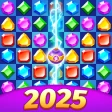
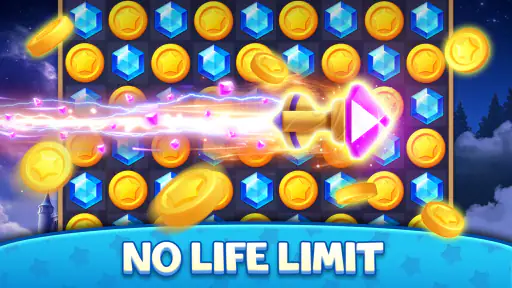
- Bright jewel graphics and lively effects make levels visually appealing.
- Short stages work well for brief gaming sessions.
- Offline play is useful when traveling or without mobile data.
- Gradually increasing difficulty keeps the campaign engaging.
Cons
- Some levels may depend heavily on lucky tile arrangements.
- Frequent boosters can make later stages feel less strategic.
- Ads may interrupt play
- especially after completing a level.
- The overall gameplay can feel repetitive over extended sessions.
- Progress and extra rewards may encourage optional in-app purchases.
- Category
- Puzzle
- Version
- 4.2.4