Jewel Coloring
- 2.78K
- 4.7
- Installs
- 10.00M
- Price
- Free

Screenshots

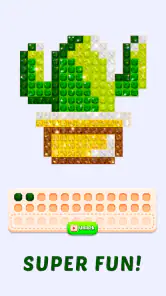
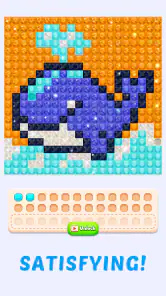
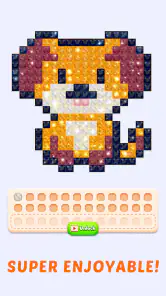
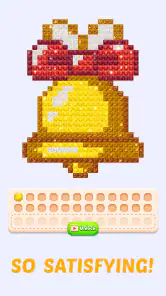

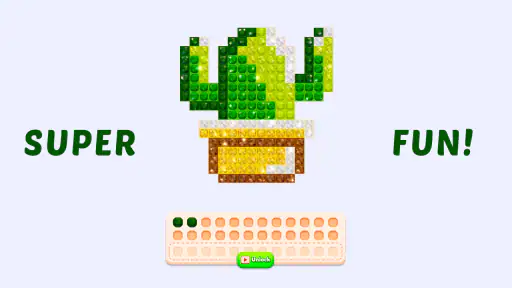
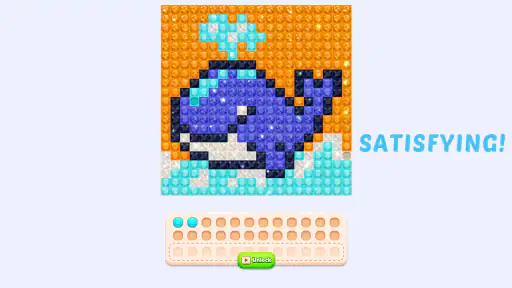
Analysis by Reviewed
I tend to judge a casual puzzle by a simple test: can I understand what to do quickly, and does it feel pleasant enough to return to when I have a few spare minutes? Jewel Coloring is built around a focused combination of sorting jewels and completing pixel-art pictures. That gives it a quieter appeal than a race against a timer or a puzzle that demands a long run of strategic planning. I’d consider it for short, low-pressure breaks, especially if the satisfaction of gradually filling in an image matters as much as solving the puzzle itself.
It is a free casual game from TaTa Game Technology Limited, with an Everyone age rating. Its central idea is easy to grasp, but the experience is specific: the sorting task is part of making colorful pixel art, rather than an end in itself. That distinction is useful when deciding whether it suits you. If you want a puzzle with a visible creative payoff, the format has a clear draw; if you want a large variety of mechanics or a demanding challenge, a more strategy-focused game may be a better match.
What to consider before choosing a jewel puzzle
A calm activity with a visible result
Sorting puzzles are satisfying because they turn a messy-looking task into orderly progress. Here, that progress connects to an image, so I’d approach each session as a small craft-like activity rather than a test of speed. The appeal is not just placing pieces correctly; it is seeing a pixel-art design take shape as the sorting work advances. That gives the game a more deliberate mood than a match puzzle built around quick reactions.
Articles Related to Jewel Coloring
For a realistic everyday use, imagine having a few minutes while waiting for a kettle or sitting through a short pause between errands. This kind of focused, visual task can occupy that gap without requiring you to follow a story or remember a complicated set of rules. I’d still treat it as a game to open when I can look at the screen, rather than something to play while walking or doing another task: sorting depends on attention, even when the overall tone is relaxed.
How it compares with familiar alternatives
Compared with match-three games, Jewel Coloring puts less emphasis on making chains of matching pieces and more on orderly sorting linked to an image. Compared with nonogram-style pixel puzzles, its appeal is not simply deducing which squares should be filled; the jewel element gives the activity a tactile, color-led identity. And compared with open-ended coloring apps, it offers a puzzle structure rather than only letting you choose where to add color.
Those distinctions matter more than broad claims about being relaxing or easy. If you enjoy arranging objects and watching a picture emerge, the combination is likely to feel coherent. If your favorite part of a puzzle is finding a difficult solution through several moves ahead, the artwork may not compensate for a lighter challenge. Likewise, someone who wants unrestricted drawing or precise control over every mark may prefer a dedicated coloring tool.
What makes this format worthwhile
The strongest reason to choose this game is the way it pairs a simple sorting premise with a concrete visual outcome. Pixel art suits this approach because the image is assembled from small, distinct units: progress can feel legible even when a design is not finished. I find that kind of incremental payoff better suited to brief visits than a puzzle whose satisfaction arrives only after a long, uninterrupted session.
You May Like

How Microsoft OneDrive Became a Mobile Productivity Giant

How Google Translate Breaks Language Barriers Effortlessly

Why Google Sheets Is the Ultimate Mobile Productivity Tool

Unveiling the Dynamic World of My Talking Tom Friends

Free Fire MAX: Dominating the Battle Royale Arena
Free Fire: Winterlands – The Ultimate Winter Gaming Adventure
A useful way to decide whether the loop fits is to notice which part you enjoy more. If you like the orderly movement of pieces, the sorting itself can carry a session. If you are mainly interested in the finished artwork, you may enjoy seeing a design develop but feel less engaged during the work between those moments. That distinction is easy to overlook in a short description, yet it often determines whether a casual puzzle becomes a regular choice.
The game’s audience figures suggest that it has reached a broad group of players: it has a 4.7 average from around 197 thousand ratings and more than 10 million installs. I treat that as useful context, not a guarantee that it will suit every puzzle fan. Preferences differ sharply between people who want a soothing visual routine and those who want a tougher brainteaser, so the premise remains the most important guide.
Where it may not be the best fit
The same focused identity that makes Jewel Coloring easy to understand can also limit its appeal. If you tire quickly of sorting, a collection of different puzzle mechanics may hold your attention longer. If you want competition, a strong narrative, or a sense of urgency, a relaxed image-building loop is unlikely to provide the same motivation. I would not choose it as a substitute for a challenging logic game just because both involve thinking.
There is also a personal trade-off in games centered on gradual visual completion: players who want to make their own designs may find the goal-directed structure restrictive, while players who prefer purely abstract puzzles may see the artwork as an extra layer they do not need. Neither reaction is a flaw in itself. It is a reason to choose according to what you want from a break, instead of assuming that every casual puzzle is interchangeable.
One practical tip is to use the first session as a test of the rhythm rather than judging the game only by whether you finish a picture. Pay attention to whether the sorting feels calming or repetitive, and whether the pixel-art progress gives you a satisfying reason to continue. That quick self-check is more useful than expecting the game to transform into a different genre later.
Switching from another casual game
Moving from a match game or a word puzzle should not require a major change in habits: the broad commitment is still a short, self-contained puzzle session. The adjustment is about what feels rewarding. Instead of looking for a dramatic combination or a clever word, you are choosing whether the careful sorting and gradual artwork are enough to keep your attention. If you already like visual organization, that transition should feel natural; if you rely on variety, you may miss the different kinds of decisions offered by a broader puzzle collection.
On Android, the current version is 1.23.1 and the minimum operating-system requirement is Android 6.0. The game is free, which makes trying its core idea a straightforward choice, but I would still make the decision based on the style of play rather than on the download cost alone. It was released on February 25, 2026, and has 2.8 thousand reviews alongside its much larger rating count.
Because the premise is focused, there is little reason to approach it as a game that must replace all your other casual apps. I’d instead keep it in mind for a particular mood: when I want something visually satisfying, easy to pick up, and less intense than a fast-paced puzzle. For a commute or waiting room, I would also consider whether I have enough attention to follow the sorting; if I need a game that can be played almost automatically, another option may suit me better.
My recommendation
I’d recommend Jewel Coloring to someone who likes tidy sorting tasks and wants that effort to build toward a pixel-art image. Its casual framing, free price, and Everyone rating make the idea approachable, while its identity is specific enough to stand apart from ordinary matching games. The best reason to try it is not that it promises every kind of puzzle satisfaction, but that it combines visual progress with a gentle sorting routine.
I’d steer away from it if you want deep strategic planning, a competitive edge, free-form art tools, or a steady change of mechanics. In those cases, a logic puzzle, a multiplayer game, or a dedicated coloring app is a more direct fit. But if the thought of organizing jewels into a picture sounds appealing, this is a sensible casual choice. My recommendation is to try it when you want a small, visually rewarding puzzle break, and keep it only if the sorting remains enjoyable after the novelty of the artwork wears off.
Making a first session count
To get a useful read on the game, I’d start when I have enough attention for one uninterrupted stretch, then notice how often I look forward to the next sorting step. That is a better test than leaving it open during a hectic moment and deciding the activity feels dull. The artwork provides a reason to keep going, but the moment-to-moment sorting is what you will actually spend time doing.
It also helps to separate “easy to start” from “easy to enjoy for a long time.” A clear premise is welcoming, but a tightly focused loop can become repetitive if you want each session to introduce a different kind of decision. I’d keep it as a companion to other casual games rather than expect it to cover every mood: its strongest use is a quiet visual task, not a universal replacement for puzzles with more varied goals.
Who should keep it in their rotation
I can see this being a good fit for someone who likes sorting videos, tidy visual patterns, or the small satisfaction of completing a picture one piece at a time. It may also suit a parent looking for an age-rated casual game to consider for a family device, though the Everyone rating is not a substitute for deciding what is appropriate for a particular child. The key is that the player should enjoy the act of organizing, not only the final image.
If you mainly want something to play one-handed without concentrating, or need a game that keeps changing its rules, I would look elsewhere. The sorting-and-art combination asks for your eyes and some focused attention, and its appeal depends on liking that particular rhythm. As a casual option from TaTa Game Technology Limited, it has a clear lane: a free, approachable puzzle for players who find visual completion rewarding, rather than a deep or endlessly varied challenge.
Choosing between this and a different kind of break
Before switching from another game, I’d ask what I want the next few minutes to feel like. If I want a quick burst of decisions, a competitive match, or a puzzle where deduction is the main event, a different genre is more likely to deliver. If I want to slow down and watch an image become more complete through organized actions, this one has a more fitting purpose. That distinction also answers whether the game is worth keeping alongside a favorite: it can fill a specific gap without needing to replace anything.
The practical cost of trying it is low because the game is free, but attention is still a resource. I would avoid starting when I cannot follow the visual task, then blaming the game for feeling hard to settle into. On the other hand, if you try a focused session and the sorting feels like busywork rather than a satisfying route toward the artwork, there is little reason to force yourself to continue. The right casual puzzle should suit the kind of break you actually have.
Jewel Coloring Frequently Asked Questions
What is Jewel Coloring?
Jewel Coloring is a casual coloring game built around gem and jewel-themed pictures. Players choose an image and fill its numbered or otherwise marked sections with matching colors, gradually revealing a finished design. It is intended for relaxed, low-pressure play rather than action or complex puzzles. The exact collection of pictures and coloring options can vary between versions, so check the app listing and screenshots for the content currently available.
How do you play Jewel Coloring?
The usual process is to select a picture, identify the areas that need coloring, and tap or drag the corresponding colors into place. Some versions use numbered sections, while others may offer a more free-form coloring experience; controls and features can differ by release. It is generally easy to pick up, though small details may take patience on a phone screen. If you are unsure how a particular tool works, check the in-game instructions before starting.
Is Jewel Coloring free to download and play?
The price and payment model depend on the version and store listing available in your region. Jewel Coloring may be offered as a free download, but free games can include advertisements, optional in-app purchases, or content that requires payment. Review the listing for purchase details before installing, and check your device’s purchase settings if children may use the app. Do not assume that every design or feature is available without payment.
Does Jewel Coloring work offline, and what devices can run it?
Offline access and device compatibility can vary by platform and app version. Basic coloring may be available without a constant internet connection, but features such as adverts, downloadable pictures, updates, or cloud progress may need internet access. Before downloading, confirm that your Android or iOS device meets the requirements shown on its store page. If offline play matters to you, test the app without a connection after installation rather than relying on assumptions.
Is Jewel Coloring suitable for children, and is it safe to download?
Coloring gameplay is generally simple and can appeal to children, but suitability depends on the app’s age rating, advertising, privacy practices, and any social or purchase features in the current release. A parent or guardian should review the store listing and privacy information before installation, especially on a child’s device. Download Jewel Coloring only from an official app store or another trusted source, and supervise in-app purchases and permissions where appropriate.
Pros
- Simple controls make it easy to start coloring right away.
- A relaxing activity that suits short breaks.
- Coloring by number helps keep each design organized.
- Suitable for players who prefer a calm
- low-pressure game.
- The jewel-themed artwork gives the pages a distinctive look.
Cons
- Coloring by number may feel repetitive over time.
- Small sections can be fiddly on compact screens.
- Players looking for action or story-driven gameplay may be disappointed.
- Some designs may require patience to complete.
- The experience may feel limited if you prefer freehand drawing.
- Category
- Casual
- Version
- 1.23.1