Idle Huntress: Girl's Land
- 5.74K
- 4.4
- Installs
- 500.00K
- Price
- Free

Screenshots





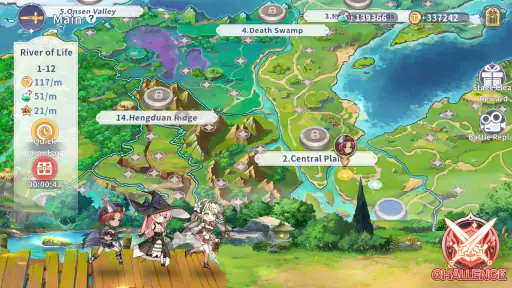
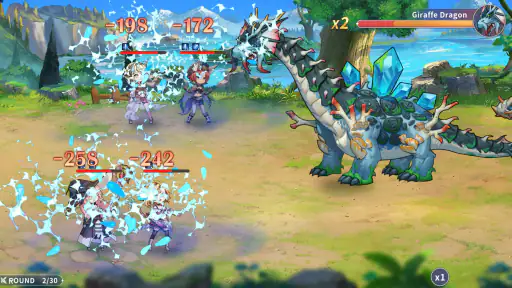
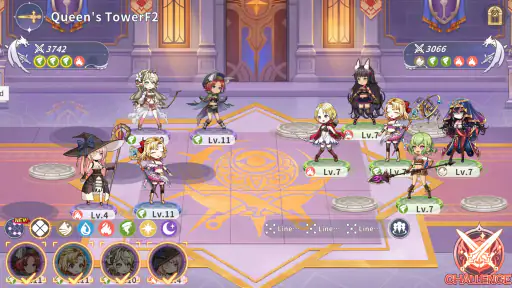
Analysis by Reviewed
Idle Huntress: Girl's Land is a free mobile card game that takes a different route from the usual hands-on deck battlers. Instead of asking me to manage every encounter from start to finish, it is built around an idle-friendly rhythm: I check my progress, improve my team, make a few decisions, and return later to see how things developed. That makes it easy to fit into short breaks, although it also means the game may feel less satisfying if I want constant tactical control.
Developed by BluStar Games Limited, the game has built a sizeable audience, with over 500 thousand installs and a 4.4 average from around 64 thousand ratings. Those figures suggest that its mix of collectible characters, card-based progression, and low-pressure check-ins appeals to many players. My own recommendation is more selective: it is a good match for someone who enjoys gradual team building, but not the best choice for anyone looking for a pure competitive card game with deep decisions every minute.
Getting past the first points of friction
Why the opening can feel less clear than expected
The first hurdle is understanding what the game wants from me. The short store description calls it an idle huntress game, but that does not fully explain the practical routine. I am not simply playing cards in isolated matches. I am building a roster, improving its strength, checking rewards, and deciding where limited attention should go. New players who expect a traditional card table can mistake the automated portions for a lack of gameplay.
I found it more useful to treat the opening session as an orientation period. Rather than spending every available item immediately, I first looked at which screens were unlocked and which improvements affected the whole team. This matters in an idle game because a small upgrade made early can influence several later activities, while a flashy individual improvement may help only one character.
The game is rated Teen, so it is not aimed at very young children. That is worth considering before installing it on a shared family device. It is also free to download, but it includes optional purchases ranging from under a dollar to nearly one hundred dollars per item. I would approach those offers carefully, especially during the early excitement of unlocking characters or reaching a new progression point.
Simple checks before blaming the game
When progress appears to stop, I start with ordinary setup checks rather than assuming the account or game has failed. I make sure the phone has enough free storage, the operating system meets the requirement of Android 7.0 or later, and the connection is stable if the game is loading online content. I also close other demanding apps before reopening it, particularly on an older phone.
These steps sound basic, but they solve a surprising amount of confusion. A slow loading screen can look like a frozen battle. A delayed reward can seem missing when the connection has not finished synchronizing. If the game has just updated, I give it a clean restart instead of repeatedly tapping the same button. I also avoid switching rapidly between the game and other apps while a result or reward is appearing.
The current version is 1.1.34, and keeping the installed version current is sensible for any live mobile game. I would check the relevant app store rather than relying on an old installation file. If the game launches but behaves strangely, restarting the device after an update is a reasonable next step. It is not glamorous troubleshooting, but it is safer than deleting local data without knowing how progress is connected to the account.
A better first-session routine
My preferred opening workflow is deliberately conservative. I complete the available introductory actions, inspect the character and upgrade screens, and then pause to understand the resource loop. I do not spend everything just because a red notification appears. Notifications are useful reminders, but they are not automatically recommendations about the best long-term use of a resource.
I also compare improvements by asking one practical question: will this help me repeatedly, or only solve the obstacle directly in front of me? In an idle-focused game, repeatable gains are usually more valuable to my routine than a single burst of progress. This is one of the less obvious adjustments that makes the game feel calmer. I am not trying to win every screen immediately; I am trying to make the next return more productive.
Another helpful habit is to finish a session at a natural stopping point. I collect what is ready, apply only the upgrades I understand, and leave the game rather than continuing to tap through every available menu. That reduces the chance of making an impulsive purchase or spending a useful item simply because I am tired and want to clear all the alerts.
Recovering a stalled workflow without overreacting
What to do when progress seems stuck
Idle games can create a particular kind of uncertainty: I may not know whether I am waiting for time to pass, missing a requirement, or looking at a result that has not synchronized. I handle this by checking the same sequence each time. First I revisit the current activity and confirm whether it actually completed. Then I inspect the team and upgrade screens for an available improvement. Finally, I leave the game normally and open it again after a short break.
If that restores the expected state, the issue was probably a temporary loading or synchronization problem rather than a permanent loss. I avoid repeatedly claiming the same reward or pressing a disabled control. Rapid repeated actions rarely help and can make it harder to tell what changed. A calm restart gives me a clearer picture of the last confirmed state.
When a particular challenge is too difficult, I do not immediately assume that buying something is the answer. I first check whether the team arrangement, character levels, or available upgrades can be improved through normal play. Card games often make a small difference in composition more useful than a large amount of random investment. Even in an idle title, choosing where to strengthen the roster is part of the game.
How I manage the idle loop
The most practical way to use the game is in short, predictable visits. I might open it during a commute break, collect completed progress, improve one or two areas, and close it again. I would not install it expecting a single long evening of uninterrupted card battles. Its appeal comes from returning to a developing account, not from replacing a fully interactive strategy session.
This also changes how I judge failure. If a team does not advance while I am away, I look for the bottleneck instead of treating the result as wasted time. Perhaps the current stage asks for stronger characters, perhaps an upgrade was available, or perhaps the game is waiting for a different action. The useful question is not “why did the idle system fail?” but “what decision did I postpone before leaving?”
One trade-off is that idle convenience can reduce the sense of control. In a traditional card battler, I can often recover through a clever turn. Here, preparation and progression carry more weight. Players who enjoy planning a roster and checking gradual improvement will probably appreciate that structure. Players who want every defeat to be solved through moment-to-moment skill may find the automated rhythm frustrating.
Handling purchases with a clear limit
The purchase range deserves a practical warning. Because the game is free, the temptation is not only whether to spend, but how easily small decisions can become a habit. I set a personal rule before opening the shop: normal progression comes first, and I only consider a purchase if I understand exactly what it changes for my team.
I also avoid buying during a frustrating session. If I have just lost a challenge or feel behind, that is the worst time to make a decision. I close the purchase screen, return later, and ask whether the item would still seem useful without the immediate pressure. This is especially important for an idle game, where patience is part of the intended rhythm.
For a friend trying it for the first time, I would say the free version is enough to discover whether the loop suits them. There is no reason to treat spending as a requirement before learning how the roster, rewards, and upgrades fit together. If the basic routine already feels repetitive, paid items are unlikely to fix that underlying mismatch.
When the problem is the phone or connection
Not every interruption comes from the game itself. A device running low on storage can struggle with updates or temporary files. An unstable connection can interrupt loading even when other apps appear usable. Battery-saving settings may also limit background activity, which can make an idle title feel inconsistent between visits. I check those broader conditions before reinstalling.
If the game works normally after a restart but becomes unreliable only when many apps are open, I treat that as a device workload issue. If it fails only on one network, I test another trusted connection. If other applications are also crashing, the sensible response is to investigate the phone rather than repeatedly changing this game.
I am cautious with clearing app data. That can remove local information, and I would only consider it after making sure my progress is safely associated with the account or installation method I use. Reinstalling may be appropriate in some cases, but it should be a later step, not the first reaction to one slow screen.
Who should choose this game
This is best for players who enjoy gradual progress more than constant input. It suits someone who likes collecting and improving a group, checking in several times during the day, and making small decisions that add up. It can also work for a card-game fan who wants something lighter than a serious match-based title.
I would be more hesitant to recommend it to a player who wants a clean, fully skill-driven card experience. If the main attraction is bluffing, precise turn order, or direct competition against another person, a conventional multiplayer card game will probably provide stronger moment-to-moment engagement. Likewise, anyone who dislikes character collection, repeated upgrade screens, or optional purchase prompts may become impatient quickly.
It is also not ideal for someone who wants a game that can be understood in one uninterrupted sitting. The idle structure rewards returning over time, so its best qualities appear through a routine rather than a single dramatic session. That is a strength when I have only a few minutes available, but a weakness when I want a complete beginning-to-end adventure in one evening.
How it compares with ordinary card-game alternatives
Compared with a classic solitaire-style card app, this game offers more long-term progression and team-building decisions, but less of the immediate satisfaction that comes from solving one self-contained deal. Compared with a competitive deck battler, it asks less of my reflexes and tactical attention, while giving me more reason to check back later.
The comparison is not simply about depth. It is about where the effort goes. In a traditional card game, I spend effort during the match. Here, I spend more effort deciding how to develop the roster and when to return. That makes it a useful companion game, but not a universal replacement for other card categories.
Its presentation also depends on whether I enjoy the huntress-focused theme. The identity of the game is built around its cast and collection loop, so a player who wants abstract cards with minimal character emphasis may prefer a simpler alternative. Someone who likes a character-driven progression system is more likely to understand why the idle format works here.
My practical verdict after using the routine
I see Idle Huntress: Girl's Land as a convenient, character-focused card game for short sessions and steady progression. The strongest part is the way it turns small check-ins into a continuing project: collect what has accumulated, improve the team, and decide what deserves attention next. That structure is easy to live with when I want a game that does not demand my full concentration.
The main limitation is equally clear. The more I want direct control, immediate tactical drama, or a purchase-free competitive environment, the less convincing the game becomes. Its free entry is helpful for testing the idea, but the optional items mean I need to keep a firm boundary around spending. The Teen rating is another reason to choose it deliberately rather than treating it as a universal family game.
For a realistic everyday use case, I would install it on a compatible phone, complete the opening steps without rushing, and use it as a five-minute check-in game during spare moments. I would keep the app updated, protect my progress before trying destructive troubleshooting, and judge purchases only after I understood the normal progression loop. With that approach, it is an enjoyable idle card experience for the right audience. If I wanted every decision to happen at the card table itself, I would choose a more traditional alternative instead.
Pros
- Large roster of collectible heroines with distinct skills and roles.
- Idle rewards let you make progress even during short play sessions.
- Turn-based battles are easy to learn and offer useful team-building choices.
- Frequent events provide extra activities
- rewards
- and limited characters.
- Anime-inspired artwork and character animations are polished and colorful.
Cons
- Progress can feel slow without spending or carefully managing resources.
- Duplicate characters and upgrade materials take considerable inventory space.
- Combat becomes repetitive once familiar teams handle most encounters.
- Many rewards and features unlock gradually
- creating a busy early experience.
- Internet access is required
- limiting play when you are offline.

- Category
- Card
- Version
- 1.1.34